- Category
- Latest news
Iran’s Long-Range Missiles Could Put European Capitals Within Reach, Experts Warns
 Prefer U24 Media on Google
- Authors


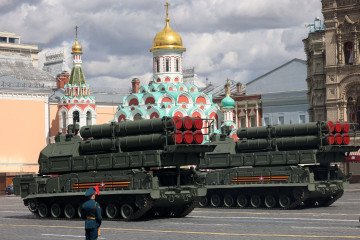
The growing reach of Iran’s missile and drone programs has introduced a direct security challenge that now extends beyond the Middle East and into the European continent, according to Defense Express on March 2.
Having already deployed more than 771 ballistic missiles and 906 drones in strikes across the region—including a recent UAV attack on a British Royal Air Force base in Cyprus—Tehran's long-range capabilities are being closely monitored by international defense analysts.
We bring you stories from the ground. Your support keeps our team in the field.
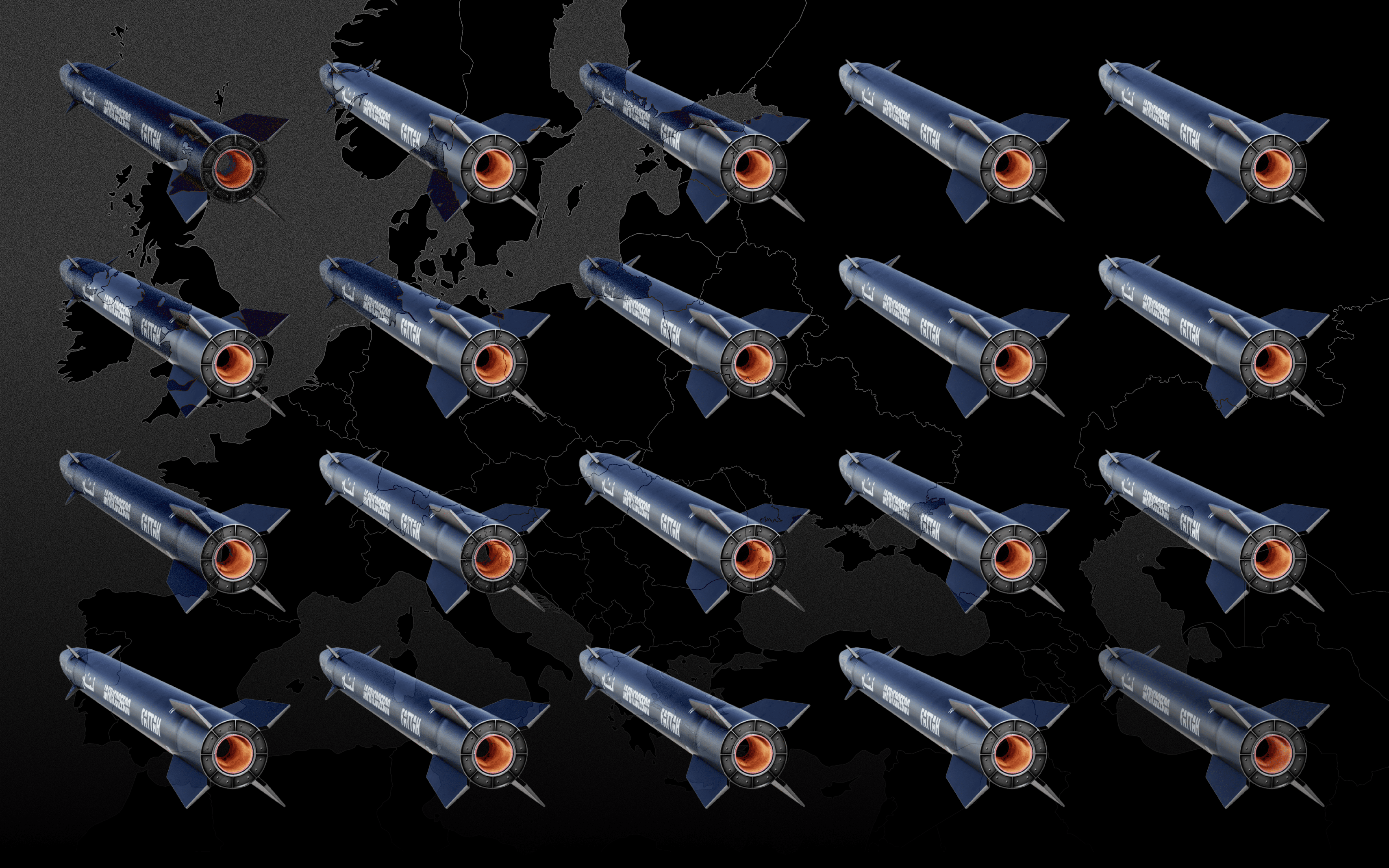
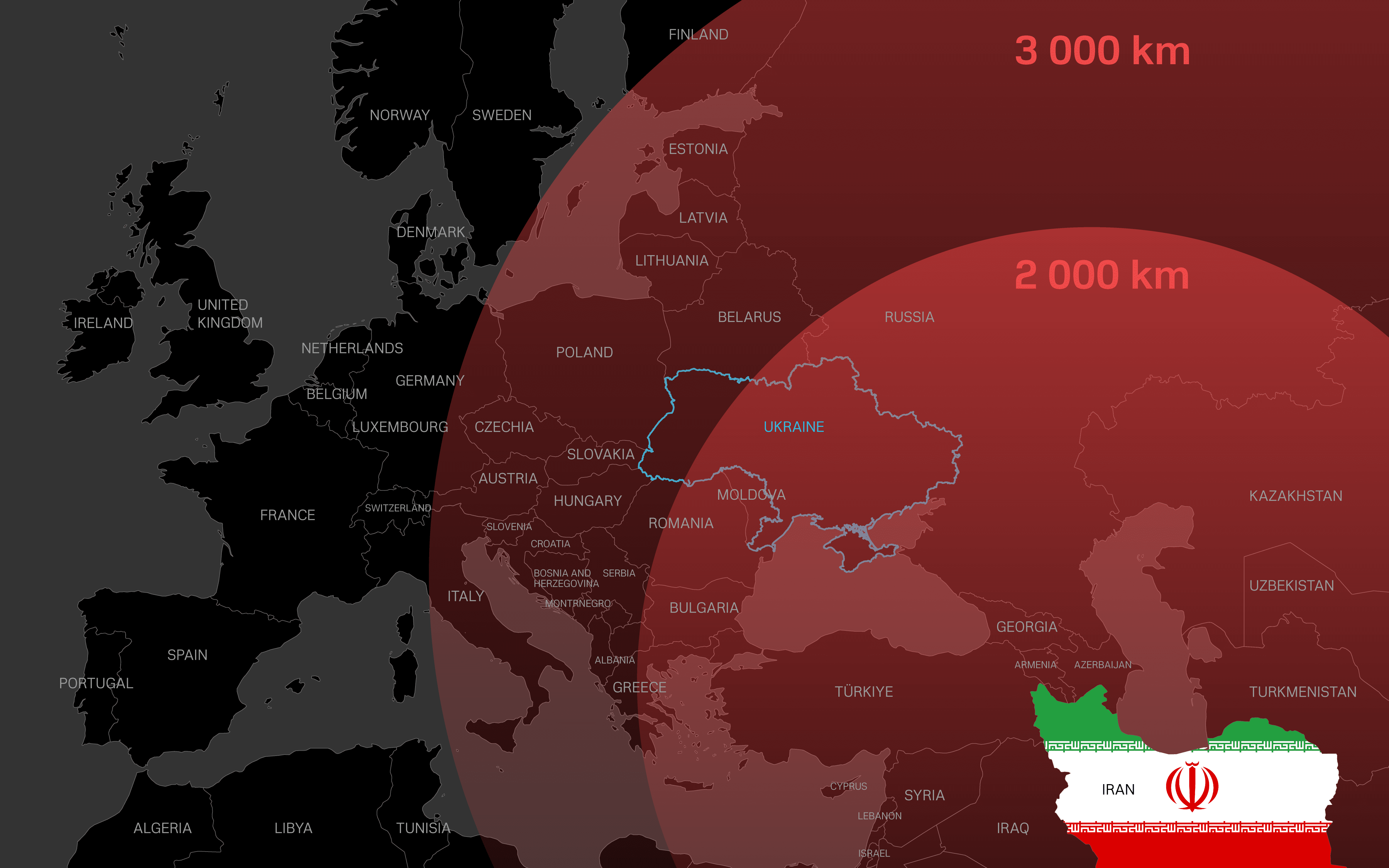
The primary concern for European security centers on Iran's liquid-fueled ballistic missiles, specifically the Khorramshahr, Sejjil, Ghadr, and Emad models. These systems have demonstrated ranges of approximately 2,000 kilometers. The Khorramshahr is particularly notable for its massive 1,800-kilogram warhead. Experts suggest that if this payload is reduced, the missile’s operational range could potentially extend to 3,000 kilometers.
From launch sites in northwestern Iran, these medium-range systems can reach several European nations. At a 2,000-kilometer range, countries such as Greece, Bulgaria, Romania, Ukraine, and Moldova are within striking distance, accoeding to Defense Express. If the Khorramshahr achieves its maximum projected distance of 3,000 kilometers, the threat envelope expands significantly to include major European capitals such as Berlin and Rome.
In addition to ballistic threats, Iran maintains a stockpile of Soumar cruise missiles with estimated ranges between 2,000 and 3,000 kilometers. Long-range drones also play a central role in Tehran’s strategy, led by the Shahed-136, which can travel up to 2,500 kilometers. Other models, such as the Arash-2 and the jet-powered Karrar, offer ranges between 1,000 and 1,600 kilometers.
While the theoretical reach of these weapons is significant, Europe is protected by a sophisticated, multi-layered defense network. Key components include the US Aegis Ashore site in Romania, which utilizes SM-3 interceptors, and Arleigh Burke-class destroyers stationed in the Mediterranean. Furthermore, Germany bolstered its national defenses by acquiring the Israeli-made Arrow 3 system, which achieved preliminary operational readiness in late 2025.
The effectiveness of an Iranian strike toward Europe is also limited by the necessity of overflying heavily monitored and contested airspace. Any such attack would likely need to pass through the air defense zones of Iraq, Syria, Jordan, or Turkey, where international coalition forces maintain active interception capabilities, according to Defense Express.
Earlier, an Iranian drone struck a British Royal Air Force base in Cyprus, triggering a high-level security response and the evacuation of military families. The Akrotiri airbase was targeted by a small unmanned aerial vehicle that impacted the airfield. While the strike caused minor damage, no casualties were reported among the approximately 2,000 service members and families stationed there.
Discuss this article:
-9a7b3a98ed5c506e0b77a6663f5727c5.png)

-72b63a4e0c8c475ad81fe3eed3f63729.jpeg "Photo of Cyril Barabaltchouk")

-111f0e5095e02c02446ffed57bfb0ab1.jpeg "Photo of Roman Kohanets")