- Category
- Latest news
Is Ukraine Developing a Fourth Neptune Missile? Analysts Point to Fresh Clues
 Prefer U24 Media on Google
- Authors

-111f0e5095e02c02446ffed57bfb0ab1.jpeg "Photo of Roman Kohanets")
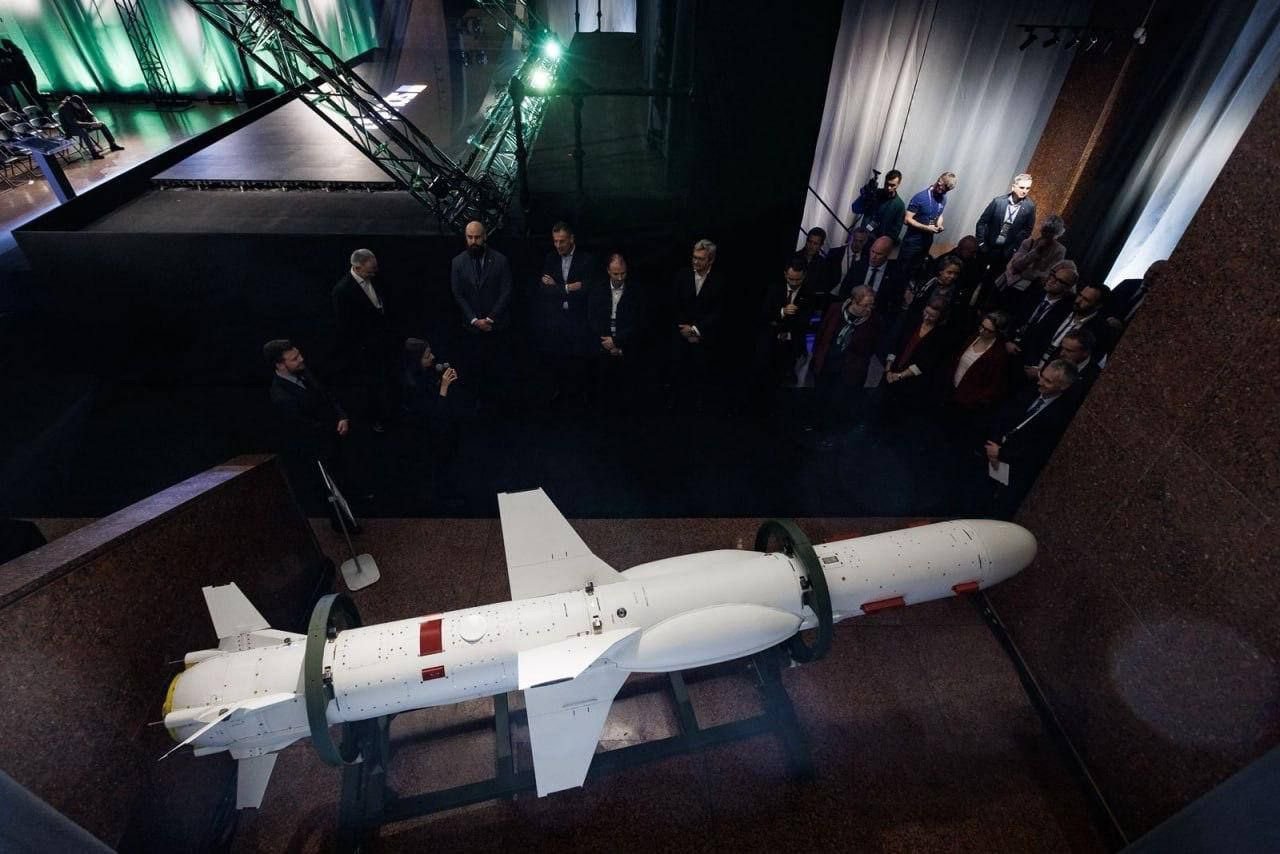
Western defense analyst H.I. Sutton have discussed whether Ukraine’s R-360 “Neptune” cruise missile family now includes more than the three commonly described versions—ship-launched, ground/coastal (shore-based) and air-launched with at least one report arguing a fourth variant has been counted.
According to the analyst, descriptions continue to treat Neptune primarily as an anti-ship missile adapted for land strikes and undergoing incremental modifications.
Developed by the Kyiv design bureau KB Luch, the R-360 Neptune is a subsonic cruise missile originally optimized for maritime targets but adapted over time for wider mission sets.
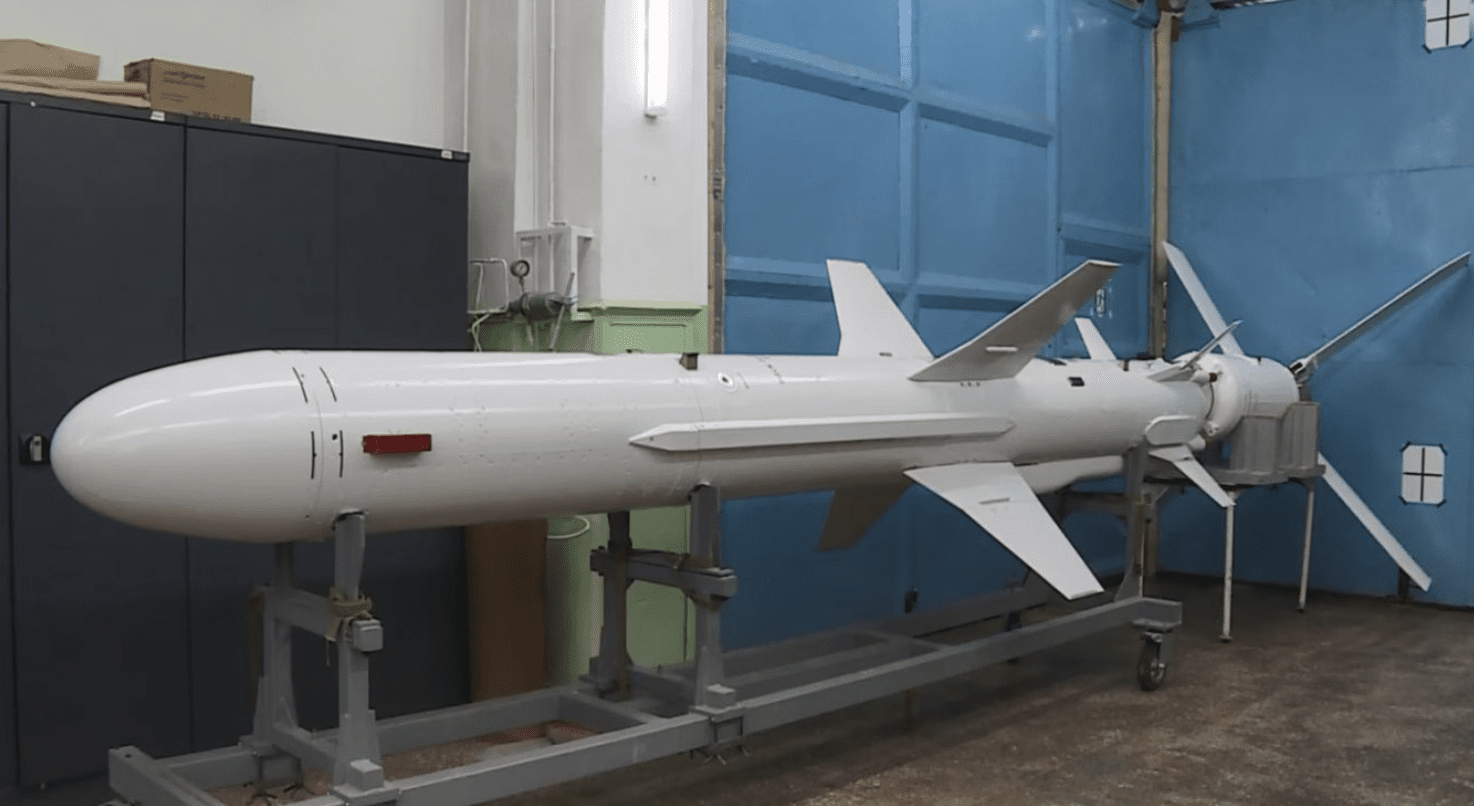
Ukrainian defense outlet Militarnyi lists the weapon’s baseline characteristics as roughly 5.5 m in length, a launch mass near 870 kg, a warhead of about 150 kg, and an operational range commonly cited up to ~280 km for earlier variants; more recently public reporting has discussed extended-range modifications and concept studies.
What “three” versus “four” versions means
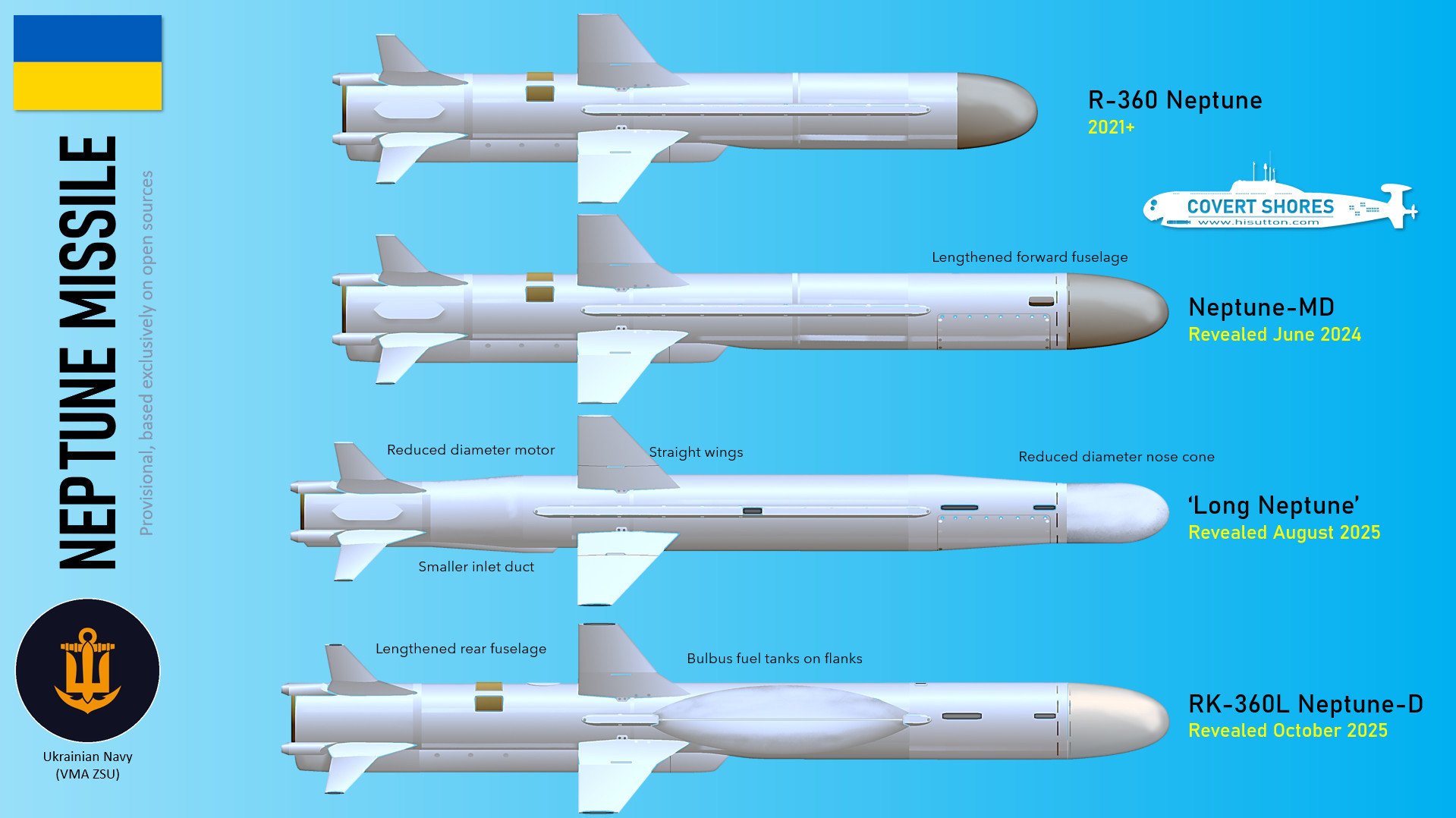
Naval (ship-launched) Neptune—the original R-360 configuration designed for launch from surface vessels; optimized for anti-ship missions with maritime seekers and shipboard integration;
Coastal / shore-based Neptune—ground-launched launcher version adapted for coastal defense and land-to-sea strikes; uses truck or trailer launchers and shore-optimized targeting and comms;
Air-launched Neptune—aviation-adapted derivative configured for carriage and release from aircraft (or UAVs); retains anti-ship guidance but adds launch-safe structural and avionics modifications;
Long-range / Neptune-D (R-360L)—extended-range land-attack derivative revealed in 2024–25: lengthened fuselage and additional fuel capacity (bulbous tanks in some photos), reduced nose/motor diameters in some marks, and possible heavier or modular warhead options for deeper land strikes.
The suggestion of a fourth version in H.I. Sutton commentary appears to stem from two different possibilities that are not mutually exclusive in open sources: weaponized derivatives or special mission adaptations (for example, an explicit long-range land-attack derivative), and experimental or prototype integration on new launch platforms or with modified guidance/booster packages.
According to the Ukrainian military outlet Defense Express, mentions of an extended-range or modified Neptune derivative should be viewed as signs of ongoing development and testing rather than evidence of a fully fielded, separate “fourth” model.
Open-source limits and what is verifiable
Open-source technical analyses and defense reports describe the Neptune missile’s core parameters and operational use—including several high-profile maritime strikes—but provide no clear evidence of four distinct, service-ready production variants in public inventories.
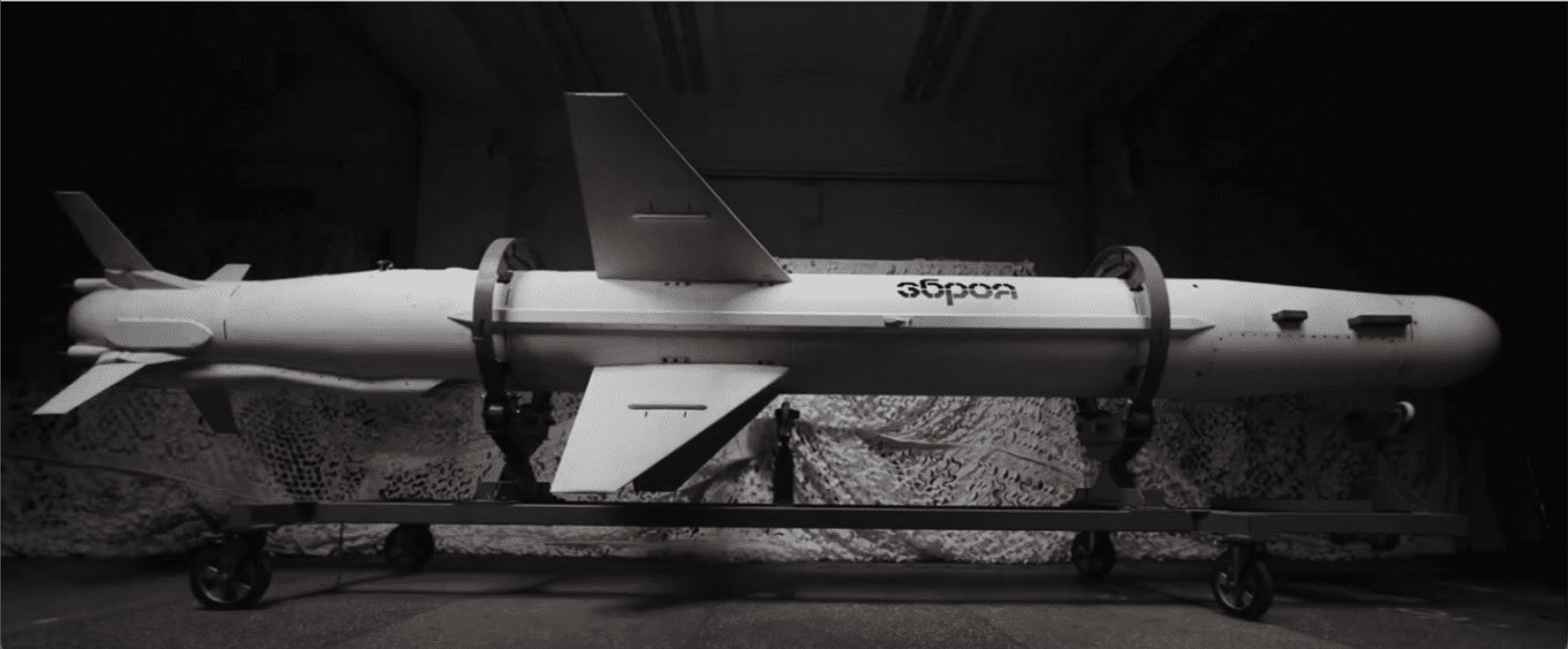
According to the Ukrainian military outlet Defense Express, mentions of an extended-range or modified Neptune derivative should be viewed as signs of ongoing development and testing rather than evidence of a fully fielded, separate “fourth” model.
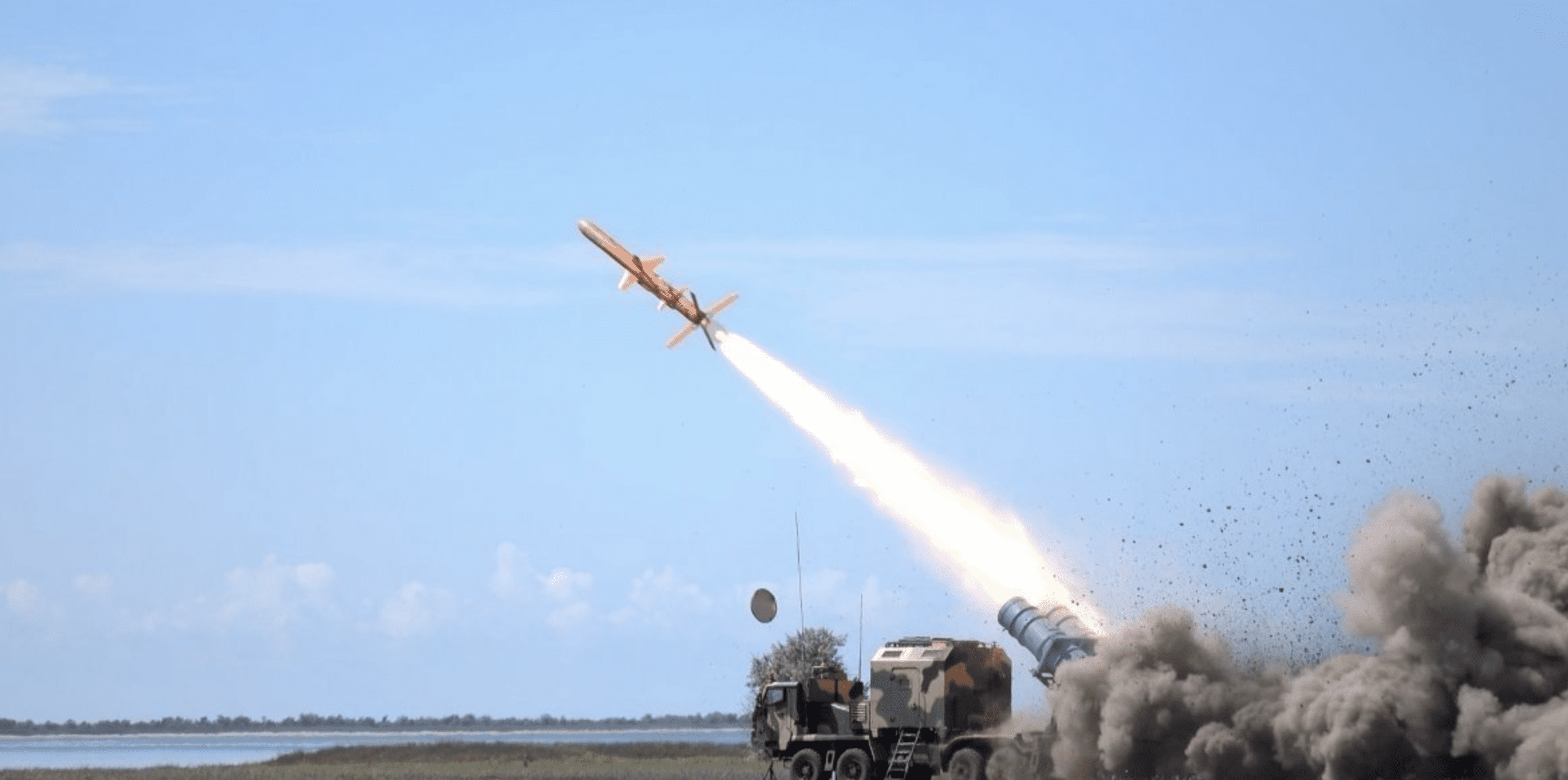
Earlier, it was reported that Ukraine has showcased a previously undisclosed variant of its Neptune cruise missile (informally dubbed “Bulky Neptune”) which features visible mid-body bulges likely intended as conformal fuel tanks to increase range.
Discuss this article: