- Category
- Latest news
Kazakhstan Is Building NATO-Standard Shell Factories—and Russia Is Not Happy
 Prefer U24 Media on Google
- Authors


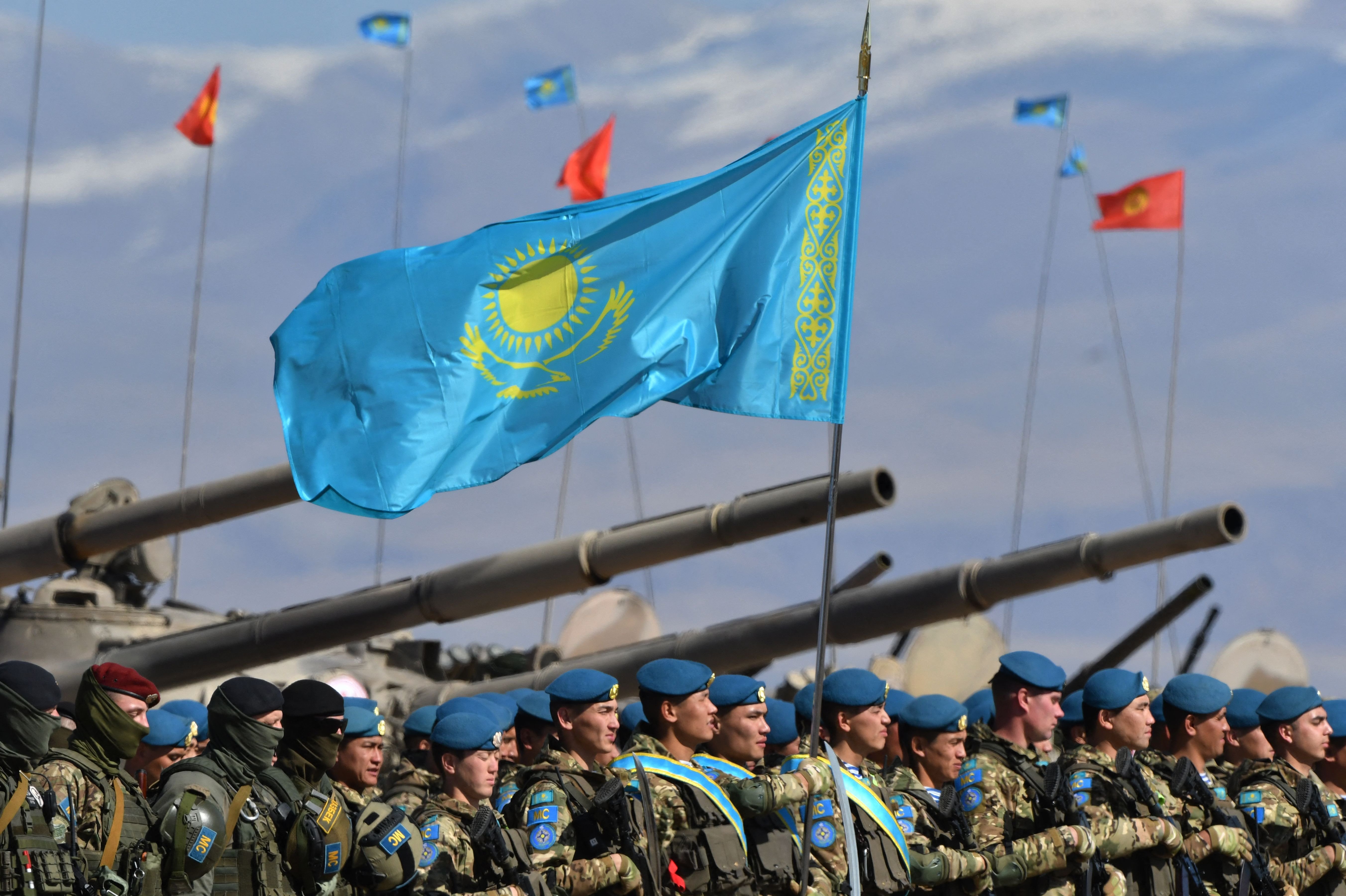
Kazakhstan is moving ahead with a $1 billion plan to build NATO-standard artillery ammunition factories to reduce its reliance on Russian models—a shift that has already drawn sharp criticism from Moscow, where officials have labeled the move “unfriendly”, according to reporting by The Moscow Times on December 17.
The initiative marks a significant shift for the Central Asian state, which has historically lacked domestic production not only of artillery ammunition and mines, but even small-arms cartridges.
We bring you stories from the ground. Your support keeps our team in the field.
A senior Kazakh military official told RTVI that this left the country’s armed forces critically dependent on inherited Soviet-era stockpiles and external supplies, primarily from Russia and other former Soviet republics.
“Kazakhstan for a long time had no domestic production not only of artillery shells and mines, but even ammunition for small arms. As a result, the combat readiness of our army critically depended on Soviet-era warehouses located on Kazakh territory and on supplies from Russia and other former Soviet republics,” the official said.
He added that in the current geopolitical environment, establishing an independent ammunition production base has become “extremely important” for national security.
Under the ASPAN project, the four planned plants will manufacture both legacy-type munitions and NATO-standard ammunition. The first facility is expected to come online in 2027, according to RTVI, with the remaining plants to follow in subsequent phases.
The announcement has drawn a sharp response from Russian officials. Alexey Zhuravlev, first deputy chairman of the Russian State Duma’s defense committee, described Kazakhstan’s move as “unfriendly” toward Russia.
“We try not to notice how a seemingly brotherly republic has briskly abandoned not only the Russian language but even Cyrillic. How they set up ‘yurts of resilience’ in support of Ukraine. And now they are switching to NATO standards for ammunition, clearly planning to abandon Russian weapons models in the future and replace them with Western ones,” Zhuravlev told Gazeta.ru.
Zhuravlev also pointed to Kazakhstan’s long-standing engagement with NATO, recalling that the country joined the North Atlantic Cooperation Council in 1992 and signed the Partnership for Peace framework agreement in 1994.
“The question immediately arises—why is NATO so interested in Kazakhstan? Maybe because it borders Russia, and from this country it’s possible to create another Russophobic outpost? <…> We all know how cooperation with NATO turned out for Kyiv,” he said.
Earlier, reports emerged that at least 270 citizens of Kazakhstan have been confirmed dead or missing while fighting for Russia in its war against Ukraine.
Discuss this article:



-111f0e5095e02c02446ffed57bfb0ab1.jpeg "Photo of Roman Kohanets")

-72b63a4e0c8c475ad81fe3eed3f63729.jpeg "Photo of Cyril Barabaltchouk")


-c439b7bd9030ecf9d5a4287dc361ba31.jpg "Photo of Katherina Popilnichenko")