- Category
- Latest news
Kremlin’s Youth Monitoring Plan Moves “Snitching” Tactics Online
 Prefer U24 Media on Google
- Authors

-111f0e5095e02c02446ffed57bfb0ab1.jpeg "Photo of Roman Kohanets")
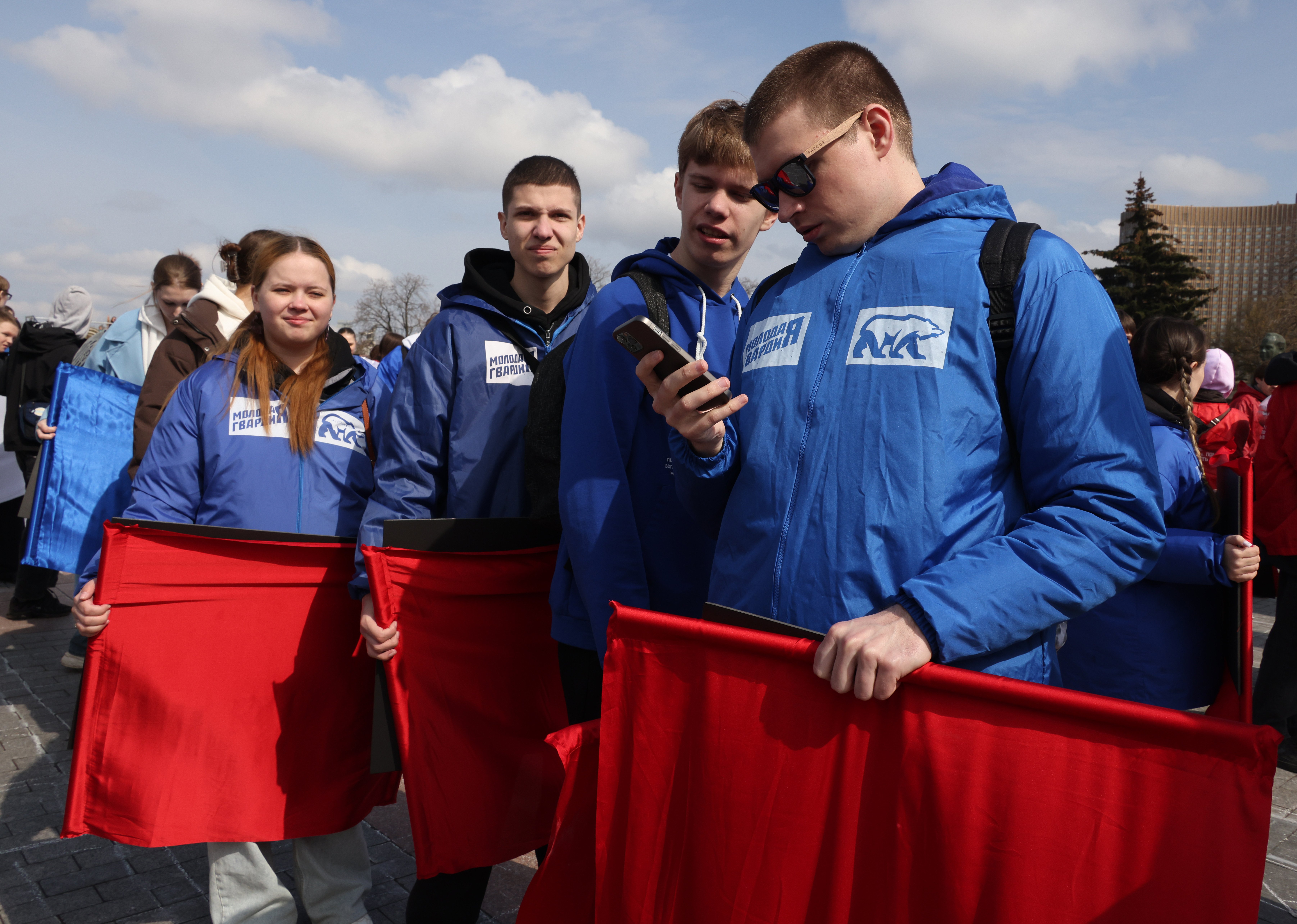
Russia has approved a 2026–2030 plan to monitor young people’s online activity under the banner of preventing “negative social phenomena” and “destructive behavior,” according to Ukraine’s Center for Countering Disinformation on May 5.
The plan was formalized by Russian Prime Minister Mikhail Mishustin and published on Russia’s official legal information portal on May 4. The Ukrainian agency reported that the document contains 41 measures, including internet-activity monitoring, nationwide conferences, seminars, and specialist training on security issues.
We bring you stories from the ground. Your support keeps our team in the field.
Under Russian law, “young people” means citizens aged 14 to 35 inclusive. Habr also described the affected category as people aged 14 to 35, noting that this includes not only schoolchildren and students but also adults who are active online.
Key measures listed in the document include:
Internet monitoring: The plan includes monitoring youth activity online. Habr reported that the document names “monitoring activity on the internet”;
Cyber squads and media patrols: Regional authorities are instructed to create or activate “cyber squads” and “media patrols” in educational institutions. These groups are expected to monitor social networks, messengers, forums, and video platforms;
Who joins these groups: The document refers to involving active students from vocational and higher education institutions in these cyber squads and media patrols;
What they look for: Rosmolodezh described the monitored content as materials linked to suicide, drugs, bullying, false information, attacks on educational institutions, and other threats to young people’s lives and health;
Where reports go: Information found by cyber squads and media patrols is sent to relevant agencies for review and possible content blocking;
")
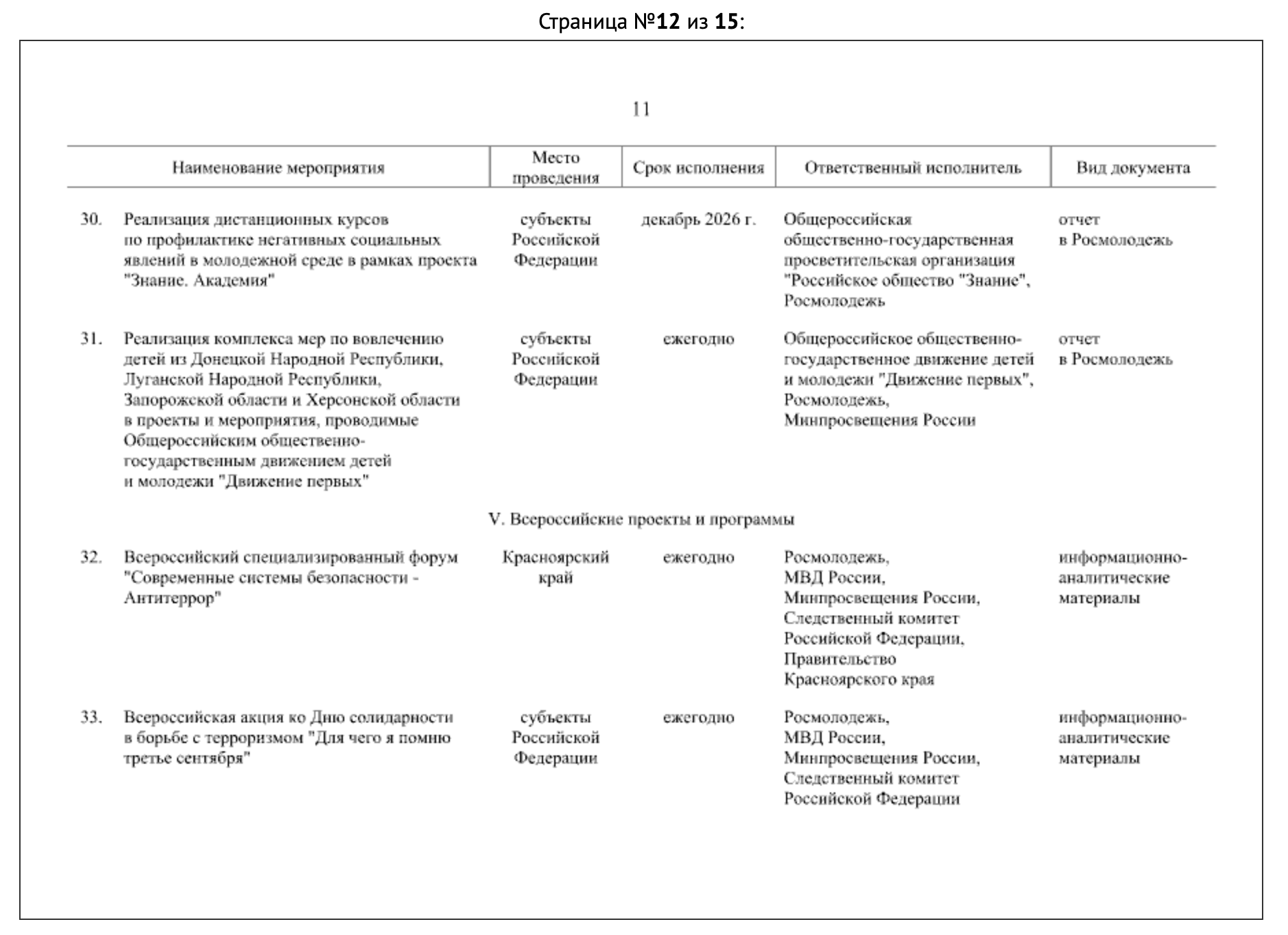
A page from Russia’s 2026–2030 youth policy plan lists measure No. 31, which requires annual work across Russian regions to involve children from temporarily occupied parts of Donetsk, Luhansk, Zaporizhzhia, and Kherson regions in projects run by the state-backed “Movement of the First.” (Source: publication.pravo.gov.ru) School attack content: The document calls for an interagency mechanism to quickly restrict regional media and popular social media communities from spreading materials about armed attacks on schools, violence, and cruelty involving minors;
Identifying minors: Regional governments are instructed to carry out measures to identify minors allegedly planning unlawful acts aimed at destabilizing the security situation. Information about such minors is to be passed to Russia’s Interior Ministry;
Unauthorized protests and sabotage: Rosmolodezh said the plan covers risks such as the dissemination of false information, the involvement of minors in unauthorized events, and sabotage;
Training teachers and specialists: The plan includes training educational psychologists, social teachers, deputy heads of educational institutions responsible for security, and social-support specialists;
Preventive talks: Regional education authorities and the Interior Ministry are tasked with holding regular preventive conversations with schoolchildren and vocational students on criminal and administrative liability for extremist and terrorist crimes;
Reporting requirement: Federal agencies and organizations responsible for the measures must submit implementation updates to Rosmolodezh by February 25 each year. Rosmolodezh must then submit an annual report to the Russian government.
The Ukrainian Center for Countering Disinformation described the plan as a system for internet denunciations targeting young people. It stated that the Kremlin is moving from blocking external information to internal surveillance, using students and educational institutions to monitor content and “unreliable” posts by their peers.
The plan also appears to extend an existing system in which young people are not only monitored, but actively drawn into state messaging efforts, as Russia had already built a network of youth movements used for military-patriotic education before expanding those structures into media training programs.
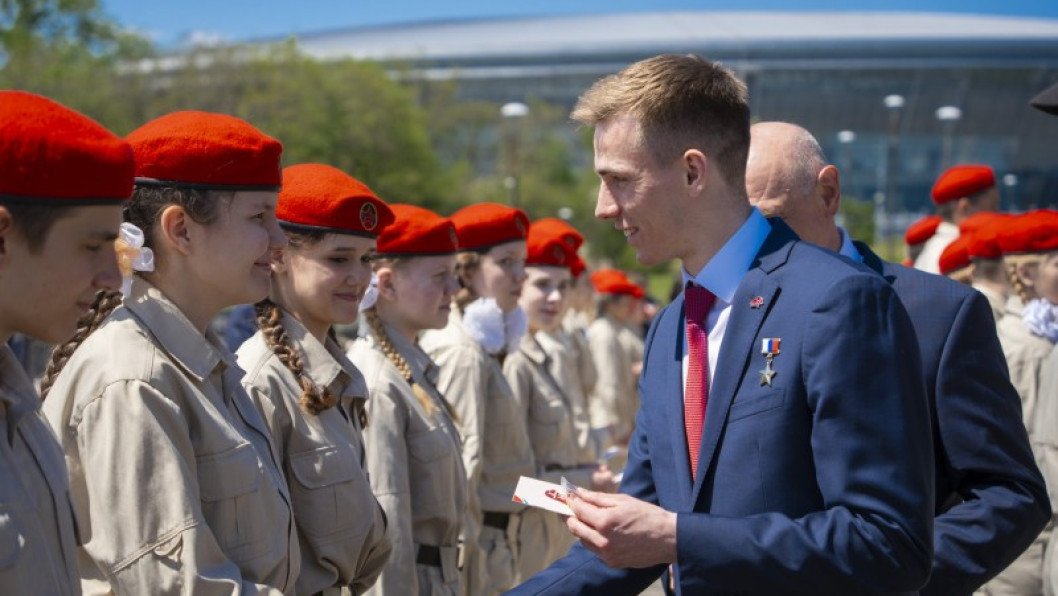
The Center Countering Disinformation reported that groups including Yunarmiya and the Movement of the First are now being used to teach children and teenagers how to create content, shape narratives, and influence audiences.
The programs were organized through competitions, seminars, and practical lessons tied to Russian state and military-patriotic institutions. Participants were reportedly trained in video production, social media promotion, and public messaging, turning youth organizations into channels for spreading Kremlin-approved narratives.
The development followed earlier efforts to involve children in militarized activities, including preschool drills and contests linked to drones in occupied Luhansk. Russian authorities presented those activities as educational or patriotic initiatives, while Ukrainian officials described them as part of a wider system of indoctrination.
Discuss this article:
-4a56a6b482ec132402c16ef6fcabf9a2.png)

-c439b7bd9030ecf9d5a4287dc361ba31.jpg "Photo of Katherina Popilnichenko")