- Category
- World
War Games Show How 12,000 AI Drones Could Shatter Russia’s Baltic Invasion Plan
 Prefer U24 Media on Google
- Authors


A NATO-linked war game has suggested that Russia could seize significant territory in Lithuania if it attacked from three directions and used nuclear threats to deter a collective NATO response—but the scenario changes dramatically if Lithuania fields around 12,000 AI-enabled strike drones, The Times reported on May 27.
According to the simulation, conducted by former Pentagon officials and US military officers, Russian forces could initially make gains against Lithuania and a German brigade stationed in the country while NATO allies debate how to respond.
We bring you stories from the ground. Your support keeps our team in the field.
But if Lithuania had a large fleet of suicide drones, the Russian offensive would be at risk of collapse within days.
European military officials increasingly believe the period before the 2028 US presidential election could be among the most dangerous for the continent, as uncertainty over Washington’s long-term NATO commitments grows and Russia continues its war against Ukraine.
The scenario examined a possible Russian escalation against NATO after Moscow’s war in Ukraine stalled. In such a case, the Russian leader could seek to widen the crisis and force a freeze on terms more favorable to Moscow.
🚨🇺🇦🇩🇪 BREAKING: On the front line, Ukrainian troops are now deploying advanced German-made kamikaze drones HF-1 and HX-2 to carry out precision strikes against Russian positions.
— Defence Index (@Defence_Index) April 8, 2026
The systems, developed by Helsing, are being used by units such as the Inquisition Battalion,… pic.twitter.com/Y19NAyDFAT
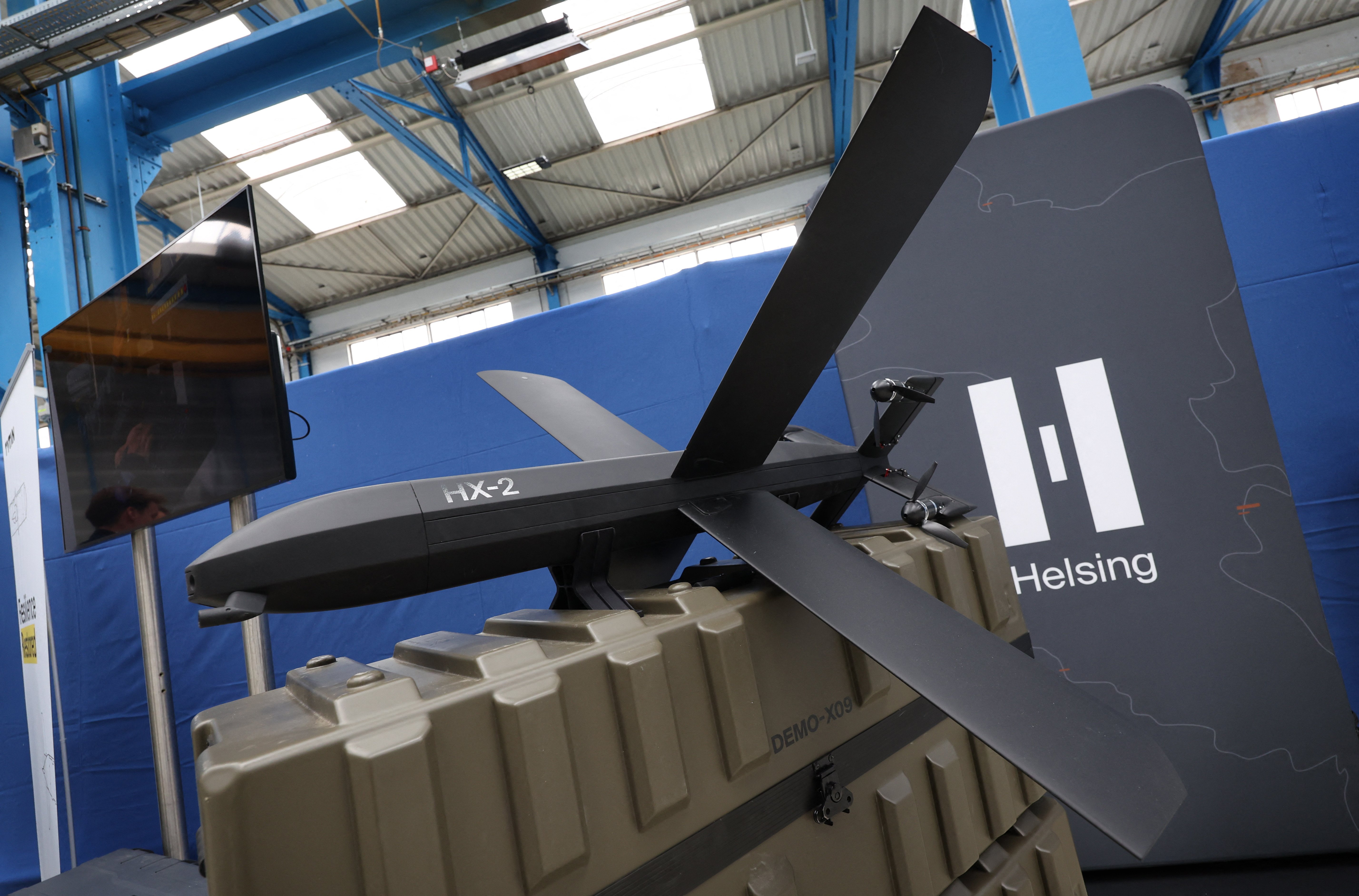
The war game was organized by Helsing, a German defense technology company, though the company did not take part in the simulation itself. Helsing says it could deliver around 12,000 HX-2 strike drones to Lithuania by the end of the year.
“We are able to do this quickly and at scale. It seemed to us that in Lithuania’s case, this could really change the situation for the better by helping close gaps in the Baltic states’ defense system,” Ben Tallis, Helsing’s director of strategic planning, told The Times. “But you can never be sure what result independent military exercises will produce—that is exactly why we organized them.”
In the baseline scenario, Lithuania and the German brigade defend alone while NATO allies struggle to agree on a joint response. Russian forces attack from three directions.
From the east, Russian troops advance toward the Ignalina nuclear power plant and wait for armored reinforcements to push deeper into Lithuania.
From the south, forces attacking from Belarus half-encircle Vilnius by the end of the fifth day. From the west, Russian troops push out of Kaliningrad and seize roughly 30 kilometers of territory, then declare it covered by Russia’s nuclear umbrella.
In that scenario, NATO hesitates to launch a collective military response.
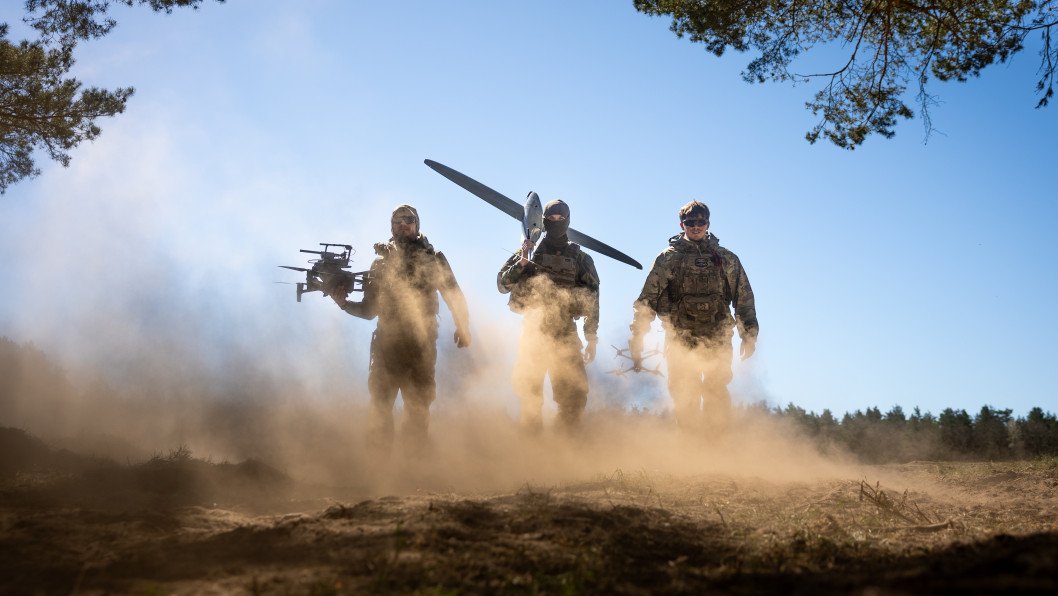
But the simulation found that large numbers of suicide drones could change the outcome. If Lithuanian forces were equipped with HX-2 drones, Russian forces would lose more than a third of their attacking troops in the first 10 days, according to the results cited by The Times.
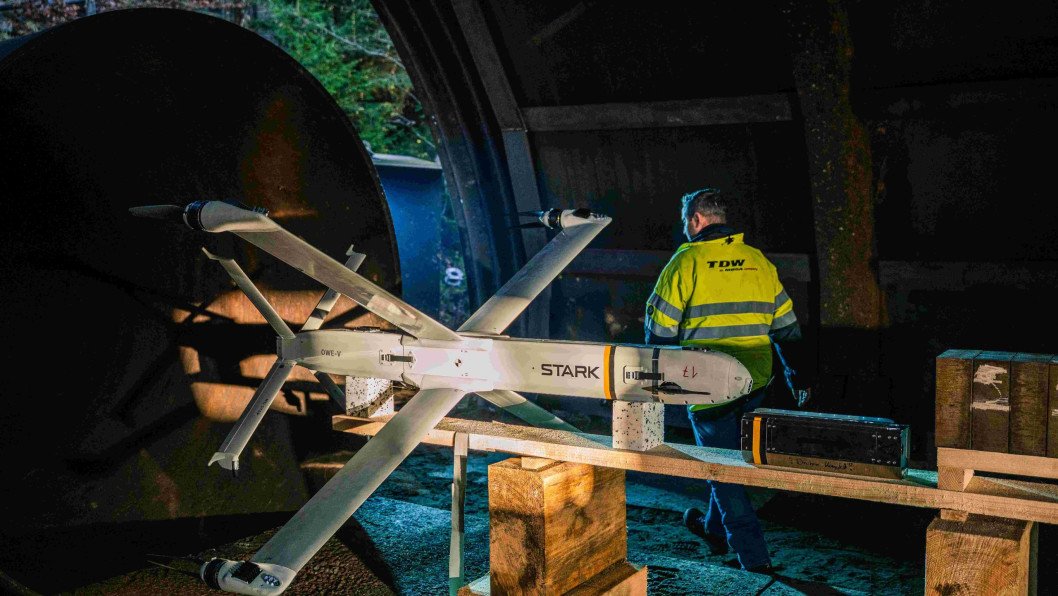
The HX-2’s advantage lies in its AI-enabled guidance system, which can continue directing the drone toward a target even if navigation systems are disrupted by enemy electronic warfare. In recent tests, HX-2 drones reportedly operated in semi-autonomous swarms, with one pilot controlling 10 or more drones at once.
Greg Melcher, a former director of operations at the US Navy Department who oversaw the war game, said the results showed that NATO’s frontline states could buy crucial time even if larger allies are slow to respond.
“Most countries on the frontline flank can create the ability to deter and, if necessary, defeat up to three first-echelon Russian armies within a week or two. That would buy the time needed for forces from coalitions of the willing or under NATO Article 5 [on collective defense] to arrive and help defeat Russia’s second-echelon armies,” Melcher said.
Helsing drones have been used in Ukraine for about a year. Today, their accuracy in combat conditions is said to have improved to around 60–80%.
Earlier, Ukrainian Foreign Minister Andrii Sybiha joined his allied counterparts at an informal meeting of the NATO-Ukraine Council. He urged the bloc to seize a decisive moment in the war by increasing pressure on Russia and deterring the growing threats from neighboring Belarus.
Discuss this article:

-111f0e5095e02c02446ffed57bfb0ab1.jpeg "Photo of Roman Kohanets")
-421e8a9c474cc6ae67d60a56d7572c56.jpg "Russian ruble coins and one hundred dollars are seen on a table. (Source: Getty Images)")
-72b63a4e0c8c475ad81fe3eed3f63729.jpeg "Photo of Cyril Barabaltchouk")

-c439b7bd9030ecf9d5a4287dc361ba31.jpg "Photo of Katherina Popilnichenko")