- Category
- Latest news
NATO Member’s Firm Reportedly Aiding Russian Arms Industry to Evade Sanctions
 Prefer U24 Media on Google
- Authors


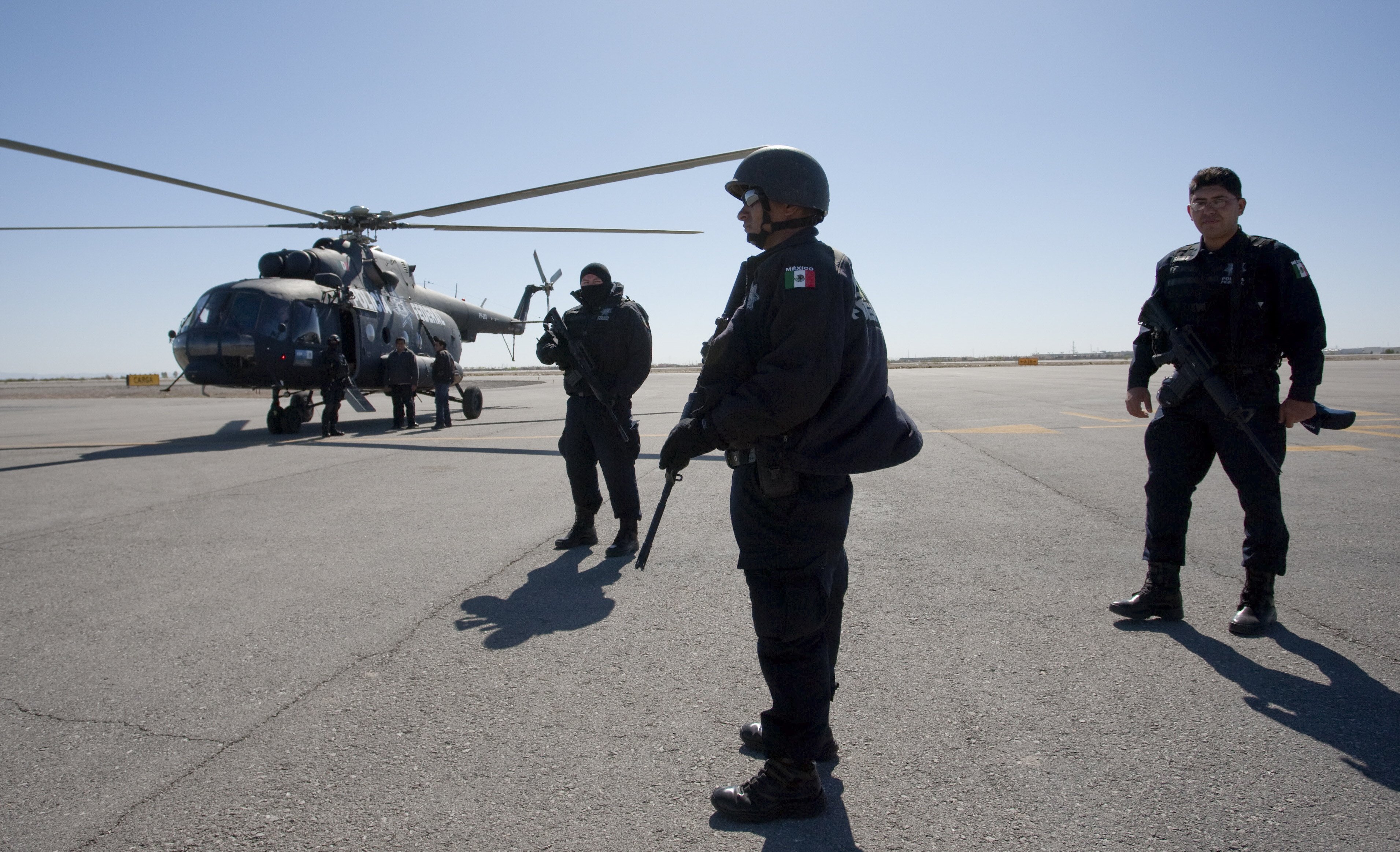
A Hungarian private company, Milspace Kft, has reportedly been implicated in a scheme to help Russian defense enterprises bypass international sanctions by facilitating helicopter repair contracts abroad.
The findings are based on internal documents obtained during a cyber operation conducted by the open-source intelligence group InformNapalm.
According to the documents, Milspace Kft offered Mexican aviation firm Personas y Paquetes Por Aire a workaround to avoid restrictions imposed on Russian defense companies, including Kazan Helicopter Plant and Mil Design Bureau, both of which are under sanctions due to Russia’s war against Ukraine.
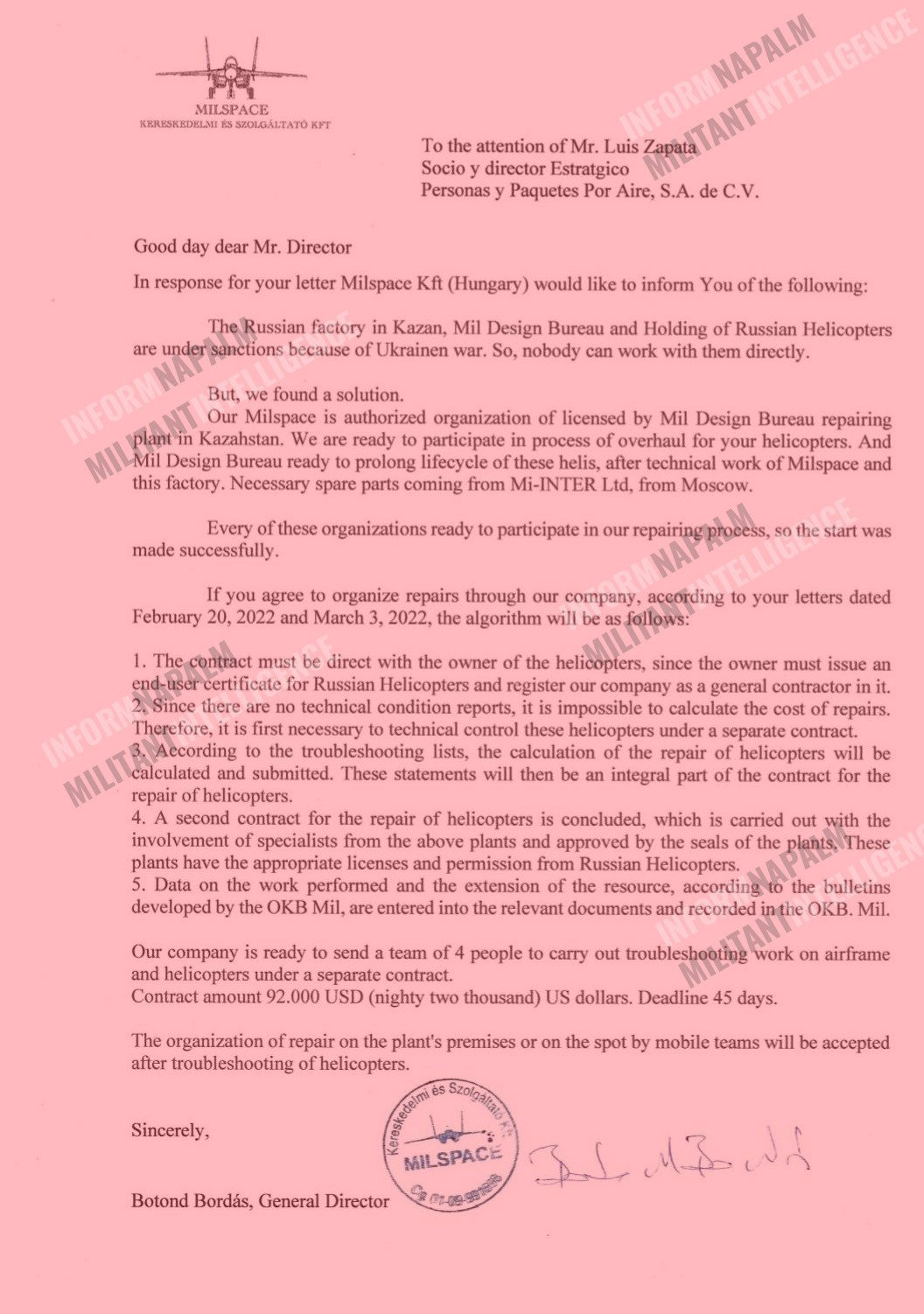
The Hungarian company proposed the following scheme:
Milspace Kft would act as the official contractor;
The repair work would be conducted at a Kazakh facility licensed by Russia’s Mil Design Bureau;
Spare parts would be delivered from Moscow by a supplier named Mi-INTER Ltd;
All technical operations would be coordinated with Mil and the Russian state-owned company Helicopters of Russia, which is part of the state conglomerate Rostec.
The letter also outlined a separate diagnostic contract valued at $92,000.
While Milspace Kft is formally a private limited liability company, InformNapalm notes that military-technical cooperation involving Soviet-era helicopters usually requires coordination with government institutions, especially in NATO member states.
Investigators point out that Milspace’s access to Russian documentation, logistical connections with Moscow, and collaboration with licensed facilities in Kazakhstan indicate either unofficial government support or a permissive attitude from Hungarian authorities.
The operation has drawn particular attention given Hungary’s past opposition to European Union sanctions against Russia and its resistance to NATO mechanisms supporting Ukraine.
-f02638173e8cd32dfe35ee9e9a32fa21.jpg)
These actions, combined with the activities of Milspace Kft, suggest that Hungary is allowing — or at least not preventing — its companies from engaging in defense-related business that strengthens Russia’s military capabilities.
InformNapalm compares this case to earlier incidents in which Russian companies used Kazakhstan as a transit hub to service Su-30SM fighter jets with Western-made avionics, including French Thales and Safran components, despite export controls.
The documents obtained by InformNapalm stem from the wider cyber operation OpsHackRussia’sDay, which exposed internal communications among Russian defense contractors and their foreign partners.
Earlier, the United States lifted sanctions on Hungary’s Russian-built Paks II nuclear plant, a move praised by Hungarian Foreign Minister Péter Szijjártó as a sign of improved ties under President Donald Trump. The project, led by Russia’s Rosatom, has faced criticism due to its reliance on Russian financing and technology despite the ongoing war in Ukraine.
Discuss this article:



-c439b7bd9030ecf9d5a4287dc361ba31.jpg "Photo of Katherina Popilnichenko")