- Category
- Latest news
Norway and Ukraine Team Up to Make NASAMS Cheaper—and Harder to Overwhelm
 Prefer U24 Media on Google
- Authors


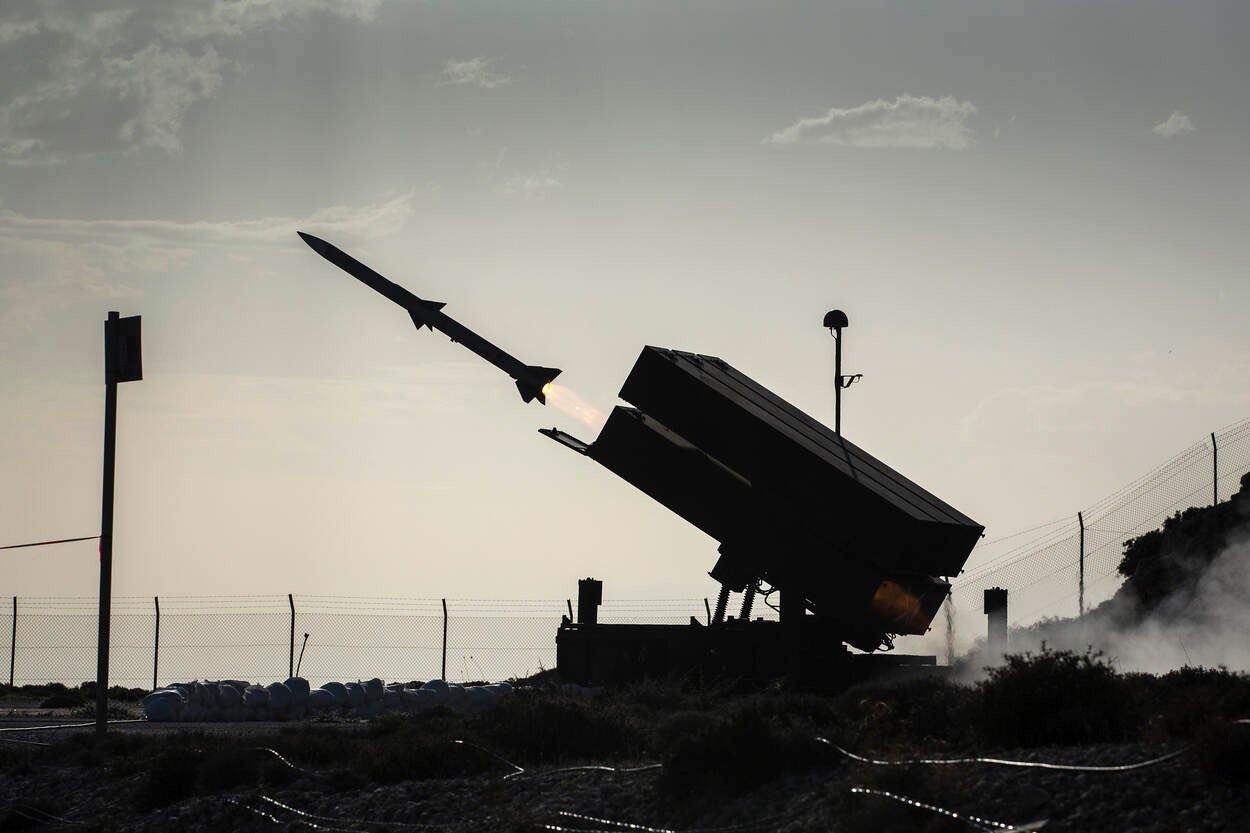
Norway is moving to integrate Ukrainian-made interceptors and effectors into the NASAMS air defense system as part of a deeper defense-industrial partnership with Kyiv, European Pravda reported on January 12, 2026.
Speaking in Kyiv, Norwegian Foreign Minister Espen Barth Eide confirmed that Oslo is working with Ukraine to adapt locally produced weapons for use within the NASAMS architecture, an effort aimed at easing pressure on limited stocks of expensive Western missiles.
We bring you stories from the ground. Your support keeps our team in the field.
As Army Recognition notes, the initiative reflects a broader push among NATO partners to find more scalable and cost-effective air defense solutions as Russia continues high-tempo missile and drone attacks.
According to Eide, Norway’s goal is not to redesign NASAMS itself, but to expand the range of interceptors the system can employ.
“The key challenge for air defense today is that many missiles are costly and produced in limited quantities,” he said, emphasizing the need for weapons that can be manufactured more cheaply and in larger volumes without altering NASAMS command, radar, or launcher systems.
🇳🇴🇺🇦 Norway wants to integrate Ukrainian interceptors into NASAMS air defense system, - Foreign Minister
— MAKS 25 🇺🇦👀 (@Maks_NAFO_FELLA) January 12, 2026
Norway is working intensively to provide Ukraine with more missiles, as well as to develop partnerships with Ukrainian defense manufacturers.
According to him, the goal of… pic.twitter.com/c7SXsVZUoO
Army Recognition has previously highlighted that this kind of interceptor diversification is increasingly seen as essential for sustaining air defense over long periods of active hostilities.
The move builds on earlier political signals. In late August 2025, Ukrainian President Volodymyr Zelenskyy said cooperation with Norway could eventually lead to joint production of NASAMS systems or components inside Ukraine. As Army Recognition observes, local production would significantly shorten supply chains and help Ukraine respond more quickly to battlefield demand.
No specific Ukrainian missile has yet been officially selected for integration. Instead, the focus remains on technical compatibility with NASAMS launchers, sensors, and fire-control networks. Potential candidates discussed by analysts cited by Army Recognition include short-range missiles derived from the R-73, infrared- and radar-guided variants of the R-27, and the UP-277 missile, which has an air-launched range of roughly 80 kilometers.
Footage of Ukrainian NASAMS shooting down Russian air targets with AIM-120 AMRAAMs.
— OSINTtechnical (@Osinttechnical) December 26, 2025
Lithuania, Norway, Canada, and the U.S. have supplied Ukraine with a number of the highly capable SAM systems. pic.twitter.com/9PFTUiFNeS
Ground-launched performance would be shorter, but still relevant for medium-range air defense tasks. Ukrainian interceptor drones are also being evaluated as possible “effectors” against low-cost threats such as Shahed-type attack drones, an option Army Recognition has identified as increasingly attractive due to cost asymmetry.
The integration effort is closely linked to manufacturing capacity. Eide described the initiative as a partnership with Ukrainian defense companies rather than a one-way supply arrangement. Army Recognition points out that this approach aligns with the realities of modern air defense, where production volume can matter as much as technical performance.
A NASAMS launcher in Ukraine 🇺🇦 loaded with 5 AMRAAM AIM-120 Surface-to-Air Missiles
— Ukraine Battle Map (@ukraine_map) February 7, 2024
NASAMS is the most effective and most advanced air defense system against cruise missiles in the world pic.twitter.com/QOAZ6Fz45y
Independent estimates cited by the outlet suggest Russia has averaged more than two dozen missile and drone launches per day against Ukraine since the start of the full-scale invasion, forcing Ukrainian air defenses to counter hundreds of targets each month.
At the same time, Norway continues to deliver additional Western-made air defense missiles to Ukraine, indicating that short-term reinforcement and long-term industrial solutions are being pursued in parallel. Army Recognition notes that this dual-track approach mirrors similar strategies adopted by other NATO states facing rapidly depleted interceptor stocks.
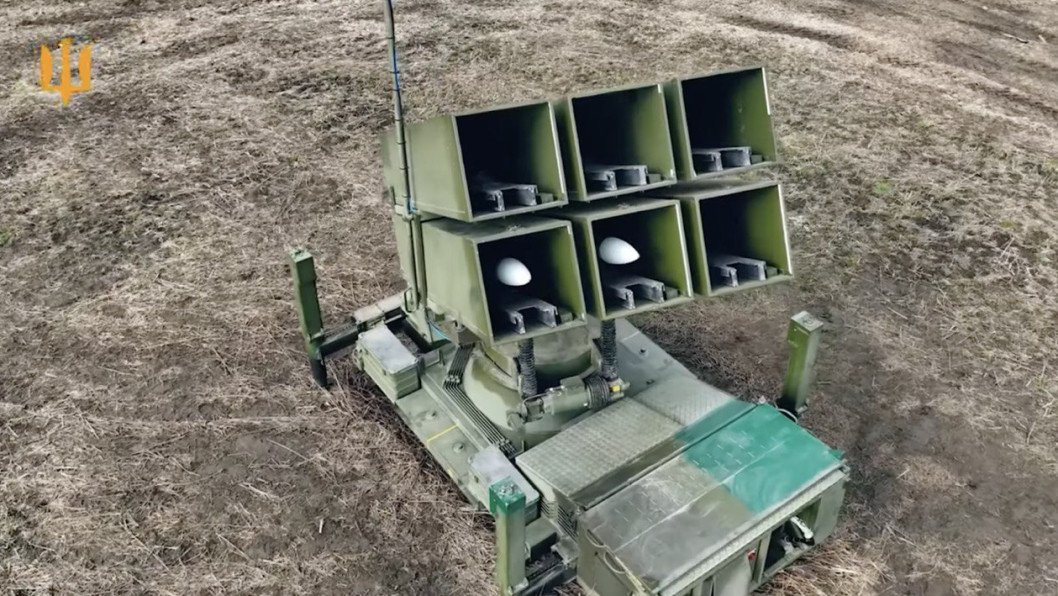
The NASAMS—short for Norwegian Advanced Surface-to-Air Missile System—is a mobile, medium-range air defense system developed by Kongsberg Defence & Aerospace in cooperation with Raytheon. As Army Recognition explains, its modular, networked architecture allows radars, launchers, and command posts to be dispersed while remaining fully integrated, improving survivability and flexibility under combat conditions.
At the unit level, a NASAMS platoon typically consists of three launchers carrying a total of 18 ready-to-fire missiles, supported by a three-coordinate radar and a fire-control console.
Army Recognition has repeatedly noted that while this setup enables rapid engagement—up to a full salvo in roughly 12 seconds—it also means interceptor stocks can be exhausted quickly during mass attacks. This operational reality underpins Norway’s push to expand the pool of compatible, lower-cost interceptors.
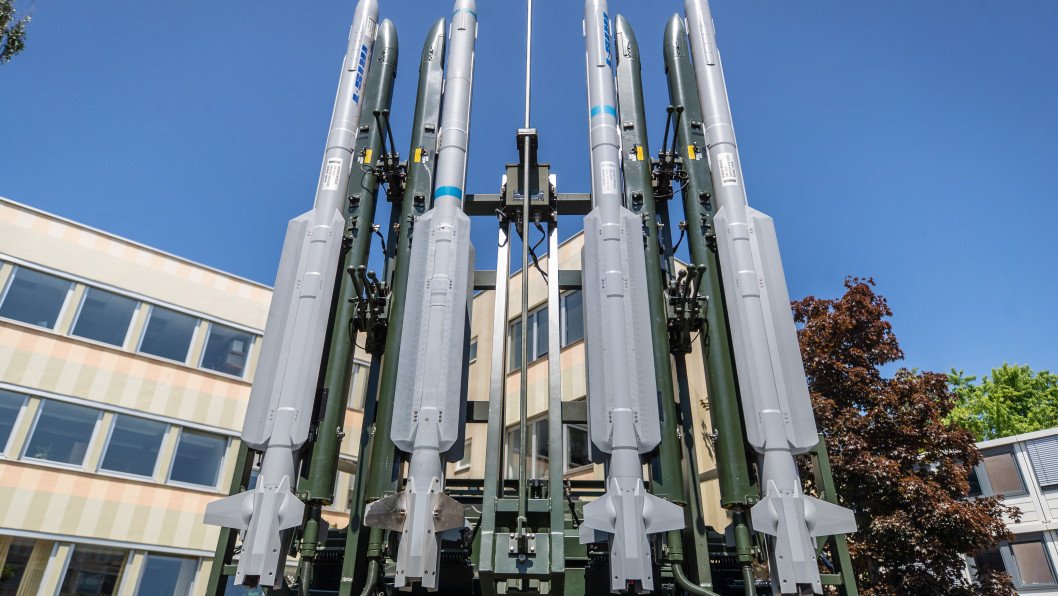
With engagement ranges of up to 30 kilometers and altitudes of up to 16 kilometers, NASAMS sits firmly in the medium-range category.
By broadening the types of interceptors it can employ, Norway and Ukraine hope to reduce dependence on a narrow set of high-cost missiles and make sustained air defense more feasible as the war continues—an approach Army Recognition describes as one of the most significant trends shaping modern air defense planning.
Earlier, Ukraine’s state defense conglomerate Ukroboronprom signed an agreement with Norwegian defense company Kongsberg Defense & Aerospace (KDA) to integrate domestic air defense systems into the NASAMS architecture.
Discuss this article:


-111f0e5095e02c02446ffed57bfb0ab1.jpeg "Photo of Roman Kohanets")
-f1e0a0eb8dc4159d1ee6f9483ef88571.jpg "Malambahe Sabtar Sabanal, a Philippine national identified by Ukrainian military intelligence as a Russian military recruit who was killed during assault operations in the Donetsk region. (Source: HUR)")

-72b63a4e0c8c475ad81fe3eed3f63729.jpeg "Photo of Cyril Barabaltchouk")