- Category
- Latest news
Putin Backs Creation of Russian Alternative to Nobel Prize in Literature
 Prefer U24 Media on Google
- Authors

-c439b7bd9030ecf9d5a4287dc361ba31.jpg "Photo of Katherina Popilnichenko")
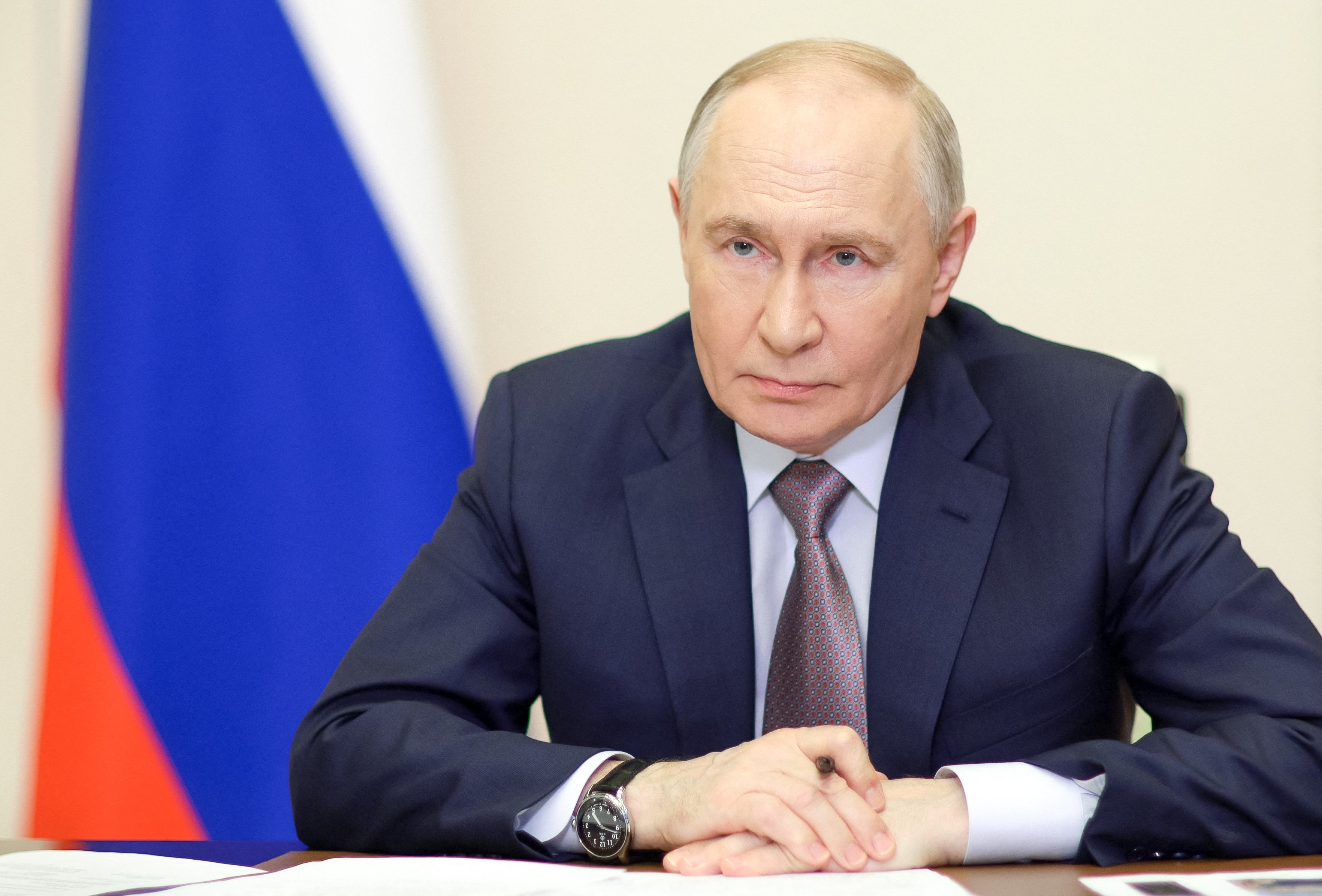
Vladimir Putin has approved a proposal by writer Zakhar Prilepin to establish an international literary award intended to serve as a rival to the Nobel Prize.
During a meeting of the Council for Culture, Putin promised to issue specific directives to the Ministry of Foreign Affairs to begin work on the initiative, according to The Moscow Times on March 26.
We bring you stories from the ground. Your support keeps our team in the field.
Prilepin argued that the Nobel Prize has become a "political instrument" over recent decades. He cited an anti-war letter signed by approximately 20 former laureates following Russia’s full-scale invasion of Ukraine as evidence of this shift.
According to Prilepin, a new award is necessary to ensure a "reasonable game" in global culture and should represent the interests of the "global majority."
The proposal suggests modeling the new honor after the "Slovo" National Literary Prize, which was established in Russia in 2024. Putin responded to the idea by stating, "We must do this, we will definitely work on it, I will also work with colleagues directly and instruct the Ministry of Foreign Affairs to do this."
Similar discussions have surfaced in Russia previously. In November 2025, a state commission on culture and "traditional spiritual and moral values" considered creating a Nobel alternative.
-e32dbbd9f523c857652f8cb2759eb32c.png)
Mikhail Razvozhayev, the governor of annexed Sevastopol, noted that the topic was being actively discussed across various regions. The initiative, also supported by Prilepin, suggested collaborating with China, India, Latin America, and Africa.
Vladimir Medinsky, a presidential aide and head of the Union of Writers of Russia, supported the move, claiming the Nobel Prize in Literature is "significantly losing its position" and "competing with the Nobel Peace Prize in marginality."
Razvozhayev added that Russia needs a highly-paid, prestigious award to evaluate "depth and contribution to world culture" rather than current political trends. He suggested such a prize would be welcomed by "friendly states" within BRICS and the CIS as a sign of "cultural multipolarity."
The debate intensified following the 2025 Nobel Prize in Literature being awarded to Hungarian author László Krasznahorkai. Prilepin described that selection as a "political instrument" used to promote a "Western ideological agenda."
He argued that Russia should develop its own versions of the Oscars and other international awards to avoid participating in a "foreign carnival" that he claims has lost "shame and conscience."
Zakhar Prilepin, a Russian former politician and combatant, arrived on the film set directly from the battlefield while still wearing the uniform he had used while fighting against Ukrainian forces.
During his interviews at the time, he continuously stated that all of Ukraine should become part of Russia and claimed that the highest number of casualties occurred where his battalion was stationed.
His involvement in international cultural projects, such as the award-winning short film "Phone Duty," highlighted how individuals directly participating in Russia’s full-scale invasion of Ukraine have sought to use global platforms to humanize the aggressor’s perspective and spread unverified narratives.
Discuss this article:
-4a56a6b482ec132402c16ef6fcabf9a2.png)

-72b63a4e0c8c475ad81fe3eed3f63729.jpeg "Photo of Cyril Barabaltchouk")

-111f0e5095e02c02446ffed57bfb0ab1.jpeg "Photo of Roman Kohanets")