- Category
- War in Ukraine
Ukraine Hits Oil, Naval, and Missile-Linked Targets Across Russia in Sweeping Deep Strike Campaign
 Prefer U24 Media on Google
- Authors


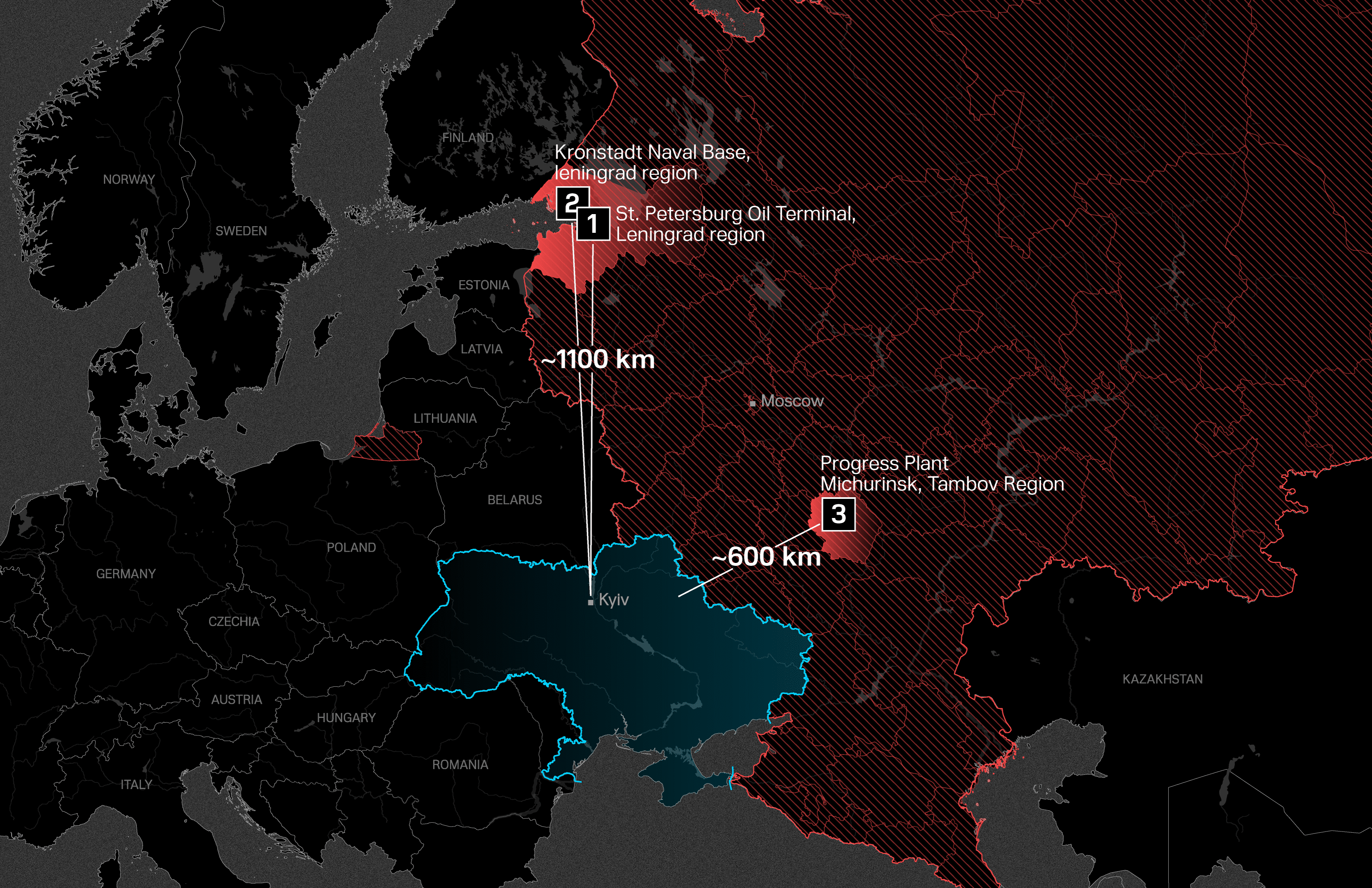
Ukraine’s latest long-range strike wave did not hit just one target—it reached across Russia’s war economy, striking a Baltic oil export hub, naval infrastructure at Kronstadt, and a missile-linked plant nearly 600 kilometers from the front line.
Ukraine’s latest long-range strike wave did not hit just one target—it reached across Russia’s war economy, striking a Baltic oil export hub, naval infrastructure at Kronstadt, and a missile-linked plant nearly 600 kilometers from the front line.
President Volodymyr Zelenskyy confirmed the strikes on June 3, describing them as part of Ukraine’s “long-range sanctions” campaign against facilities that support Russia’s war.
We bring you stories from the ground. Your support keeps our team in the field.
“Our long-range sanctions carried out by the warriors of the Security Service of Ukraine, the Unmanned Systems Forces, the Special Operations Forces, the Defense Intelligence of Ukraine, and the State Border Guard Service of Ukraine have yielded good results. Important facilities on Russian territory were hit last night,” Zelenskyy said.
The targets stretched from Russia’s Baltic coast to its defense-industrial interior, showing Ukraine’s growing ability to hit energy, naval, and weapons-production infrastructure far from the front line.
Our long-range sanctions carried out by the warriors of the Security Service of Ukraine, the Unmanned Systems Forces, the Special Operations Forces, the Defense Intelligence of Ukraine, and the State Border Guard Service of Ukraine have yielded good results. Important facilities… pic.twitter.com/esxYMexU8d
— Volodymyr Zelenskyy / Володимир Зеленський (@ZelenskyyUa) June 3, 2026
St. Petersburg Oil Terminal
1,100 km from Ukraine
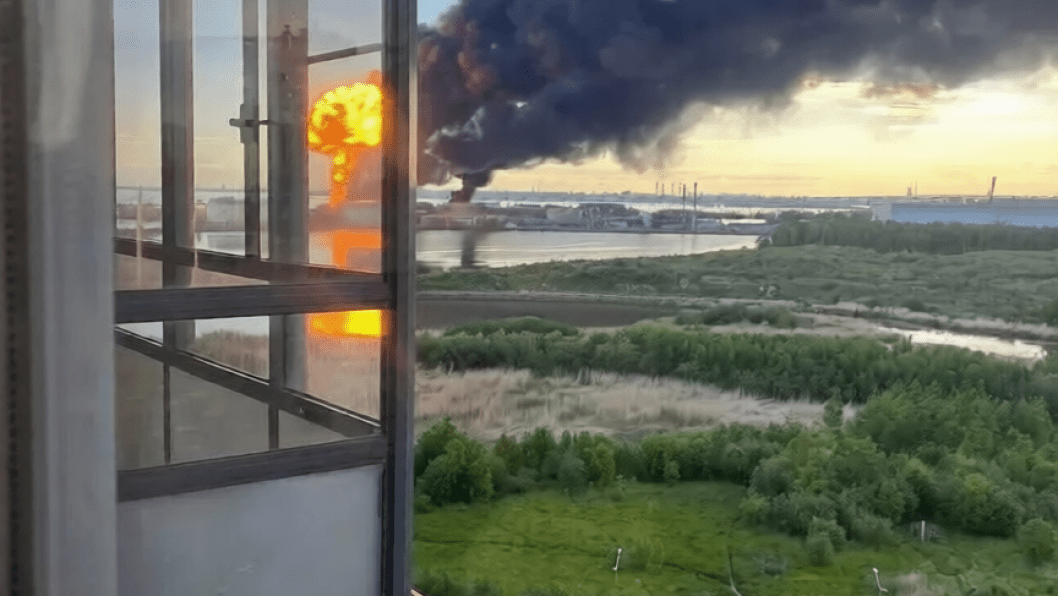
Ukrainian long-range drones struck the Petersburg Oil Terminal in St. Petersburg, setting fuel tanks on fire at one of Russia’s largest oil product transshipment facilities in the Baltic region.
Footage published by the OSINT community Exilenova+ and filmed by residents showed fires burning across the facility after the strike. Witnesses reported multiple explosions in the city, while videos also captured Russian air defense systems trying to intercept the drones.
The terminal is located about 1,100 kilometers from Ukraine’s state border. Zelenskyy said the facility is part of Russia’s oil industry serving the war.
A major oil terminal in Russia’s second-largest city was attacked by drones, just as the prestigious St. Petersburg International Economic Forum is set to begin with Putin in attendance. pic.twitter.com/sFcGUyA2AS
— Visegrád 24 (@visegrad24) June 3, 2026
“Among them was the Petersburg Oil Terminal. The distance from Ukraine’s state border to this facility of Russia’s oil industry, which serves the war, is about 1,100 kilometers,” he said.
The Petersburg Oil Terminal covers 37 hectares and has 21 storage tanks for light and dark oil products. Its annual throughput capacity is 12.5 million tons.
Located inside the Great Port of St. Petersburg, the terminal receives fuel by rail, river transport, and road vehicles before loading it onto sea tankers for export. The facility has been designated as strategically important for Russia’s security.
Footage from eyewitnesses showed thick black smoke rising from several locations after the strike.
“Everything is burning there! One, two, three… It’s just brutal. What should we do? As long as it doesn’t hit the building,” one local resident said while filming the aftermath.
Russian media also reported delays and cancellations of outbound flights at Pulkovo Airport on the morning of the attack.
The timing was especially notable because the St. Petersburg International Economic Forum opened in the city on June 3 and is scheduled to run through June 6. Foreign business representatives were expected to attend the event. The strike brought burning oil infrastructure into view just as Moscow was trying to stage one of its main international business showcases.
Kronstadt Naval Base
1,100 km from Ukraine
Ukraine also struck Russian naval targets at the Kronstadt base near St. Petersburg, one of the two main bases of Russia’s Baltic Fleet.
Zelenskyy said “purely military targets at the Kronstadt base were also hit.” Ukraine’s General Staff later reported that, according to preliminary information, ships and infrastructure facilities in the port of Kronstadt had been struck.
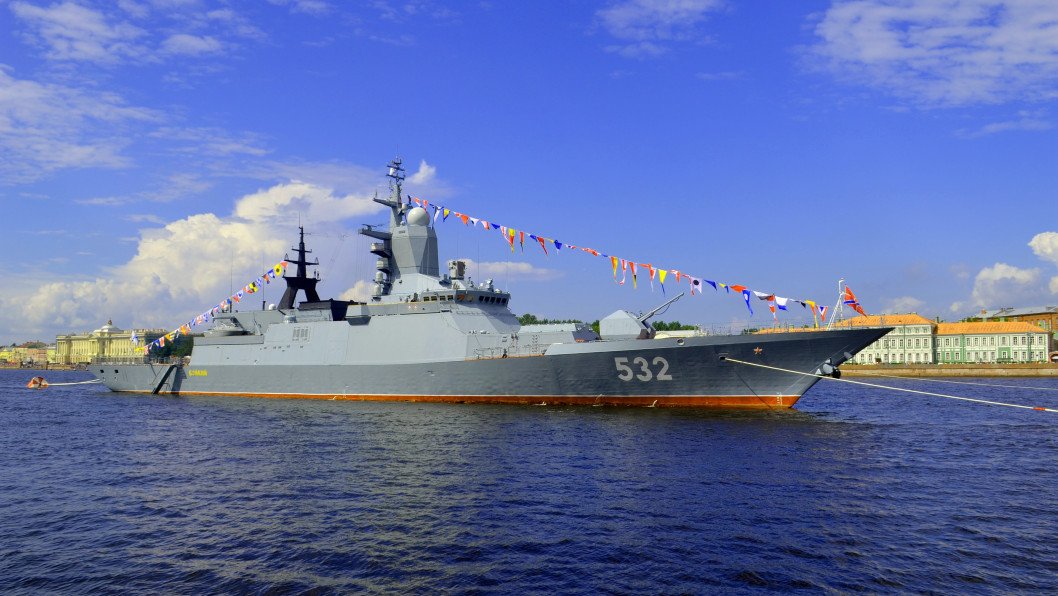
The commander of Ukraine’s Unmanned Systems Forces, Robert “Madyar” Brovdi, released footage showing a strike on the Russian corvette Boiky, reportedly while it was standing in dry dock, with the Ukrainian Defense Ministry later confirming the strike.
Ukrainian attack drones successfully attacked Russia's Kronstadt naval base this morning, hitting and heavily damaging the Steregushchy-class corvette Boikiy in drydock.
— OSINTtechnical (@Osinttechnical) June 3, 2026
The Boikiy was one of the most capable surface combatants in the Russian Navy's Baltic Fleet. pic.twitter.com/8K1nH0OTWd
The Boiky is a Project 20380 multipurpose warship of Russia’s Baltic Fleet. It entered service in 2013 and is designed for coastal defense, anti-ship operations, anti-submarine warfare, and air defense. The vessel has a displacement of around 2,220 tons, a length of 104.5 meters, a crew of about 100, and a top speed of up to 27 knots.
Its weapons include a 100mm A-190 naval gun, Uran anti-ship missiles, the Redut air defense system, the Paket-NK anti-submarine system, and a Ka-27 helicopter carried in a hangar.
Defense Express reported that the strike on Kronstadt may be even more significant than the hit on the Petersburg Oil Terminal because the base is a major naval repair and modernization hub.
One of the most important facilities there is the Kronstadt Marine Plant, which repairs and services Russian Navy vessels, including Kalibr-capable warships and submarines.
In 2023, the plant began repair and modernization work on the Project 20380 corvette Steregushchy. The facility has also handled complex repairs of Project 636.3 Varshavyanka-class submarines, including vessels from Russia’s Black Sea Fleet. These submarines are capable of launching Kalibr cruise missiles.
Satellite imagery from May 25 showed a vessel around 100 meters long in dry dock, matching the size of a Project 20380 corvette. A larger vessel roughly 120 meters long, corresponding to a frigate-class ship, was also visible near the plant’s quay.
Kronstadt hosts the 3rd Separate Submarine Division and the 105th Brigade of ships responsible for protecting the water area. According to Telegraf, the base usually hosts around 20 to 25 combat ships and boats, along with several dozen auxiliary support vessels.
Kronstadt, Saint Petersburg — a fire has broken out at a facility within the Russian Baltic Fleet’s naval base. Reports indicate that a ship or multiple ships are on fire. pic.twitter.com/yXnRpil29T
— Exilenova+ (@Exilenova_plus) June 3, 2026
While Russia’s largest Baltic Fleet strike assets are based in Baltiysk, in the Kaliningrad region, Kronstadt remains a major hub for ship repair, naval training, coastal defense, and fleet logistics near St. Petersburg.
Denys Shtilerman, co-founder and chief designer of Fire Point, wrote that Ukrainian forces had “very much wanted to organize an excursion for guests to the cruiser Moskva, but unfortunately, we could not bring it there, so we had to minus two other ships already at the venue.”
Progress plant in Tambov region
nearly 600 km from the front line
The third confirmed target was a defense-industrial facility in Russia’s Tambov region involved in weapons production.
Zelenskyy said the site was nearly 600 kilometers from the front line.
“Another target was an enterprise in the Tambov region involved in the production of Russian weapons. The distance from the frontline is almost 600 kilometers,” Zelenskyy said.
According to Russian outlet ASTRA, the target was the Progress plant in the city of Michurinsk. Videos published overnight showed a fire burning on the facility’s grounds after the drone strike. ASTRA reported that OSINT analysis geolocated the footage to the area of the plant’s production facilities.
The "Progress" plant, which produces equipment for aviation and missile systems control, was attacked and is on fire in Michurinsk, Tambov - OSINT analysis by ASTRA
— Beefeater (@Beefeater_Fella) June 3, 2026
ASTRA geolocated videos of the fire, shot by eyewitnesses on the night of June 3. According to our data, the… pic.twitter.com/jLUpO006Z2
Ukraine’s Defense Intelligence War & Sanctions database says the Progress plant manufactures navigation, meteorological, and geodetic instruments, as well as components used in Russia’s aviation and missile industries.
The plant is part of the production chain for the Kh-101 air-launched cruise missile and supplies MP-95 sensors used for testing and monitoring key missile systems.
It also produces GMS-01D gyromotors for Kh-59M2 and Kh-59M2A guided missiles, as well as electric motors and gyroscopes used in the Pantsir-S1 air defense system.
The plant is located roughly 350 kilometers from Ukraine’s border and has been targeted several times during the war. According to Russian and Ukrainian reports, it was previously attacked in February 2026, June 2025, and December 2024.

By hitting Progress again, Ukraine targeted a facility tied directly to Russia’s missile and air defense supply chain.
“I thank our warriors for their precision. Ukraine’s plan for long-range sanctions is being implemented exactly as needed to bring peace closer. Glory to Ukraine!” Zelenskyy said.
Taken together, the three strikes show a widening Ukrainian strategy: hit the oil infrastructure that funds and fuels Russia’s war, strike naval repair hubs that keep Kalibr-capable ships and submarines in service, and pressure factories that feed Moscow’s missile and air defense production.
Discuss this article:


-f8b795e6bf1d73fc2fdbfd74f5e7ea96.jpeg "Massive flames and thick black smoke rise from the Omsky Kauchuk chemical plant in Russia following a Ukrainian drone strike on October 24, 2026. (Source: Exilenova+)")