- Category
- War in Ukraine
As Ukraine Gains the Upper Hand on the Battlefield, Russia Terrorizes Civilians with Ballistic Missile Strikes
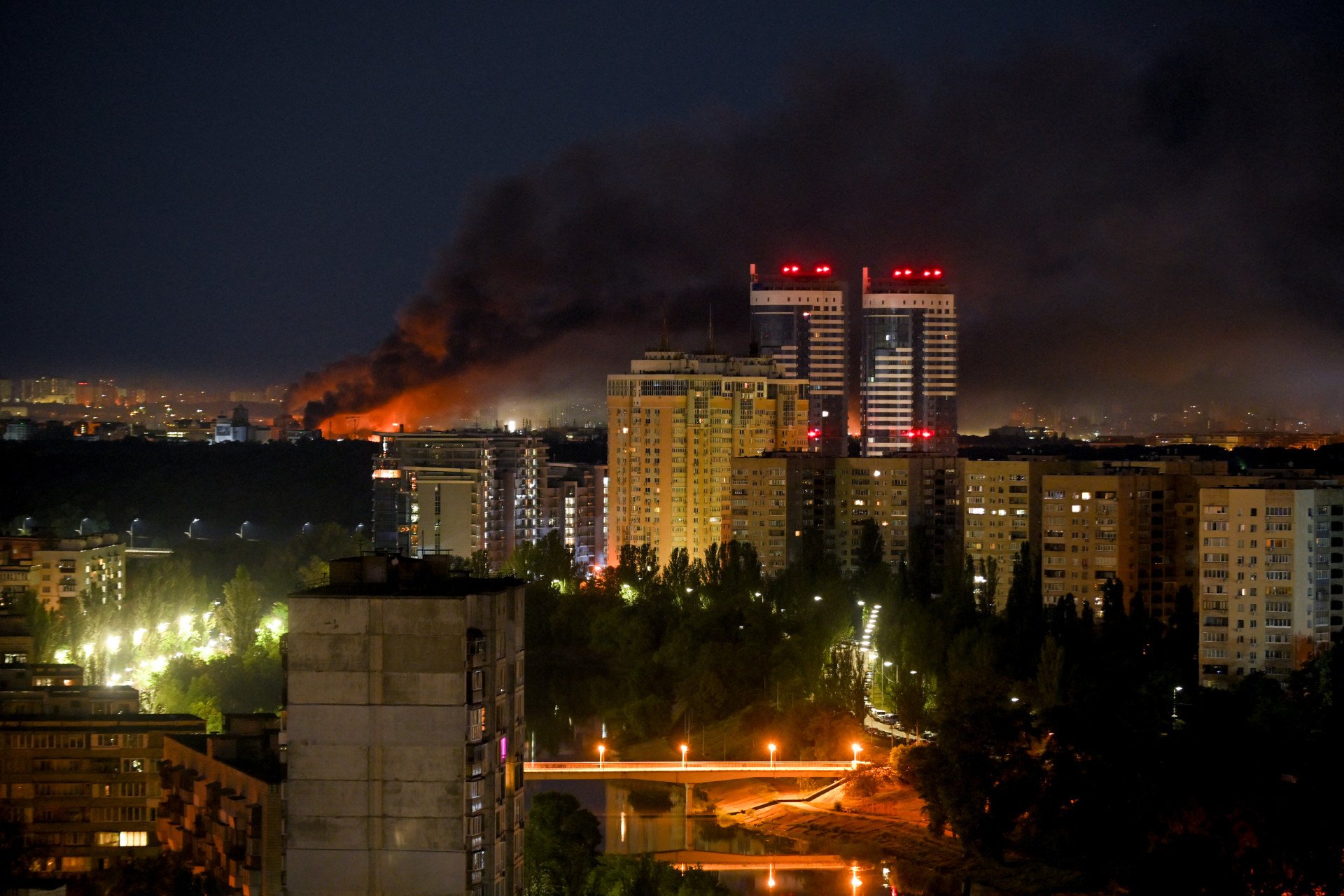
Russia’s spring offensive campaign has been derailed. Despite suffering more than 100,000 casualties, Moscow has captured little territory, while Ukrainian strikes continue to degrade its logistics networks. Putin has responded by bombarding Ukrainian cities with ballistic missiles, destroying residential buildings and civilian infrastructure.
 Prefer U24 Media on Google
- Authors

-29a1a43aba23f9bb779a1ac8b98d2121.jpeg "Photo of Illia Kabachynskyi")
During the night of June 2, Russia launched a massive attack against Ukraine. Five regions were affected. At the time of writing, the Russian attack killed more than 10 people and injured nearly 100. In total, Russia used 729 aerial attack assets:
656 UAVs
73 missiles of various types
In a single night, the Kremlin ordered the launch of 33 Iskander-M ballistic missiles against Ukraine. Russia also used eight Zircon anti-ship missiles. Due to a shortage of interceptor missiles capable of engaging ballistic targets, Ukraine was only able to destroy a portion of them. At the same time, Ukrainian air defenses shot down nearly all of the cruise missiles and more than 600 Shahed drones.
Dozens of residential buildings, office facilities, medical facilities, and other civilian structures across Ukraine, including in the capital, were damaged.
The attack came one week after the previous large-scale strike on May 24, which primarily targeted Ukraine’s capital. That assault involved roughly 700 aerial attack assets, including more than 40 ballistic missiles and over 600 drones.
There have been nearly a dozen similar attacks throughout the spring. During that period, Moscow ordered the launch of several hundred ballistic missiles against Ukraine and systematically terrorized the country’s civilian population. The Kremlin’s frustration may be understandable: it has achieved little success on the battlefield.
Russia’s spring offensive stalls
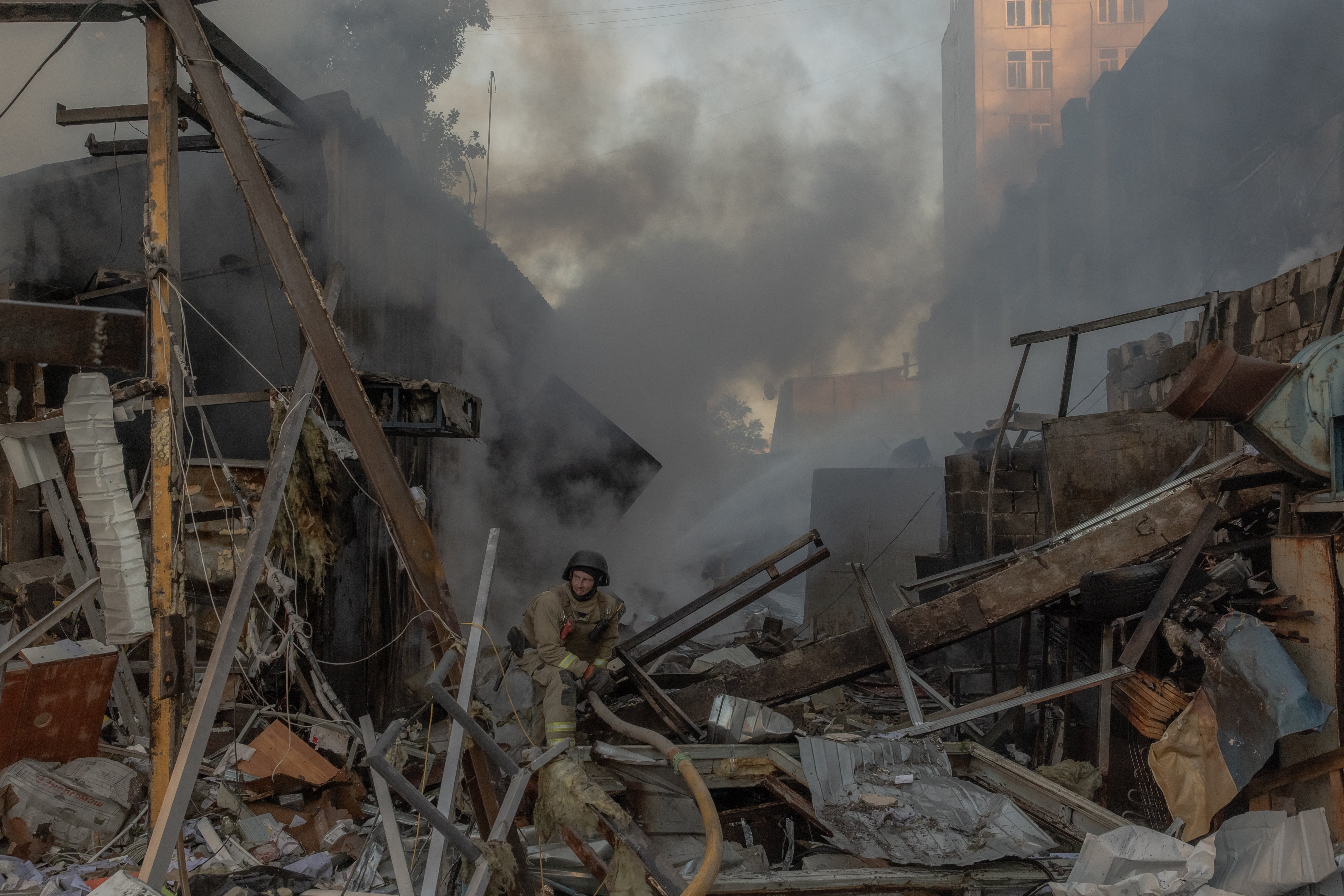
Russia’s ballistic missile attacks on Ukrainian cities appear even more desperate when viewed against developments at the front. As UNITED24 Media has reported on several occasions, the Russian military’s spring offensive failed to achieve meaningful success. Territorial gains have been negligible, and in some sectors, Ukrainian forces have even reclaimed ground.
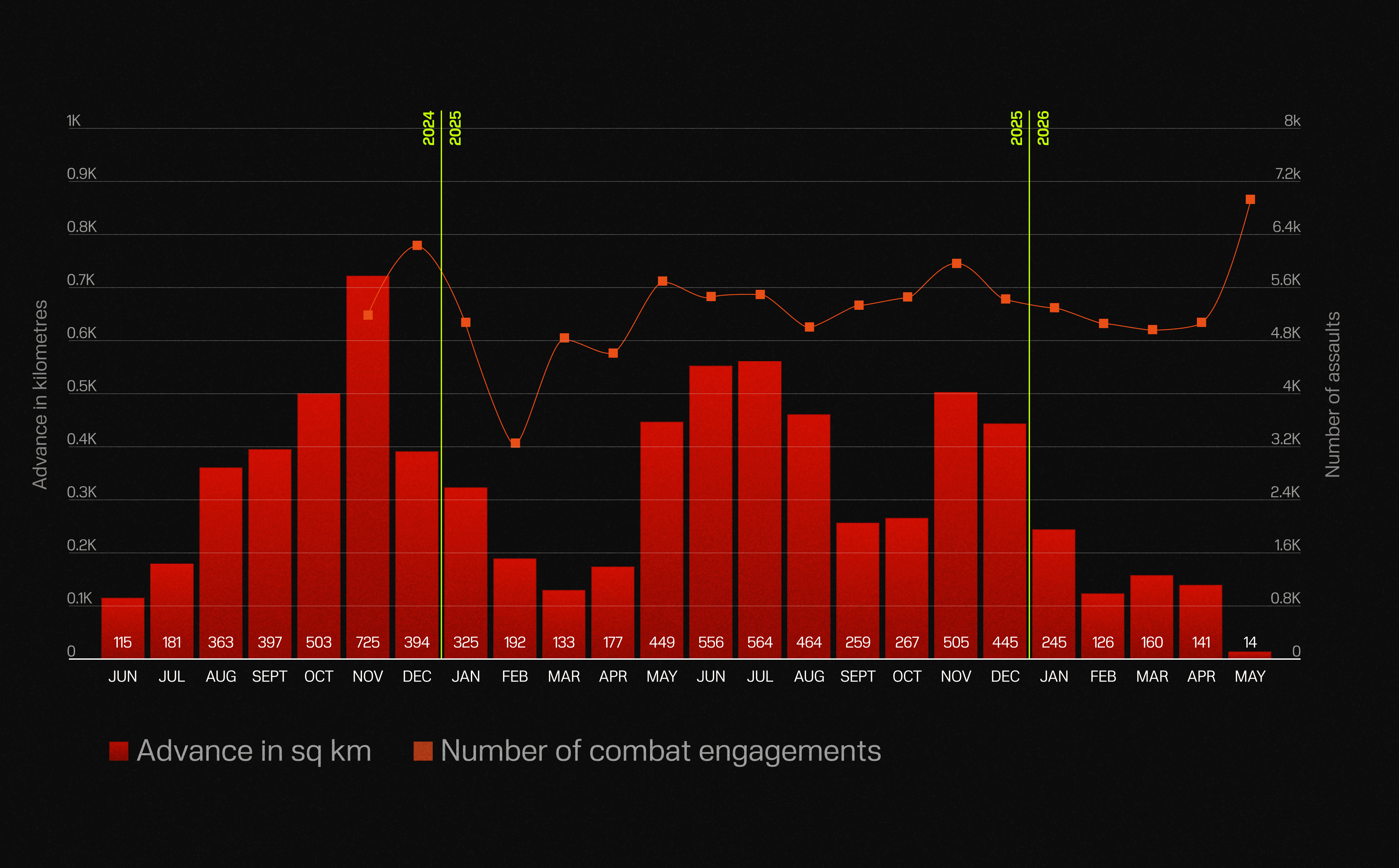
May proved even more difficult for Moscow. According to the Ukrainian analytical platform DeepState, Russia appears to have failed to capture new territory for the first time in years and may have actually lost ground. Its advances have been so limited that they are effectively within the margin of error.
The depth of the crisis is reflected in the fact that the number of assault operations increased by 37.5% over the month, reaching a record 7,000 attacks. In other words, the Russian military is attacking more frequently while achieving worse results.
At the same time, Russian forces suffered approximately 100,000 killed and wounded during the spring campaign, while recruitment efforts are reportedly failing to replace losses as quickly as troops are being eliminated in Ukraine.
Ukrainian drone campaign disrupts Russian logistics
The “logistics lockdown” implemented by Ukraine’s Ministry of Defense and General Staff is designed to disrupt Russian logistics deep behind the front lines. Deep-strike drones operating at ranges of up to 200 kilometers are targeting supply routes, vehicles, warehouses, arsenals, and command centers.
Ukraine currently holds a significant advantage in this area. Over the past two months alone, hundreds of targets have reportedly been destroyed, while the pace of strikes continues to increase. In practice, medium-range drone operations have made Russia’s entire land corridor to occupied Crimea increasingly vulnerable, with drones threatening roads throughout the occupied territories.
This is compounded by the fact that Russia’s state budget is facing a deep crisis, with a massive deficit and no clear solution for covering it. The problem comes at a time when Russian wartime spending is at its highest level. Yet even this peak expenditure is failing to yield results due to the effectiveness of Ukrainian military operations.
Ukraine’s narrow window to exploit Russia’s battlefield weaknesses
Ukraine recognizes that the current situation is not unique but rather a critical moment that requires decisive action. In previous phases of the war, Ukraine managed to seize the initiative through the early adoption of FPV drones and HIMARS systems. Today, medium-range strike drones are playing a similar role.
Ukrainian military personnel say Ukraine has a six- to nine-month window of opportunity before Russia adapts to the changing battlefield environment. Kyiv’s primary objective is to secure the resources necessary to destroy as much of the Russian combat potential as possible during that period and compel the Kremlin to come to the negotiating table.
This is where support from international partners becomes essential. Financial assistance will allow Ukraine to procure the drones and missiles needed to further degrade Russia’s capacity to continue the war.
Discuss this article:
-4a56a6b482ec132402c16ef6fcabf9a2.png)





-efa69d4733b5af9f7cd0a642f85424a6.jpeg "Thick black smoke rises from the heavily damaged Proton-Electrotex plant in Orel, Russia, following a reported strike. (Source: Exilenova+)")