Category
Latest news

Russia Appears to Prepare Escalation Near Ukraine. What Satellite Images Reveal

4 min read
Authors
Photo of Ivan Khomenko
News Writer
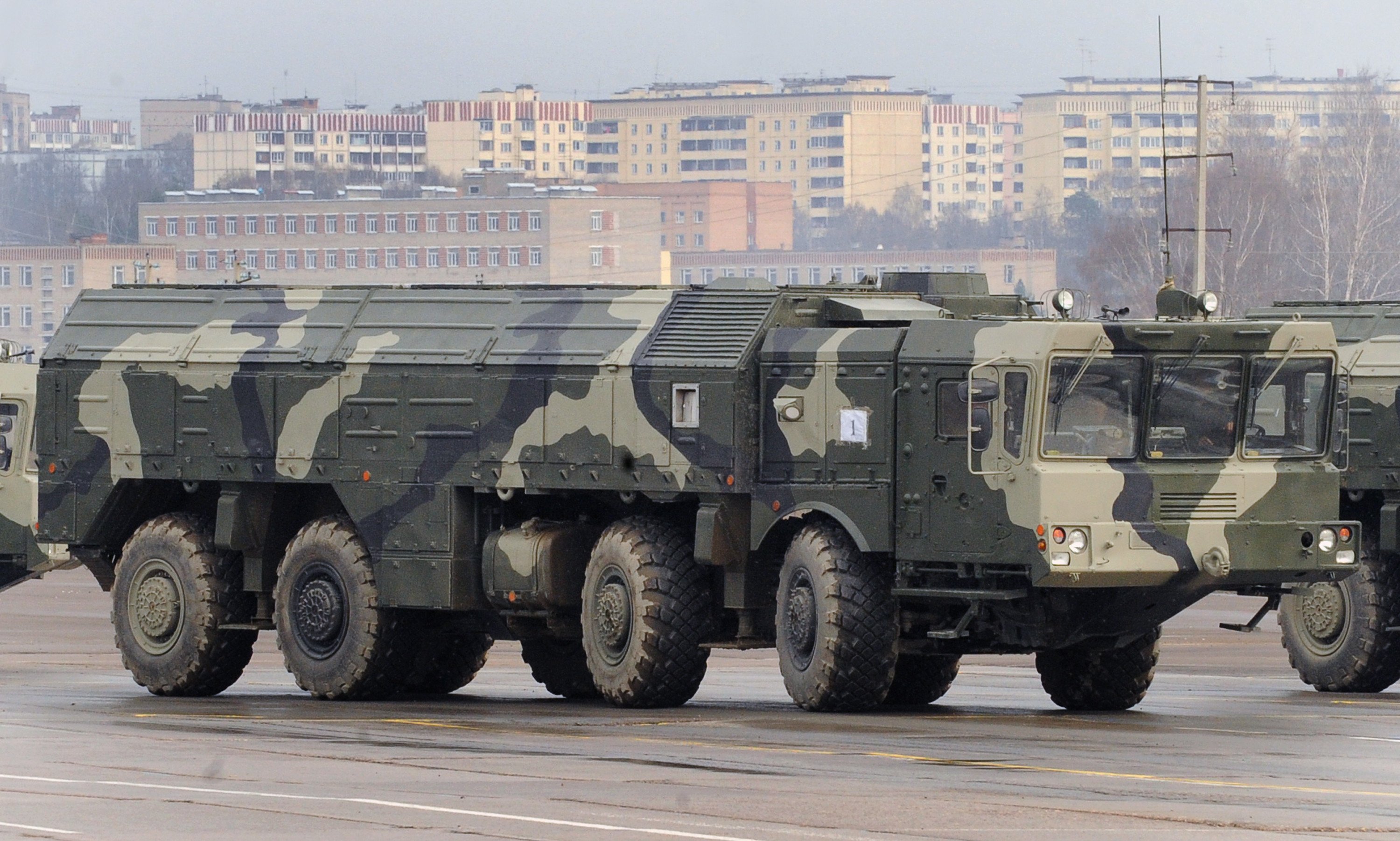
A Russian Iskander ballistic missile launcher moves during a military parade rehearsal in Alabino near Moscow on April 20, 2010. (Photo: Getty Images)
A Russian Iskander ballistic missile launcher moves during a military parade rehearsal in Alabino near Moscow on April 20, 2010. (Photo: Getty Images)

Russia has set up at least nine launch sites for its Iskander short-range missile systems near the Ukrainian border, including in occupied Crimea, according to satellite imagery and data published by the Strategic Aviation of Russia Telegram channel on January 31.

The analysis identifies launch zones for both Iskander-M ballistic and Iskander-K cruise missile variants in several Russian regions—Kursk, Bryansk, and Rostov—as well as within temporarily occupied territories of Ukraine. These locations are reportedly used to conduct strikes deep into Ukrainian territory.
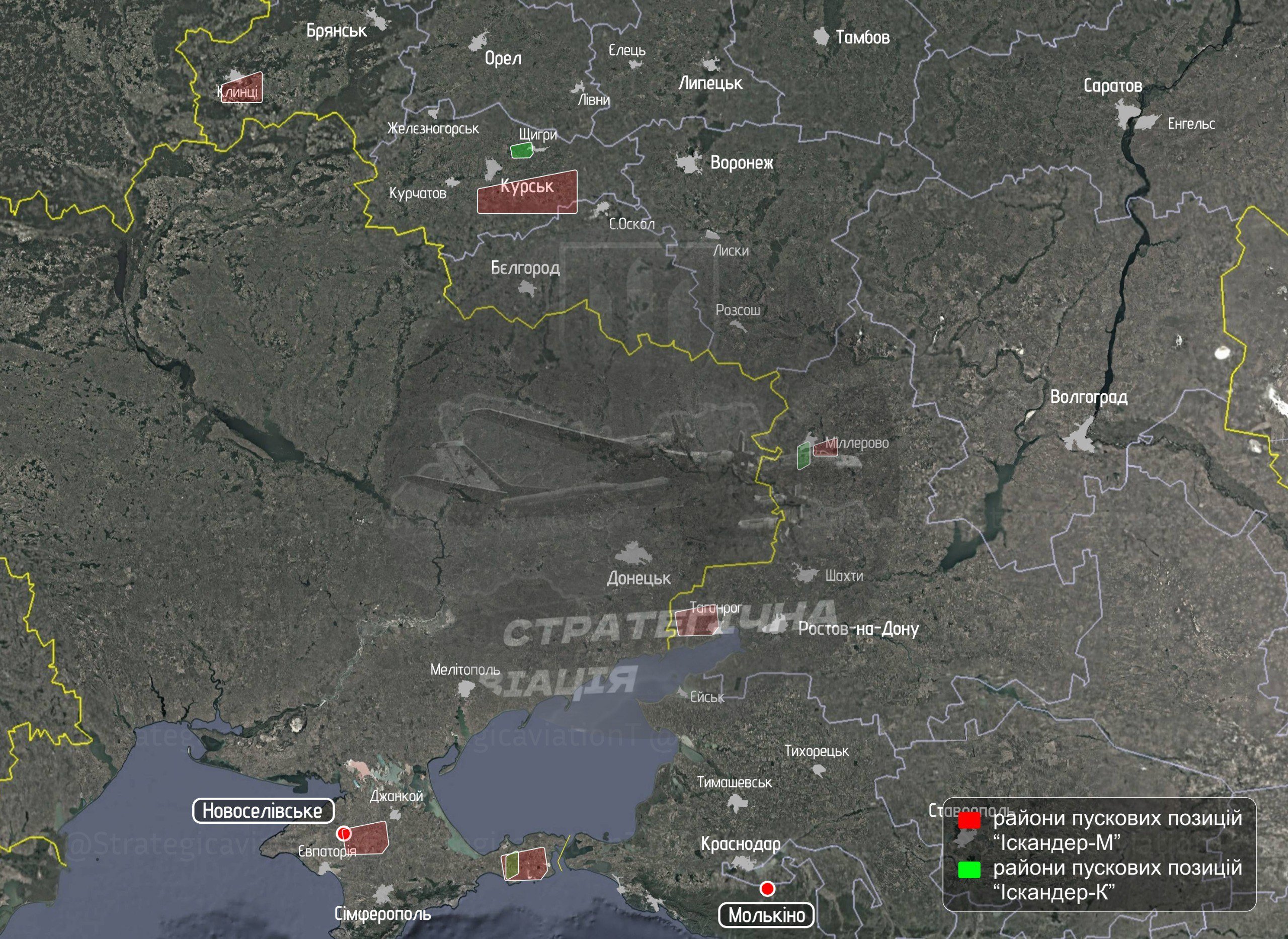
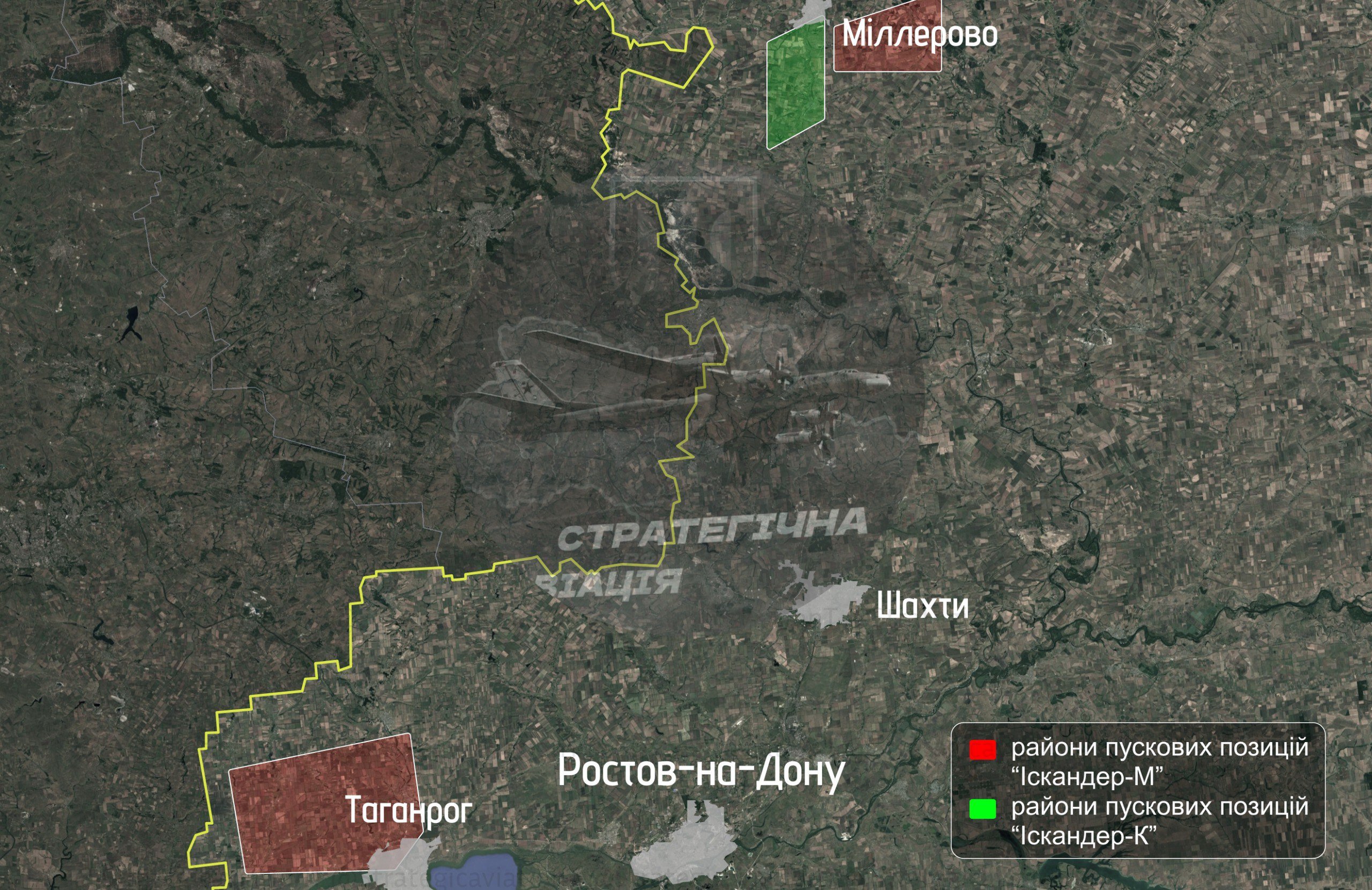
Overview map showing confirmed launch sites for Iskander-M (red) and Iskander-K (green) missile systems in Russia’s Bryansk, Kursk, Rostov regions, occupied Crimea, and the Krasnodar Krai. (Photo: Strategic Aviation of Russia)
Satellite view of missile deployment zones near Taganrog and Millerovo—key areas for Russia’s Iskander-M and Iskander-K launches against Ukraine. (Photo: Strategic Aviation of Russia)

In the Kursk region, three separate launch areas were pinpointed. One is located west of Shumakovo village, where a former 9P78-1 Iskander launcher base is situated. While Ukrainian drones previously targeted and destroyed systems at this location, current activity remains unverified.

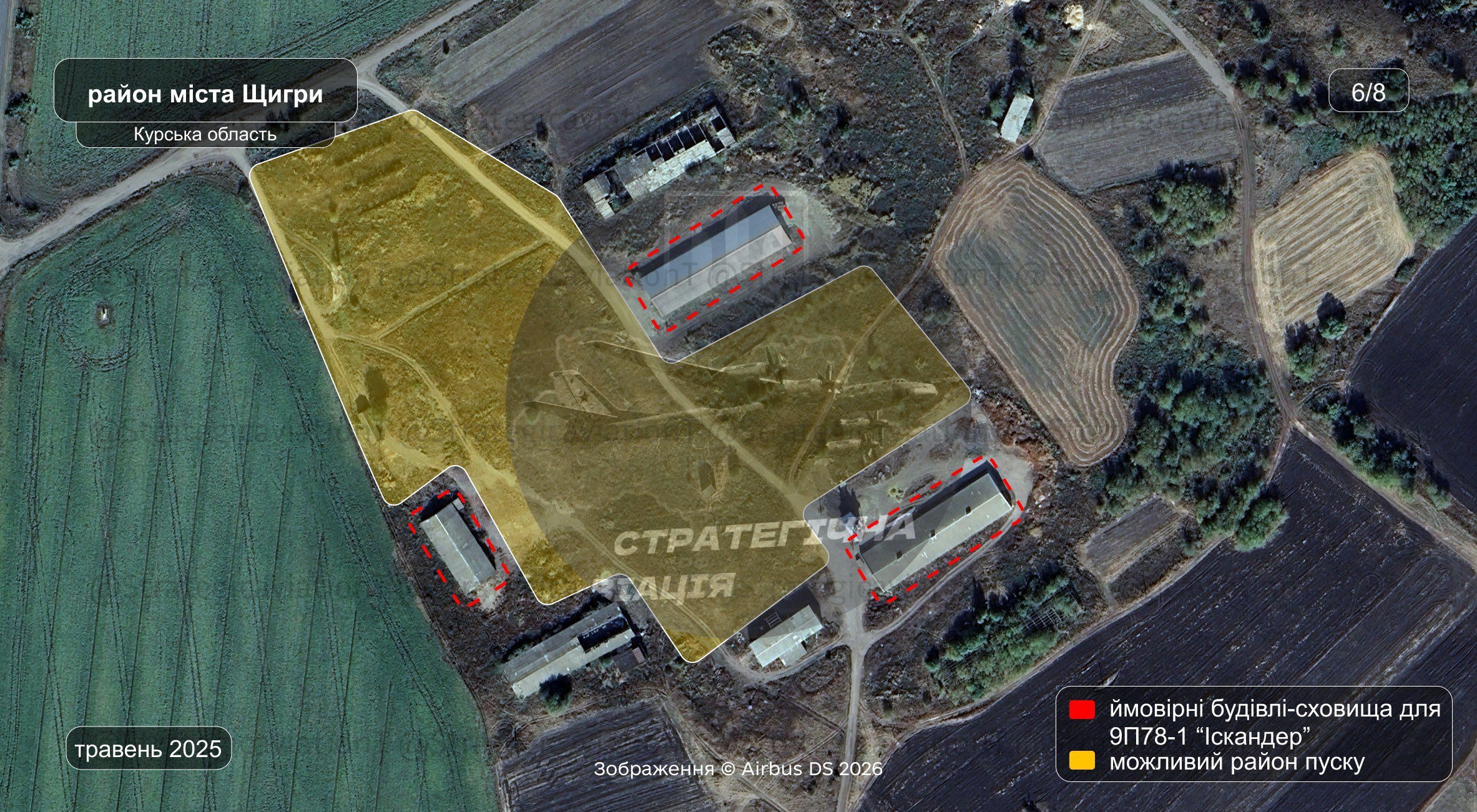
Another site near the town of Shchigry is reportedly used primarily for launching Iskander-K cruise missiles. According to the channel, missiles of this type were used in an attack on Kyiv during the night of January 13.
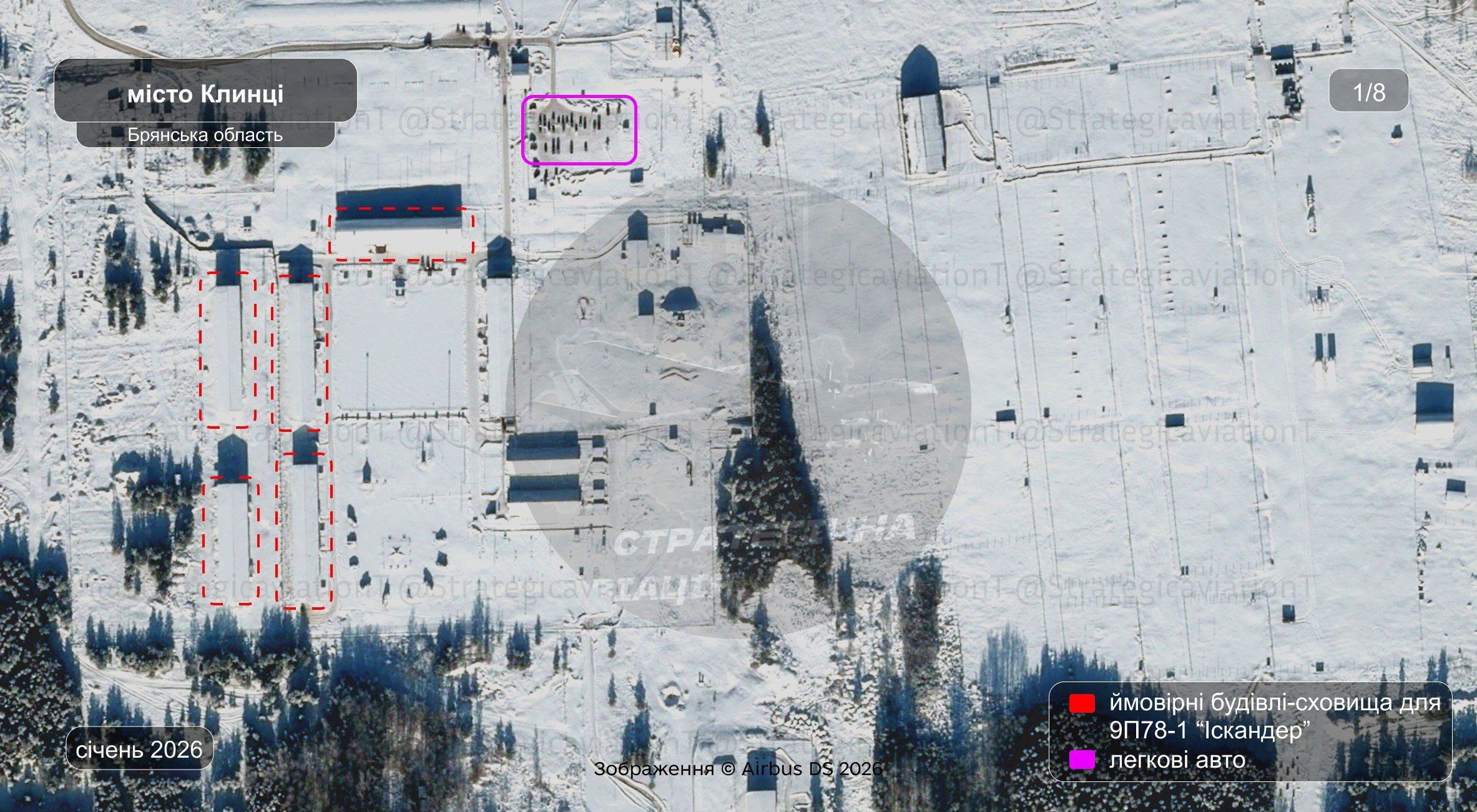
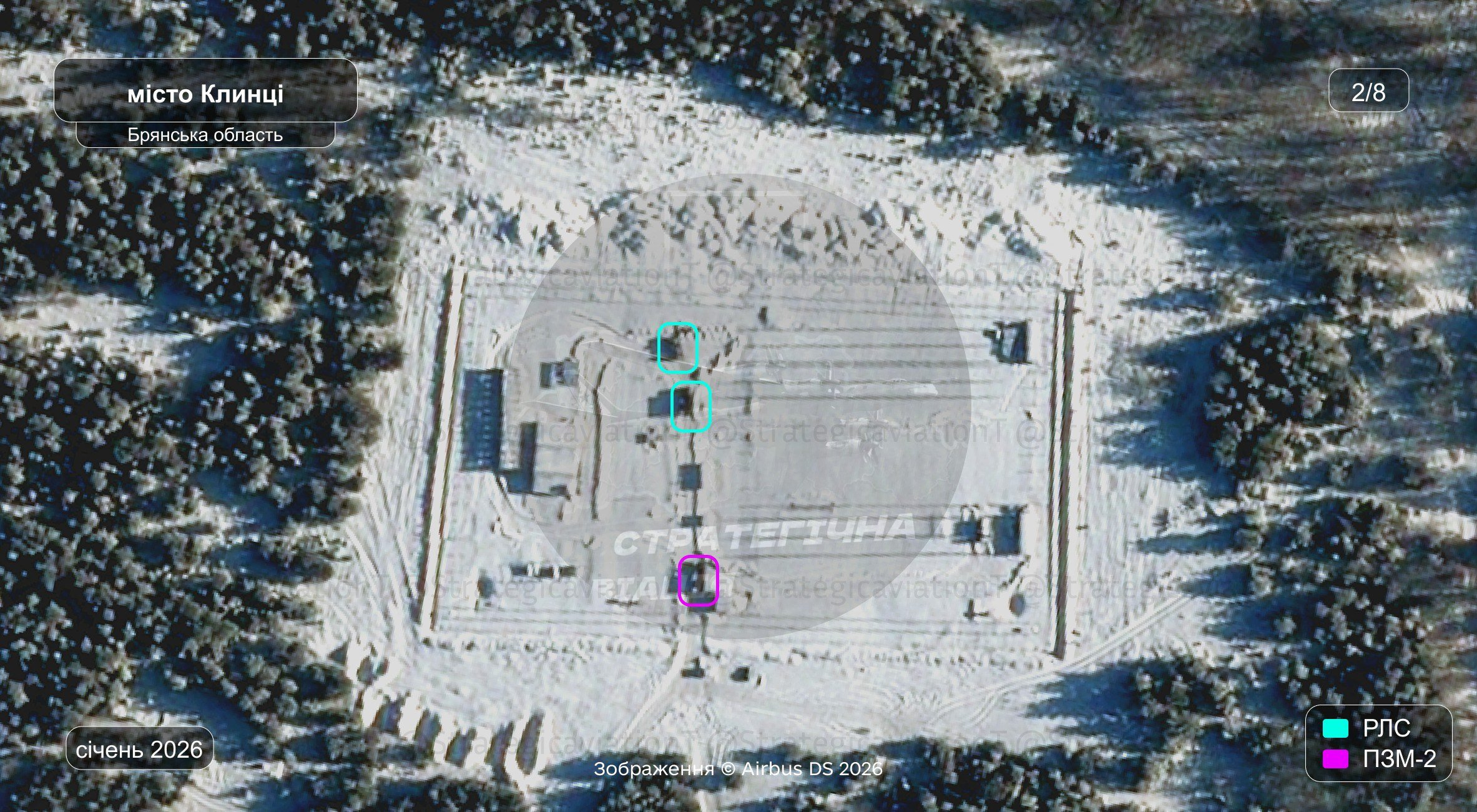
Imagery from January 2026 shows possible shelters for 9P78-1 Iskander launchers in Klintsy, a known Russian military hub near the Ukrainian border. (Photo: Strategic Aviation of Russia)
Further analysis of the Klintsy site reveals radar units and command vehicles (ПЗМ-2), suggesting a fully operational Iskander launch complex. (Photo: Strategic Aviation of Russia)

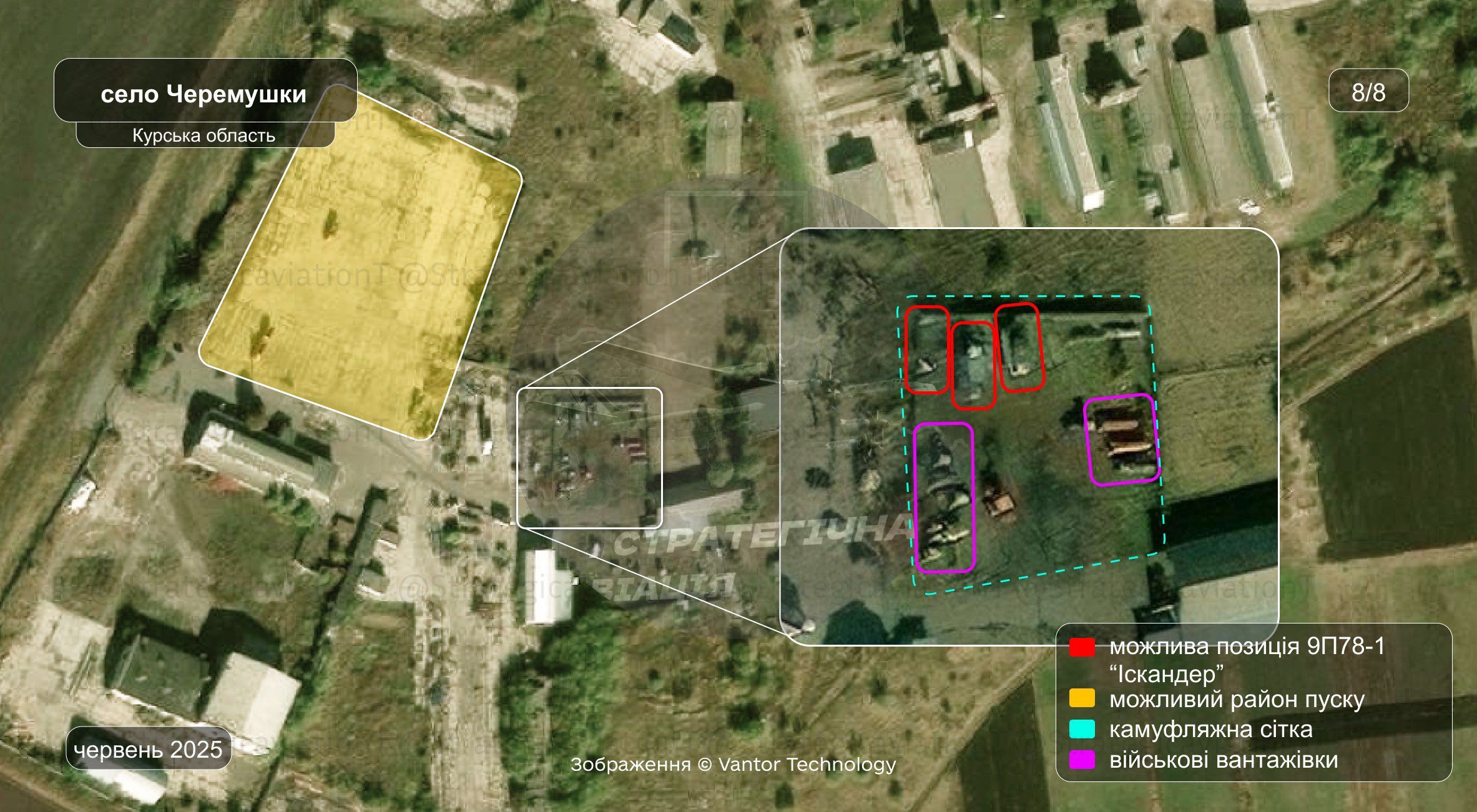
A third site in the vicinity of Cheremushki village shows camouflaged military hardware, believed to include Iskander-M systems, positioned in open areas without permanent shelters.

Several launch points have been identified near Novoselivske, close to the administrative border with occupied Crimea. These include multiple positions used to fire ballistic missiles. Satellite photos reviewed by the channel show active construction at several sites, including what appears to be newly built fortifications.
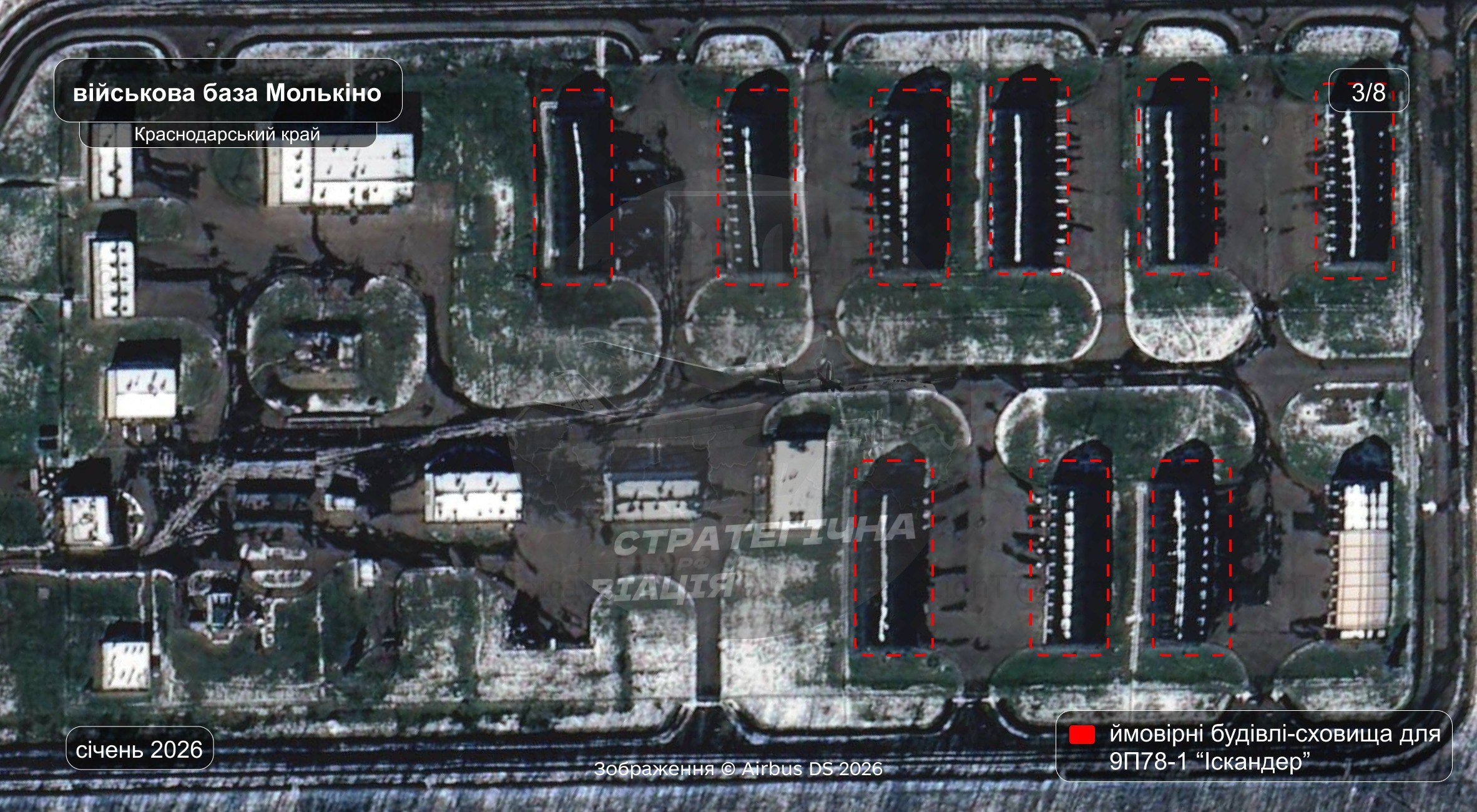
One of Russia’s primary Iskander deployment sites, Molykino hosts numerous fortified shelters for launchers, as shown in satellite imagery from January 2026. (Photo: Strategic Aviation of Russia)
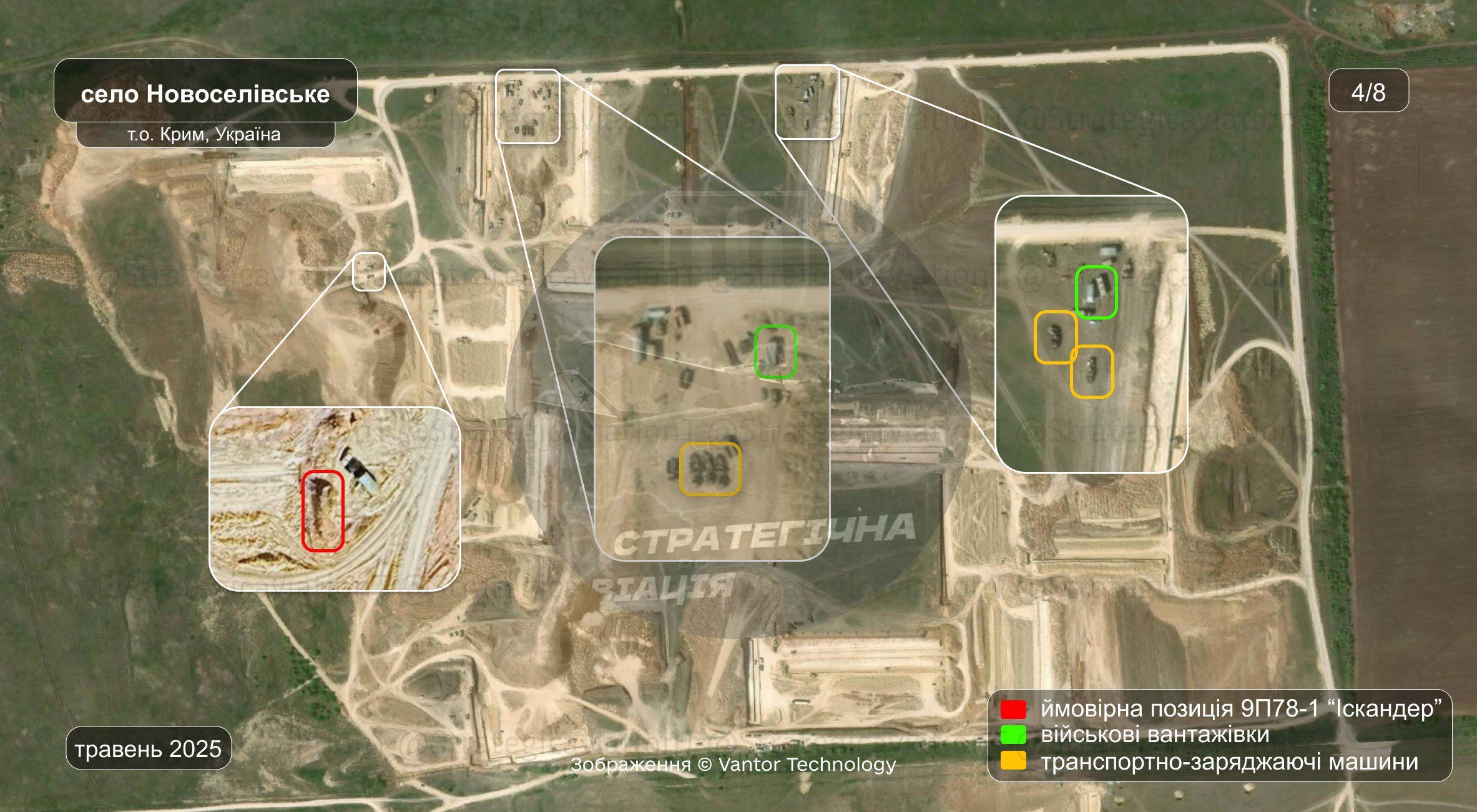
May 2025 imagery shows isolated 9P78-1 launchers, military trucks, and transport-loader vehicles positioned on earth-covered pads near Novoselivske. (Photo: Strategic Aviation of Russia)

The airbase near Taganrog has also been flagged as a recent point of interest. On January 28, an An-124 heavy-lift aircraft reportedly delivered an Iskander complex to the area, which was subsequently deployed nearby.

Other areas of activity include the outskirts of Taganrog and Millerovo, as well as the Chauda training range in Crimea. However, the Molykin training ground in Russia’s Krasnodar Krai remains one of the primary bases for Iskander operations.
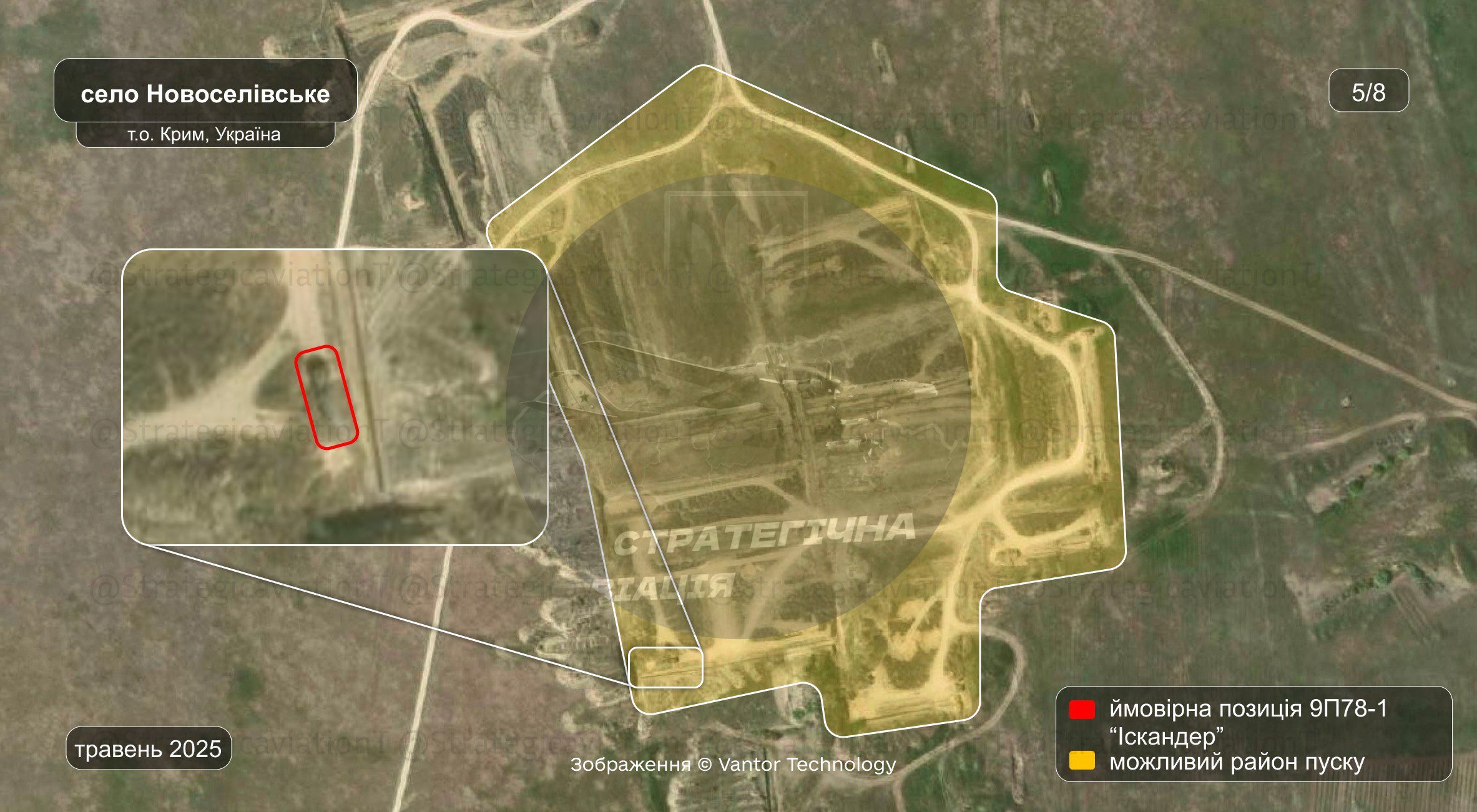
Additional visuals highlight a broader potential launch zone near Novoselivske, confirming this site as a major ballistic missile platform for southern strikes. (Photo: Strategic Aviation of Russia)
The area outside Shchigry features warehouse-like shelters and an adjacent open launch field, often used for cruise missile strikes, including the January 13 attack on Kyiv. (Photo: Strategic Aviation of Russia)

Open-source assessments indicate that Russia conducted approximately 492 Iskander ballistic missile launches in 2025 alone. The Iskander-M system can be equipped with at least seven different types of ballistic missiles, depending on operational requirements.

Russia’s use of the Iskander system—capable of striking targets up to 500 km away—remains a key element of its long-range precision-strike capability in the war against Ukraine.
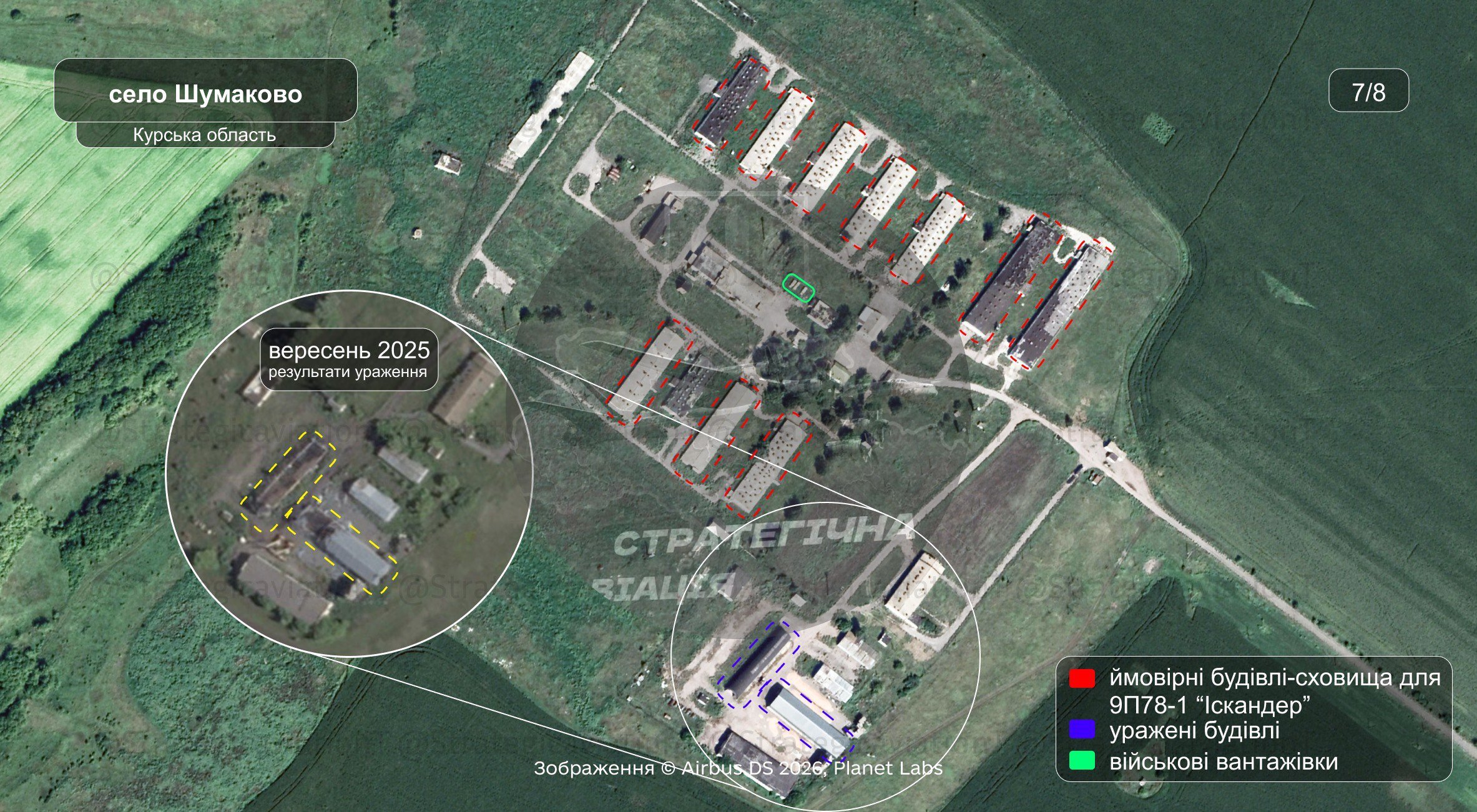
Imagery from September 2025 shows Ukrainian drone strikes had targeted this Iskander base. Red boxes mark suspected shelter areas; some buildings show visible damage. (Photo: Strategic Aviation of Russia)
Satellite images from June 2025 reveal camouflaged Iskander equipment and trucks at Cheremushki, indicating active or standby status for launch operations. (Photo: Strategic Aviation of Russia)

Earlier, Ukraine’s Main Intelligence Directorate disclosed the industrial network behind Russia’s Iskander‑K cruise missile, identifying 41 Russian and Belarusian enterprises involved in producing the 9M727 missile.

According to HUR, the list—published on the War & Sanctions platform—includes the Novator Design Bureau as the lead developer, along with dozens of suppliers responsible for propulsion, guidance, electronics, and warhead components. Ukrainian intelligence noted that several of the identified companies remain outside international sanctions regimes.

See all

Support UNITED24 Media Team

Your donation powers frontline reporting from Ukraine.
United, we tell the war as it is.