- Category
- Latest news
Russia Debuts VTOL Interceptor—Is It a Copy of Ukraine’s Sting?
 Prefer U24 Media on Google
- Authors


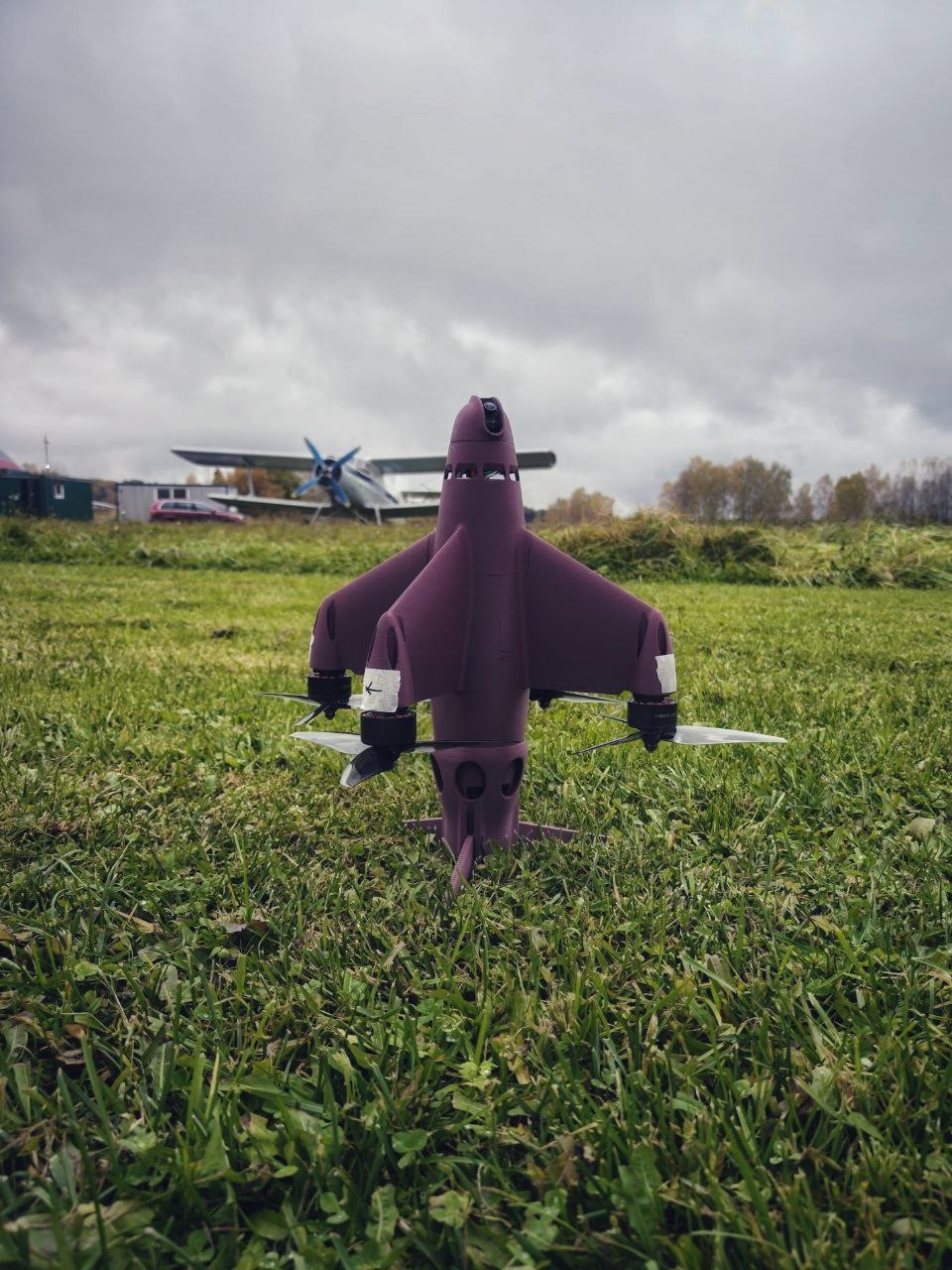
Russia’s research-and-production center for unmanned aviation and robotic systems, NPTs BASiRTK, released footage showing a new interceptor drone built for vertical takeoff and landing on October 8.
The short clip depicts the quadcopter in hover and forward flight, but the developer did not publish technical specs or weaponization details, saying only that the platform is intended to operate as part of a distributed network of heterogeneous robotic systems for maritime monitoring and infrastructure protection.
The interceptor follows a familiar design pattern for counter-drone drones: four motors, VTOL capability, and a compact airframe capable of stable loitering. NPTs BASiRTK’s post frames the machine as a node in an integrated sensor-and-robot network to surveil sea approaches and safeguard coastal facilities.
Ukrainian defense media, Militarnyi analysts note the new Russian model bears a strong visual and functional resemblance to Ukraine’s Sting interceptor.
Ukrainian nonprofit drone maker Wild Hornets has released footage of its STING drone undergoing high-speed testing,hitting impressive speeds and altitudes.STING drone briefly reaches just over 204 km/h at an altitude of 426 meters,a striking performance for an interceptor drone. pic.twitter.com/t6ZkJpVxCy
— Valhalla (@ELMObrokenWings) February 7, 2025
While the Russian developer did not claim any lineage, analysts say it is plausible Moscow incorporated design ideas already proven in Ukrainian systems—a common shortcut when time and battlefield lessons favor rapid copying over fresh R&D. That assessment remains circumstantial unless manufacturers or independent engineers confirm direct parts or design transfers.
Ukraine’s Sting is a straightforward, battle-tested interceptor: a quadcopter topped by a raised dome that houses a warhead and camera, flown by operators using VR goggles for a first-person view.
The Sting family has been deployed to intercept a range of hostile UAVs; some variants couple operator control with AI-assisted target tracking to speed up acquisitions and reduce operator workload.
The Russian footage did not show an armament demonstration or target engagements, and the developer withheld performance figures such as endurance, payload, or sensor suite.
Earlier, reports emerged that China registered a patent for a foldable anti-drone protection system for tanks that closely resembles Ukraine’s so-called “hood.”
The development follows earlier reports that Russia had already adapted the Ukrainian design for its own armored vehicles.
Discuss this article:


-c439b7bd9030ecf9d5a4287dc361ba31.jpg "Photo of Katherina Popilnichenko")

-72b63a4e0c8c475ad81fe3eed3f63729.jpeg "Photo of Cyril Barabaltchouk")
-111f0e5095e02c02446ffed57bfb0ab1.jpeg "Photo of Roman Kohanets")