- Category
- Latest news
Russia Escalates Efforts to Destabilize the Balkans, Says ISW After Lavrov-Dodik Meeting
 Prefer U24 Media on Google
- Authors


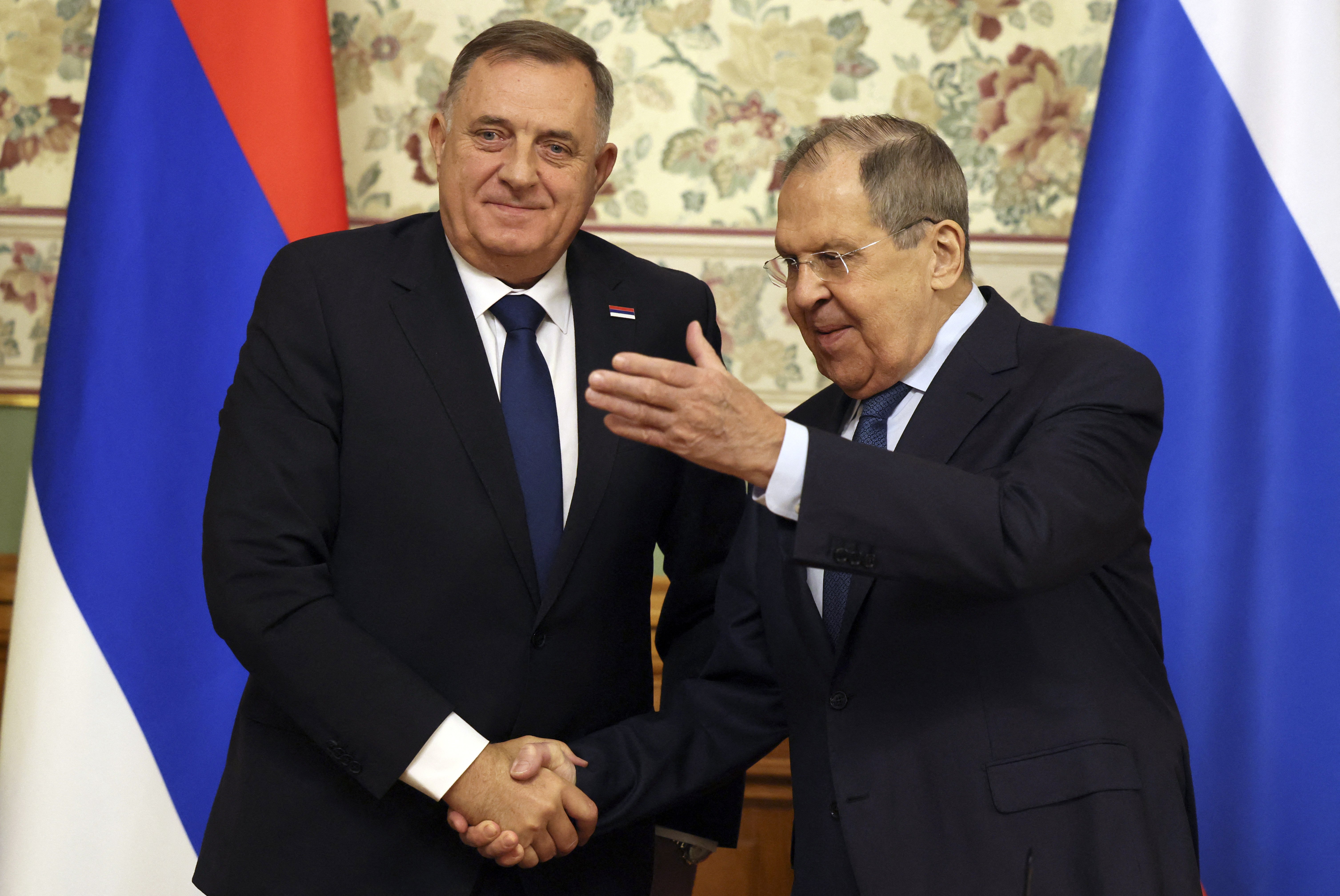
Russian authorities “continue efforts to destabilize the Balkans” and dismantle the 1995 Dayton Agreement , according to a September 11 report from the Institute for the Study of War (ISW).
Researchers believe these efforts are part of a broader campaign to divide and distract Europe, a view shared by the ISW following a meeting between Russian Foreign Minister Sergey Lavrov and Milorad Dodik, the leader of Republika Srpska, a Bosnian entity. Lavrov hosted Dodik in Moscow on September 9, where he condemned "Western attempts" to remove Dodik from power in Republika Srpska.
The report highlights that Lavrov and Dodik met on the 30th anniversary of the Dayton Accords, which ended NATO’s “aggression” in Bosnia and Herzegovina during the alliance’s 1995 Operation Deliberate Force. Lavrov accused the West of “violating” the accords to gain “undivided control” over Bosnia and Herzegovina and strip Serbs of their rights.
Lavrov also praised Dodik for planning a referendum in Republika Srpska in October, stating that “the West doesn’t like referendums,” including the “transparent” referendum held in Russia-occupied Crimea.
ISW pointed out that Lavrov and Dodik met on the same day Russia launched a large-scale drone invasion into Polish airspace, likely aimed at testing the unity of NATO and the European Union.
-b991a32d798b67cd55dc5d4db1637d78.png)
“The Kremlin has previously leveraged its relationship with Republika Srpska to further influence the Balkans, sow divisions in Europe, and undermine the US-backed Dayton Accords to throw the Balkans into turmoil,” researchers noted.
In August, Bosnia and Herzegovina’s court rejected Dodik’s appeal against a decision by the country’s Central Election Commission to suspend his powers. The court’s ruling is final, meaning that early elections for the President of Republika Srpska must be called within 90 days. The new president will serve only for one year, until October 2026, when Dodik’s current term was set to end.
Throughout his career, Dodik has maintained close ties with Russia, receiving support from the Russian government in his efforts to strengthen Republika Srpska’s independence. His stance has earned him a reputation as a destabilizing force in the Balkans, particularly for his resistance to reforms aimed at improving the country’s integration with the European Union and NATO. Dodik’s leadership is also marked by his support for policies that are seen as undermining the country’s multiethnic identity, particularly his efforts to challenge Bosnia’s constitutional framework and promote Serb nationalism.
Earlier on August 6, Bosnia and Herzegovina’s Central Election Commission has officially terminated the mandate of Milorad Dodik, according to the commission’s statement.
Discuss this article:


-c439b7bd9030ecf9d5a4287dc361ba31.jpg "Photo of Katherina Popilnichenko")