- Category
- Latest news
Russia Expands Anti-Aircraft Defense System in Moscow: New "Pantsir-S1" Towers Detected
 Prefer U24 Media on Google
- Authors

-72b63a4e0c8c475ad81fe3eed3f63729.jpeg "Photo of Cyril Barabaltchouk")
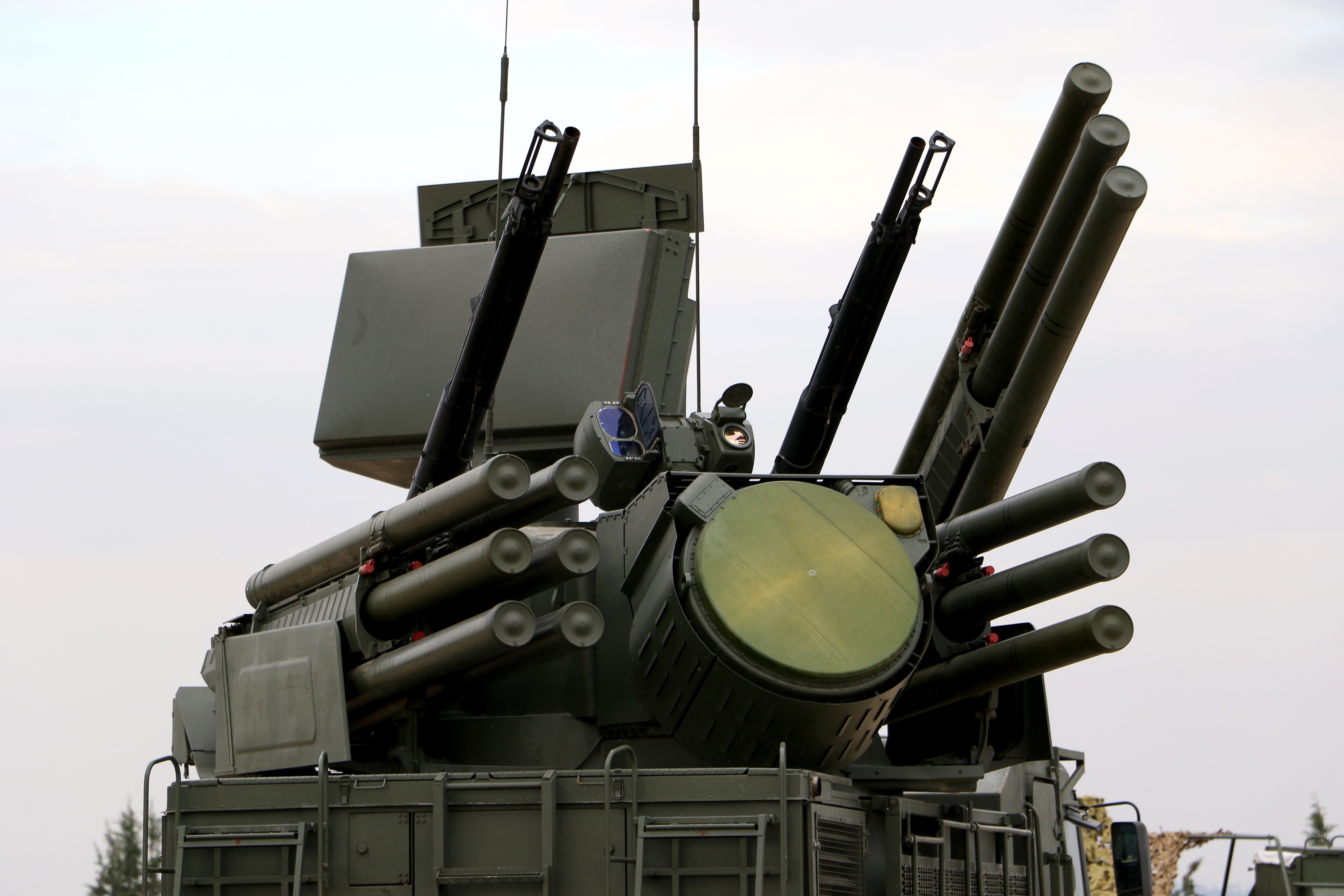
In the latest development regarding Russia’s air defense strategy, OSINT (open source intelligence) researcher Jembob has geo-located additional "anti air towers" being constructed around Moscow. These towers are designated to house the Pantsir-S1 air defense missile systems, part of Moscow's ongoing efforts to bolster its protection against aerial threats, as the researcher said in his post on X on July 29.
According to new data provided by Jembob, journalist Mark Krutov of Radio Svoboda has compiled an updated report tracking the ongoing air defense tower project. Krutov's research revealed that the outer ring for the Pantsir-S1 systems largely follows the "Moscow Small Ring," a circular highway that lies approximately 50 kilometers from the city center. The Small Ring was originally constructed in the 1950s for the placement of the S-25 anti-aircraft missile systems, which were the first Soviet missile systems of their kind.
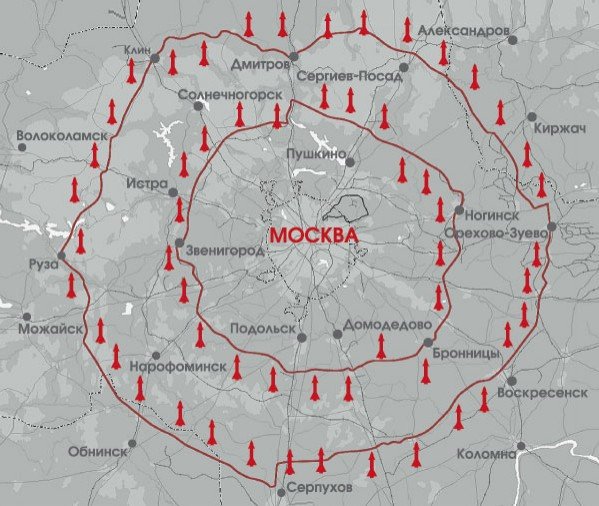
Interestingly, Krutov's research highlights that the "Moscow Large Ring," which was built for the placement of longer-range S-25 systems, appears to have been abandoned in this new iteration of Russia’s defense strategy. Instead, the new outer perimeter for air defense now aligns with the Small Ring.
While the outer perimeter now extends around the Small Ring, the inner defense ring is being constructed closer to the city center, utilizing new air defense towers. This shift in strategy suggests a more focused, centralized approach to defending the center of Moscow against aerial threats.
-69b59d47dbeaba8282816bfee26fa328.png)
As Krutov pointed out, photographs of the streets around these towers show that many of the structures have already been built. However, these towers are still lacking the air defense systems that are supposed to be deployed at them.

To summarize, Krutov's map of the air defense system currently features 54 identified towers. According to the map, the Large Ring remains empty, while the Small Ring is partially filled with towers. The primary air defense points are, however, clustered closer to the city center.
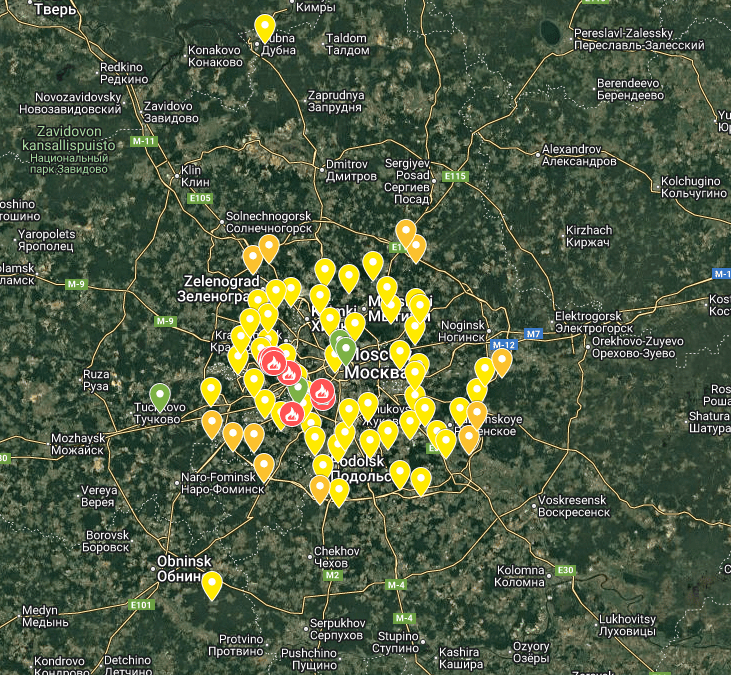
While the deployment of these towers is part of Russia’s broader air defense strategy, the visible gaps in the placement of air defense systems in some locations indicate that the project is still in its developmental phase, and its effectiveness remains to be seen.
Earlier, it was reported that Ukraine's successful Operation “Spiderweb” dealt a heavy blow to Russia's strategic aviation, effectively targeting one of the key components of its nuclear triad, while Russia’s air defense severely underperformed.
Discuss this article:



-c439b7bd9030ecf9d5a4287dc361ba31.jpg "Photo of Katherina Popilnichenko")



-111f0e5095e02c02446ffed57bfb0ab1.jpeg "Photo of Roman Kohanets")