- Category
- Latest news
Russia Parks Oreshnik Nuclear Missiles in Belarus—But Aims at the West
 Prefer U24 Media on Google
- Authors


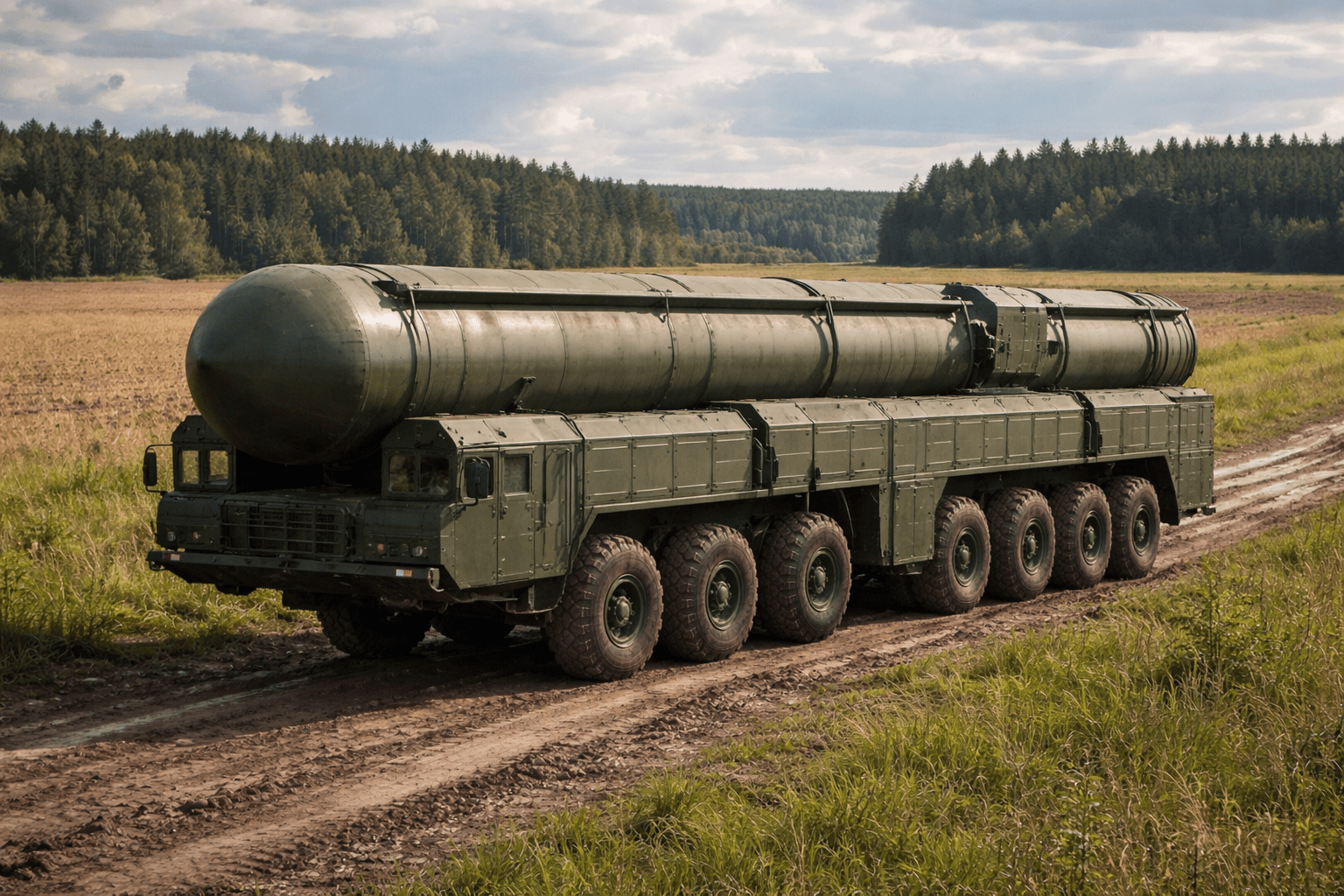
Russia has begun the deployment of its nuclear-capable intermediate-range ballistic missile system, known as Oreshnik, to Belarusian territory, according to multiple independent OSINT analysts and satellite imagery reviewed by ArmsControlWonk.com and reported by Defense Blog on December 27, 2025.
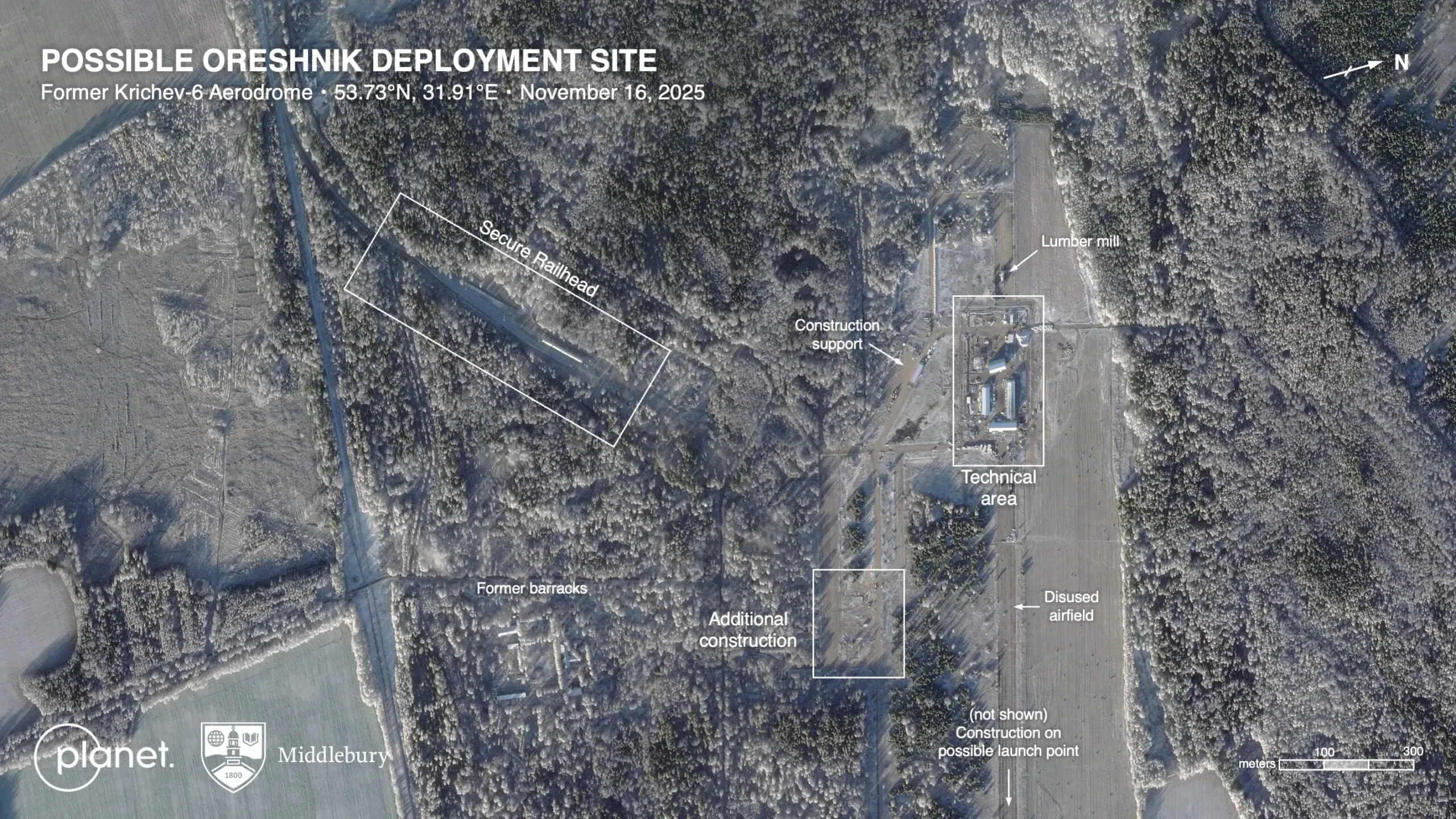
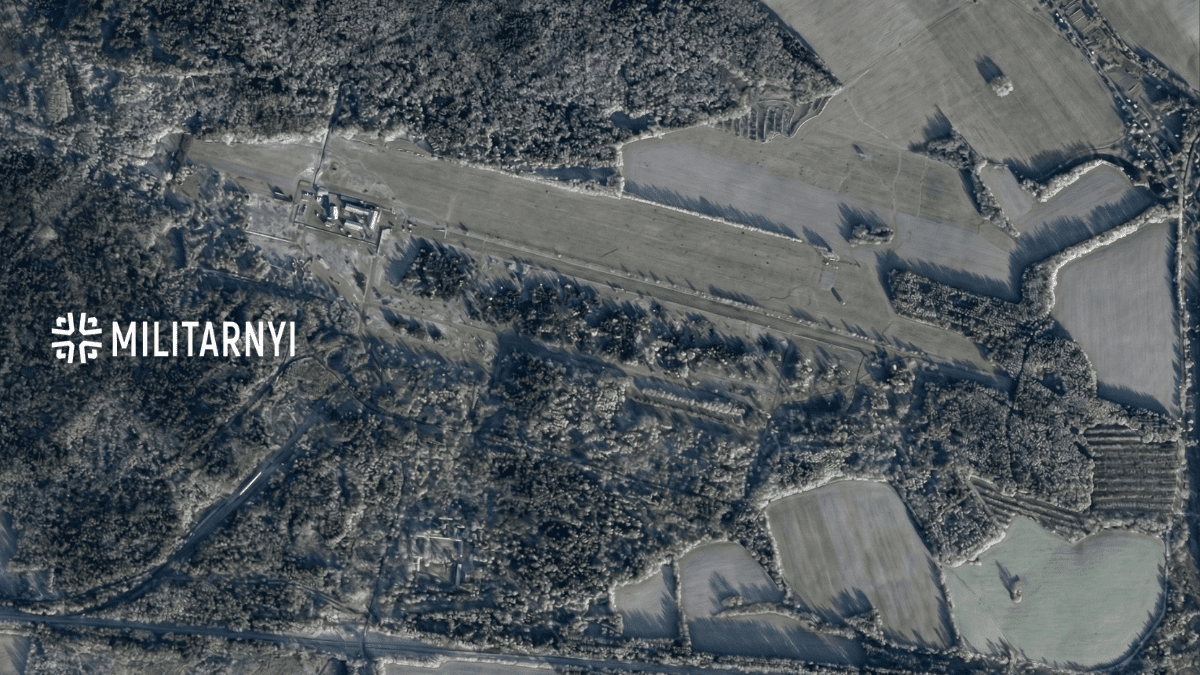
Analysts affiliated with the Middlebury Institute of International Studies, including Dr. Jeffrey Lewis and colleagues Michael Duitsman and Decker Eveleth, identified the former Krichev-6 airfield in eastern Belarus as the likely location for the Oreshnik missile deployment. The site is situated just 4–5 kilometers from the Russian border in the Mogilev region.
The location was selected after assessing over a dozen potential sites, many of which previously hosted Soviet-era SS-20 Pioneer missile systems.
According to satellite imagery provided by Planet Labs, construction at Krichev-6 began in August 2025 and includes a rebuilt railway terminal, protective bunkers, and new concrete structures on the former runway.
Belarusian leader Alexander Lukashenko confirmed the presence of the Oreshnik system in mid-December, stating,
“The first positions have been prepared for the Oreshnik missile system. We have had it since yesterday, and it is going on combat duty before the end of the year.” Belarus’s defense minister later echoed this, confirming deployment on Belarusian territory.
Ukrainian President Volodymyr Zelenskyy also commented on the development, saying earlier this week that the relocation of the Oreshnik system to Belarus was “nearing completion”, although he did not publicly name the specific location.
According to the Middlebury team and cited US government assessments, the Oreshnik system is derived from the first two stages of the RS-24 Yars intercontinental ballistic missile and shares design lineage with the RS-26 Rubezh.
In its MIRV (multiple independently targetable reentry vehicle) configuration, the missile is believed to have a range of approximately 3,500 kilometers and can carry up to six nuclear warheads or alternative payloads.
-1d9fa7480e5881fc68e774e53f4fa441.jpg)
The secured area at Krichev-6 is estimated to accommodate only two to three launchers—enough for a battalion-level element rather than a full regiment. There is currently no visible infrastructure for storing nuclear warheads at the site, indicating that the warheads would remain under Russian control and be transported only if needed.
While the location’s proximity to Russia minimizes its tactical advantage—placing it effectively within the same strike envelope as Smolensk—the deployment is seen by analysts as politically symbolic.
Earlier, Ukrinform reported that Belarus has been secretly building a full-cycle ammunition plant under a classified project known as Uchastok, intended to produce Soviet-caliber artillery and rocket rounds—122 mm and 152 mm—for Russia’s war effort.
Discuss this article:



-c439b7bd9030ecf9d5a4287dc361ba31.jpg "Photo of Katherina Popilnichenko")