- Category
- Latest news
Russia Plots New Kherson Offensive That Could Trigger Black Sea Pollution Disaster
 Prefer U24 Media on Google
- Authors


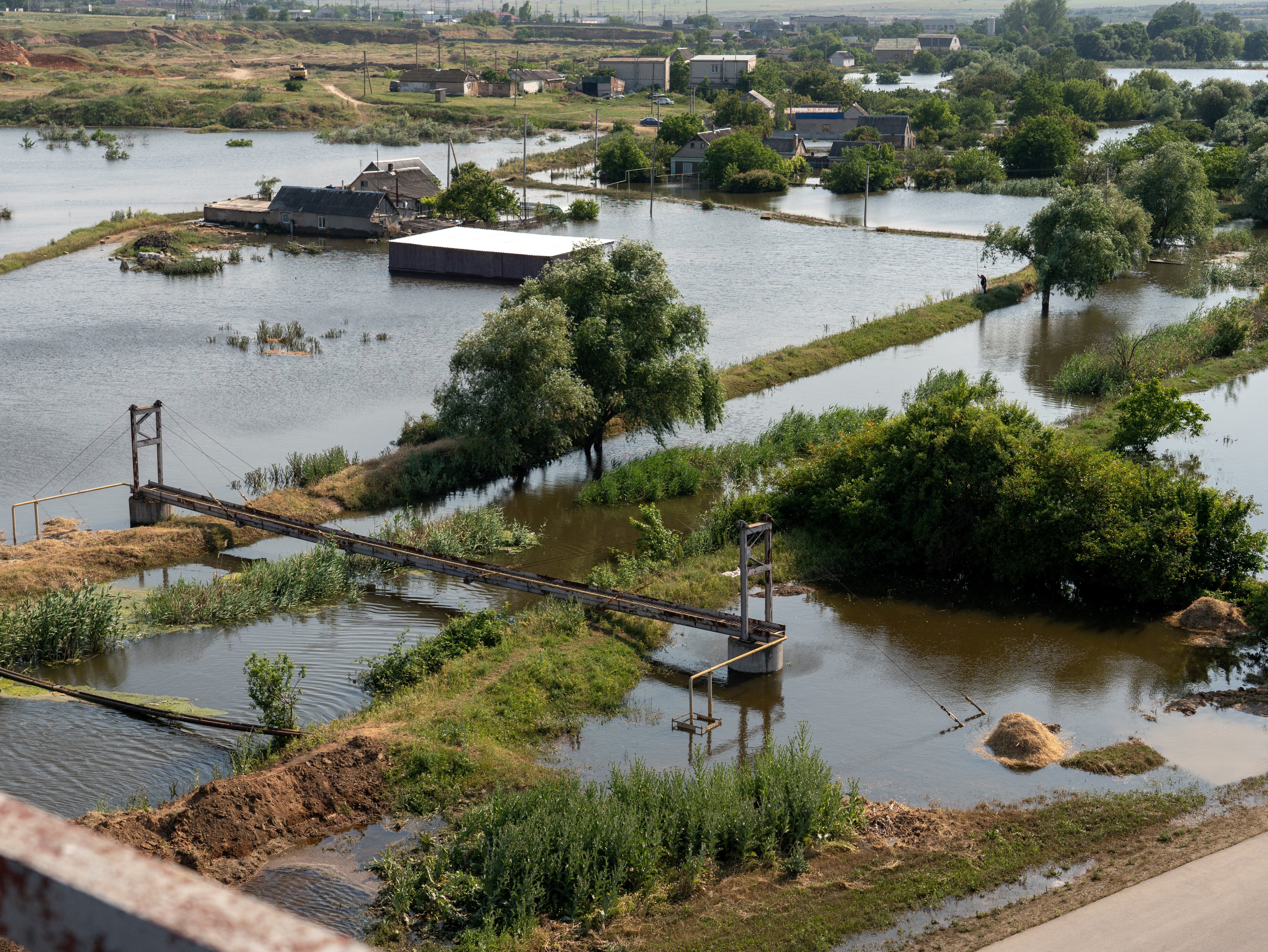
After the liberation of Kherson, the city has remained under constant Russian fire: in October alone, more than 9,000 FPV-drone attacks were recorded on this axis, daily artillery strikes reached 1,500–1,600 rounds, and the number of guided aerial bomb attacks rose from 250 in September to more than 550 in October, according to Channel 24 on December 1
Against this backdrop, the editorial team of Channel 24 received an intercepted combat order from the hacker group “256 Cyber-Assault Division,” indicating that Russian units are preparing for a further escalation in Kherson—including operations that could trigger major environmental consequences for the Dnipro River and the Black Sea basin. The document was found in the service correspondence of Major Oleksii Yatsenko of Russia’s 98th Airborne Division.
We bring you stories from the ground. Your support keeps our team in the field.
An analysis of Yatsenko’s correspondence shows that his unit, part of the 331st Parachute Brigade, was redeployed to the Kherson sector in autumn 2025. The occupying forces are considering an attempt to cross the Dnipro and seize the Korabel district, which they mistakenly identify as part of Karantynnyi Island, following outdated Soviet maps.
Following the destruction of the Kakhovka Hydropower Plant, Kherson’s water and energy infrastructure is functioning on the brink of failure. Wastewater now contains harmful substances at levels 1.2–4.2 times higher than permitted norms.
-6a831ba8208ee2b72860a2631c8ff8f7.jpg)
As reported by Channel 24, experts warn that any loss of power or the destruction of the city’s treatment facilities would immediately halt the daily supply of 100,000–110,000 cubic meters of drinking water, leave hospitals unable to operate or carry out surgeries, trigger sewage overflows within hours, and result in untreated wastewater flowing directly into the Dnipro River and the Dnipro–Bug estuary.
Environmental specialists warn that the consequences could extend far beyond Ukraine.
At the same time, Russia plans mass strikes on critical infrastructure—energy facilities, water-treatment systems, and pumping stations. Materials from Yatsenko’s email include coordinates for at least ten targets that Russian forces are preparing to hit with ballistic missiles and strike drones, Channel 24 reported.

If Kherson’s treatment facilities are destroyed, toxic organic compounds, pathogens, and heavy metals would flow into the Dnipro. The unique Dnipro–Bug estuary ecosystem would collapse, and the Black Sea could experience large-scale cyanobacterial blooms.
The potential fallout is far-reaching. Experts warn that fish spawning grounds could be wiped out, mussel populations and other natural biofilters would face a sharp decline, and coastal areas risk significant toxic contamination. The influx of pollutants could also trigger eutrophication and large-scale algae blooms, ultimately leading to a collapse of Black Sea fisheries within the next two to three years.

Sea currents would carry the contaminated waters to the shores of Romania, Bulgaria, and Turkey, causing billions in damages to fisheries, tourism, and aquaculture.
Earlier, Kherson regional police reported that Russian troops launched cluster munitions at the city’s coastal neighborhoods and warned residents to stay away from the shoreline due to the increased danger posed by unexploded submunitions.
Discuss this article:
-4a56a6b482ec132402c16ef6fcabf9a2.png)

-c439b7bd9030ecf9d5a4287dc361ba31.jpg "Photo of Katherina Popilnichenko")

-72b63a4e0c8c475ad81fe3eed3f63729.jpeg "Photo of Cyril Barabaltchouk")

-111f0e5095e02c02446ffed57bfb0ab1.jpeg "Photo of Roman Kohanets")