- Category
- Latest news
Russia Pushes Toxic Mine Water as “Suitable to Drink” in Temporarily Occupied Donetsk Despite Severe Health Risks
 Prefer U24 Media on Google
- Authors


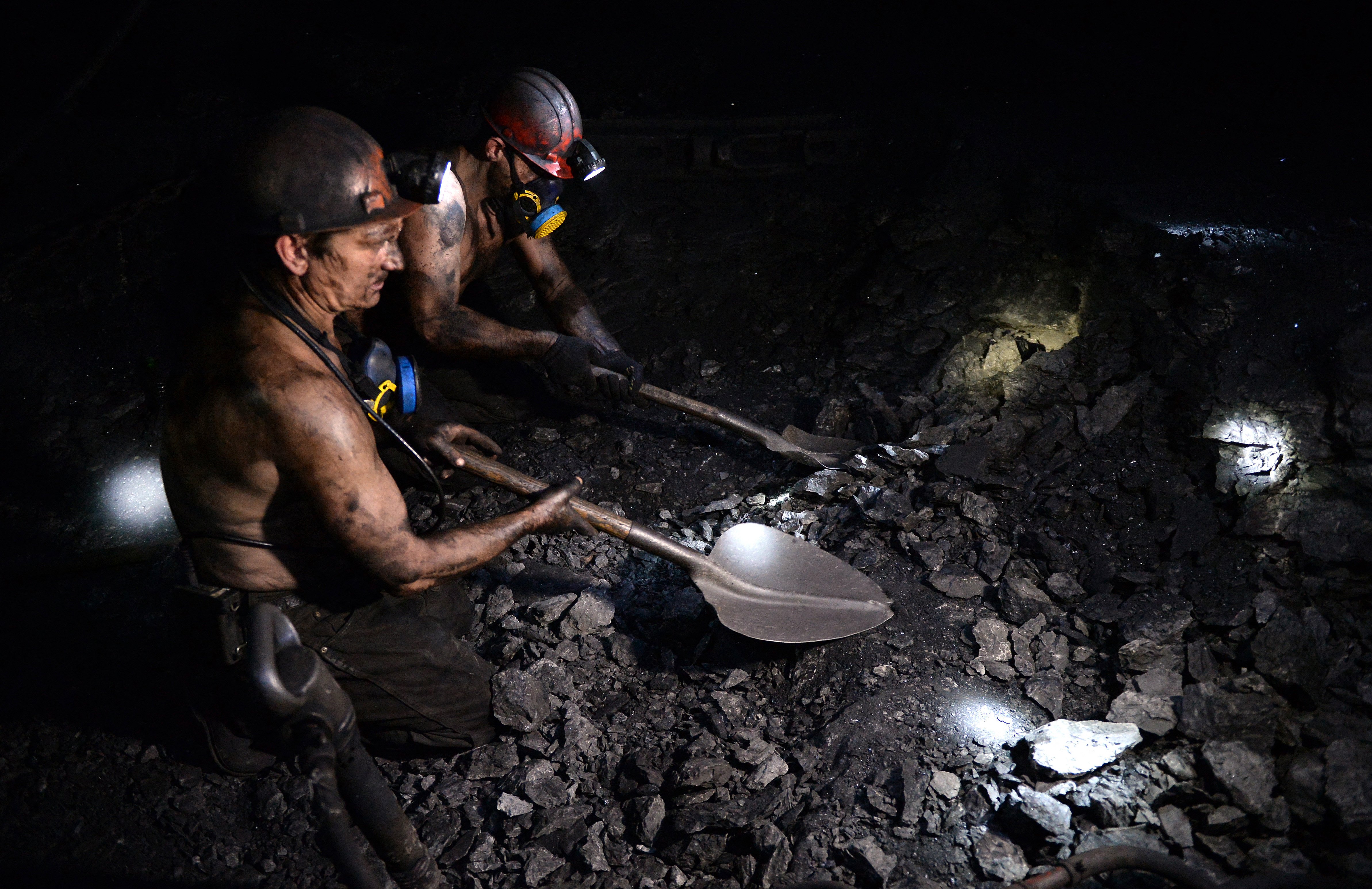
Russian authorities in temporarily occupied parts of Donetsk region have launched an information campaign to prepare residents for the use of mine water as an alleged “alternative” to drinking water. Amid a growing crisis, Olena Nikitina, an adviser to thr head of so-called “DPR,” (“Donetsk People’s Republic,” a Russian-controlled proxy entity created by Moscow in 2014 in the occupied part of Ukraine’s Donetsk region) claimed that mine water is “suitable for drinking.”
According to analysts from Ukraine’s Center for National Resistance on November 24, Russia is attempting to legitimize mine water as a “temporary solution,” effectively replacing destroyed water infrastructure with a toxic substitute. Experts note that mine water in Donbas contains extremely high mineralization, heavy metals, sulfates, petroleum products, radionuclides and industrial chemicals. Even Russian environmental specialists admit such water can be used only for technical purposes, never for human consumption.
We bring you stories from the ground. Your support keeps our team in the field.
At the same time, occupation authorities are promoting narratives about the “successful experience of Kuzbass ,” attempting to convince locals that mine water could become a “new resource.” The Center for National Resistance found that treatment technologies used in Russian industrial regions cannot remove radionuclides, heavy metals or toxic organic compounds. Mine water in Donbas has been found to contain lead, cadmium, arsenic, mercury and remnants of mononitrochlorobenzene—a highly toxic substance dumped into mines during Soviet-era accidents. Water from such reservoirs cannot be used for drinking under any circumstances.
According to the center, the situation is further complicated by radiation risks. At the YunKom mine, the site of a 1979 underground nuclear explosion, Russian occupation authorities stopped pumping water in 2018. This has caused flooding of mine workings and increased the risk of a radioactive capsule being compromised. Specialists warn that underground radiation could seep into groundwater, making any form of purification technically impossible.
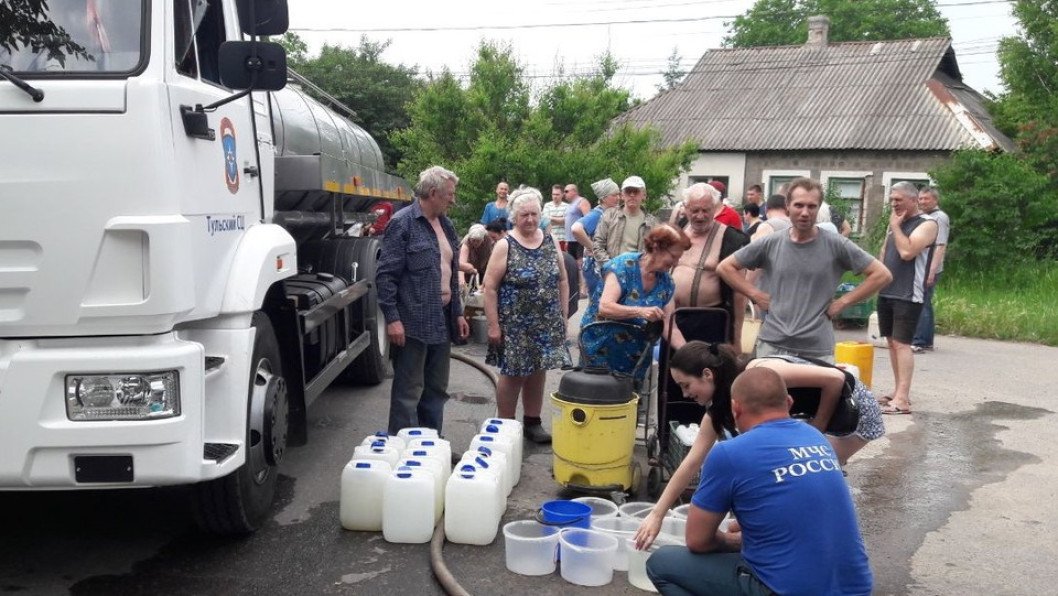
With the Siverskyi Donets–Donbas canal destroyed, water intakes located in active combat zones, and engineering infrastructure either ruined or unmanaged, occupation authorities are attempting to mask a severe environmental and humanitarian disaster by presenting contaminated mine water as a solution.
Consuming such water poses a direct threat to health. Heavy metals accumulate in the liver and bones, leading to anemia, kidney damage and neurological disorders, while in children they contribute to developmental delays and a higher risk of cancer, as reported by the Center for National Resistance. Radionuclides further amplify carcinogenic risks. Excess salts can trigger hypertension, heart failure and dehydration. Medical experts warn that for people with chronic illnesses, pregnant women and children, such water may be life-threatening.
Earlier, in a video address marking three years since Russia declared the annexation of four Ukrainian regions, Vladimir Putin claimed that Russia is waging a “righteous battle” to protect what he described as the will of the people in Luhansk, Donetsk, Zaporizhzhia, and Kherson.
He asserted that the Russian armed forces and society are “united in defending their historical unity and love for the homeland.”
Discuss this article:
-4a56a6b482ec132402c16ef6fcabf9a2.png)


-c439b7bd9030ecf9d5a4287dc361ba31.jpg "Photo of Katherina Popilnichenko")

-72b63a4e0c8c475ad81fe3eed3f63729.jpeg "Photo of Cyril Barabaltchouk")
-111f0e5095e02c02446ffed57bfb0ab1.jpeg "Photo of Roman Kohanets")