- Category
- Latest news
Russian Economy Shrinks for First Time Since 2023 as January GDP Drops by 2.1%
 Prefer U24 Media on Google
- Authors

-72b63a4e0c8c475ad81fe3eed3f63729.jpeg "Photo of Cyril Barabaltchouk")
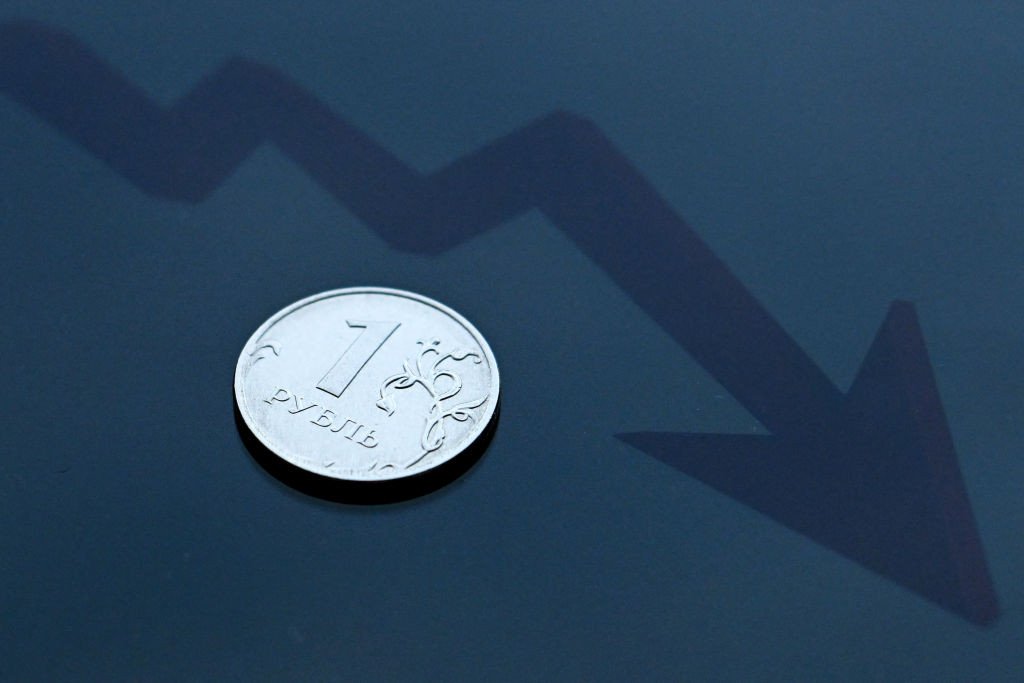
Russia’s economy has entered a phase of contraction for the first time since March 2023, with a 2.1% year-on-year drop in GDP for January, compared to the same month in 2025, The Moscow Times reported on March 5, citing Russia’s Ministry of Economic Development.
This marks the first decline in Russia’s economic output in nearly a year and highlights a crisis in the country’s economic landscape.
We bring you stories from the ground. Your support keeps our team in the field.
The Ministry attributes the downturn to several factors, including a two-day reduction in the working month and extreme cold weather, which had a notable impact on industrial output. Specifically, the construction sector saw a sharp 16% contraction, a stark contrast to the previous year when it grew by 6%, thanks to an unusually warm January.
However, economists caution that even when accounting for these external factors, Russia’s economy appears to be stagnating rather than growing. Underlying economic activity has slowed down across most major sectors, The Moscow Times wrote.
One of the primary drivers of the economic downturn is a significant weakening of consumer demand. In 2025, consumption accounted for 51.1% of Russia’s GDP, but early data for 2026 suggests that demand is faltering. This stagnation comes on the back of a VAT hike, which has added pressure to household finances.
Retail turnover and consumer services have shown only modest growth. In January, real retail turnover increased by just 0.7% year-on-year, down sharply from 3.9% in December. The food services sector has shown more resilience, however, with consumer spending rising by 15.1%.
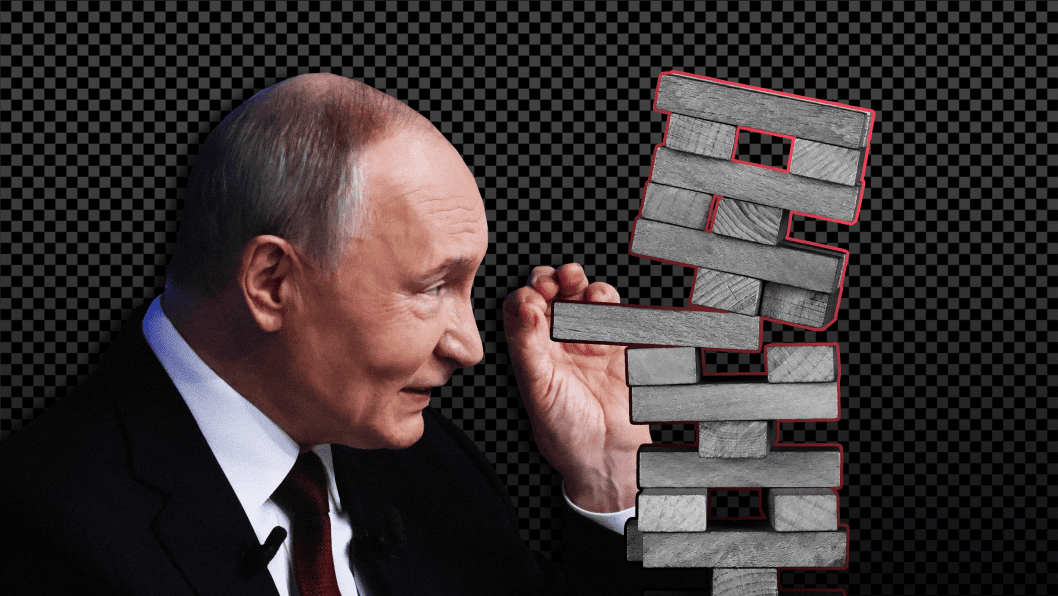
Economist Sergey Alexashenko described the weak growth in retail trade as surprising, especially given the 7.7% rise in real incomes the previous year. Alexashenko speculated that this disparity indicates that the rise in incomes is benefiting those who already have sufficient resources to meet their needs, while those hoping for a better standard of living are seeing no improvement.
Wages, too, have shown signs of slowing down. In 2025, real wages grew by 4.4%, but the rate of growth slowed to just 2.4% in December. This reflects a more cautious pace of wage increases, which, coupled with high credit rates, is discouraging consumer spending, according to Daniil Nametkin, director of the Center for Investment Analysis and Macroeconomic Research, cited by The Moscow Times.
Despite the overall downturn, the defense sector continues to provide a stabilizing influence. Analysts have pointed out that military production remains robust in certain areas, particularly in industries linked to Russia’s military-industrial complex. Notably, there was no decline in sectors with a significant focus on military production, which is an unusual exception to the typical seasonal drop in industrial output.
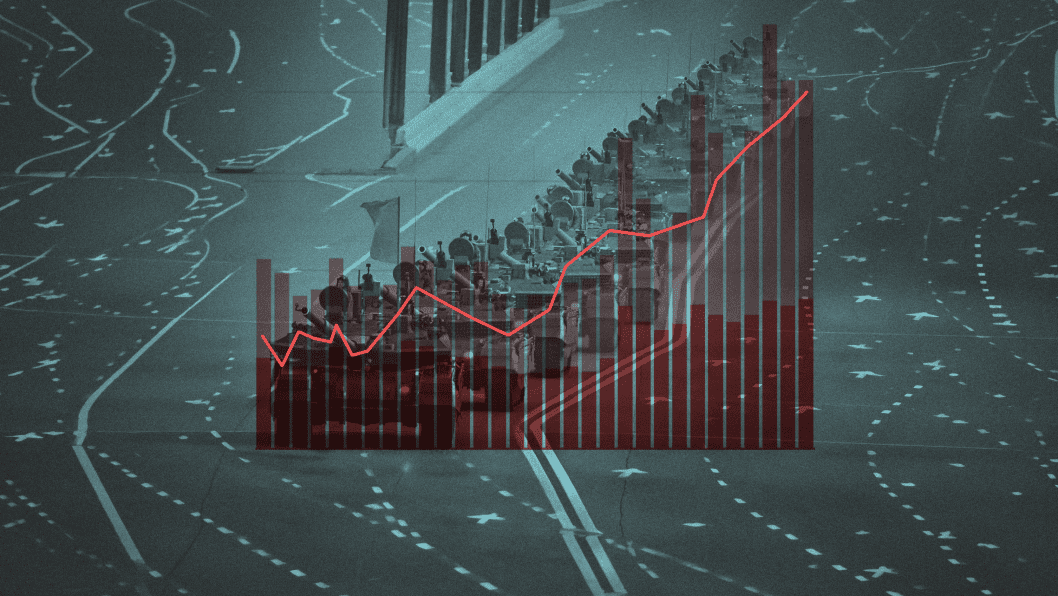
However, the wider economy has experienced a general downturn, with some sectors faring worse than others. The metallurgy industry saw a 6.6% decline, driven by low global prices and high interest rates, while the automotive sector suffered a substantial 21.3% drop due to weakening consumer demand.
After modest growth of just 1% in 2025, a sharp decline from the previous two years, which saw growth rates of 4.9% and 4.1%, Russia’s Ministry of Economic Development forecasts a slight 1.3% growth for 2026. However, most other projections are more pessimistic.
The International Monetary Fund (IMF) expects growth of only 0.8%, while the Central Bank of Russia has forecasted a range of 0.5% to 1.5%. Analysts surveyed by the Ministry of Economic Development project an average growth rate of 1.1%, with the Higher School of Economics estimating 0.9%, The Moscow Times wrote.
This latest contraction follows earlier reports that Western sanctions have severely degraded Russia’s oil sector and triggered a critical surge in its budget deficit.
To mask the true financial toll of its full-scale invasion of Ukraine, the Kremlin has been actively manipulating its economic statistics. Despite official claims, Russia’s actual federal budget deficit for 2025 was 26% higher than acknowledged, hitting nearly 3.6% of its GDP.
Discuss this article:
-9a7b3a98ed5c506e0b77a6663f5727c5.png)

-c439b7bd9030ecf9d5a4287dc361ba31.jpg "Photo of Katherina Popilnichenko")