- Category
- Latest news
Russia’s Defense Industry May Be Running Out of Steam Amid Sanctions and Economic Stress, Report Says
 Prefer U24 Media on Google
- Authors


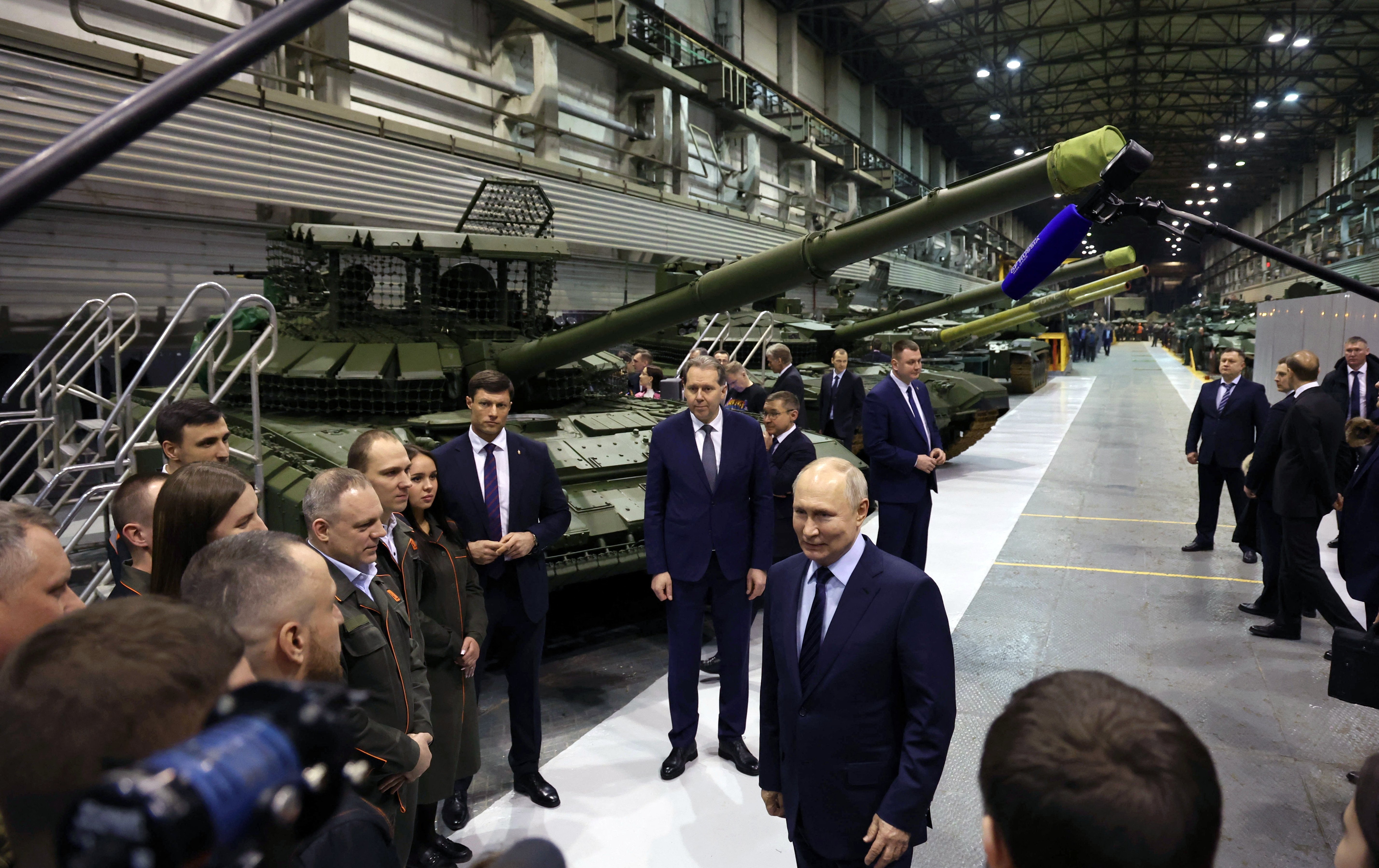
Former Russian deputy energy minister Vladimir Milov has released a new assessment examining the condition of Russia’s defense-industrial sector. According to reporting by Defence Blog on March 2, he concludes that the country’s wartime production boom is beginning to lose momentum as financial pressures mount across military manufacturers.
The analysis, based on publicly available industrial statistics, corporate disclosures, and official government statements, challenges the widely promoted narrative that Russia has successfully built a stable, self-sustaining wartime economy.
We bring you stories from the ground. Your support keeps our team in the field.
As highlighted by Defence Blog, Milov argues that rapid growth in weapons output during 2023 and 2024 was largely fueled by extraordinary government spending injections rather than deep structural modernization of the defense industry. Now, as budget expansion slows and financing constraints intensify, systemic weaknesses are becoming increasingly visible.
Sanctions pressure, costly borrowing, regulated pricing, and declining investment capacity are converging at the same time—limiting the sector’s ability to maintain earlier production growth.
Since the start of the full-scale invasion of Ukraine, Russian authorities have significantly reduced transparency around defense production figures. Many companies have stopped publishing detailed reports, forcing analysts to rely on indirect indicators.
-051a89e5a5304a3f0a58cfb1746eda24.png)
Nevertheless, aggregated industrial data released by Rosstat allows observers to track defense output through related manufacturing sectors—a method referenced in the Defence Blog analysis.
Three industrial categories serve as key indicators: fabricated metal products linked to weapons and ammunition, transport equipment covering armored vehicles and aircraft, and electronic and optical manufacturing tied to targeting systems and military electronics.
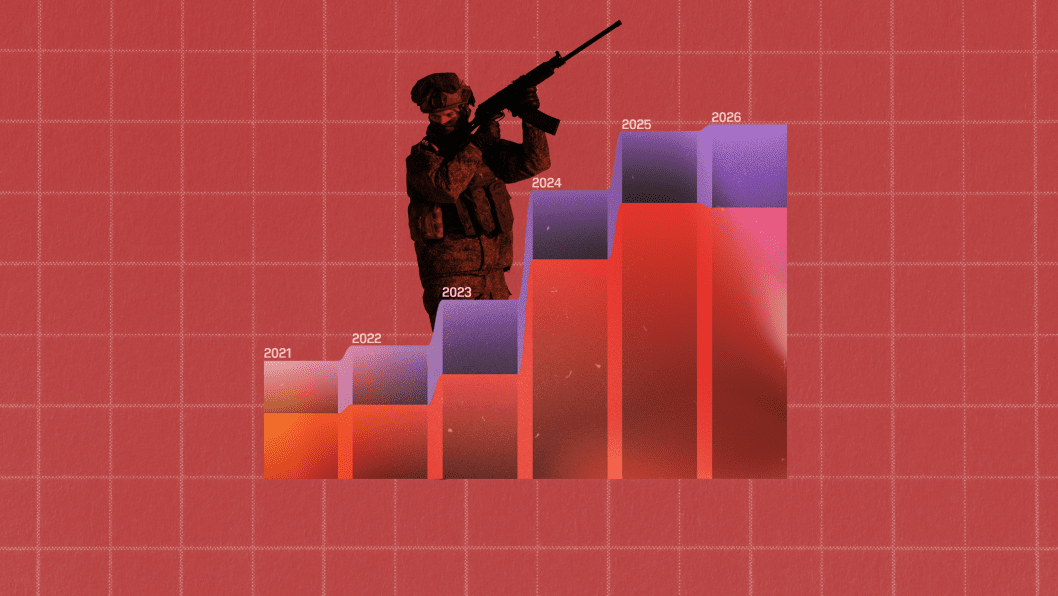
All three sectors expanded rapidly throughout 2023 and 2024. However, growth slowed noticeably in 2025. According to Milov’s assessment cited by Defence Blog, production increases in weapons and electronics dropped to roughly half previous rates, while combat vehicle manufacturing also showed clear deceleration.
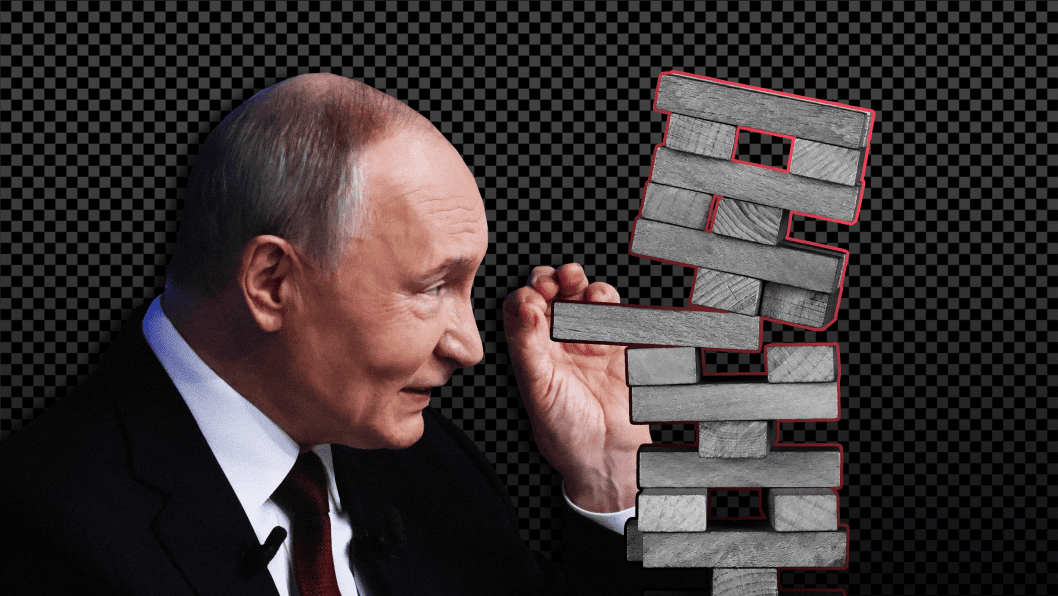
By late 2025, growth in electronics and optical production had fallen to around 1% in December—the weakest performance recorded since the invasion began—while weapons manufacturing temporarily entered negative territory during parts of the year.
Comments attributed to First Deputy Prime Minister Denis Manturov suggest recent output figures were driven primarily by earlier wartime backlogs rather than new investment cycles, reinforcing concerns that expansion may not be sustainable.
Sanctions remain a central constraint. The analysis describes Russia’s defense sector as heavily affected by restricted access to advanced technologies, components, and especially modern machine tools. Numerically controlled manufacturing equipment—essential for establishing new production lines—is identified as a critical vulnerability, with domestic replacements unable to fully compensate for lost Western imports.
-0a5cbbb9c4bbf50b0374bd541b58ba00.jpg)
Financial pressures further complicate the picture. Military equipment produced under Russia’s state defense order operates under government-regulated pricing rather than market mechanisms. Profit margins typically range between 5% and 10%, while inflation—estimated at 14.5% in Russian Central Bank surveys—effectively erodes profitability.
“There is no free pricing for products supplied under the state defense order,” Milov said, adding that inflation “will simply eat any regulated profitability of 5–10%.”
Statements from Rostec leadership, also referenced by Defence Blog, indicate many defense enterprises are operating with minimal or even negative profitability. Average margins across Rostec—including civilian and financial divisions—stand at roughly 2–3%, implying even tighter conditions within purely military production.
Financing arrangements create additional strain. Defense contractors typically receive only partial advance payments, with final funds transferred after lengthy acceptance and budget approval procedures. This forces manufacturers and subcontractors to rely on commercial loans to sustain production cycles.
With borrowing costs exceeding 20%, companies face severe financial pressure when operating on thin margins, increasing repayment risks and driving debt accumulation throughout supply chains.
The strain is reflected in the performance of Promsvyazbank (PSB), the state-backed lender closely tied to defense financing. The bank reportedly posted a 12-billion-ruble loss in the first half of 2025 after setting aside reserves for potentially unrecoverable loans issued to defense enterprises. The government later injected two separate 30-billion-ruble recapitalizations to stabilize the institution.
-3aed29944c85ef24f42784c3821fdca4.png)
Corporate disclosures and legal disputes across aircraft manufacturing, engine production, and missile development sectors point to similar liquidity problems. Supplier lawsuits over unpaid invoices and growing payment delays suggest financial stress is spreading beyond prime contractors into regional subcontractor networks—a trend Russian business associations increasingly identify as a major systemic risk.
Labor and investment indicators show parallel warning signs. Wage growth in defense-linked industries has slowed after earlier wartime increases and now trails inflation, reducing real income gains for workers. Investment in electronics and optical manufacturing—previously one of the fastest-growing sectors—reportedly turned negative during parts of 2025, signaling declining reinvestment capacity.
Unlike Western defense companies that balance military contracts with profitable civilian production, Russian conglomerates remain heavily dependent on state orders. Rostec previously aimed to raise civilian output to 50% of total production, yet current levels remain near 29%, limiting alternative revenue streams capable of offsetting weak military margins.
Taken together, the assessment—as summarized by Defence Blog—portrays Russia’s wartime industrial expansion as heavily reliant on exceptional government spending rather than durable economic foundations.
As budget growth slows, rising debt exposure, constrained modernization, and sanctions pressure are increasingly shaping the operating environment, even as factories continue operating at a high tempo.
The interaction between regulated pricing, expensive credit, delayed payments, and technological restrictions creates a reinforcing cycle that gradually weakens industrial resilience — a dynamic defense analysts are closely monitoring when assessing Russia’s long-term ability to sustain weapons production.
Earlier, a massive data analysis confirmed the identities of over 200,000 Russian soldiers killed during the full-scale invasion of Ukraine.
The data reveals that 57% of those killed—including mercenaries, mobilized citizens, and prisoners—had no military affiliation before the February 2022 invasion.
The scale of the war has escalated sharply over the last 12 months. The invasion of Ukraine has become the deadliest war for Russia since World War II. Current estimates suggest that one in every 25 Russian men aged 18 to 49 has been either killed or severely wounded on the battlefield.
Discuss this article:

-c439b7bd9030ecf9d5a4287dc361ba31.jpg "Photo of Katherina Popilnichenko")