- Category
- War in Ukraine
Why Putin Is a "Slave to War"
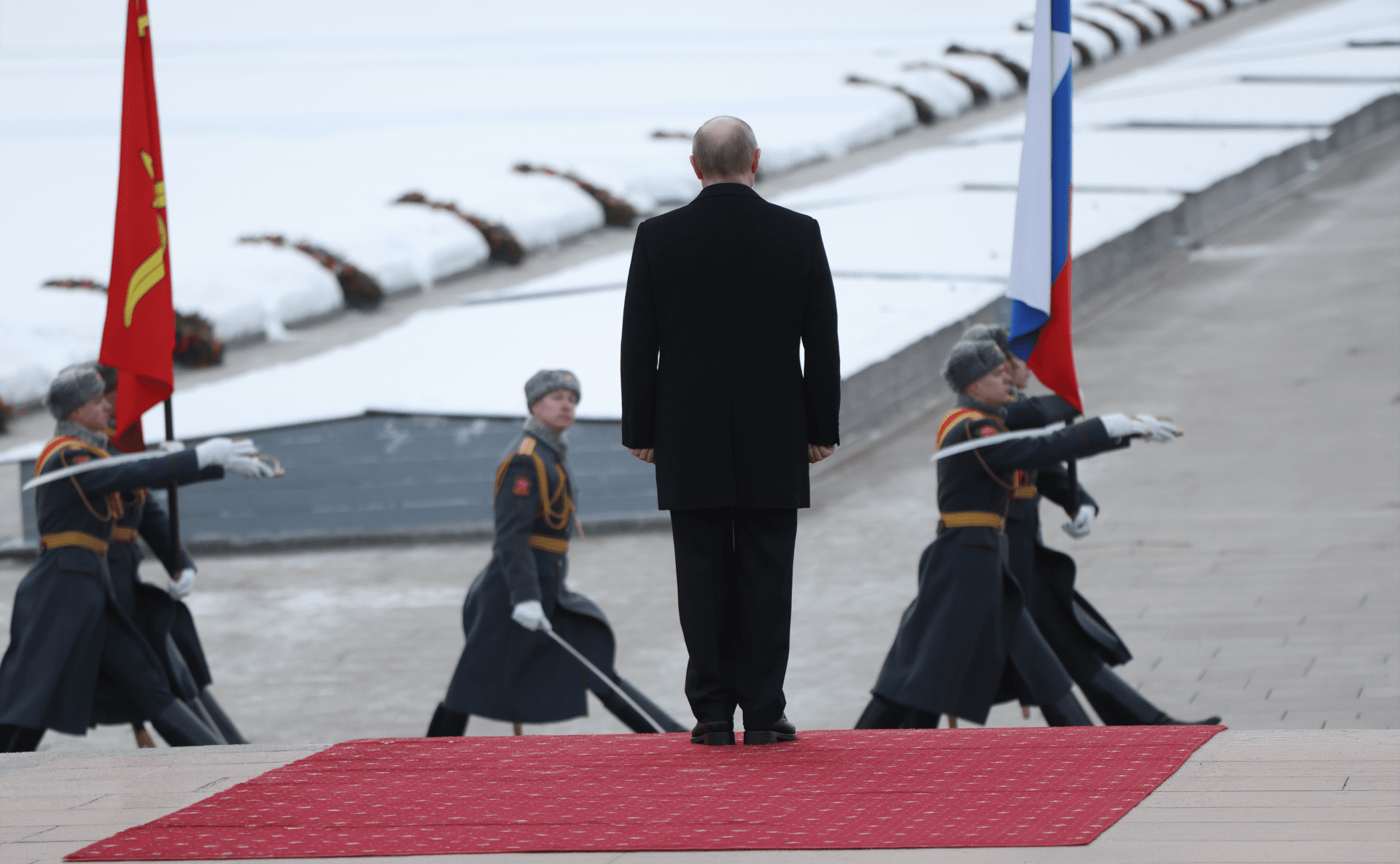
“He may see himself as a Tsar, but he is a slave of war,” President Zelenskyy said regarding the Russian leader at the Munich Security Conference on February 14, adding that Putin “cannot imagine life without power or after power.” How many wars has Russia been in since Putin came to power?
 Prefer U24 Media on Google
- Authors

-605be766de04ba3d21b67fb76a76786a.jpg "Joseph Place")
So far, Putin has shown no interest in slowing down Russia’s attacks on Ukraine, and war has been a core component of Putin’s rise to power and how he has maintained it. This is despite the high costs to Russia that the invasion of Ukraine has inflicted on Russia’s economy, military, and reputation.
How war shaped Putin’s rise
When did Putin come to power?
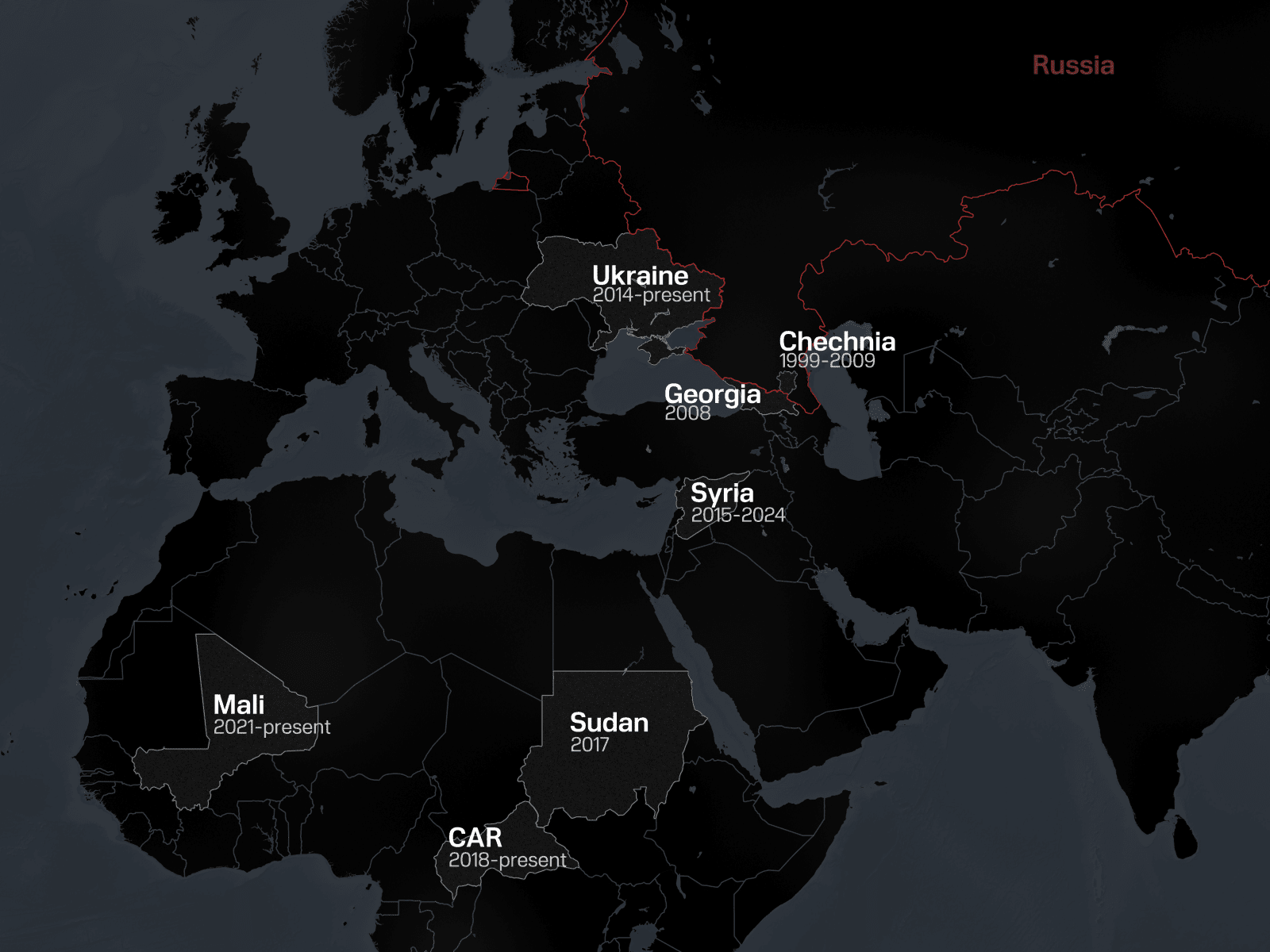
War has been a core component of Putin’s success in consolidating power and in gaining popularity in the first place. But, when did Putin come to power? In 1999, Putin was the Prime Minister under then-President Boris Yeltsin. In September, apartment buildings in three Russian cities were bombed, with over 350 people killed, and Russian authorities quickly, and controversially, blamed Chechen separatists.
These bombings led to the Second Chechen War. Putin’s popularity jumped from 31% to 80%, according to some estimates. Polls in Russia are not entirely reliable for gauging public opinion on Putin; however, independent polling can still indicate trends. Putin used this conflict to solidify his popularity, with Yeltsin anointing him as his successor, and set a trend we would see up until now. The war in Chechnya officially concluded in 2009, after 9 years of guerrilla fighting and 10 years of overall conflict. However, this was far from the only war in which Putin was involved.
Russia’s invasion of Georgia
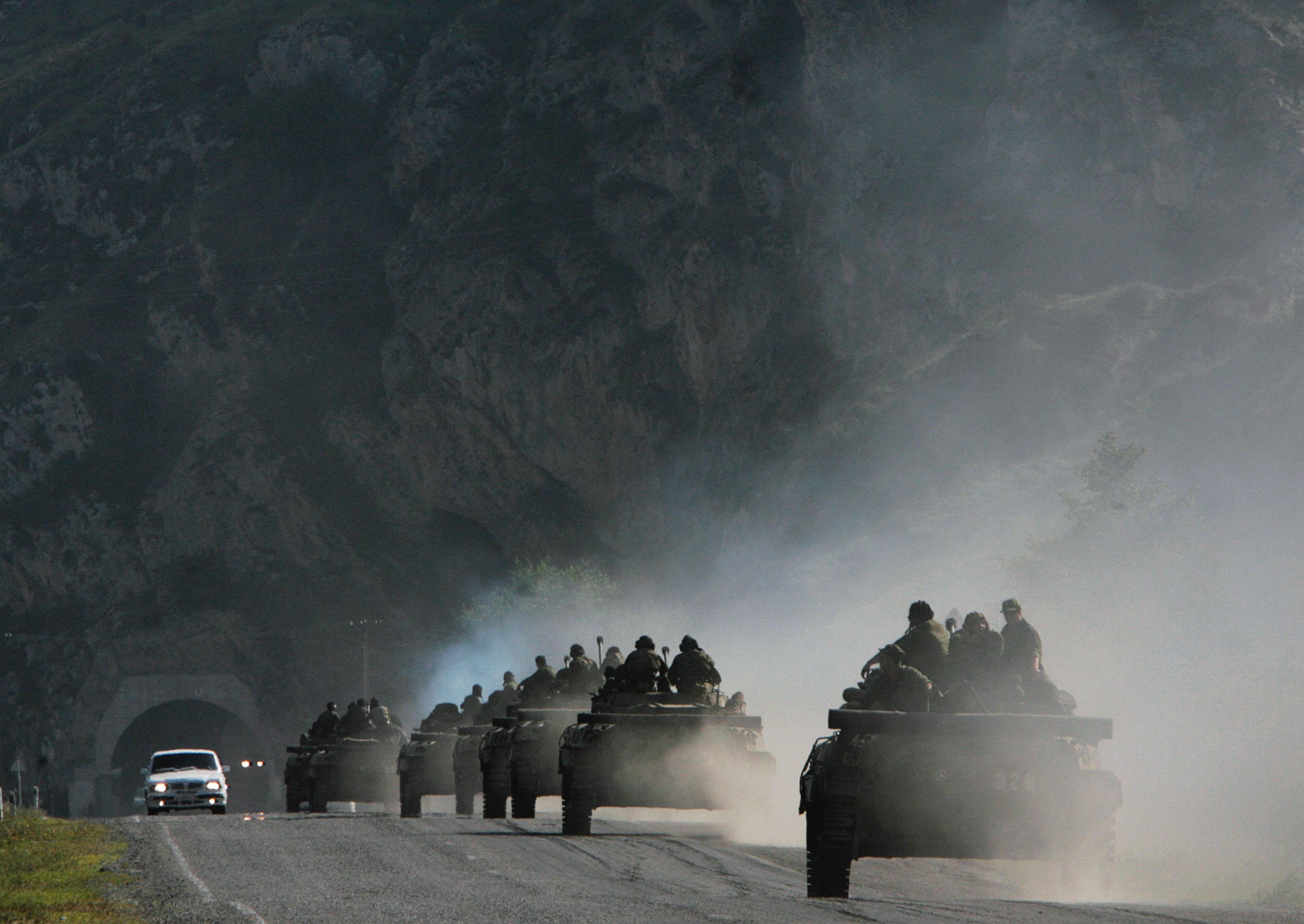
While in the 2000s, Putin appeared to align with Western powers in providing energy and in fighting the “War on Terror”. However, in 2007, Putin criticized Western dominance globally, NATO, and many perceived it as a shift in foreign policy, which led to Russia’s increased aggression. In 2008, Russia invaded Georgia, occupying South Ossetia and Abkhazia, expelling many Georgians from the region, and a total of 192,000 civilians were displaced by the war. This also boosted his popularity to 88% in Russia.
An expected repeat of victory in Ukraine
The next conflict was in Ukraine. Putin’s popularity rose after the so-called annexation of Crimea in 2014, and the invasion of Donetsk and Luhansk regions made war in Ukraine a constant reality for Russia, later culminating in the full-scale invasion in 2022. Putin used this war not only for imperialist goals of expanding Russian control, to subjugate Ukraine and Ukrainians, and destabilize global norms, but also to oppress opponents in his own country, even pro-war ones. For example, Russia has murdered journalists, opposition figures, arrested protesters, and controlled the media. The Russian government has enormous control over the population, especially since 2022.
Interventions in Syria and Africa
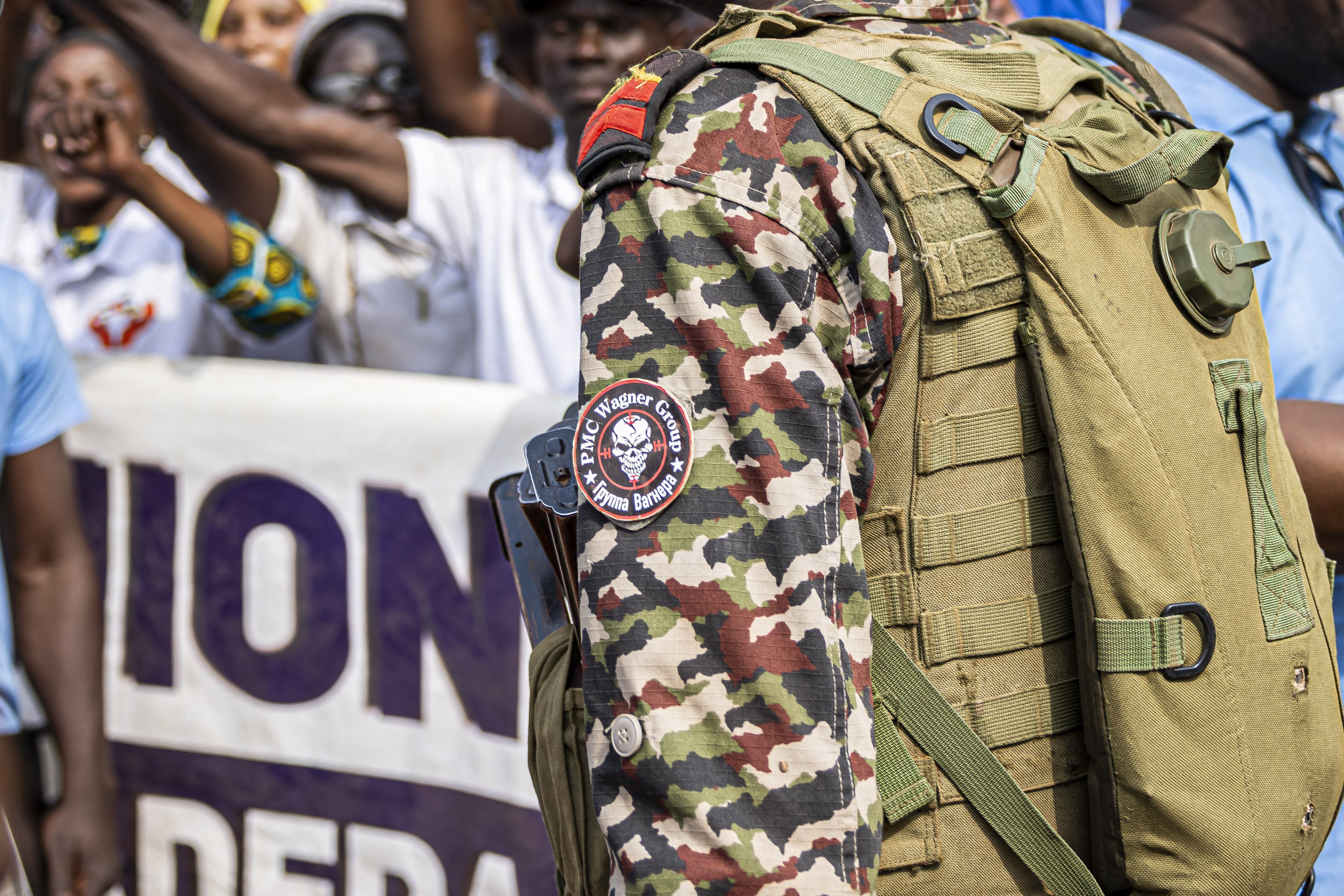
Russia also engaged in military actions in Syria in 2015, backing up Assad against the multiple factions that opposed him and conducting air strike campaigns in the country. They deployed troops and Wagner units on a “permanent” basis and had military bases and a naval base there until 2024, when Assad’s regime collapsed. War has become a constant reality of Russia and a core part of Putin’s foreign policy. Russia also engaged in military actions and sent the Wagner Group PMC and other similar groups to African countries such as the Central African Republic, Burkina Faso, and Mali, bleeding the countries of their gold.
War as political capital
Despite the fact that Ukraine has offered Russia multiple off-ramps and concessions, Russia has continued to invade Ukraine. Russia has also refused multiple attempts to de-escalate, often using peace talks as an opportunity to rather escalate, a pattern going back to 2014.
One part of the motivations for war, alongside subjugating Ukrainian aspirations of independence, is for Russia to have its place in the world, be respected, and have influence over other countries. Yeltsin hoped Russia would be seen as a great European power, something Putin at least pretended to aspire to, and as a power alongside the West. For example, Putin said in 2000 that Russia is "part of the Western European culture. No matter where our people live, in the Far East or the South, we are Europeans.”
But that position gradually shifted. As researcher Nicole Fernandez notes in Political Analysis, Putin’s 2007 Munich Security Conference speech marked a decisive break. He openly criticized the United States, NATO, and the European Union. “While Putin refrained from explicitly naming the revolutions in Georgia and Ukraine, it was apparent that his references to these events were embedded in his commentary on the OSCE and the promotion of democracy,” says Fernandez.
The speech cemented two ideas that clashed fundamentally with Western policy, Fernandez says: “Firstly, he contended that former Soviet states like Georgia and Ukraine fell under Russia's distinct influence. Secondly, he attributed the decisions of Georgia and Ukraine to distance themselves from their sphere of influence to Western influence and involvement.”
Military action thus has been used as a way to get leverage over others, threaten, coerce, and have a seat at the table. It is also likely that Putin cannot conceive of losing a war, as stated by some US officials, possibly because in cases like Chechnya and Georgia, he was successful.
Costs of Putin’s war in Ukraine
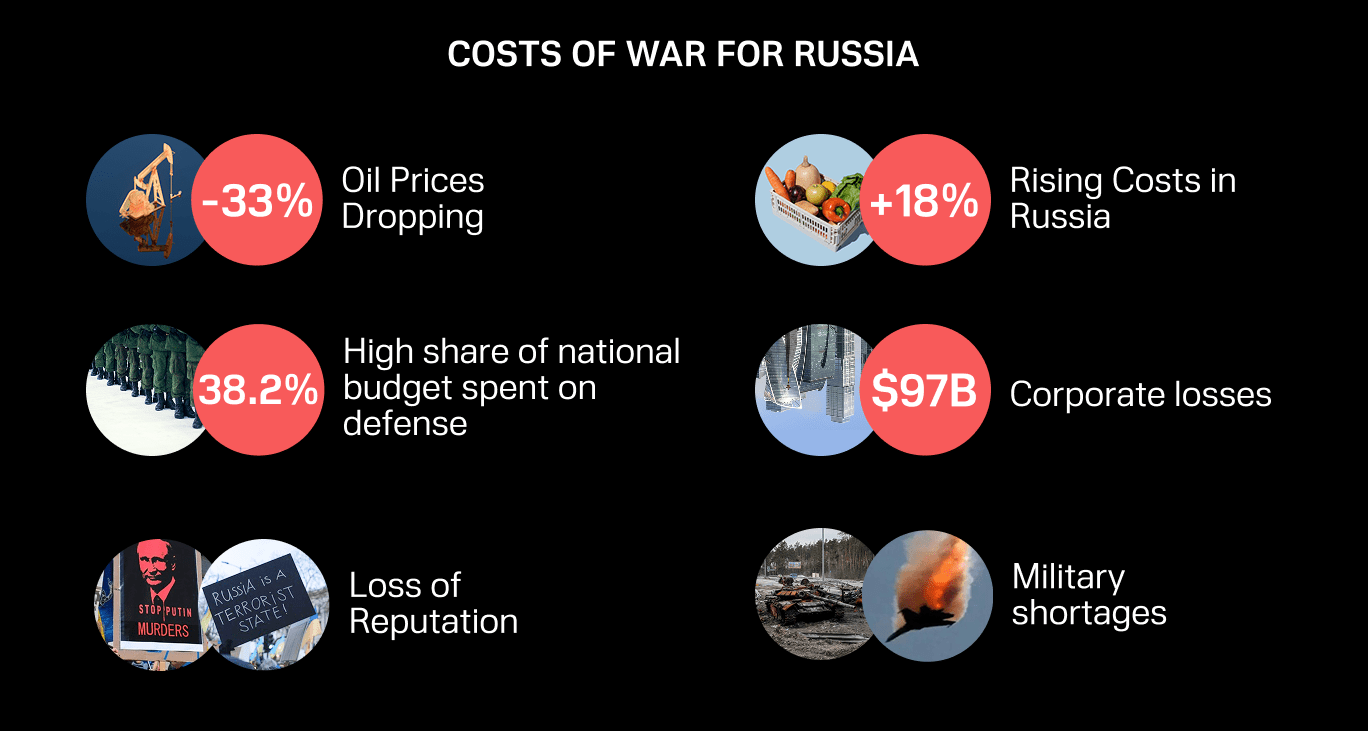
However, at this point, the costs are much higher than before. So what is different now? In the past, Russia was still very much able to function, a trend that geopolitical events, the income from trade, and minimal costs at home sustained. While the 2014 invasion of Ukraine led to sanctions and political isolation, the costs for Russia were relatively low and had less so. However, now Russia has gone all in on a war economy, essentially, and the costs are much higher after four years of the full-scale invasion, monetarily, politically, and militarily, making it no longer sustainable.
On the diplomatic level, Russia has become more isolated and less respected. “Russia had clearly lost a great deal of status in the Middle East by late 2025, and Putin’s reputation as a reliable ally has been shattered,” said Kimberly Marten, professor of political science at Barnard College, Columbia University. In addition, Russia has lost a great deal of influence in the South Caucasus region, with both Armenia, which hosts a Russian military base, and Azerbaijan pivoting away from Russia, with the USA leading negotiations for a treaty between the two countries. It also failed to assist Iran in its war with Israel, or Nicolas Maduro when he was captured by US forces. Russia did not attend Davos in any capacity either, indicating wider isolation.
This reliance on war has undermined every goal Putin laid out in his invasion of Ukraine and regarding politics in general. Russia hoped to be greeted as liberators in Ukraine, but their actions only angered Ukrainians. For example, after the invasion of Crimea and then Donetsk and Luhansk, Ukrainians who viewed Russia with a positive light massively decreased according to the Kyiv International Institute of Sociology. It went from around 78% of Ukrainians viewing Russia positively in February 2014 to 30% after the initial events of the war began. After the full-scale, it dropped further, to 3% by October 2024.
Regarding wider geopolitical powers, NATO has expanded with Sweden and Finland joining, Ukraine is likely to enter the European Union, a core motivation of the Revolution of Dignity, and Russia is in part running out of its allies globally.
This is not to mention the vast economic costs being burdened on the country from sanctions, the decrease in oil revenue, the vast sums spent on the war and rising taxation, inflation, rising costs for business, and other major issues. It is spending approximately 50% of its Federal budget on the war, according to German intelligence. Sanctions have had a significant impact on the economy, and trade levels are decreasing as well. Generally, its economy has been broken by the invasion.
Additionally, the military is experiencing extreme shortages of basic goods, many stockpiles are being exhausted, and sanctions also make it more difficult to acquire replacement parts for aviation and other sectors. It is hard to deny that Putin has become dependent on waging wars and sees his popularity and power deeply connected to the use of military power, even at the expense of the very country he leads.
Discuss this article:


-c439b7bd9030ecf9d5a4287dc361ba31.jpg "Photo of Katherina Popilnichenko")