- Category
- War in Ukraine
1 Million Soldiers for 1% of Ukraine Since 2023: Russia’s Trillion-Dollar War After Four Years
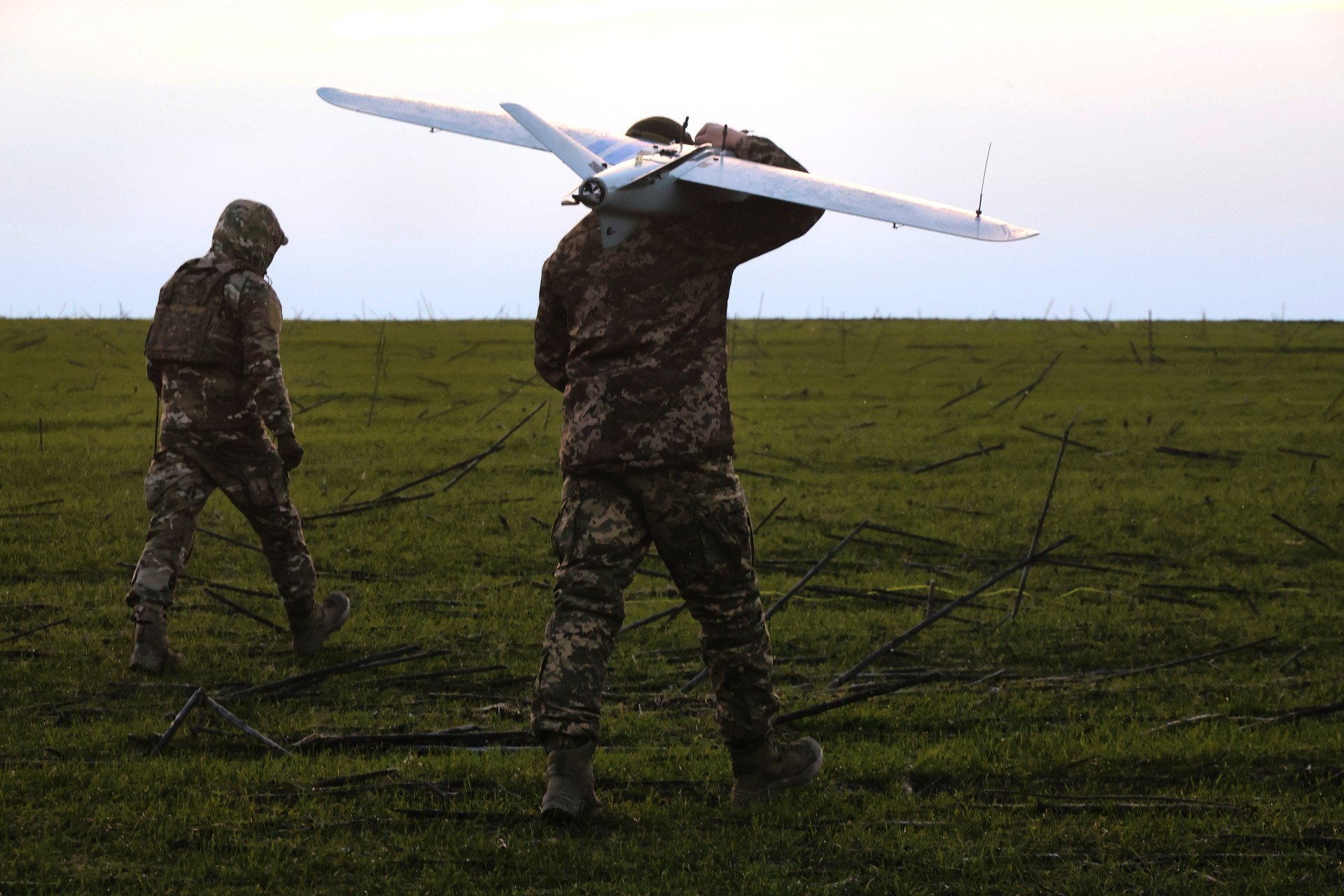
Moscow’s myth of Ukraine’s “inevitable defeat” collapses under basic arithmetic. To capture the rest of the Donetsk region could cost Russia years more war and hundreds of thousands of additional lives. The resources already lost were enough to build a world-class AI sector.
 Prefer U24 Media on Google
- Authors

-29a1a43aba23f9bb779a1ac8b98d2121.jpeg "Photo of Illia Kabachynskyi")
For Ukraine, February 24 is one of the most difficult days in its history. On that day in 2022, Russia launched its full-scale invasion, sending nearly 200,000 troops into Ukraine from three directions—north, east, and south—along with thousands of pieces of equipment, aircraft, and dozens of missiles.
The pace of Russia’s advance
“Kyiv in three days” turned into a catastrophe for the Russian army. The large-scale war has now lasted four years, or 1,462 days. Moscow’s losses during that time have reached 1.25 million soldiers killed and wounded, more than 10,000 tanks destroyed, 400 aircraft lost, two submarines sunk, one cruiser, and over 30,000 artillery systems.
But it is crucial to look not only at these numbers, but also at what Russia has gained in return. The most productive period for Moscow was the first months of the invasion. A sudden, massive assault from three directions allowed Russian forces to advance quickly in southern and eastern Ukraine and to approach within a few dozen kilometers of Kyiv. By the end of the year, however, Ukraine had pushed Russian troops out of the Kyiv, Chernihiv, and Kharkiv regions, liberated part of Kherson, defended Mykolaiv, and thwarted all attempts to reach Odesa. During the first year of the war alone, the Kremlin lost 109,000 troops killed and wounded.
The following data are critical to understanding the pace of Russia’s advance in this war. Despite repeated claims of Moscow’s victories, the reality looks like this: more than 1 million troops lost in exchange for just over 1% of Ukrainian territory.
2023 — 600 km² captured / 0.1% of Ukraine’s territory; 253,000 troops lost
2024 — 3,500 km² / 0.5%–0.6% of Ukraine’s territory; 431,000 troops lost
2025 — 4,500 km² / 0.7%–0.8% of Ukraine’s territory; 418,000 troops lost
Overall, Ukraine has lost around 1.4% of its territory at the cost of more than 1 million Russian soldiers. In 2024, during the Kursk operation, Ukraine managed to seize more than 1,300 km² of Russian territory, further offsetting these figures. At present, Ukraine is conducting stabilization operations in the south, having recaptured more than 400 km².
Pro-Russian slogans such as “To Berlin—we can do it again” have run aground in Ukraine against the small town of Chasiv Yar, just 18 km² in area, which has been under defense for nearly two years. Kupiansk, proclaimed “captured” four times in rhetoric, remains under Ukrainian control. Even Pokrovsk—attacked by a grouping of 170,000 troops—is holding out, although the city itself has long been completely destroyed.
We bring you stories from the ground. Your support keeps our team in the field.
How much has the war in Ukraine cost Russia?
The war is extraordinarily expensive for Russia, regardless of what officials claim. Much information is concealed, but some figures are available — and others can be calculated.
Russia’s military budget:
2022 — $102 billion
2023 — $109 billion
2024 — $149 billion
2025 — $150+ billion
2026 (planned) — $167 billion
The Kremlin’s spending plans have never aligned with actual expenditures. In 2022, less than $80 billion was initially allocated for the war in Ukraine, but total spending ultimately exceeded $100 billion.
From 2023 through the end of 2025, Russia officially spent more than $400 billion on the war, gaining just over 1% of Ukrainian territory in return. Since the start of the invasion, official expenditures alone have surpassed half a trillion dollars. Experts say hundreds of billions more remain hidden—including loans issued by state banks to defense enterprises across Russia to ramp up production. In 2025, estimates of such lending exceeded $200 billion.
It remains unclear how much Russia has paid North Korea and Iran, but the sums are believed to be enormous—transferred via barter, gold, food supplies, or cryptocurrency.
Russia’s war expenditures are colossal. It has sustained over 1.2 million casualties and currently maintains an active force of 700,000 troops. The costs are staggering.
Signing bonuses for contract soldiers range from $10,000 to $20,000 — payments of 1 to 2 million rubles, depending on the region. Even by conservative estimates, training a single recruit costs $3,000–$5,000 before deployment. Monthly pay averages around $2,000—although soldiers often do not receive it for long, as the average life expectancy of a Russian soldier at the front is roughly two months. Compensation for injuries ranges from $10,000 to $30,000, while death benefits can reach $100,000–$150,000 depending on the region.
Rough estimates suggest Russia has spent at least $100 billion on those who have been killed alone, and up to $20 billion simply to form its current 700,000-strong army. Each month, Russia recruits about 35,000 new contract soldiers and loses roughly 30,000 personnel—a minimum of $3 billion per month on manpower alone.
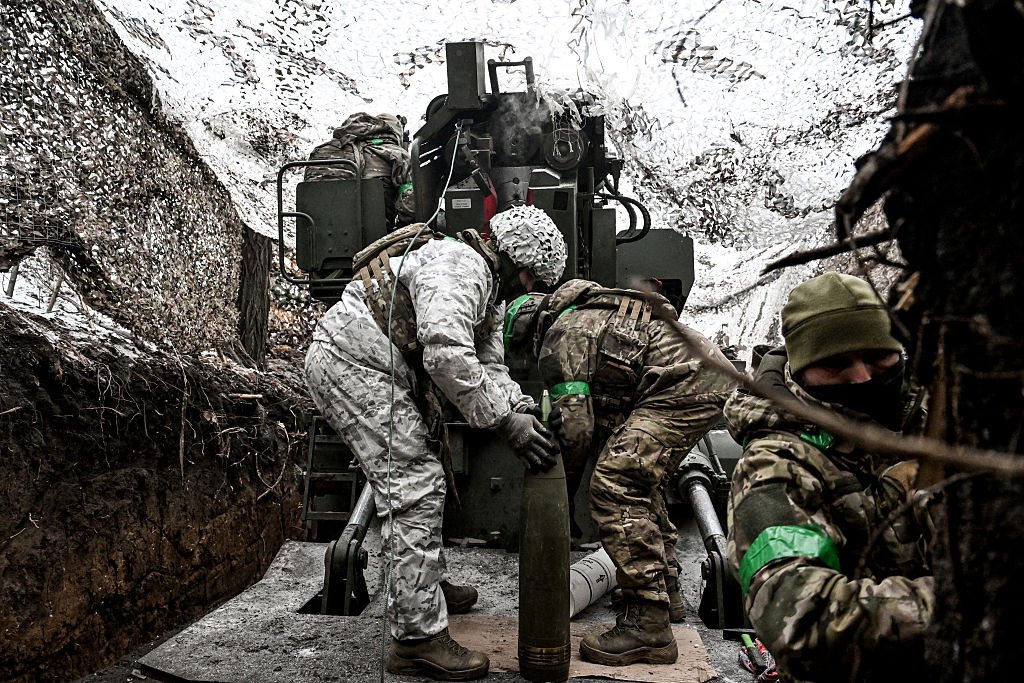
Aircraft losses amount to nearly $15 billion by conservative estimates; some cannot be replaced. Destroyed tanks account for roughly $20 billion, while armored vehicles and artillery systems run into tens of billions more. In the early years of the war, Russia heavily relied on artillery, firing up to 60,000 shells per day. Even at a minimal estimate of $1,000 per shell—prices are far higher today — that amounts to $60 million per day for this category alone.
Russia has lost two submarines costing $300–$400 million each, the cruiser Moskva valued at $750 million, and a significant portion of its Black Sea Fleet.
In January 2026 alone, Russia launched 91 ballistic missiles at Ukraine. Even at a conservative $3+ million per missile, that represents roughly $300 million. In the same month, 4,333 Shahed drones were launched—at least another $250 million. As of mid-June, cruise missile launches alone had exceeded $2.5 billion, while the total cost of Shahed drones fired runs into tens of billions.
No strategic gain
If one accounts not only for direct war losses but also for economic damage, lost opportunities, human capital depletion, frozen assets, and lost export markets, Russia’s total losses from the war are likely to exceed $1 trillion.
How large is that sum?
Consider artificial intelligence—the defining technological race of the past two years. Even taken together, AI-first companies such as OpenAI and Anthropic have not raised sums approaching that level, despite record-breaking funding rounds of $30 billion and $100 billion, respectively. Even US tech giants, despite massive capital expenditures on infrastructure, have not spent that much on building data centers in such a short period.
On a more tangible level, $300 million in ballistic missiles could build a modern hospital, a dozen schools, or housing for several thousand families. The $250 million spent on Shahed drones could fund 50 kindergartens or more than a thousand ambulances. The $2.5 billion spent on cruise missiles equals the cost of rebuilding an entire city or constructing more than 100 kilometers of high-speed rail. Every month, Russia spends enough on soldier salaries to pay more than one million engineers for that same month.
Russia has lost not only money but opportunity. It has no globally competitive AI model. External financing markets are closed to Russian projects. The country’s technology sector is overwhelmingly redirected toward the war effort. Years of opportunity have been lost. Nvidia chips are not sold in Russia. Critical technologies are unavailable. Major companies are not building data centers there or opening R&D centers.
More than $1 trillion in losses have yielded no strategic benefit for Russia—only setting the country back years, with long-term consequences that will endure well into the future.
Discuss this article:

-c439b7bd9030ecf9d5a4287dc361ba31.jpg "Photo of Katherina Popilnichenko")

-72b63a4e0c8c475ad81fe3eed3f63729.jpeg "Photo of Cyril Barabaltchouk")