- Category
- War in Ukraine
Russia’s 2025: Three False Claims on Kupiansk, 0.72% of Ukraine Seized, Over 400,000 Troops Lost
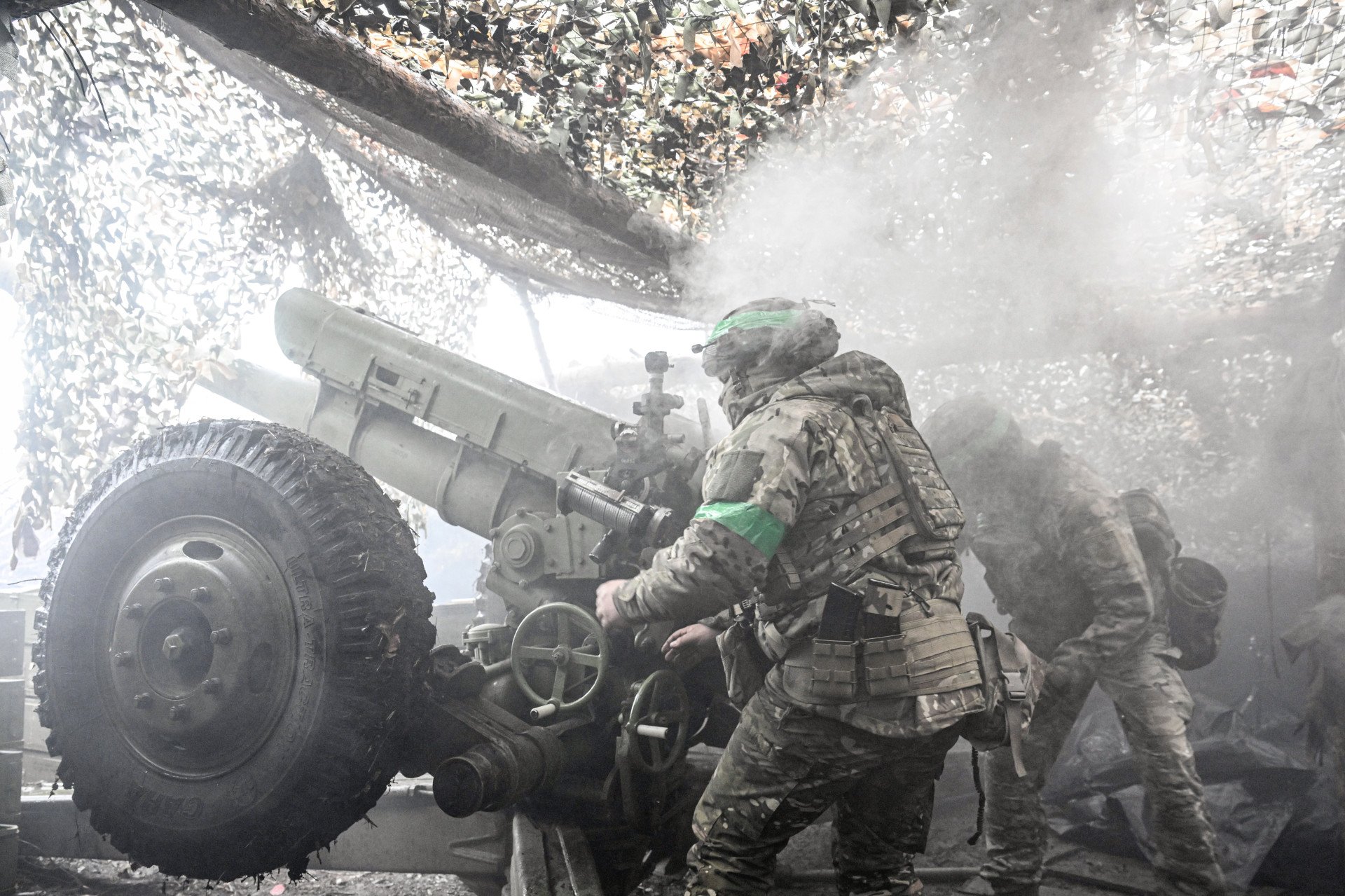
Putin has claimed major battlefield victories in Ukraine, but 2025 figures tell a different story. Ukraine ultimately held Pokrovsk or Chasiv Yar, blocked Russia from Kostiantynivka, and almost cleared Kupiansk—destroying over 1,000 Russian troops. These realities matter as partners consider any future negotiations or shifts in support for Ukraine.
 Prefer U24 Media on Google
- Authors

-29a1a43aba23f9bb779a1ac8b98d2121.jpeg "Photo of Illia Kabachynskyi")
Throughout 2025, the Russian army achieved only minimal territorial gains, capturing 4,336 square kilometers of Ukrainian land. That amounts to just 0.72% of Ukraine’s total territory.
We bring you stories from the ground. Your support keeps our team in the field.
Another comparison is equally important: Ukraine still controls 22% of the Donetsk region—a territory highly coveted by Putin. This is more than 6,000 square kilometers of territory that includes the urban agglomeration of Kramatorsk, Sloviansk, Druzhkivka, and Kostiantynivka. It is a major fortress stretching for dozens of kilometers—a heavily fortified area where the Russian army could become bogged down for a year or even years.
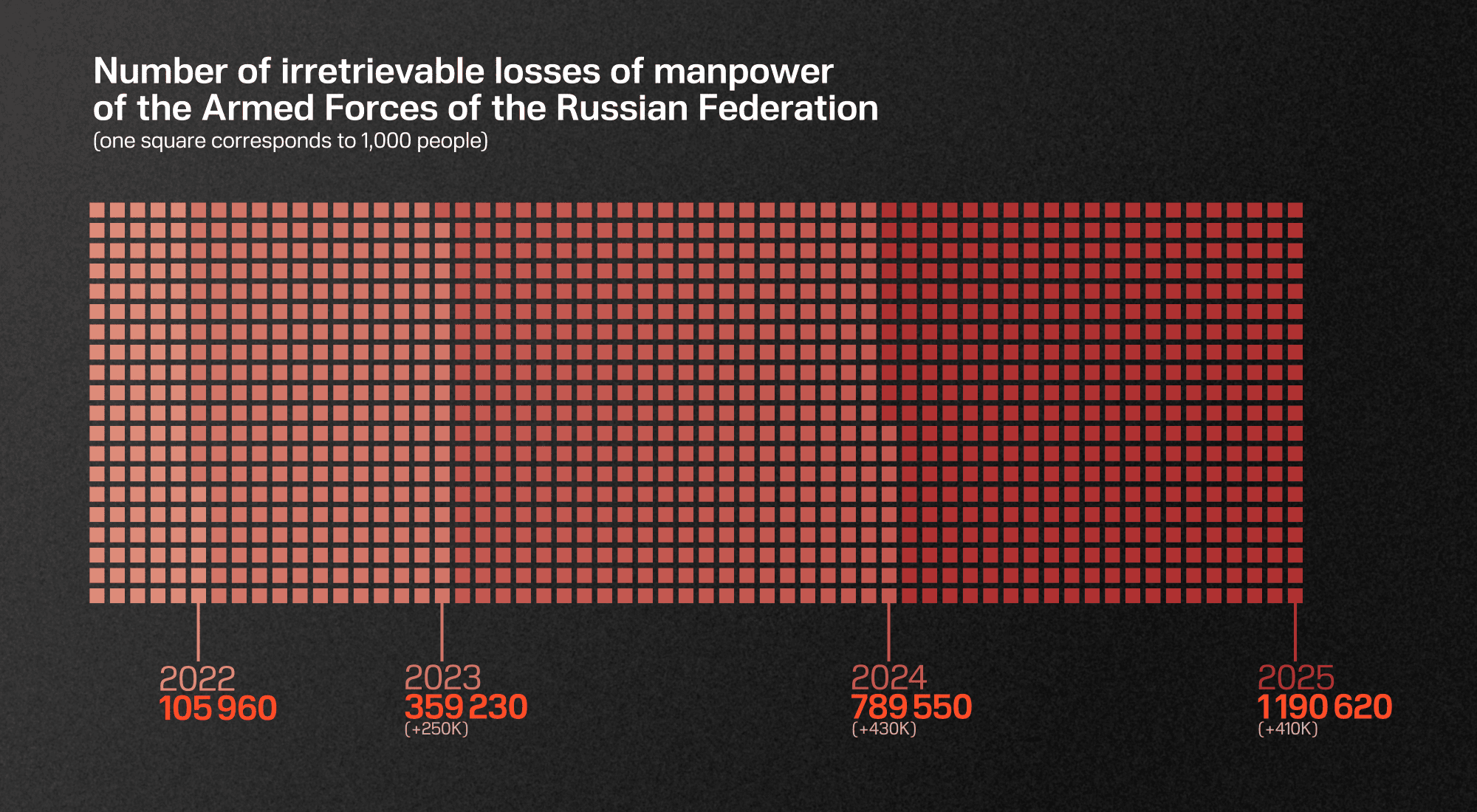
It is in this direction that Russia has concentrated its largest forces and conducts the highest number of assaults: dozens per day occur in Pokrovsk alone. Over the past year, Russia managed to occupy an additional 10% of the Donetsk region, paying for it with the lives of some 400,000 of its soldiers. For the second year in a row, the number of killed and irreversibly wounded has exceeded this figure.
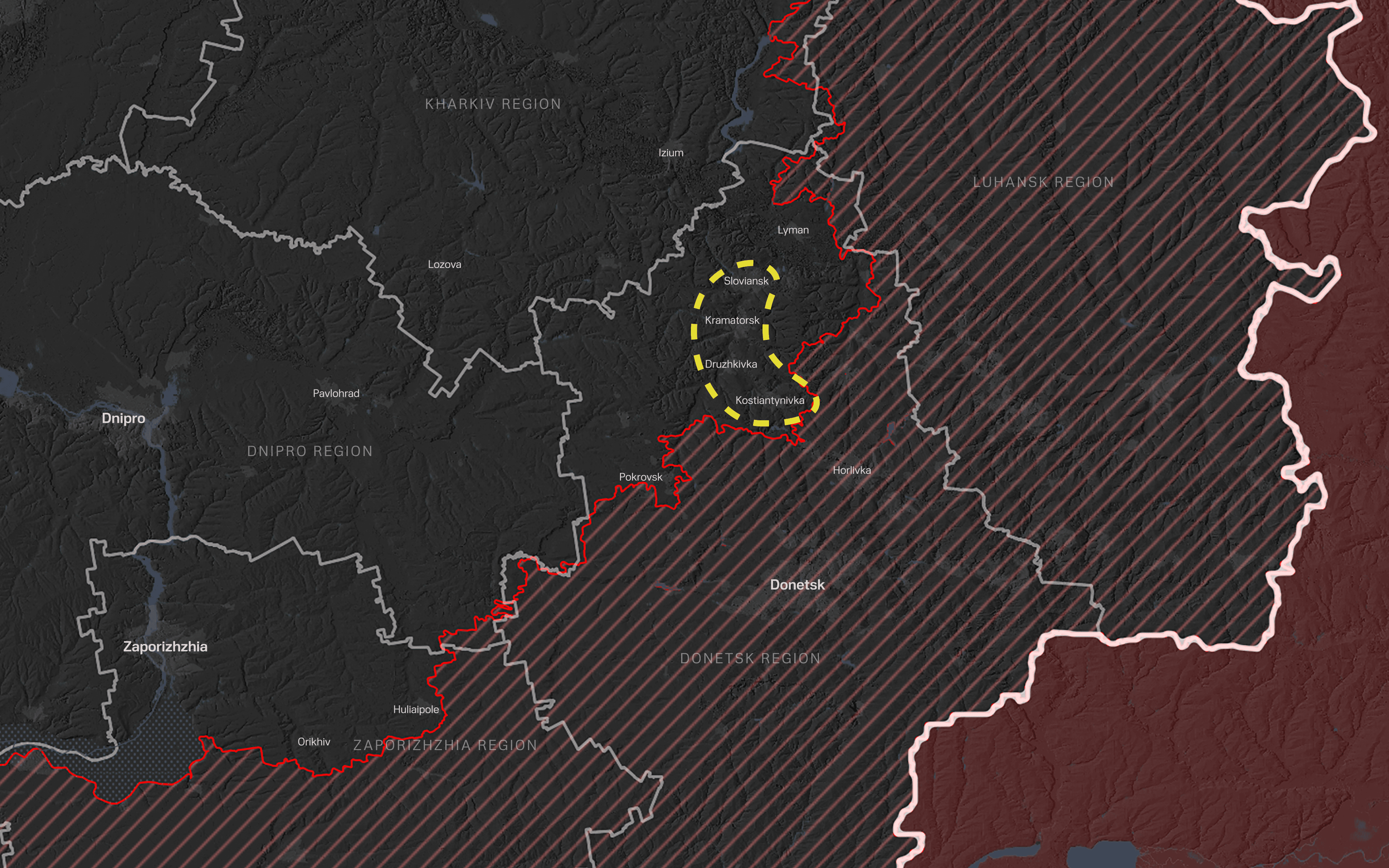
At the same time, it is important to view the situation in the Donetsk region across the entire period of the full-scale invasion. Before February 2022, Moscow controlled 56.7% of the region’s territory, having started the war in 2014. Since then, the Kremlin has managed to occupy another 20%. As of today, Russia controls about 78% of the Donetsk region—several thousand square kilometers seized over nearly four years of full-scale war.
Another telling point: from January 1, 2023, to January 1, 2026, the increase in occupied territory amounted to 7,463 square kilometers, or 1.28% of Ukraine’s total area. Over the same period, the Russian army lost about one million troops killed and wounded. According to sources at UNITED24 Media, starting in 2024, the number of killed began to exceed the number of wounded in these statistics.
Notably, the battle for Pokrovsk has been ongoing for more than a year and a half. The Russian army began attacking the city back in June–July 2024. The city has been reduced to ruins, but Russian forces have still failed to capture it: Ukraine’s armed forces have prevented the Russian troops from entrenching themselves there. Since May 2024, Russia has also failed to fully seize the city of Vovchansk, though it has managed to destroy it completely.
The situation is even worse for the Russian army in Kupiansk. Putin announced its capture three times. In early September 2025, the Ukrainian army prepared a counteroffensive plan, and within a few months, the city was almost completely cleared, along with the surrounding approaches. Kupiansk today is Ukrainian.
Why does this matter?
In negotiations, the Kremlin advances one main demand: Ukraine must cede the entire Donetsk region. Kyiv rejects this scenario, agreeing instead that a free economic zone could be created there and that both sides would withdraw their troops.
Based on the statistics of previous years, capturing these territories would require enormous Russian forces and a great deal of time. For context, a Russian grouping of approximately 165,000 troops is positioned near Pokrovsk, yet the city has still not been taken after 18 months. Pokrovsk covers an area of 30 square kilometers, while Kramatorsk—which Putin wants to obtain without a fight—spans 117 square kilometers. That is a city four times larger, with a massive agglomeration that could cost the Russian army hundreds of thousands of casualties and years of war.
Given developments in Latin America and the prospect of significant volumes of new cheap oil entering the market, the Kremlin may not have those years. This is something that must be kept in mind during the negotiations.
Discuss this article:



-72b63a4e0c8c475ad81fe3eed3f63729.jpeg "Photo of Cyril Barabaltchouk")