- Category
- Latest news
Russia’s Baltic Oil Exports Stumble Following Targeted Drone Strikes
 Prefer U24 Media on Google
- Authors

-c439b7bd9030ecf9d5a4287dc361ba31.jpg "Photo of Katherina Popilnichenko")
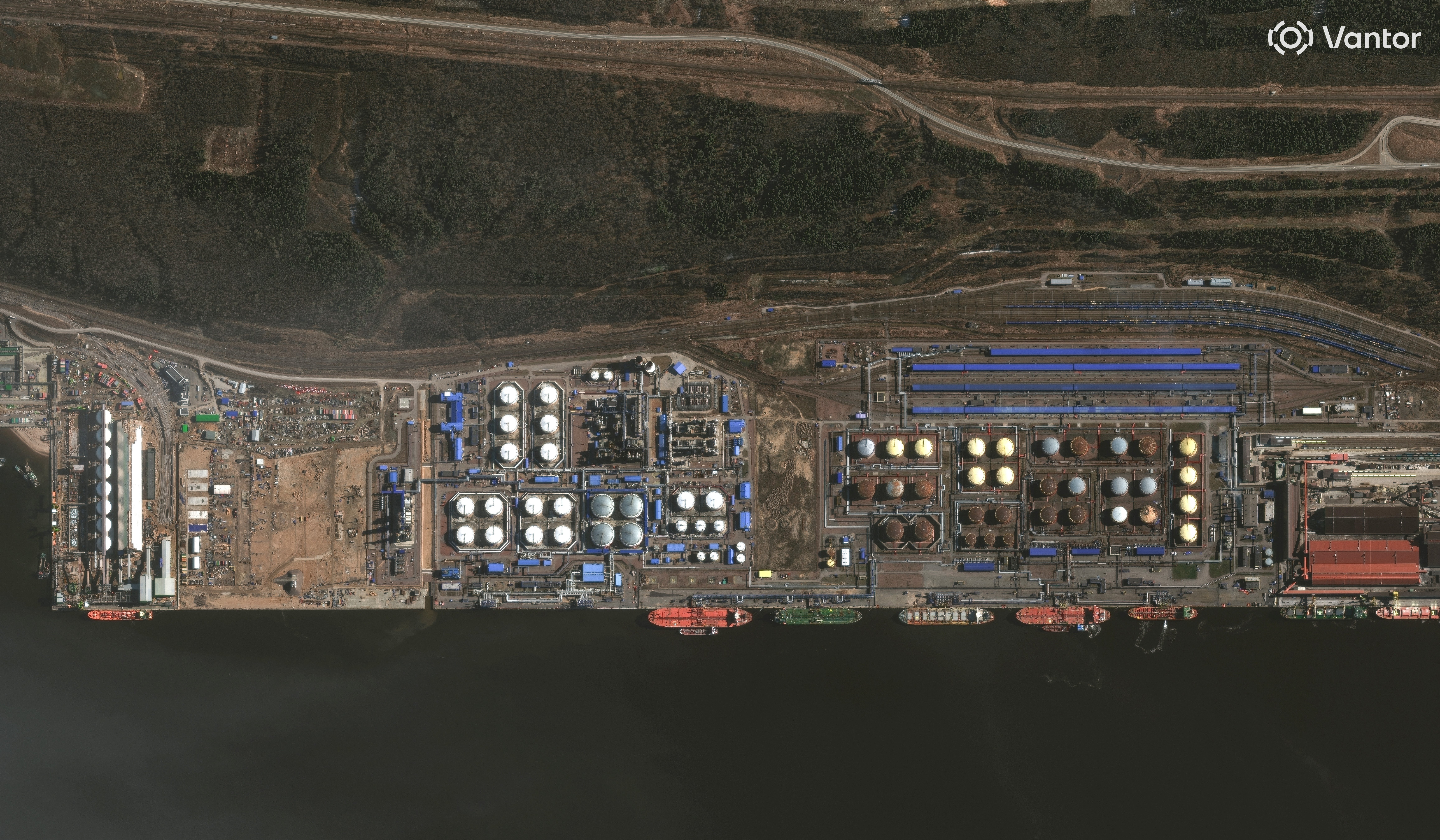
Satellite imagery from late March has confirmed significant damage to the Primorsk port, a critical site for Russian energy exports.
The images, analyzed by the American space intelligence firm Vantor, indicate that at least eight storage tanks were hit during a period of sustained drone activity, according to Reuters on April 2.
We bring you stories from the ground. Your support keeps our team in the field.
Each of these tanks has a capacity of 50,000 cubic meters. These strikes have effectively disabled approximately 40% of the port’s total storage capacity.
The Primorsk facility is responsible for handling nearly 1% of the world’s daily oil consumption, with a total of 14 crude oil tanks and four diesel units.
Two of the damaged units were specifically used for diesel storage. Market traders suggest that the loss of these facilities may force a significant reduction in the volume of shipments leaving the port.
The disruption extends to the nearby port of Ust-Luga, which has also come under repeated fire. Industry representatives stated that the export schedule for the first half of April is unlikely to be met.
Transneft, the state-owned pipeline operator responsible for moving raw materials to the coast, has already notified exporters that loading operations are currently unable to proceed as planned.
Ust-Luga was targeted five times between March 22 and March 31. Satellite data shows that fires impacted eight reservoirs at this location, each with a 30,000-cubic-meter capacity. This represents about one-fourth of the port’s storage infrastructure.
In addition to the coastal terminals, the Kirishinefteorgsintez refinery in the city of Kirishi, within the Leningrad Oblast of Russia was also hit.
These two ports are vital to the Russian economy, with Ust-Luga handling 20% of the country’s oil exports and Primorsk accounting for 22%.
These infrastructure losses, combined with damage to pipelines and refineries, will likely force oil companies to lower their production levels.
Since the storage and export systems can no longer handle standard volumes, producers have few options for managing the surplus raw materials.
Russian Baltic ports suspended oil loading operations following a significant Ukrainian drone attack that targeted critical energy infrastructure.
The Primorsk and Ust-Luga terminals, which serve as Russia’s primary export hubs, stopped loading crude oil and petroleum products after the strikes caused massive fires.
The impact was so extensive that smoke from the burning facilities remained visible as far away as Finland, leading to increased uncertainty in global oil markets.
Discuss this article:
-9bd5e1532102621f8fb1c4ba871a3171.png)