- Category
- Latest news
Russia’s Building 400 Tanks a Year—but Can’t Escape the Drone War
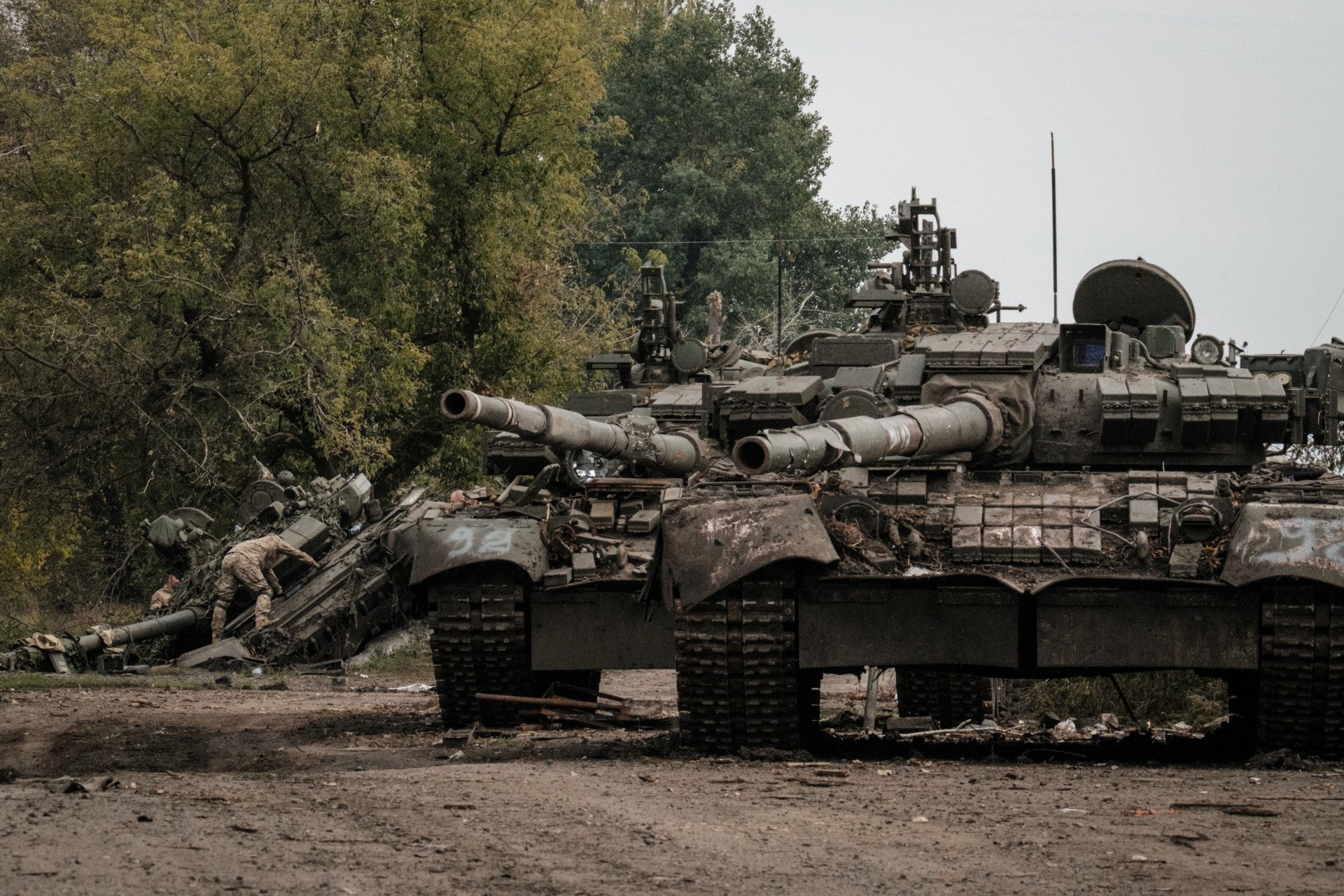
New Janes analysis shows Russia expanding its armored fleet with T‑90M and T‑80BVM tanks, even as drones reshape the battlefield.
 Prefer U24 Media on Google
- Authors




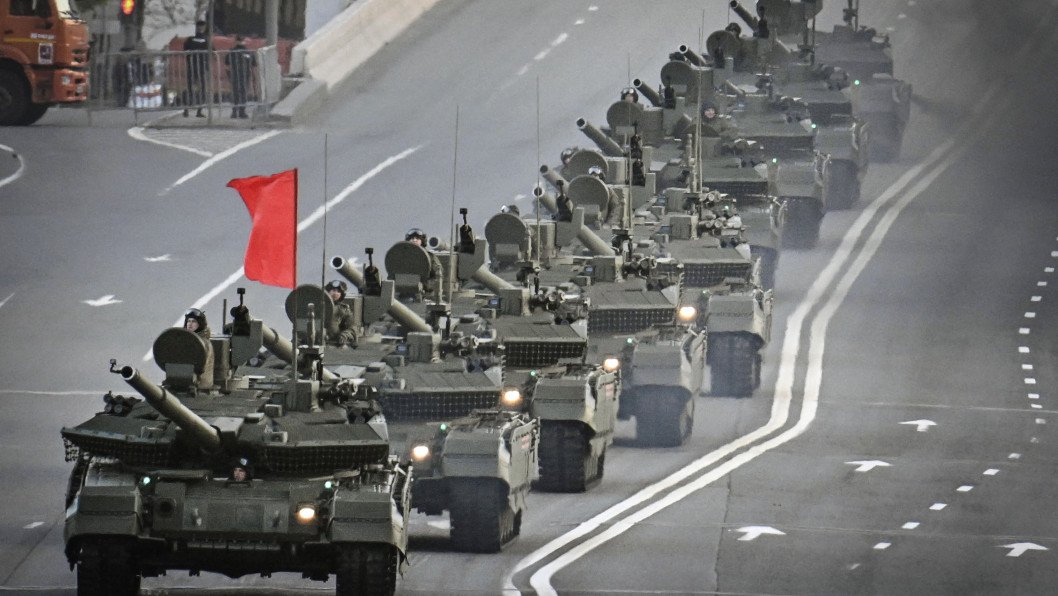
Russia is increasing the number of armored units equipped with modern tanks such as the T-90M and T-80BVM, signaling a continued commitment to large-scale ground warfare despite battlefield losses and growing drone threats. This assessment comes from a new analysis by Janes, published on November 16, 2025.
According to Janes, Russia’s defense industry is currently capable of producing up to 250 T-90M “Proryv” tanks annually at the Uralvagonzavod plant, as well as up to 150 T-80BVM tanks at the Omsktransmash facility.
These figures reflect the country’s industrial capacity to sustain and expand its armored forces, even as Western analysts debate the future relevance of tanks in high-tech warfare.
The report notes that while Ukrainian military intelligence estimates T-90M production at 250 units per year, Janes offers a more conservative range of 150 to 200 new units annually. No detailed estimate was provided for the T-80BVM production pace, though the capacity figure of 150 units is cited.
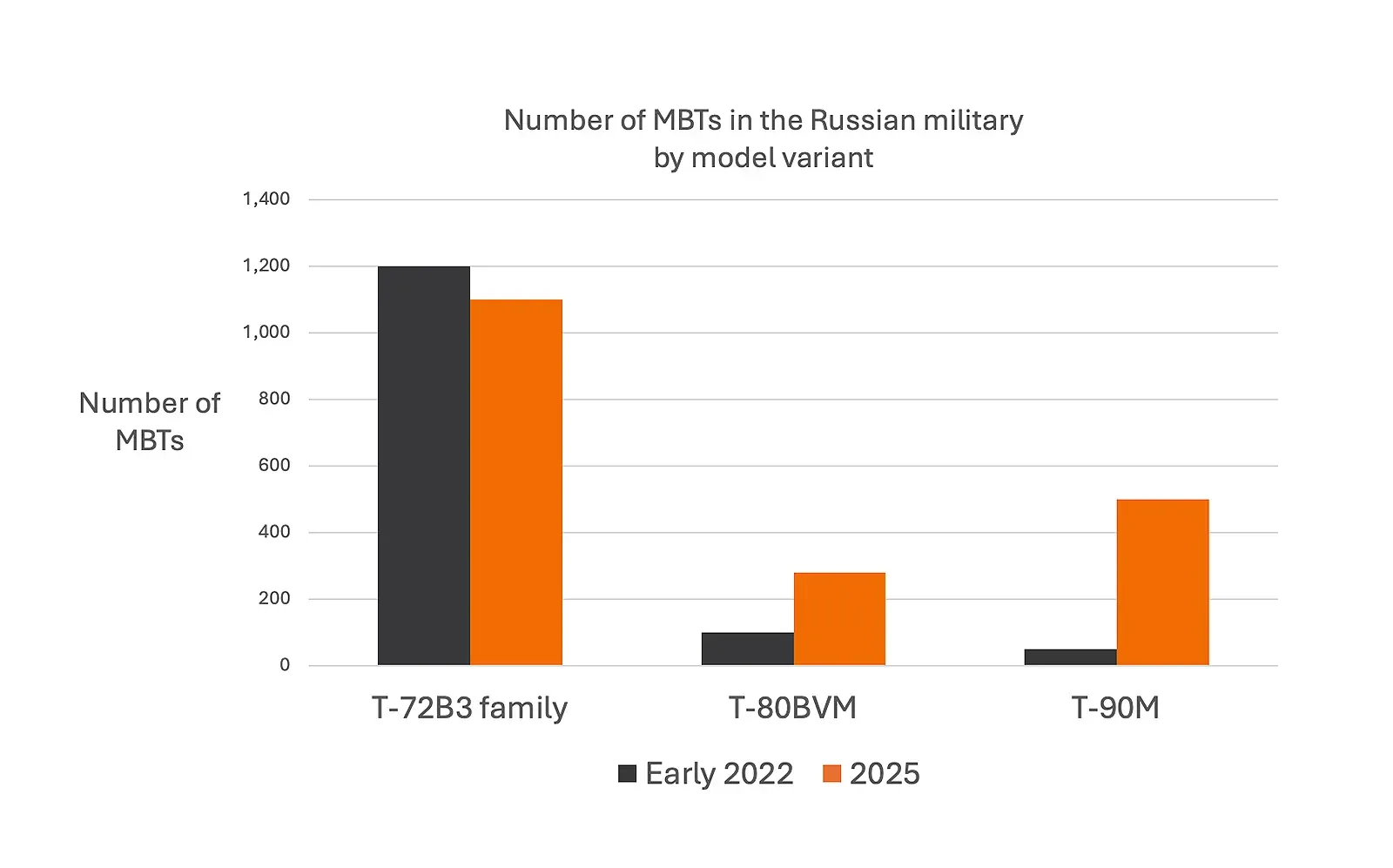
Janes compares Russia’s tank inventory from the beginning of the full-scale war in 2022 to late 2025. The number of T-90M tanks reportedly increased from approximately 50 to 200 units, while the T-80BVM inventory grew from around 100 to 280 units.
-74a72b71f9cb9b4cc1b98b41a74c5bbf.jpg)
In contrast, T-72B3 numbers slightly declined from 1,200 to 1,100, suggesting attrition on the battlefield is being partially offset by new deliveries.
Combined, these three types now account for an estimated 65–70% of Russia’s active tank fleet, up from 50% before the full-scale invasion of Ukraine, according to Janes.
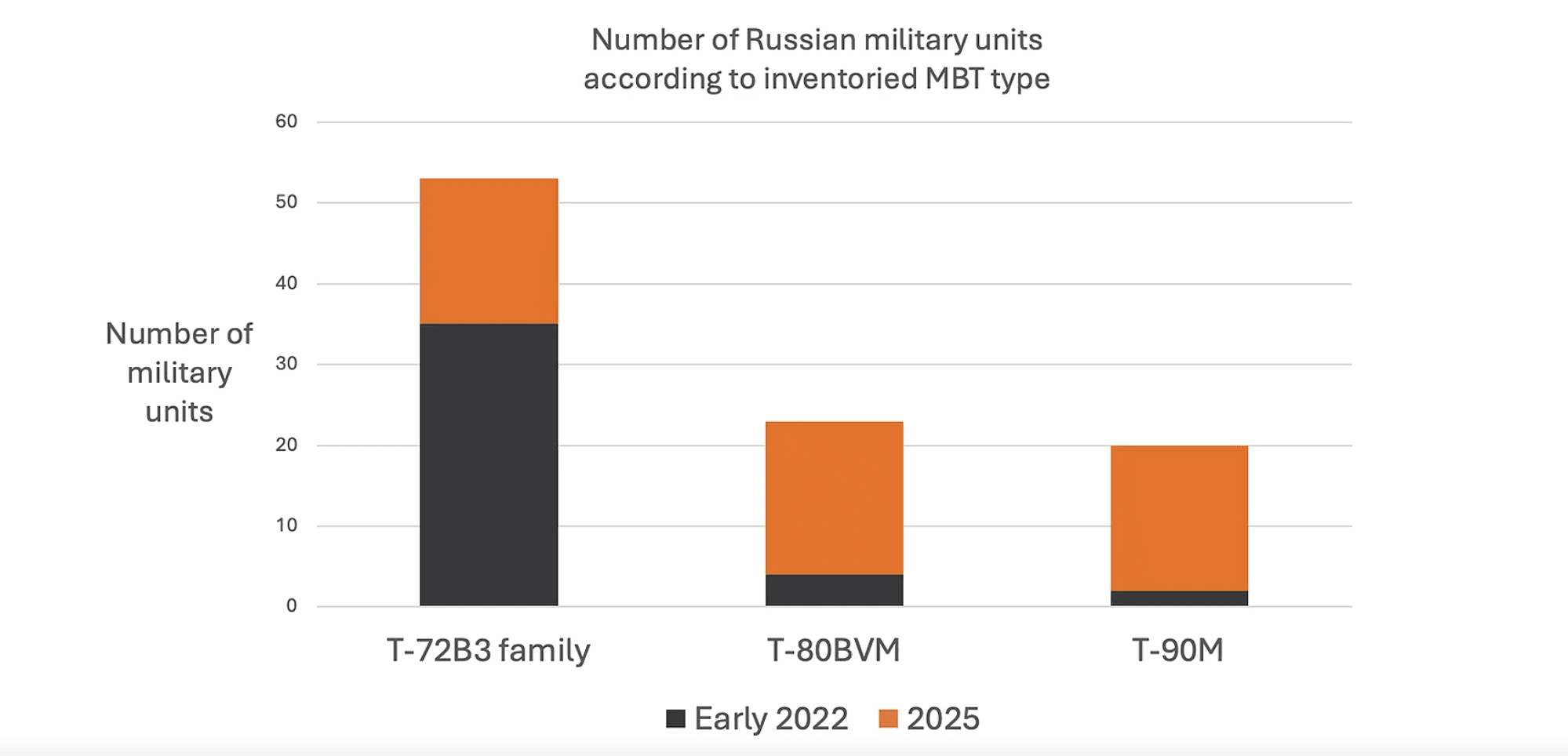
Beyond production volumes, the analysis emphasizes a broader distribution of modern tanks across Russian units. In early 2022, only two units operated T-90M tanks, compared to roughly 20 units today. The number of units with T-80BVMs increased from 4 to 23, and those with T-72B3s from 35 to 53.
However, Janes cautions that the term “unit” may refer to anything from a platoon (a few tanks) to a full battalion (30–40 tanks), making it difficult to determine exact front-line strength. Still, the data suggests a widespread effort to ensure that more units, even if under-strength, have access to modern main battle tanks.
Earlier, a Russian soldier interviewed by Vault8 criticized the T-80BVM tank as unreliable and poorly built, citing frequent mechanical failures, poor performance in muddy terrain, and ineffective field upgrades. According to Defence Blog, the crew reported constant breakdowns, including hydraulic leaks and startup delays under fire.
Discuss this article:
-331a1b401e9a9c0419b8a2db83317979.png)