- Category
- Latest news
Russia Bets on Refurbishing 800 Aging T-72 Tanks to Replace Huge Battlefield Losses
 Prefer U24 Media on Google
- Authors


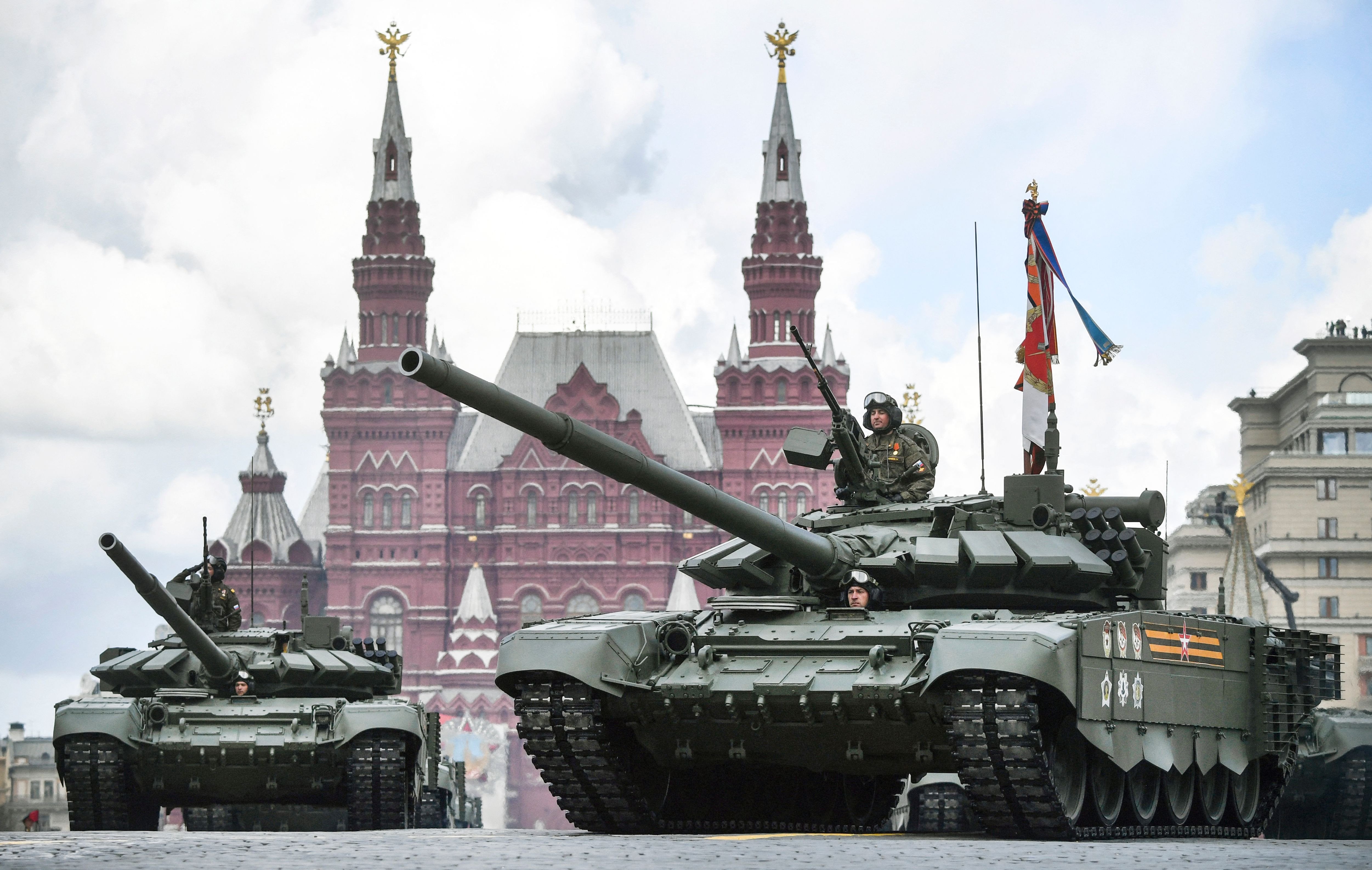
Russia is reportedly preparing to refurbish and upgrade over 800 T-72 main battle tanks to the T-72B3M configuration over the next decade, according to an analysis of internal procurement documentation.
The findings were published by the open-source intelligence project Frontelligence Insight on October 12.
The group reviewed documentation from Russia’s state-owned defense manufacturer Uralvagonzavod, reconstructing production targets based on parts orders and internal planning figures.
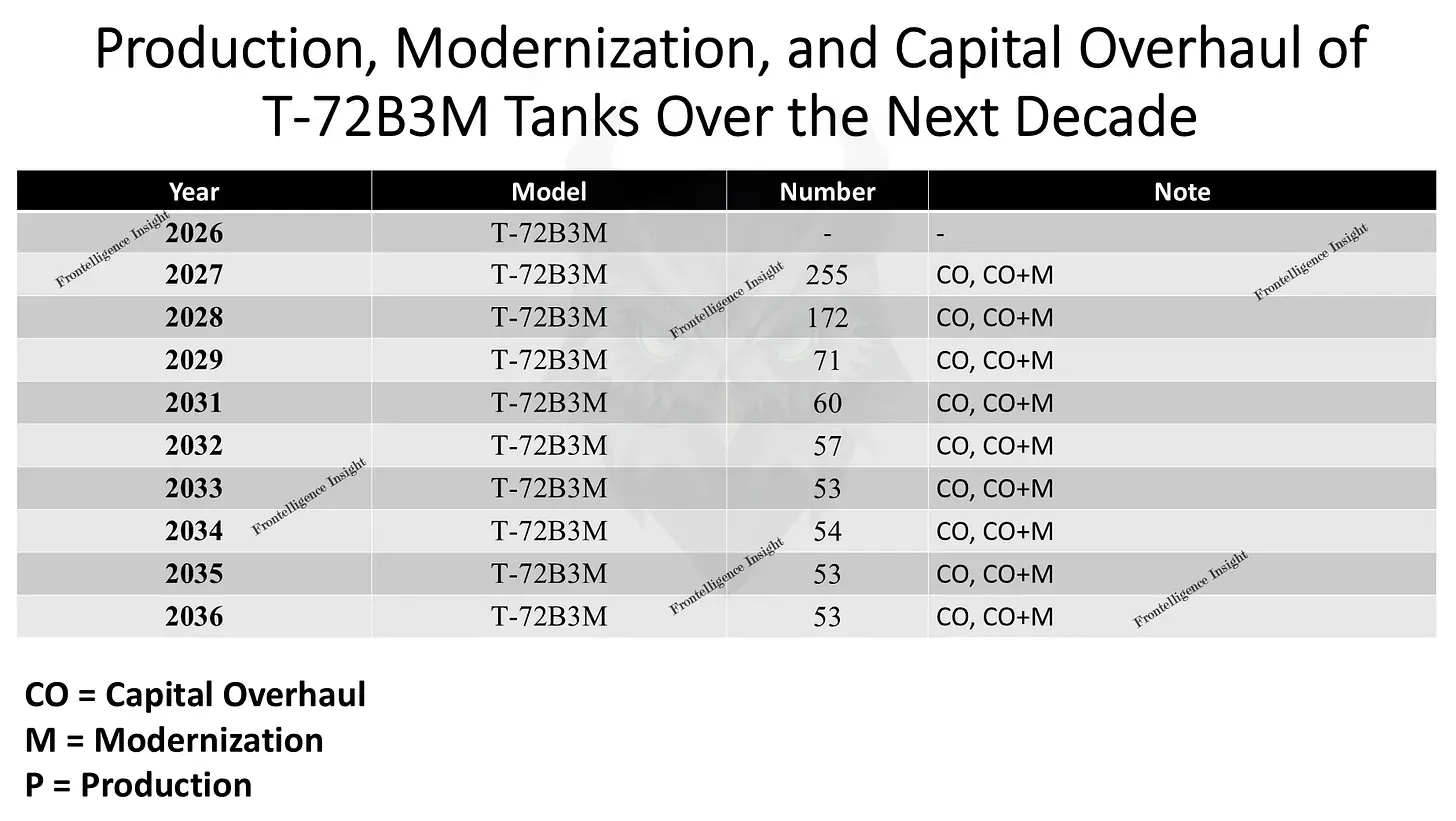
The data indicates that by 2036, Russia intends to restore and modernize 828 T-72 tanks—largely drawn from Cold War-era stockpiles—upgrading them to the T-72B3M configuration.
According to Frontelligence Insight, peak activity is scheduled between 2027 and 2029, during which 498 tanks are expected to be overhauled or upgraded.
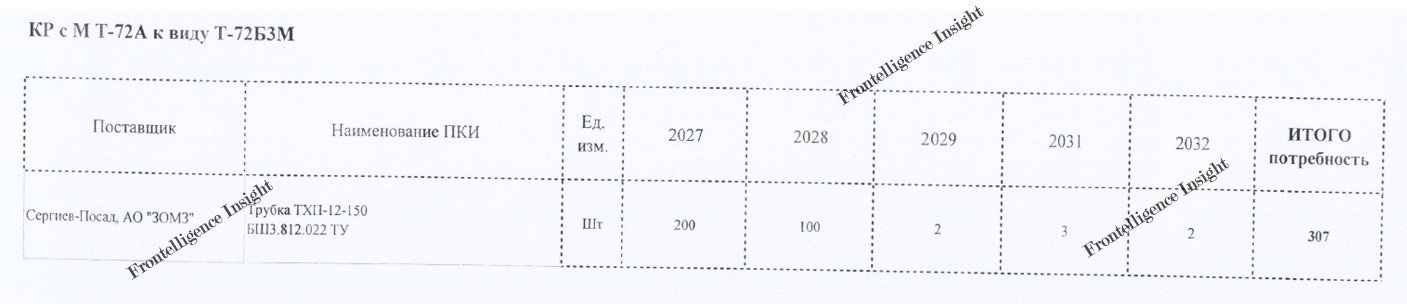
Much of the fleet set for modernization consists of T-72A variants, originally deployed in 1979 and produced until the mid-1980s. Converting these units to T-72B3M standards will reportedly require a full systems overhaul, including replacement of electronics, drivetrain upgrades, a new autoloader, and improved armor protection.
Recent imagery from Uralvagonzavod’s production line also appears to confirm the emergence of a new T-72B3 variant featuring integrated “Relikt” explosive reactive armor modules on the turret. This configuration mirrors upgrades seen on other Russian tank platforms, including the T-80BVM, and appears aimed at standardizing modular armor across vehicle types.
-74a72b71f9cb9b4cc1b98b41a74c5bbf.jpg)
Russia’s overhaul of its armored vehicle fleet comes amid heightened losses in Ukraine, where older and hastily restored tanks have been widely documented on the battlefield.
While the Kremlin has prioritized production of newer T-90M and T-90M2 models, Frontelligence Insight notes that T-72 refurbishment still forms a major component of Russia’s long-term armored strategy.
The documents also mention limited plans for the “Terminator-2” fire support vehicle. Between 2027 and 2036, only 86 units are scheduled for overhaul or new production—suggesting the system remains a low priority despite its high-profile promotion in recent years.
Earlier, Russia attempted to enhance the protection of its BMD-4M airborne infantry vehicles with additional armor and lattice screens. However, analysts concluded that the upgrade fails to address the vehicle’s fundamental design flaws, leaving it vulnerable to FPV drones and anti-tank weapons despite the new modifications.
Discuss this article: