- Category
- Latest news
Russia Tries to Uparm Its BMD-4M But It’s Still a Death Trap on the Battlefield
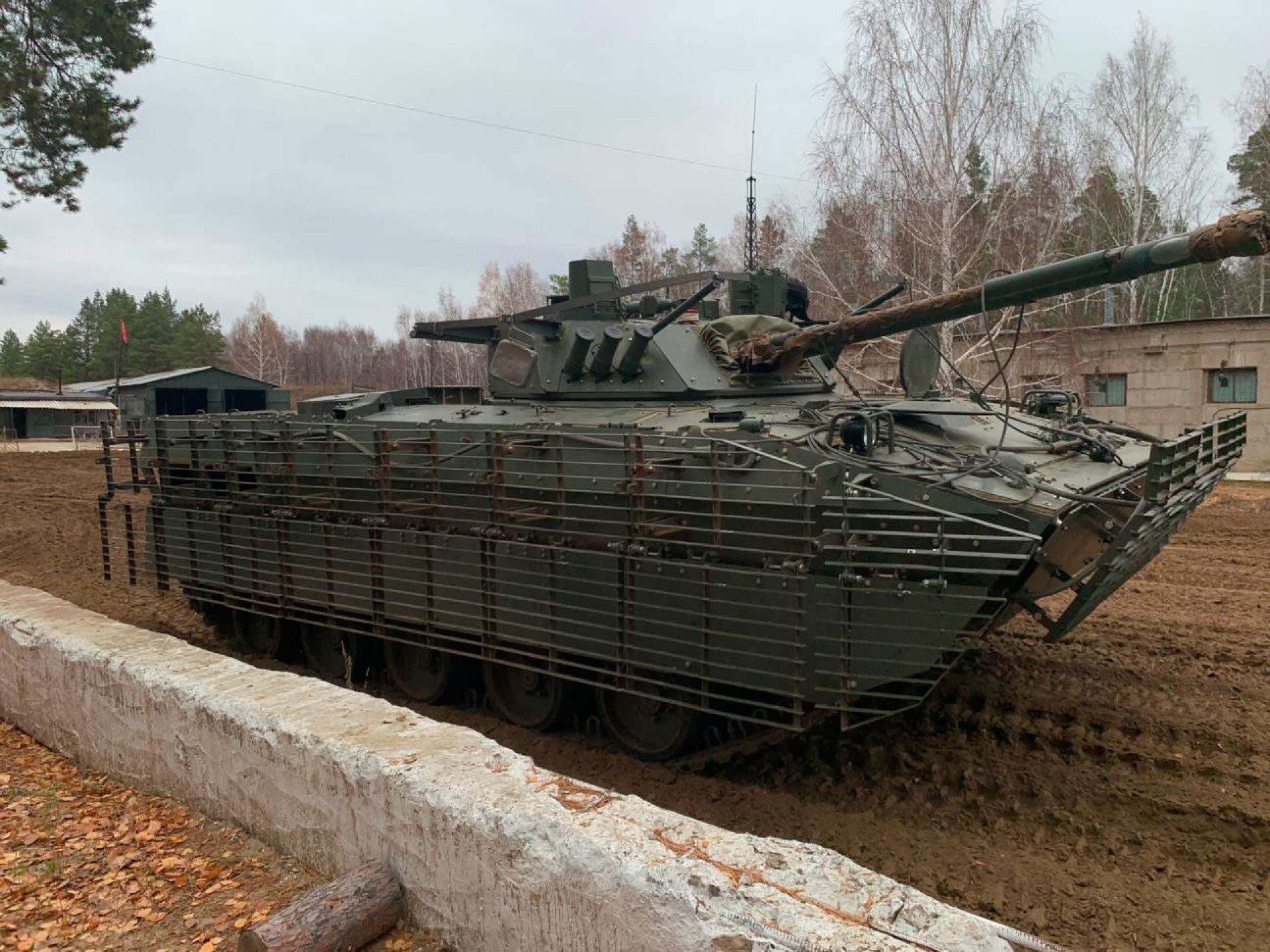
Russia has unveiled an armor upgrade for its BMD-4M airborne infantry fighting vehicle, but military analysts say the changes do little to solve the vehicle’s core vulnerabilities. Despite new lattice and armored screens, the lightweight IFV remains highly exposed to drones, anti-tank weapons, and even heavy machine-gun fire—a flaw rooted in its very design.
 Prefer U24 Media on Google
- Authors


Russia is scrambling to fix one of its battlefield vulnerabilities: the BMD-4M airborne infantry fighting vehicle, which has proven extremely fragile under modern combat conditions in Ukraine, according to an analysis shared by Ukrainian defense media Defense Express on September 11.
After repeated battlefield losses, Russian defense researchers acknowledged that the BMD-4M “effectively lacks armor” and cannot withstand most modern threats.
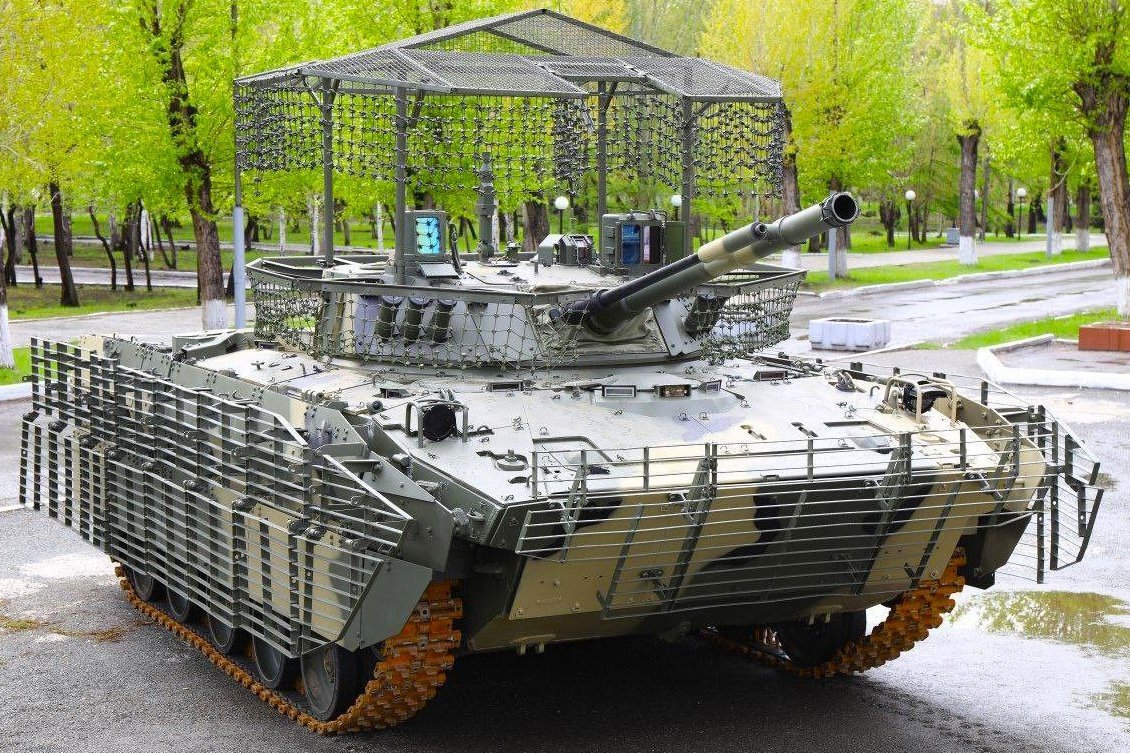
A recent study published by Russian defense engineers, cited by BTVT.INFO, admitted that combat analysis of damaged vehicles collected in Dzhankoy, Crimea, showed catastrophic survivability issues.
To address this, Russian designers introduced a protection upgrade package that includes armored screens on the front, sides, and rear of the hull, along with mesh lattice screens on the turret.
⚡️🇷🇺 Video from Kurganmashzavod. Assembly of BMP-3 and BMD-4M. pic.twitter.com/WpPDi1G4fk
— SIMPLICIUS Ѱ (@simpatico771) August 12, 2024
While these additions provide some defense against shaped-charge weapons and side strikes from drones, they leave the vehicle’s upper surfaces completely exposed—precisely where FPV drones most often attack.
Defense Express pointed out that the BMD-4M’s biggest weakness is its very concept: it must remain light enough for airdropping and amphibious operations, while also carrying heavy weaponry.
It was a ruSSian BMD-4M pic.twitter.com/C7QgX5eT6M
— 𝔗𝔥𝔢 𝕯𝔢𝔞𝔡 𝕯𝔦𝔰𝔱𝔯𝔦𝔠𝔱△ 🇬🇪🇺🇦🇺🇲🇬🇷 (@TheDeadDistrict) April 21, 2025
The trade-off comes at the expense of armor, leaving the vehicle essentially a “glass cannon.”
“The BMD-4M has only bulletproof protection, while carrying a 100mm gun and a 30mm cannon,” Defense Express noted. “That’s an explosive combination with highly questionable survivability.”
The problem has grown worse with Ukraine’s mass use of FPV drones, which can easily penetrate thin armor or strike exposed ammunition compartments.
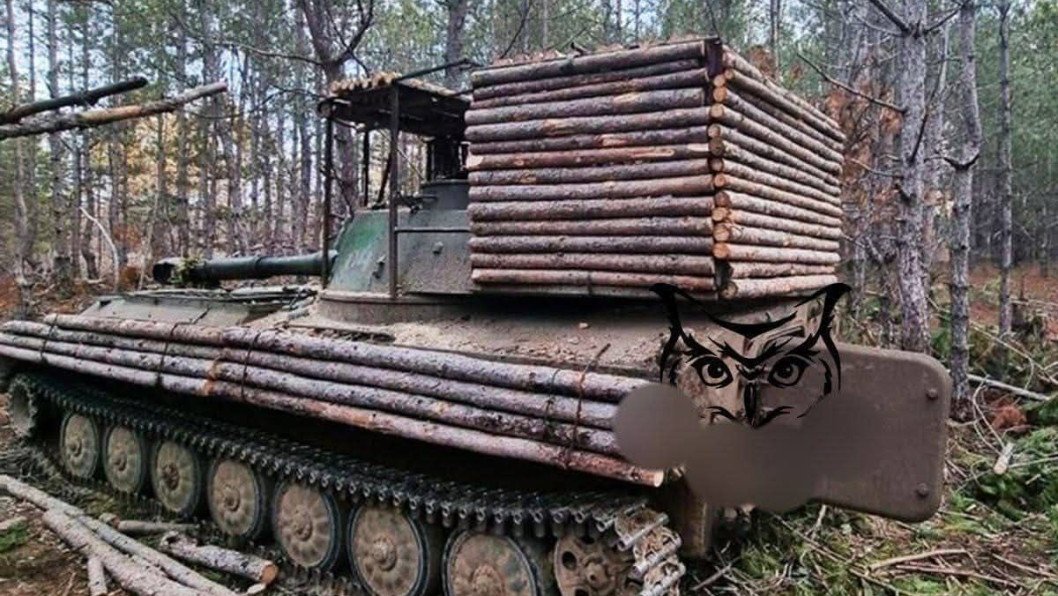
The new protection kit does not include any form of overhead cage armor, which experts say would be the most obvious countermeasure.
Regarding the protracted modernization of the BMD-4M
— Andrei_bt (@AndreiBtvt) September 5, 2025
Quote from “Development and Implementation of a Comprehensive Method to Enhance the Efficiency of Multipurpose Transport Vehicles to Strengthen the Defense Capability and Improve the Security of the Russian Federation”: The… pic.twitter.com/jfwNyg0m46
Despite its limited effectiveness, the developers of the additional armor package were nominated for a state prize, highlighting, as Defense Express observed, Moscow’s preference for symbolic gestures over practical solutions.
A more effective fix, analysts argue, would be for Russia to abandon the entire line of airborne fighting vehicles. But with the Kremlin’s emphasis on prestige systems like the BMD, such a shift appears highly unlikely.
Earlier, a Russian military analysis of a captured American M2A2 Bradley infantry fighting vehicle has concluded that the US armored vehicle significantly outperforms Russia’s BMP-3 in nearly every key category.
The report, titled “Results of Research Trials of the M2A2 ODS SA (USA) Infantry Fighting Vehicle”, was conducted by Russia’s 38th Research Institute of Armored Vehicles in Kubinka.
Despite technical errors in the study, Tarasenko acknowledged that the findings highlight a “complete failure of the Soviet and Russian design school for infantry fighting vehicles.”
Discuss this article:


-c439b7bd9030ecf9d5a4287dc361ba31.jpg "Photo of Katherina Popilnichenko")