- Category
- Latest news
Russia’s Chipmaking Dreams Hit a Wall as Government Pulls Funding
 Prefer U24 Media on Google
- Authors


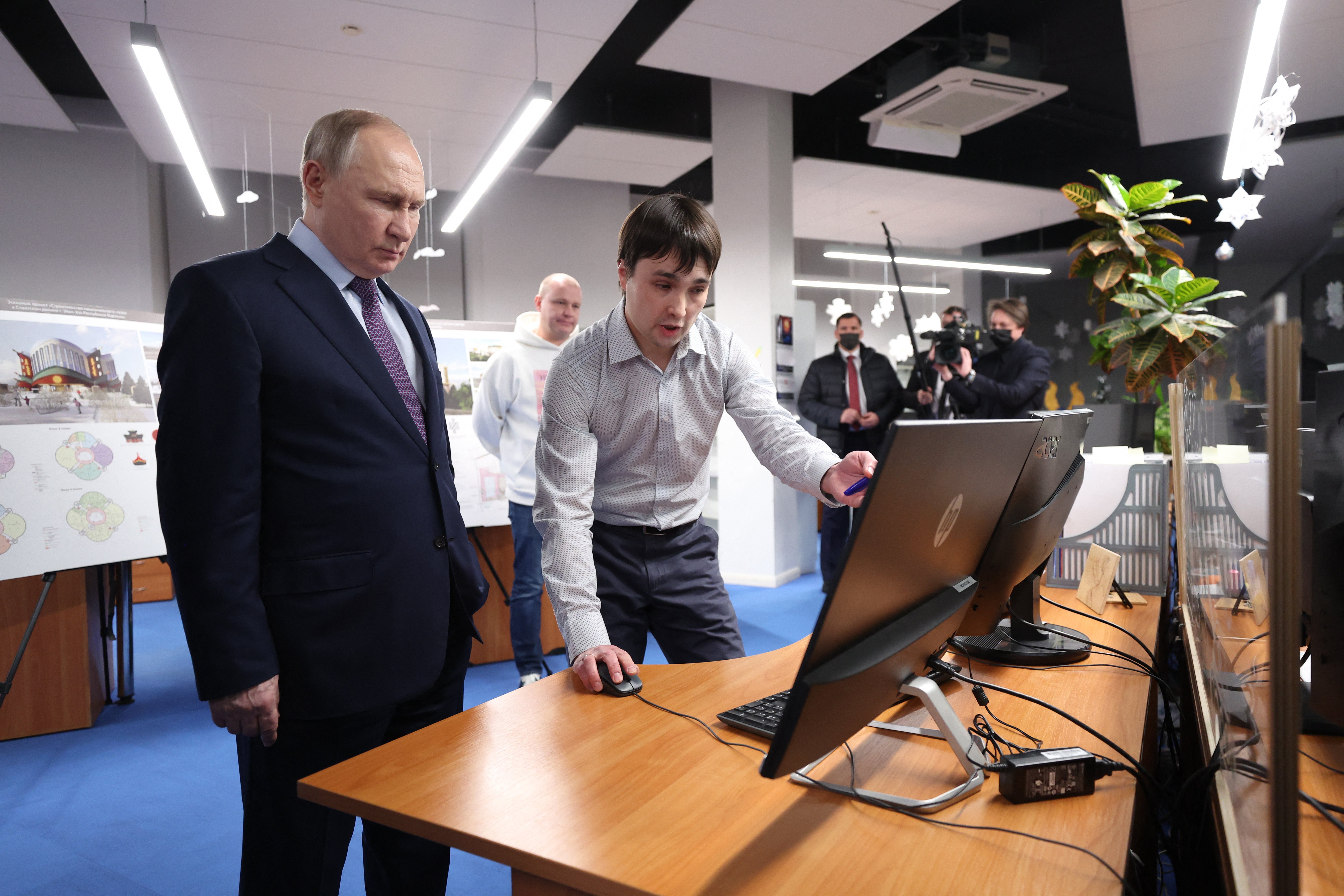
Russia has halted several key projects tied to the development of domestic lithography systems—technology required for manufacturing “sovereign” processors and microchips—after the government pulled funding and canceled multiple industrial tenders, Russian outlet CNews reported on December 3.
The Ministry of Industry and Trade canceled a $20.8 million tender to establish production of monocrystalline calcium fluoride, a material used for optical components in ultraviolet photolithography. The notice was posted on November 25, 2025, and canceled on December 1 without explanation.
We bring you stories from the ground. Your support keeps our team in the field.
Monocrystalline calcium fluoride is essential in optics for excimer lasers, which enable the production of electronic components at 90 nm and below.
Foreign suppliers—Nikon, Corning, and Hellma—dominate the market, while domestic substitutes are described as far below global standards. The ministry’s own technical documentation said the shortfall effectively blocks Russia’s ability to build modern lithography machines.
Another tender for the development of monocrystals of terbium–scandium–lutetium–aluminum garnet—a material used in polarization optical isolators (Faraday cells) for laser systems—was canceled as well.
-0fbfaea359cd2b00ddf9d206db1c87eb.png)
The project was valued at $5.2 million. Potential users of this material included leading Russian optical and laser manufacturers Polus, Avesta, and VPG Laserwan, which rely on foreign components for advanced laser production.
A third canceled tender involved $10.4 million earmarked for the development of powders for tantalum capacitor anodes, an area where Russia continues importing high-charge foreign materials because no domestic products meet performance requirements.
Industry sources told CNews the decision is directly linked to a shortage of funding. “Most likely, budgets have been reallocated in favor of projects considered more of a priority,” one source said.
-6403c946457b52fb65db46330ea2b5ec.png)
According to the ministry’s own numbers, cited by The Moscow Times, the electronic engineering development program faces a shortfall of $430 million in the 2026–2028 budget cycle. Funding already lags far behind targets. In 2024, the plan called for $563 million, but only $308 million was actually provided.
The gap widened again the next year—$520 million was planned for 2025, but spending reached only $204 million.
Earlier, reports emerged that Mikron, the Russian microelectronics manufacturer, was seeking a Chinese language instructor to help employees engage with technical documentation and business communications in Chinese.
Discuss this article:




-c439b7bd9030ecf9d5a4287dc361ba31.jpg "Photo of Katherina Popilnichenko")