- Category
- Latest news
Russia’s Fossil Fuel Revenues Collapse 27% Amid Ukraine War in Year Four
 Prefer U24 Media on Google
- Authors

-72b63a4e0c8c475ad81fe3eed3f63729.jpeg "Photo of Cyril Barabaltchouk")
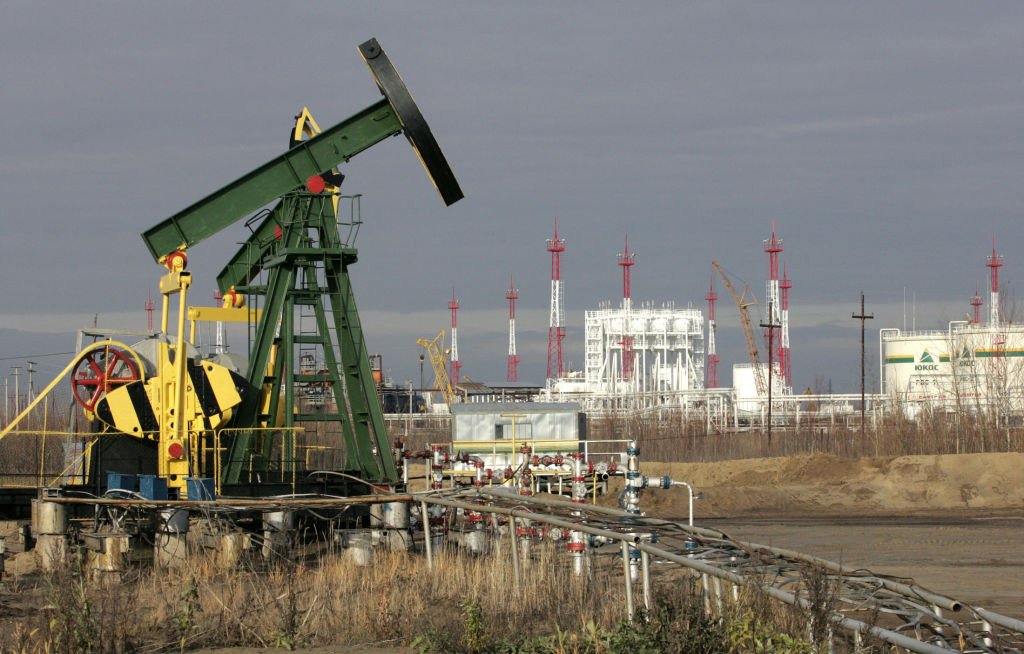
Marking the fourth anniversary of the full-scale invasion of Ukraine, the Center for Research on Energy and Clean Air (CREA) reported on February 24 that Russia’s fossil fuel revenues have plummeted by 27% compared to pre-invasion levels.
Despite continued reliance on 'shadow' tankers, Russia’s fossil fuel revenues fell by 19% year-on-year, totaling €193 billion ($227 billion) in the fourth year of the invasion.
We bring you stories from the ground. Your support keeps our team in the field.
The European Union has notably reduced its dependence on Russian fossil fuels, with EU imports of Russian oil dropping by 36% in 2025 compared to the previous year.
The EU’s sanctions on Russian crude oil, especially refined products, and sanctions by the US Office of Foreign Assets Control (OFAC) on the two Russian oil majors Rosneft and Lukoil have significantly impacted Russia’s ability to sell its oil, particularly to markets like India and China, CREA wrote.
Despite this, Russian crude sales to these countries remain higher than to Europe, though China’s imports decreased by 14% and India’s by 9% in 2025.
While Western sanctions initially forced Russia to rely on a shadow fleet of tankers using deceptive flags to bypass restrictions, Moscow’s maritime operations are chaning. Recent data shows a drop in the use of false flags, offset by a growing reliance on Russian-flagged vessels.
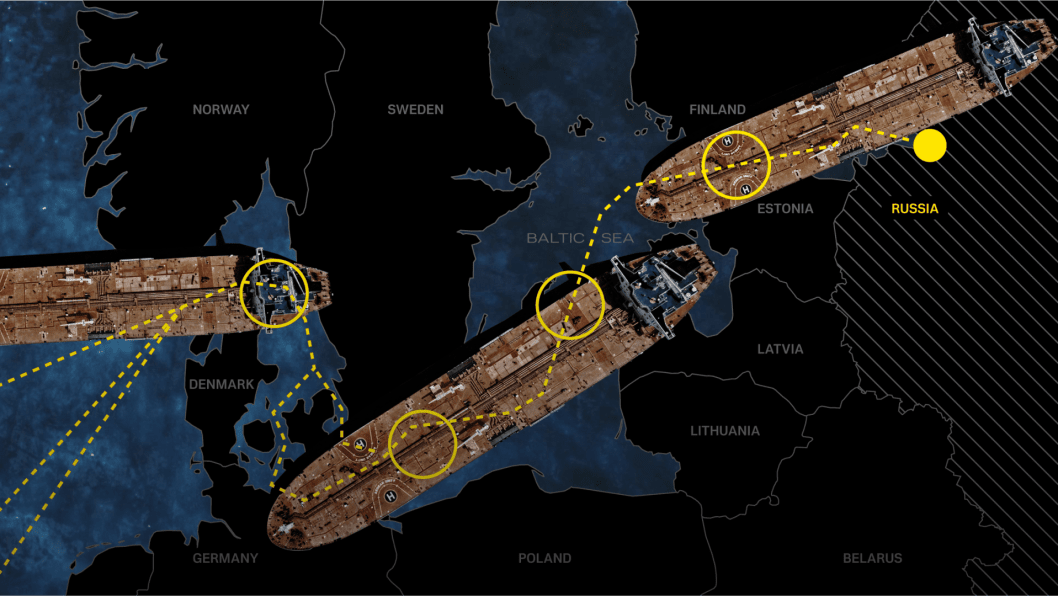
While the shadow fleet was responsible for over 60% of Russia’s seaborne crude exports in the fourth quarter of 2025, it is clear that Russian efforts to bypass sanctions are still heavily dependent on these illicit channels.
Regardless of the difficulties caused by sanctions, Russia’s oil export volumes remain slightly above pre-invasion levels, with the three largest buyers—China, India, and Turkey—accounting for 93% of exports. As Western sanctions continue to tighten, Russia’s reliance on shadow fleets and deep discounts on its oil is expected to persist, according to CREA.
Compounding the impact of sanctions, a sustained campaign of Ukrainian drone strikes on Russian oil refineries has fundamentally altered Moscow’s export dynamics.
By repeatedly knocking out significant portions of Russia’s domestic refining capacity—which Oxford Analytica estimated disrupted up to 17% of national capacity during peak strike periods—these attacks have forced Russia to export cheaper, unrefined crude oil instead of highly profitable refined products like diesel and gasoline.
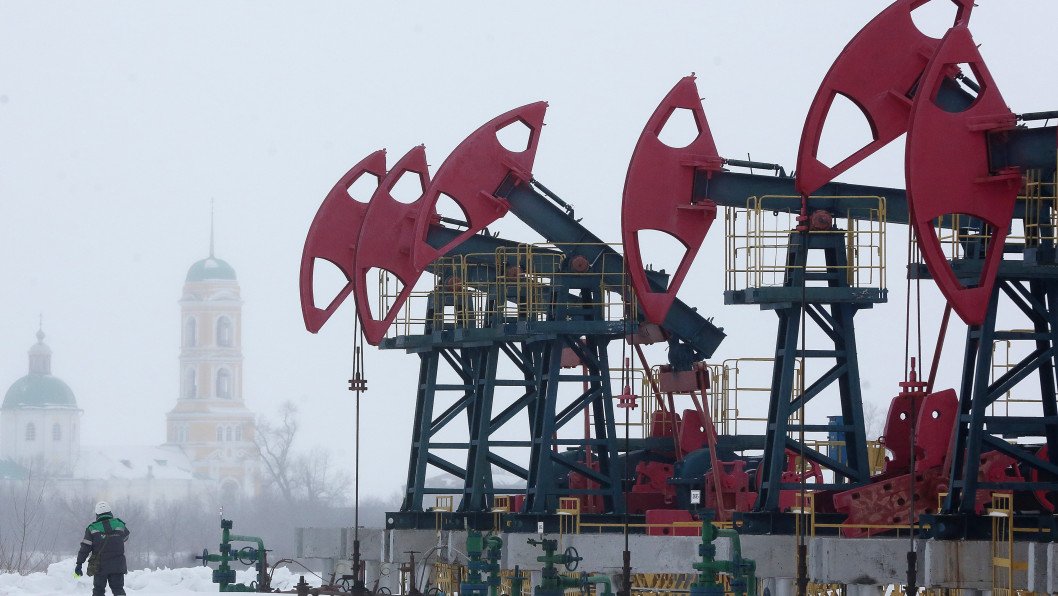
According to data tracked by Bloomberg, this loss of processing ability forced a sharp redirection of raw crude to export terminals to avoid domestic storage overflows. Because this raw crude must be sold at steep discounts to Asian buyers, Moscow is earning significantly less revenue, even as its overall physical export volumes remain high.
Earlier, it was reported that India’s imports of Russian crude oil in January fell to their lowest level since late 2022, as New Delhi scaled back purchases amid Western sanctions pressures and ongoing trade talks with the United States.
According to industry tracking, India—the world’s third-largest oil importer—received about 1.1 million barrels per day (bpd) of Russian crude last month, down roughly 23.5% from December and about a third compared with a year earlier. Russian oil’s share of India’s overall crude imports slid to 21.2%, its smallest proportion since October 2022.
The reduction shows Western sanctions over Russia’s invasion of Ukraine and diplomatic pressure tied to a US-India trade agreement that encourages New Delhi to cut Russian oil purchases.
Discuss this article: