- Category
- Latest news
Russia’s Geran-2 Drones Upgraded With Napalm-Like Incendiaries and Air-Burst Fragments
 Prefer U24 Media on Google
- Authors


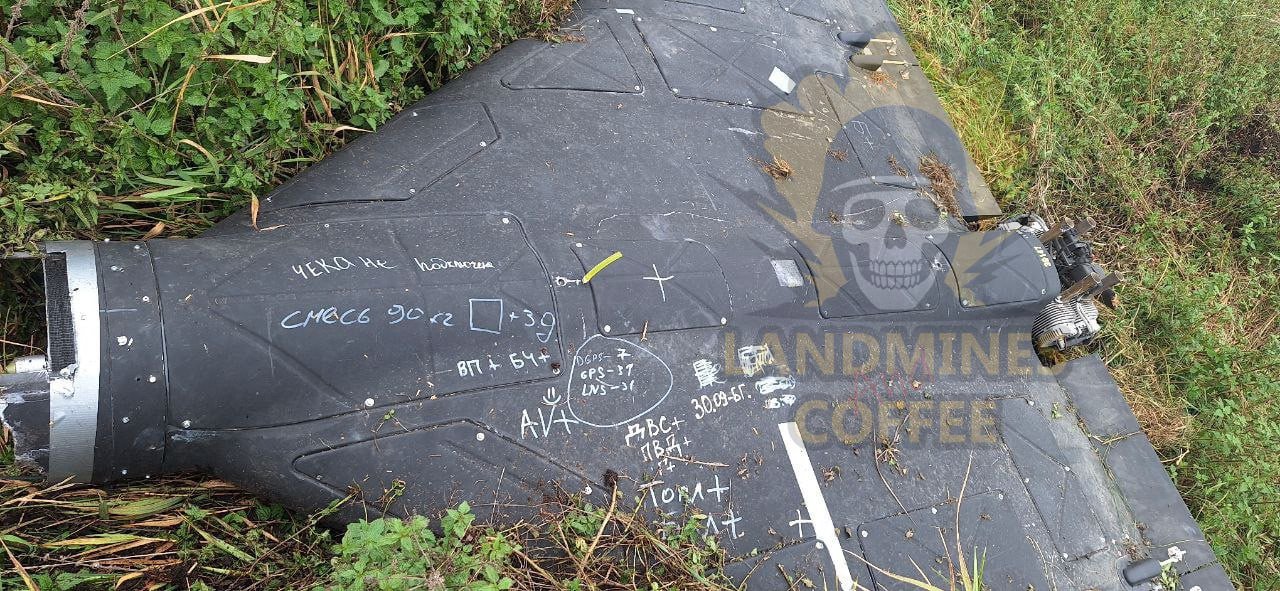
Russia is continuing to experiment with warheads for suicide drones such as the Geran-2, seeking to boost their destructive and incendiary effect on impact. New battlefield evidence shows Russian forces combining fire-producing charges with high-explosive/fragmentation elements to maximise damage.
The Telegram channel Mіny ta kava z kanapkamy published the findings on the latest warhead modification on October 8.
According to the report, the device contains a red-brown liquid incendiary—likely napalm—and, based on markings found on the drone airframe, the total warhead mass is about 90 kg.
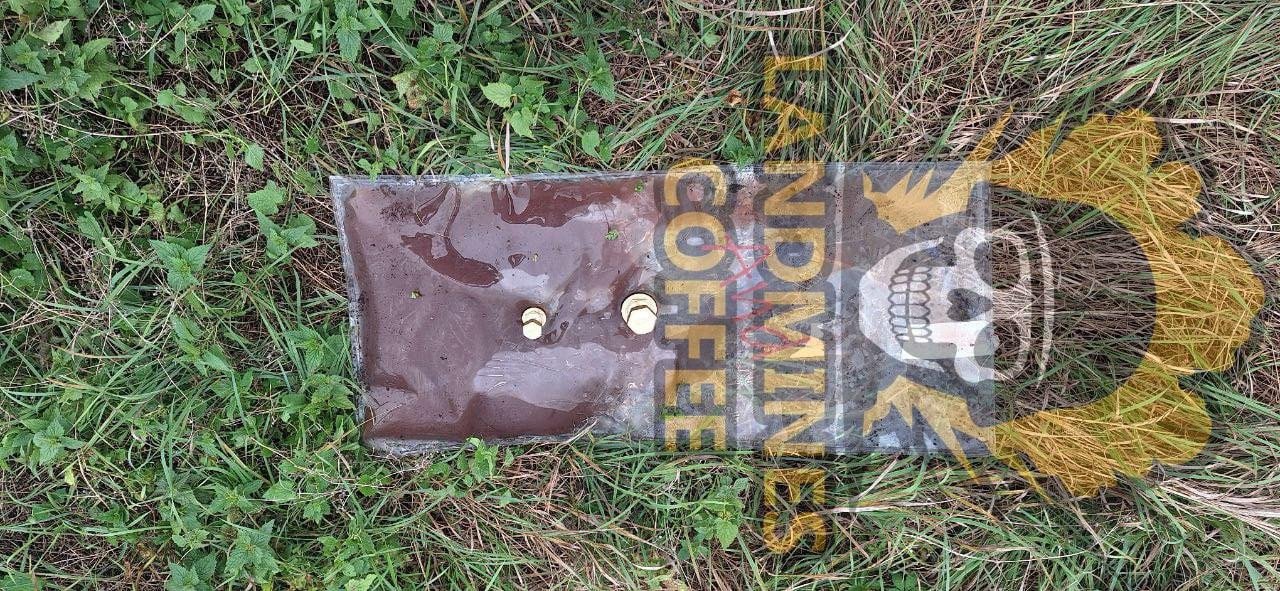
Key technical features noted by analysts include an unusual initiation system: a bursting charge formed from an OFBCH-2 unit paired with a UZ-2 fuze. Inspectors also discovered an additional incendiary charge in the nose, stored in a container resembling the fuel tank commonly used on Gerber-type UAVs.
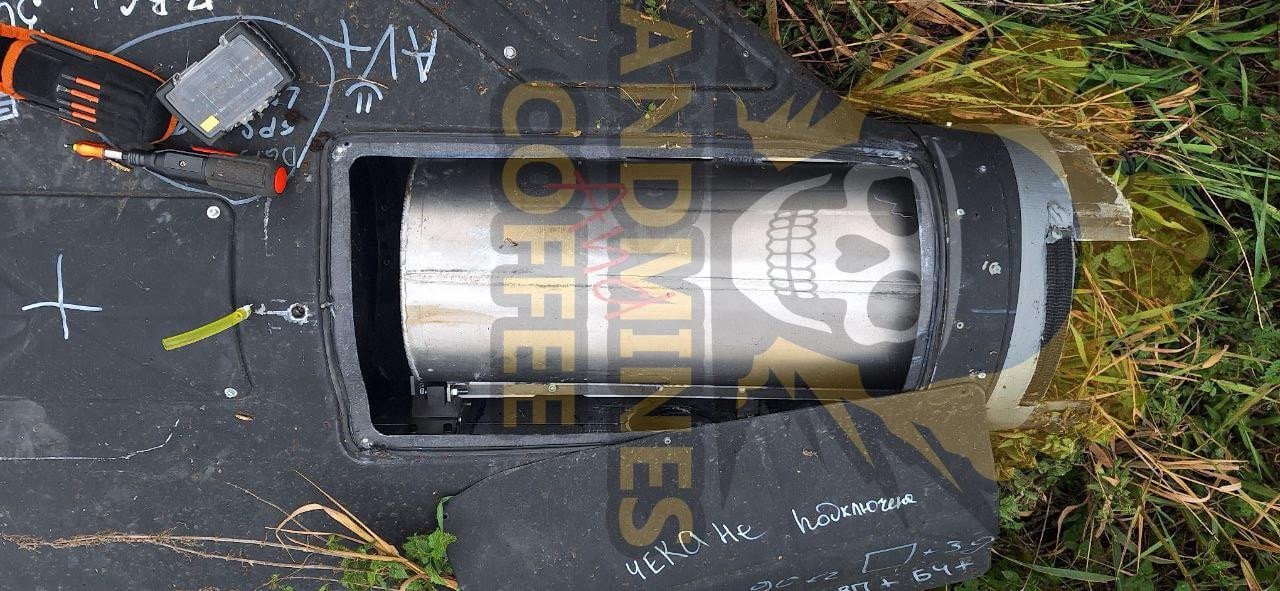
The channel notes that such experiments indicate Russia is attempting to create munitions capable of inflicting maximum casualties and expanding the area of incendiary damage after impact.
At the same time, Russian forces have started equipping Geran-2 (Shahed-type) loitering munitions with a newly identified fragmentation–HE warhead that appears designed for air-burst detonation—a change that markedly increases the weapon’s threat to exposed personnel, radar installations and other soft-skinned targets.
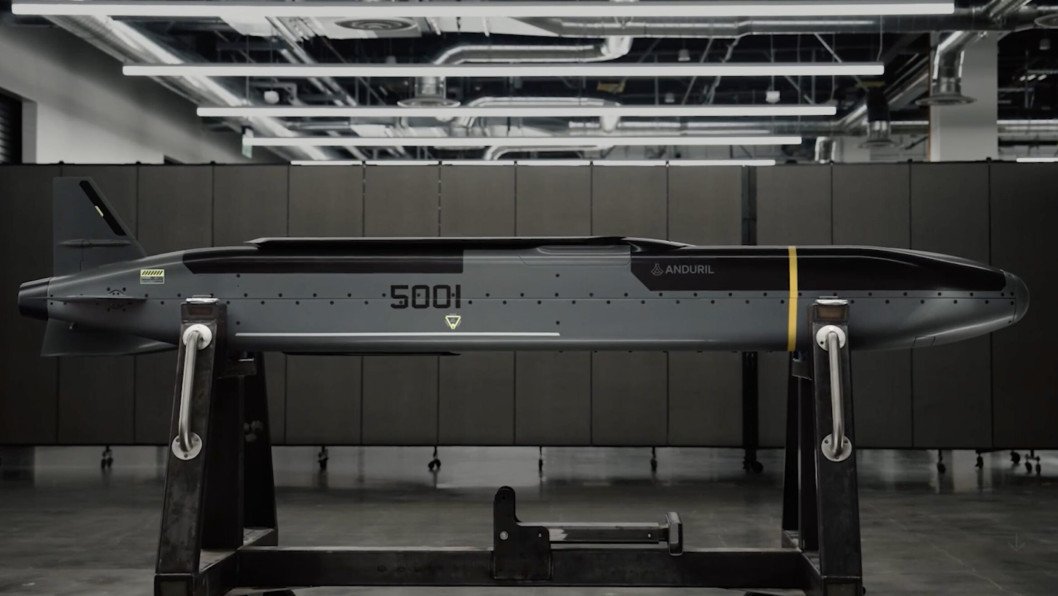
Investigators describe the warhead as a cylindrical unit bearing factory and lot markings and a painted alignment stripe. The upper section is packed with pre-formed fragments, while the lower section contains the initiation system—a base-mounted inertia fuze—and separate fill ports for explosive and incendiary charges. Analysts say the configuration merges blast, fragmentation and incendiary effects to maximise casualties and broaden the area of resulting fires.
Earlier, it was reported that Russia is now using at least three different variants of Shahed suicide drones in its attacks on Ukraine, according to an analysis he released — each version differing significantly in the amount of imported electronic components it contains.
Discuss this article:


-c439b7bd9030ecf9d5a4287dc361ba31.jpg "Photo of Katherina Popilnichenko")

-72b63a4e0c8c475ad81fe3eed3f63729.jpeg "Photo of Cyril Barabaltchouk")
-111f0e5095e02c02446ffed57bfb0ab1.jpeg "Photo of Roman Kohanets")