- Category
- Latest news
Sanctions Strand Half-Month Supply of Russian Crude on Tankers Worldwide
 Prefer U24 Media on Google
- Authors


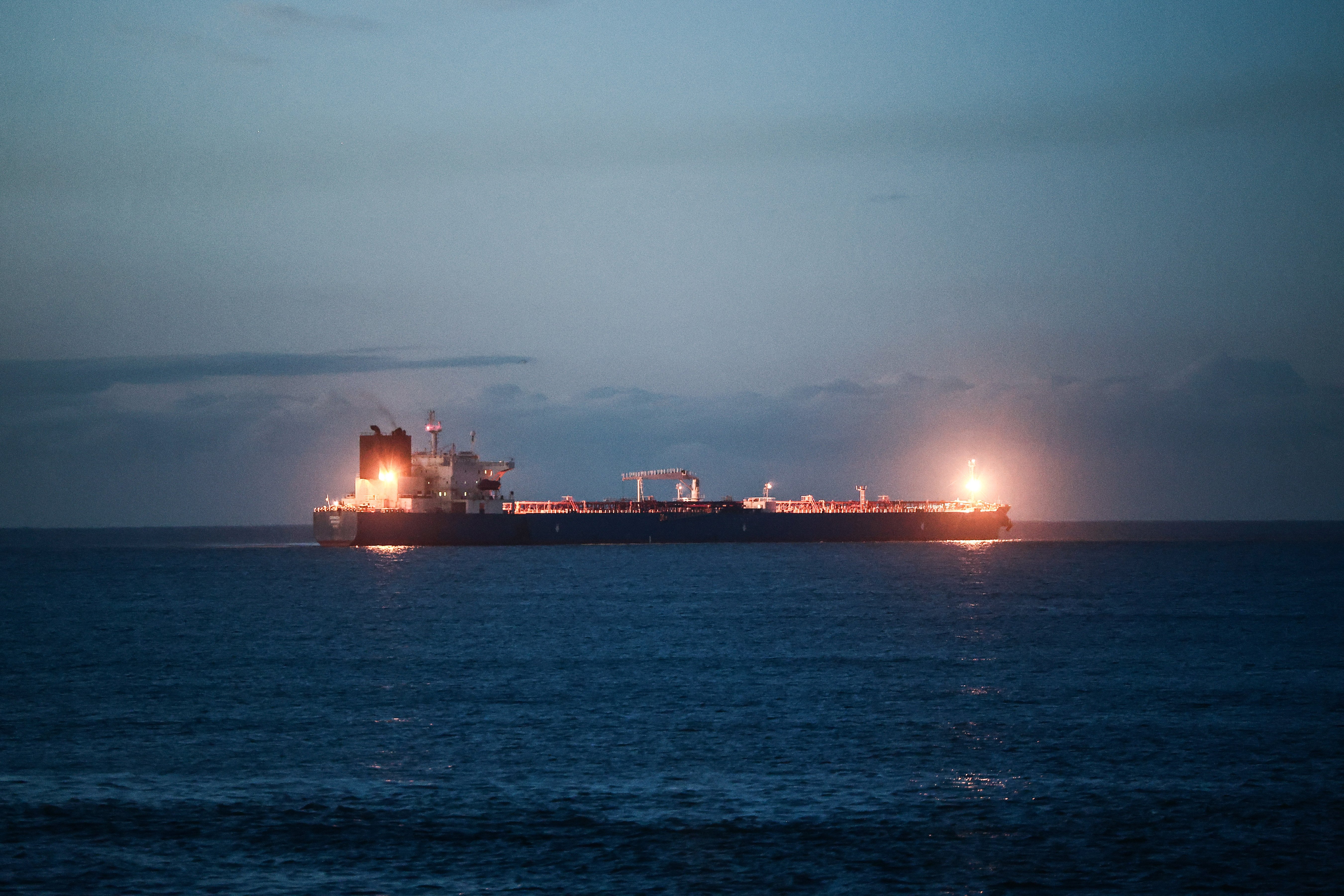
As of February 10, roughly 143 million barrels of Russian oil were sitting aboard tankers at sea, effectively turning vessels into floating storage, energy-tracking firm Vortexa reported, according to The Wall Street Journal on February 11.
The figure represents about half of Russia’s monthly production, highlighting the growing difficulty in placing shipments despite aggressive price cuts.
We bring you stories from the ground. Your support keeps our team in the field.
Russia’s output fluctuated throughout last year, ranging from just under 9 million barrels per day in January—when OPEC+ restrictions were tighter—to 9.43 million barrels per day in November, before slipping again to around 9.28 million barrels per day in January 2026.
Much of the unsold crude is now concentrated near ports off Russia, India, and China, as well as in ship-to-ship transfer zones such as waters near Malaysia, said Vortexa oil-market analyst Emma Li.
According to Li, the speed at which these stored barrels find buyers will largely depend on how far Russia is willing to deepen discounts.
1/10 🛢️ Russia’s oil export structure is shifting. Rosneft and Lukoil’s share in Russian crude exports fell from 51% in 2023–2024 to just 19% in December 2025. New traders are rapidly gaining ground, according to the January Russian Oil Tracker by @KSE_Institute.… pic.twitter.com/NiQSnTY2ly
— KSE Institute 🇺🇦 (@KSE_Institute) February 11, 2026
The price gap between Urals crude and Brent has widened to a record $27.3 per barrel at loading ports after climbing steadily since early November, data from Argus Media shows. The discount for Russia’s Far Eastern ESPO blend stands at about $13 per barrel.
Additional pressure emerged in January, when the European Union banned imports of fuels refined from Russian crude. That move delivers a “double blow” to Moscow’s energy trade by undermining demand not only for raw oil but also for refined petroleum products derived from it, said S&P Global Energy shipping analyst Mark Esposito. In practical terms, he noted, products made from Russian crude are increasingly treated as unacceptable in Western-linked markets.
According to WSJ, the financial impact is already visible. Russia’s oil-and-gas budget revenues dropped in January to their lowest level since the COVID-19 pandemic, stated Janis Kluge, a Russia-focused economist at the German Institute for International and Security Affairs. The decline coincides with slowing economic growth while wartime spending remains elevated—an increasingly difficult balance for the Kremlin to maintain.
-17753cdeceefed101825738abba6e0d4.jpg)
Kluge argues that sustained fiscal strain may not push Moscow toward peace negotiations but could still reshape battlefield strategy over time.
“I don’t think this will lead them to seek a peace agreement,” he said. “But they may decide to reduce the intensity of combat, focus on selected sectors of the front, and slow the pace of the war. That would be the logical response if the conflict becomes too costly.”
Earlier, reports emerged that Russian tankers were increasingly listing Singapore as their official destination, despite the city-state not importing Russian oil.
Data from financial analytics firm LSEG and multiple oil traders reports that roughly 1.4 million metric tons of Russian crude were declared as headed to Singapore in January 2026—the highest monthly volume in recent years.
Discuss this article:


-c439b7bd9030ecf9d5a4287dc361ba31.jpg "Photo of Katherina Popilnichenko")