- Category
- Latest news
Stalled Russian Offensive Gives Ukraine Time to Fortify the Front With Layered Defenses
 Prefer U24 Media on Google
- Authors


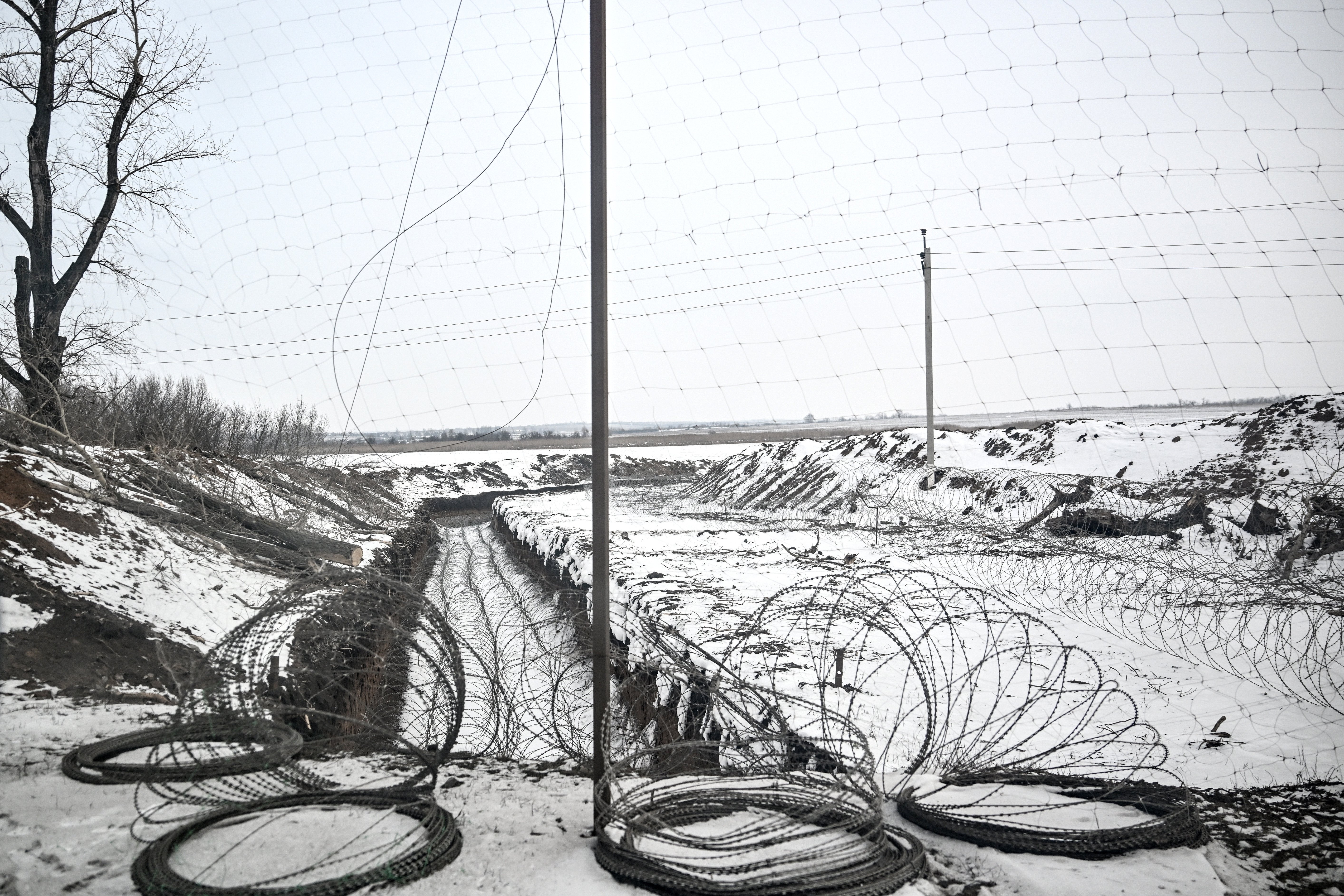
Recent Russian setbacks on the battlefield have given Ukraine additional time to strengthen and expand its defensive fortifications on several frontline directions, according to OSINT researcher Clément Molin, who outlined the changes on February 15.
Molin says the new defenses show a clear improvement in quality and structure.
We bring you stories from the ground. Your support keeps our team in the field.
Between the first and second main defensive lines, Ukrainian forces have added smaller perpendicular barrier lines, creating isolated defensive sectors rather than a simple linear formation. These sectors form enclosed squares divided by trenches and rows of barbed wire.
If Russian troops manage to break through into one of these zones, Molin suggests they are unlikely to encounter Ukrainian infantry directly. Instead, they would face minefields combined with drone and artillery strikes.
Each day that passes gives Ukraine 🇺🇦 more time to prepare new fortifications that will ultimately slow down russian 🇷🇺 offensives.
— Clément Molin (@clement_molin) February 15, 2026
The recent russian setbacks allowed Ukraine to largely reinforce its fortification strategy.
🧵THREAD🧵1/16 ⬇️ https://t.co/w4iFNKxgCN pic.twitter.com/zM0gxiQrIq
According to the researcher, the updated defensive concept also avoids relying on cities as primary fortified strongholds.
Russian forces have repeatedly attempted to infiltrate around urban areas before launching direct assaults, reducing the effectiveness of city-centered defenses.
The new approach instead prioritizes a continuous defensive line designed to slow advances and channel attacking forces into exposed zones. Satellite imagery indicates the scale of construction has been significant.

Comparisons between current images and those taken six months and one year ago show substantial expansion and rapid building progress, Molin noted.
Even so, he assesses that infantry infiltration will likely remain Russia’s main tactical method against the new defenses, while the chances of a large-scale breakthrough or rapid frontline collapse appear increasingly unlikely.
Earlier, reports emerged that Ukrainian forces were conducting localized counterattacks near the boundary between the Dnipropetrovsk and Zaporizhzhia regions, likely taking advantage of communication disruptions affecting Russian troops
Discuss this article:
-9bd5e1532102621f8fb1c4ba871a3171.png)


-c439b7bd9030ecf9d5a4287dc361ba31.jpg "Photo of Katherina Popilnichenko")