- Category
- Latest news
STARK Plans Full-Cycle UAV Manufacturing in Ukraine After Launching Research Hub
 Prefer U24 Media on Google
- Authors


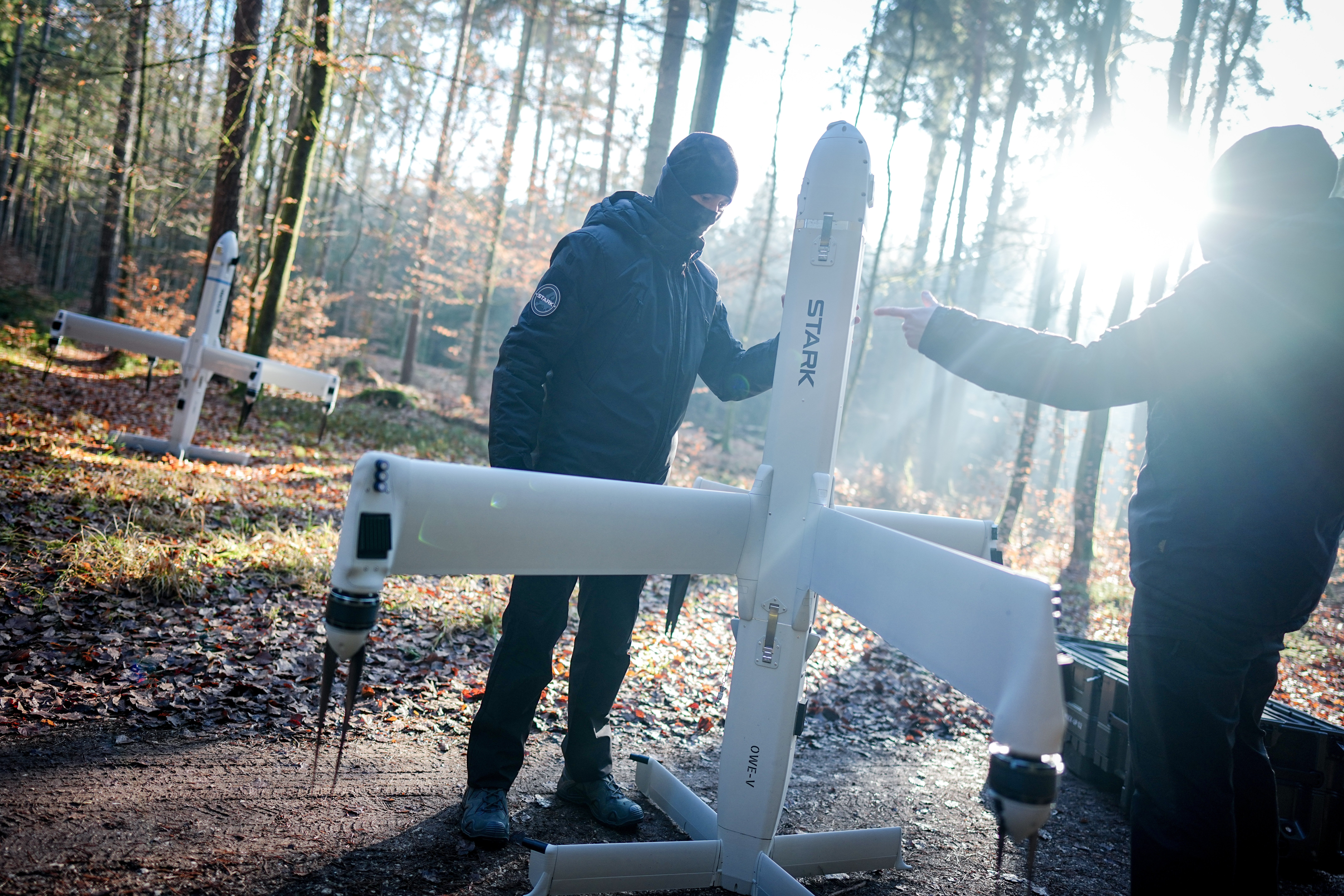
European defense technology company STARK is expanding its footprint in Ukraine with the launch of a new research and development (R&D) hub that could accelerate the delivery of advanced unmanned systems to the battlefield, according to the company’s press release, shared with UNITED24 Media on February 13.
The company announced ahead of the Munich Security Conference that the Kyiv-based facility will provide local training, engineering support, and continuous collaboration with frontline users.
We bring you stories from the ground. Your support keeps our team in the field.
The site will span roughly 2,000 square meters and is expected to support more than 200 specialists, focusing on research, integration, operator training, and technical maintenance.
STARK specializes in next-generation unmanned weapon systems, including its Virtus loitering munition, which has been refined using operational feedback from military personnel across Europe and Ukraine. By situating development inside Ukraine, the company aims to conduct daily technology iterations based on real battlefield data, shortening the time between design updates and deployment while ensuring systems remain aligned with frontline needs.
“Russia’s war against Ukraine has fundamentally reshaped Europe’s security landscape,” said STARK Ukraine Chief Operating Officer Maksym Cherkis. “Deterrence now depends not only on military capability, but also on the ability to sustain stable production.”
The company views Ukraine as a long-term partner in building a new European defense architecture and plans to expand from research and engineering toward full-cycle UAV manufacturing inside the country. STARK is also opening an additional office in Greece, reinforcing its ambition to operate as a pan-European defense manufacturer.
“STARK is becoming a key pillar in Europe’s defense by developing local R&D and production across the continent,” said Chief Executive Officer Uwe Horstmann. “By leveraging innovation from the frontline, we can produce proven systems at speed and keep them relevant as operational demands evolve.”
🚨🇩🇪 BREAKING: Germany to order €536 million worth of strike drones
— Defence Index (@Defence_Index) February 10, 2026
Germany plans to procure loitering munition strike drones worth €536 million ($638M) from domestic startups Helsing and Stark Defense, as part of a broader €4.3 billion rearmament framework following Russia’s… pic.twitter.com/dS2BNhSsFU
Company background and capabilities
Founded in 2024, STARK has rapidly emerged as one of Europe’s fastest-growing defense technology firms and is now valued at more than €1 billion. Headquartered in Berlin, the company maintains offices in Germany, the United Kingdom, Sweden, and Ukraine, and employs roughly 400 personnel.
STARK has raised $100 million in funding, backed by investors including Project A, the NATO Innovation Fund, and Sequoia Capital. CEO Uwe Horstmann is a prominent figure in Germany’s defense-tech ecosystem and has supported multiple emerging military technology companies through venture investments.
The company develops unmanned systems for air, sea, and land operations, all built on a unified software architecture known as Minerva. The platform is designed to support distributed, multi-domain operations aligned with US and NATO doctrine, enabling networked autonomous systems to extend operational reach while reducing risk to personnel.
Among STARK’s flagship products:
Virtus loitering munition
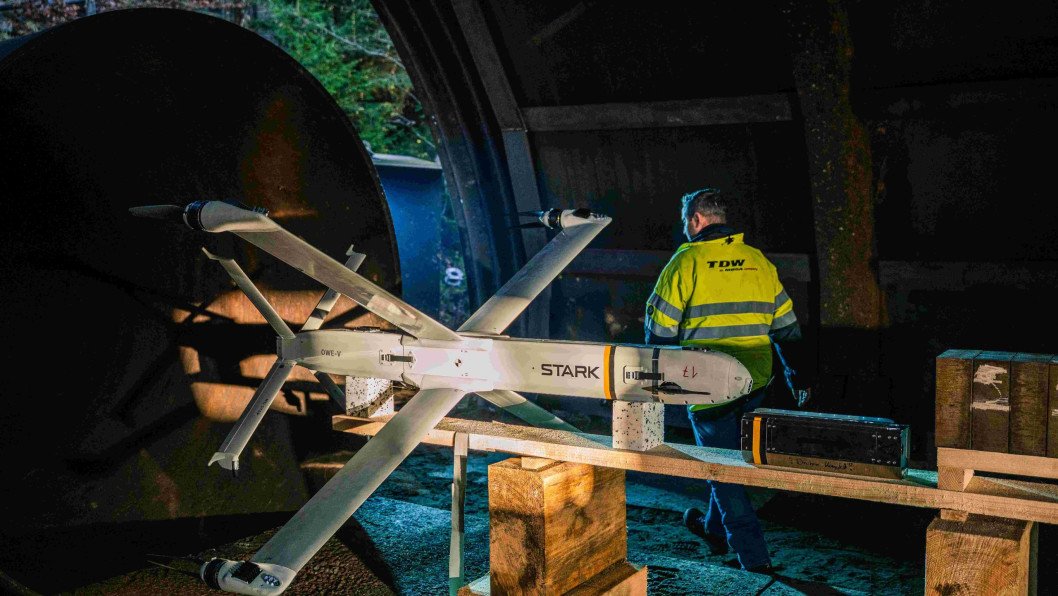
A vertical-takeoff strike drone with a range of 120 km, endurance of up to 60 minutes, and payload capacity of 5 kg, capable of precision engagements without requiring a launch system.Minerva command-and-control software
Enables coordinated control of drone swarms and is designed to function in GNSS-denied or degraded environments, supporting complex “hunter-killer” mission profiles already demonstrated in Ukraine.
German VTOL Loitering Munition OWE-V VIRTUS by STARK 🇩🇪
— DefenseTrends (@DefenseTrends) January 24, 2026
- Max. Speed: 250 km/h
- Payload: 5 kg
- Endurance: 60 min pic.twitter.com/Ddte0g2rgG
Vanta unmanned surface vessel
Built for maritime reconnaissance and strike missions, with ongoing integration of tube-launched loitering munitions demonstrated during NATO exercises.Advanced warheads
STARK has invested in German-manufactured warheads from TDW (MBDA Germany), including the Lion Strike 110, which has demonstrated penetration of 800 mm of rolled armored steel, while also integrating Ukrainian-produced warhead technology.
Growing defense investment
Germany’s federal government has approved €300 million in funding for the procurement of STARK loitering munitions as part of a broader expansion in defense spending, underscoring rising European demand for autonomous strike capabilities shaped by Ukraine’s battlefield experience.
With production, research, and real-time combat adaptation increasingly centered in Ukraine, STARK’s expansion highlights how the war is transforming the country into a core hub of European military innovation.
Earlier, reports emerged that Ukrainian arms producers received the first wartime licenses to export their goods abroad, in a policy shift aimed at bringing in investment and expanding domestic weapons production.
Discuss this article:



-c439b7bd9030ecf9d5a4287dc361ba31.jpg "Photo of Katherina Popilnichenko")


