- Category
- Latest news
Three Cutting-Edge Ukrainian Drones Unveiled: 500-km Cargo Bomber, $3k Scout, and an FPV Mothership
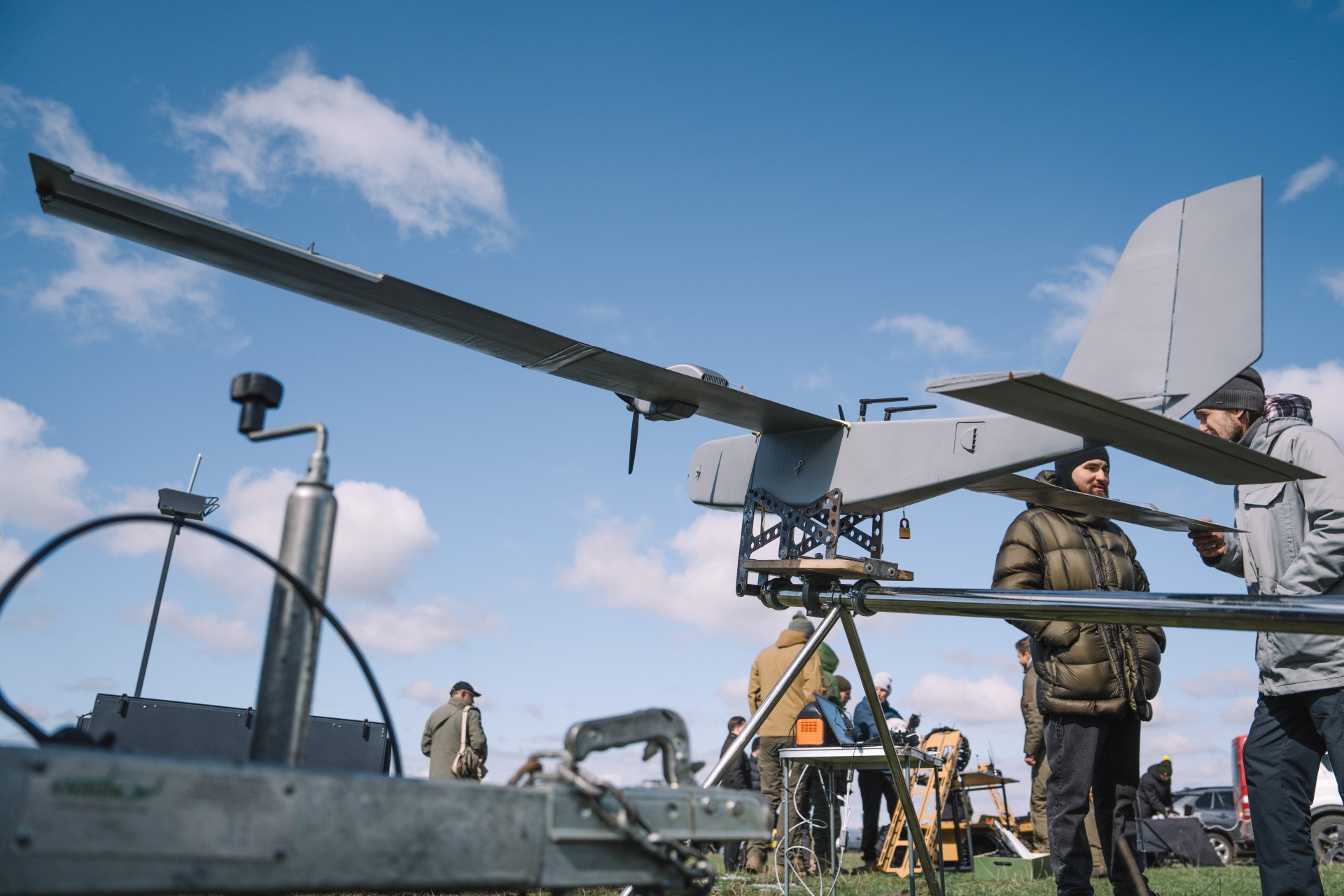
At a one-day showcase of Ukrainian defense tech, manufacturers rolled out complementary UAV concepts meant to be used together: a heavy-range Cargo aircraft to carry supplies or drop munitions deep behind enemy lines; Sokil, an inexpensive front-line recon drone meant to be lost by the dozen; and Veresen, a carrier platform that can deliver two strike or recon copters into contested territory — or act as a stand-alone munition.
 Prefer U24 Media on Google
- Authors


At the Defense Tech Valley 2025 investment summit near Kyiv, Ukrainian drone firms unveiled a trio of new unmanned aircraft designed to cover different battlefield roles — from long-range cargo and strike missions to low-cost frontline reconnaissance and a “mothership” that carries and releases FPV attack copters, Ukrainian defense media Militarnyi reported on September 19.
The announcements, made by Brave1 and Vyriy, signal Kyiv’s continuing push to field scalable, mass-produced systems that keep pace with the demands of high-intensity warfare.
⚡️ @BRAVE1ua Defense Tech Valley 2025 in Lviv drew 5,000 guests, 300 investors, and $100M in pledges, cementing Ukraine as the global hub of battlefield innovation. @UNITED24 joined as the official charity partner of the summit. pic.twitter.com/G0ZIerMeTZ
— UNITED24 Media (@United24media) September 19, 2025
Cargo: a drone that can bomb, deliver, or return
Brave1’s new Cargo aviation complex is a small transport/strike unmanned airplane designed for flexible missions: suicide strike, precision bombing of small targets, or cargo delivery to forward units. Key points the company disclosed:
payload options: three small 8.5-kg bombs or a single 25-kg munition; after weapon release, the airframe is programmed to return to a pre-set recovery point;
range & launch: a claimed ferry range in excess of 500 km (dependent on payload and fuel); capable of taking off from short asphalt strips, fields, or via catapult;
recovery modes: manual, automatic, or parachute recovery to a designated spot;
resilience: redundant communications channels to resist jamming and spoofing;
mission fit: intended for logistics runs or “surgical” strikes where a light airframe that returns for reuse provides economy and tempo.
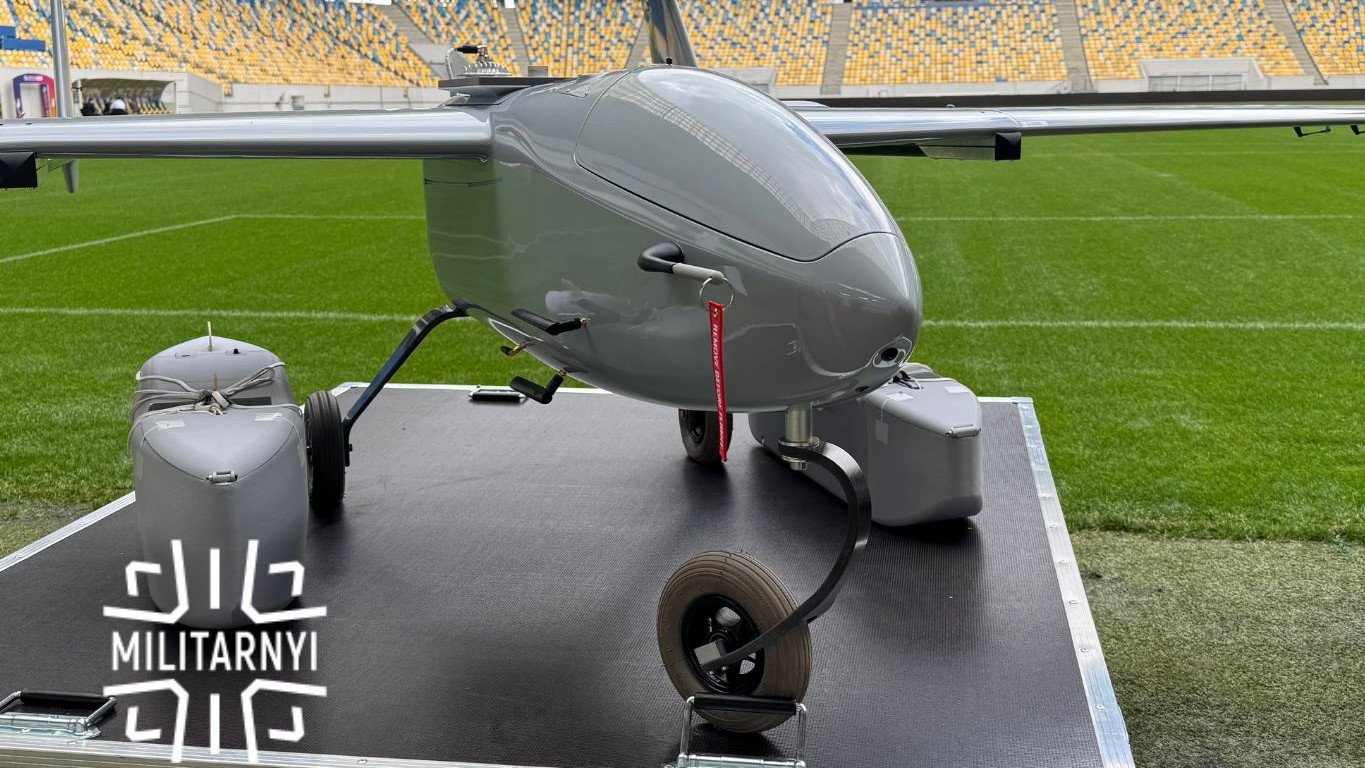
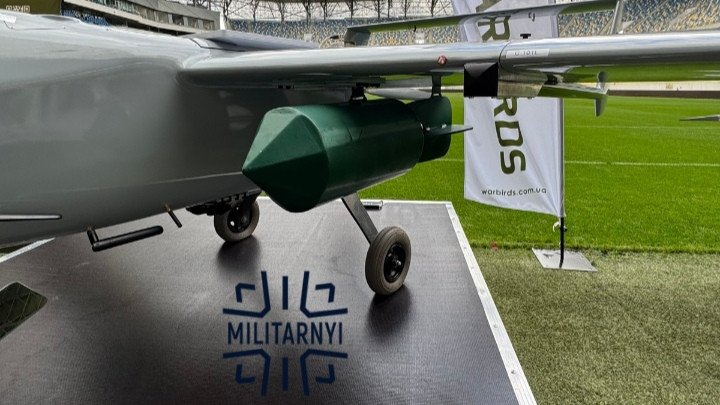
Developers said Cargo has evolved through several modernization cycles driven by combat experience and user feedback since work began before the full-scale invasion, Militarnyi noted.
Sokil: cheap, scalable battlefield scout
Vyriy’s Sokil fills a different niche—cheap, mass-deployable tactical reconnaissance intended to operate along the contact line where attrition and EW attacks are high.

Cost & concept: designed to be inexpensive ($3,000–$5,000 depending on fit) so units can field them in large numbers without risking high-value assets;
performance: up to 2.5 hours endurance, 10× optical zoom with 3× digital, cruise speed ~75 km/h, and an operational radius of around 130 km on battery power;
deployment: 8-kg, hand-launched; requires minimal operator skill and can be prepared for launch in about 20 minutes with a three-person crew;
roles: short-range surveillance, vehicle detection at several kilometers, and freeing larger, costlier ISR platforms for deeper missions.
CEO of Vyriy drones, Oleksii Babenko, emphasized Sokil’s purpose: to avoid “blinding” Ukrainian forces by losing expensive deep-recon platforms to routine frontline attrition in an interview with Militarnyi.
Veresen: the mothership that carries FPV strike drones
Vyriy also presented Veresen , a twin-motor drone designed as a carrier for FPV strike copters and as a multi-role platform in its own right.
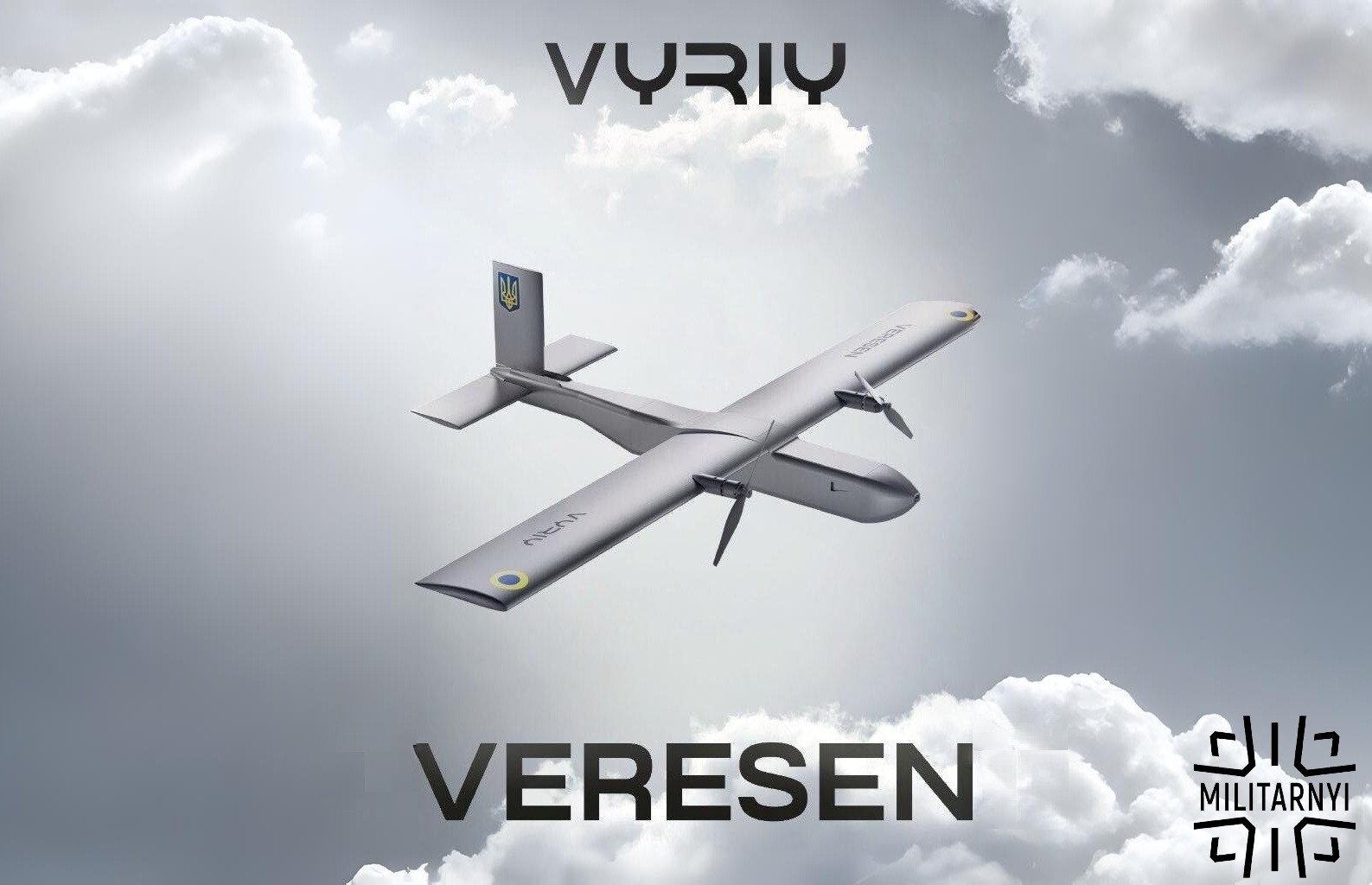
Carrying capacity: can deploy two quadcopters with up to 1.5 kg payload each—enough for fragmentation warheads or anti-tank shaped charges;
modes: operates as a carrier (launching two FPV attackers), as a stand-alone suicide (up to 4 kg payload, ~60 minutes endurance, ~75 km range), or as a long-endurance recon platform (with extra batteries up to 180 minutes and a ~50 km radius);
comms & survivability: uses frequency-hopping communications (to resist jamming) and spatial navigation aided by ground beacons; Veresen can relay two simultaneous channels for subordinate drones;
launch & speed: catapult launch; cruise speed about 70 km/h with bursts to 130 km/h. Developers say the airframe is production-ready and entering serial manufacturing trials.
Vyriy said Veresen was developed in close partnership with frontline K-2 unit engineers and is already being tested in integrated missions with FPV teams, Vyriy drones SEO said in a comment to Militarnyi.
Why these three matter
Taken together, the three systems reflect a layered approach: Cargo provides reach and reusable strike/logistics capability; Sokil offers cheap, easily replaceable eyes along the front; Veresen acts as a delivery and comms node for high-value FPV strikes into enemy rear areas.
That architecture mirrors Ukrainian battlefield practice of pairing high-volume, low-cost munitions with a smaller number of higher-value, long-range assets.
We did it!
— BRAVE1 (@BRAVE1ua) September 19, 2025
Brave1 Defense Tech Valley 2025 hosted 5,000+ visitors from 50 countries: investors, manufacturers, and military. The opening ceremony honored our soldiers, with the flags of top drone units raised by legendary Ukrainian Heavy Shot & Vampire drones. Take a look! pic.twitter.com/UPFEJtn5O0
Manufacturers at the summit stressed production scalability and battlefield economics: massed, cheaper systems can be produced and fielded rapidly, preserving high-end platforms for missions where they deliver unique value.
Earlier, Ukraine launched Clarity—software that spots enemy assets in drone imagery, geotags them, and builds orthophotos in seconds. Already trusted by 250+ frontline units, it cuts analyst time by 90% — and runs on a laptop.
Discuss this article:




-72b63a4e0c8c475ad81fe3eed3f63729.jpeg "Photo of Cyril Barabaltchouk")

-111f0e5095e02c02446ffed57bfb0ab1.jpeg "Photo of Roman Kohanets")