- Category
- Latest news
Ukraine Blows a $65 Million Hole in Russia’s Nuclear Bomber Hub
 Prefer U24 Media on Google
- Authors


The Beriev Aircraft Plant (TANTK) in Taganrog, a cornerstone of Russia’s strategic aviation, has reported a staggering $65 million loss for 2025.
This financial freefall marks a devastating reversal from its $15 million profit in 2024, signaling that Ukrainian precision strikes are effectively bankrupting Russia’s military-industrial complex.
We bring you stories from the ground. Your support keeps our team in the field.
Official data reveals that the plant’s production output has plummeted by 2.5 times, a direct consequence of the physical destruction of its manufacturing workshops.
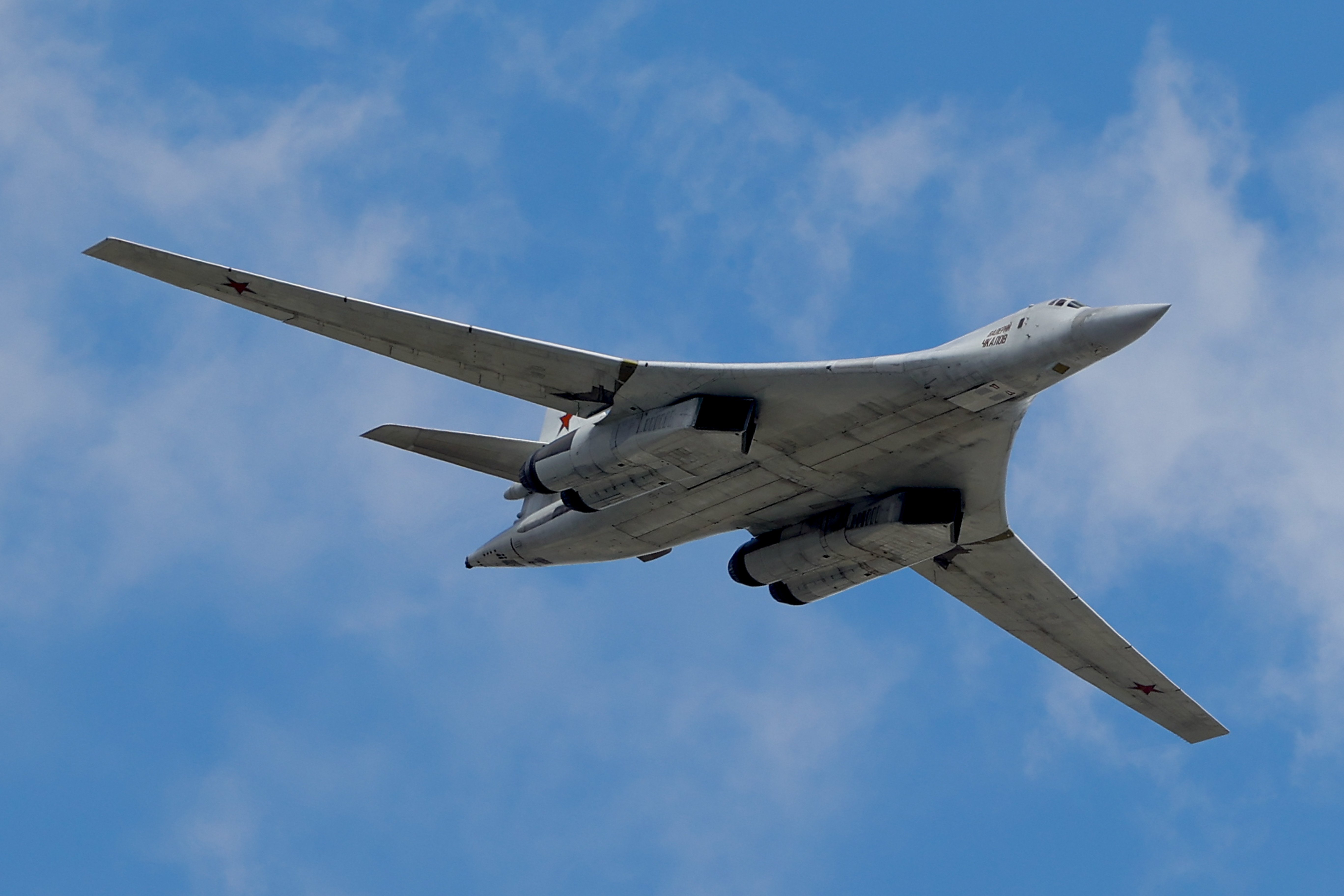
As reported by Defense Express on February 22, the facility was under a high-priority $170 million contract to modernize three Tu-95MS strategic bombers to the “MSM” level, allowing them to carry advanced Kh-101 cruise missiles.
However, constant Ukrainian pressure has turned the facility into a graveyard for these high-tech projects. The report highlights that systematic strikes, including those on July 7 and November 25, 2025, have crippled the site’s ability to fulfill state defense orders, leaving the fate of the nuclear-capable bombers in limbo.

The timeline of strikes shows a calculated campaign to blind and weaken the Russian Air Force. A particularly precise hit in late 2025 resulted in the destruction of Russia’s rare A-60 “flying laser” laboratory, an irreplaceable asset.
Furthermore, the facility’s primary role as the developer of the A-50 and A-100 “Premier” radar planes has been completely compromised. Russia’s desperate attempts to restart A-50 AWACS production have devolved into a stalled “long-term construction” project with no realistic completion date in sight.
The plant is now undergoing a forced “technological reduction.” Workshops No. 22 and No. 36, which previously handled sophisticated aircraft assembly, were severely damaged, leading to casualties and operational paralysis.

Unable to maintain complex supply chains for strategic bombers, the plant is reportedly being repurposed to manufacture simple “Molniya” type drones for use on the battlefield.
This forced pivot from elite nuclear carriers to disposable attack drones marks the terminal decline of Russia’s once-formidable aviation industry—a strategic degradation underscored by the latest Defense Express analysis.
Earlier, throughout 2025, Ukraine’s SBU “Alpha” unit used long-range drones to strike five airbases, destroying 15 Russian aircraft and causing over $1 billion in damage. The losses included 11 jets, such as Su-34 bombers, Su-30SM fighters, and MiG-31 Kinzhal carriers, along with an An-26 transport and three helicopters, including the Mi-28 “Night Hunter” and the massive Mi-26, severely crippling Russia’s tactical fleet and regional logistics.
Discuss this article:
-4a56a6b482ec132402c16ef6fcabf9a2.png)