- Category
- Latest news
Ukraine Quietly Tested Space-Launch Capabilities in Middle of War Twice
 Prefer U24 Media on Google
- Authors


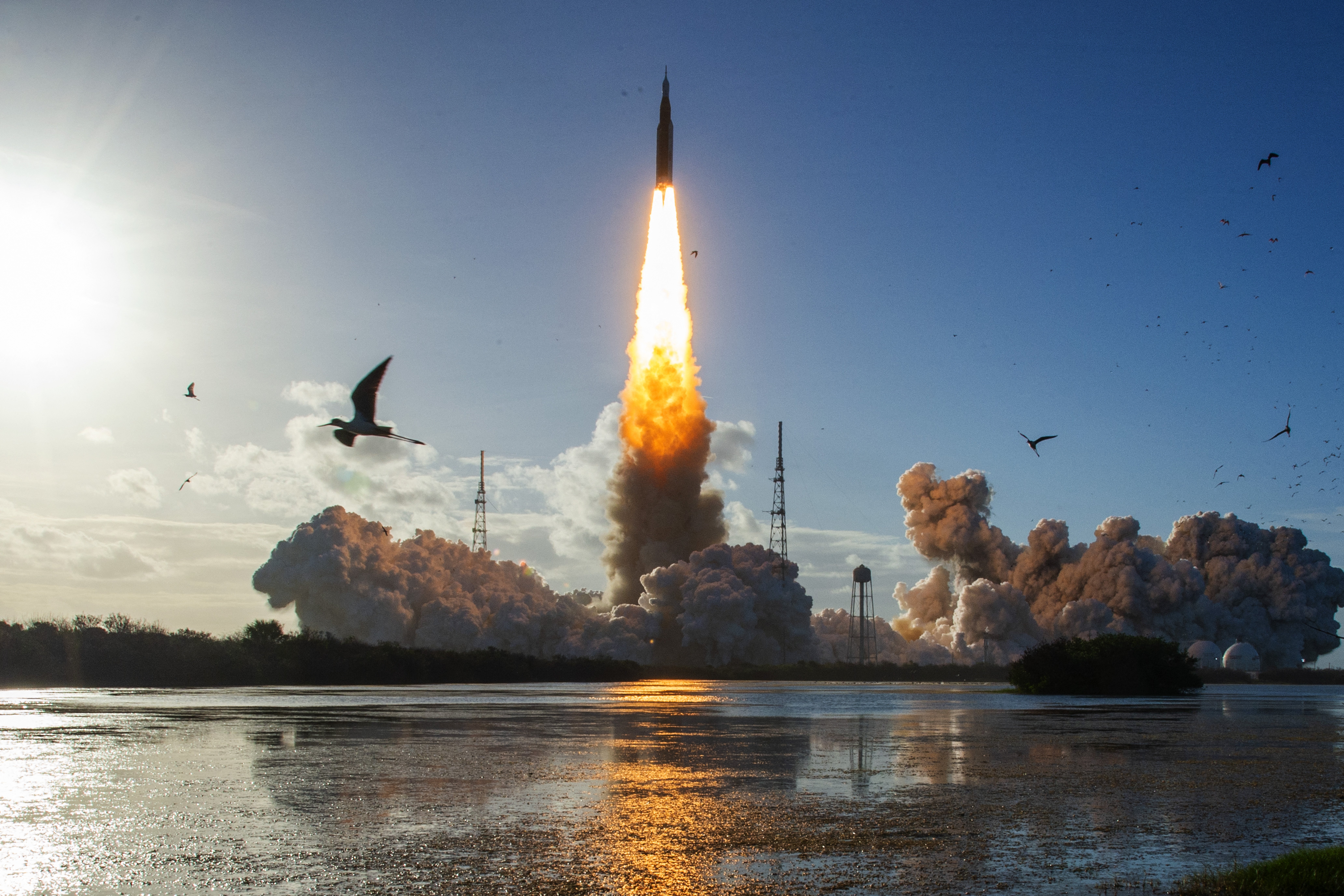
Ukrainian intelligence has successfully carried out two rocket launches into space during the full-scale war, lawmaker Fedir Venislavskyi, who chairs the parliamentary subcommittee on state security and defense, said in an interview with RBC-Ukraine on April 13.
Venislavskyi stated units of Ukraine’s military intelligence agency had twice sent rocket carriers beyond the atmosphere.
We bring you stories from the ground. Your support keeps our team in the field.
The first launch reached an altitude of over 100 kilometers (62 miles), while the second climbed to 204 kilometers (126 miles). Both launches were officially recorded using technical monitoring systems.
“This is a unique situation for a country that is in a state of full-scale war. Ukraine already has the technical capability to counter similar enemy attack systems and to strike them in space,” Venislavskyi said.
He emphasized that these were not experimental tests but real combat missions carried out under the leadership of then–military intelligence chief Kyrylo Budanov.
“We have missiles that almost no one knows about, but which are capable of striking enemy territory at distances of up to 500 kilometers (310 miles) and flying at hypersonic speeds. We are successfully using them. But their main purpose is to carry out non-standard operations, including those we have just discussed,” he added.
In addition to the space launches, Venislavskyi said Ukrainian intelligence had completed another unusual mission—launching a rocket carrier from a transport aircraft at an altitude of around 8 kilometers (5 miles).
“This was done for the first time on the European continent and only the second time in world history. The United States first achieved this in the mid-1970s. But our launch altitude is a record,” he said.
According to the lawmaker, the system could evolve into an “airborne spaceport” in the near future. Launching rockets from the air reduces the energy needed to pass through dense layers of the atmosphere, significantly increasing both range and strike efficiency.
He added that the technology could be used not only for civilian purposes but also to counter advanced Russian missile systems, like the Oreshnik intermediate-range ballistic missile.
“These are unique results of the work of our group led by military intelligence. We continue to develop this direction,” Venislavskyi said.
Earlier, reports emerged that Ukraine’s planned UASAT LEO satellite constellation will initially be manufactured in Denmark by the space technology company GomSpace, with production expected to shift to Ukraine in later stages of the program.
The UASAT LEO project is designed as a large constellation of low Earth orbit communications satellites. The planned network will include approximately 300 spacecraft. The first satellite is expected to launch in October using a SpaceX rocket.
Discuss this article:
-4a56a6b482ec132402c16ef6fcabf9a2.png)




-80134f2dc17b4a887d01513a1c7bc929.png "Illustration of Russian military infrastructure targeted by Ukrainian strikes in temporarily occupied eastern Ukraine. (Source: General Staff of the Armed Forces of Ukraine)")