- Category
- Latest news
Russia Admits It’s No Longer a Space Power as Launches Fall to 1960s Levels
 Prefer U24 Media on Google
- Authors

-72b63a4e0c8c475ad81fe3eed3f63729.jpeg "Photo of Cyril Barabaltchouk")
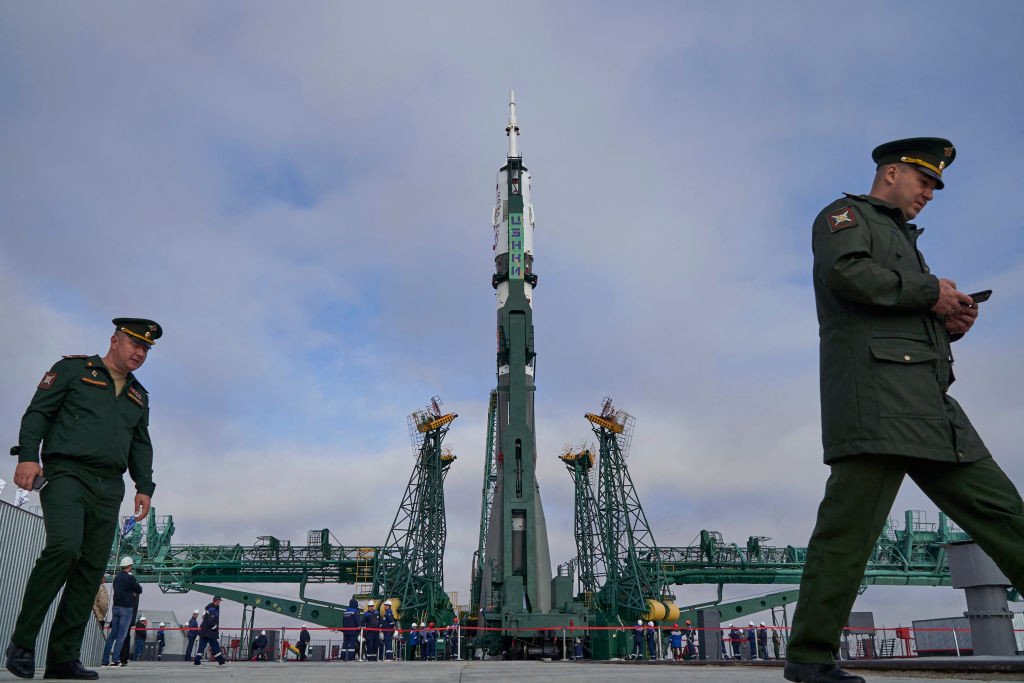
Russia has effectively fallen out of the ranks of global space leaders, with its launch rates hitting a historic low not seen since the dawn of human spaceflight, The Moscow Times reported, citing Russian state media on April 10.
Speaking at the Russian Space Forum, Lev Zeleny, the scientific director of the Russian Academy of Sciences' Space Research Institute, admitted that Moscow has no plans for manned deep space or lunar missions over the next decade. The only major project remaining is the creation of a new Russian Orbital Station.
We bring you stories from the ground. Your support keeps our team in the field.
“Of course, there should be Russian manned lunar cosmonautics, but we must find some difficult, non-standard solutions to go from lagging behind to overtaking,” Zeleny stated.
Launch statistics confirm this pessimism. In 2025, Roscosmos carried out just 17 orbital launches, Russian Deputy Prime Minister Denis Manturov reported to Russian leader Vladimir Putin earlier this year. This is the exact same number of launches Russia executed the previous year, and notably, it ties Moscow with the small island nation of New Zealand, The Moscow Times wrote.
By comparison, the United States increased its launches from 145 to 181, while China jumped from 68 to 91. This means Russia has fallen behind the US by more than tenfold and lags behind China by a factor of five. Excluding the pandemic period, Russia’s current launch level is its absolute lowest since 1961, the year Soviet cosmonaut Yuri Gagarin made his historic first flight (which saw 9 launches).
While Roscosmos Deputy General Director Grigory Maksimov attempts to reassure the public by claiming the state corporation will “enter the top three world space powers” in the next three to four years, reality suggests otherwise. Space expert and popularizer Vitaly Egorov noted that out of 20 launches planned for 2026, three have already been delayed due to severe technical failures.
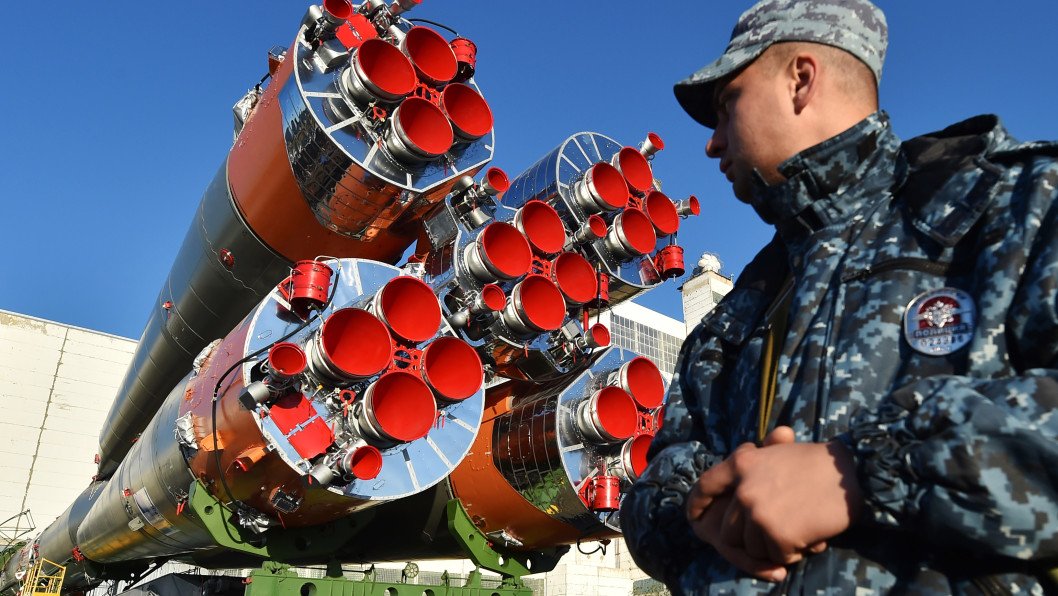
These include a major accident on the Baikonur launch pad in late November that derailed the Progress MS-33 mission, issues with a Proton-M upper stage, and a failed test start of the new Soyuz-5 rocket.
“All three failures have a different cause, which in general does not characterize the state of the Russian space industry in the best way,” Egorov concluded.
The collapse of the Russian space program highlights a change in global orbital dominance. As Roscosmos faces record-low launch rates and repeated technical failures—such as the recent Baikonur launchpad accident—Moscow is increasingly pivoting from scientific space exploration to militarizing its remaining assets.
Cut off from Western technology by severe sanctions, the Kremlin has resorted to deploying hostile “matryoshka” satellites and electronic warfare systems to track and harass US and UK reconnaissance spacecraft. This signals that while Russia can no longer compete with the US or China in commercial or lunar launches, it remains intent on weaponizing low Earth orbit to compensate for its rapidly deteriorating aerospace industry.
Discuss this article:


-c439b7bd9030ecf9d5a4287dc361ba31.jpg "Photo of Katherina Popilnichenko")