- Category
- Latest news
Ukraine’s Ground Robot Tore Through Russian Troops—So It’s Now Armed With a Grenade Launcher
 Prefer U24 Media on Google
- Authors


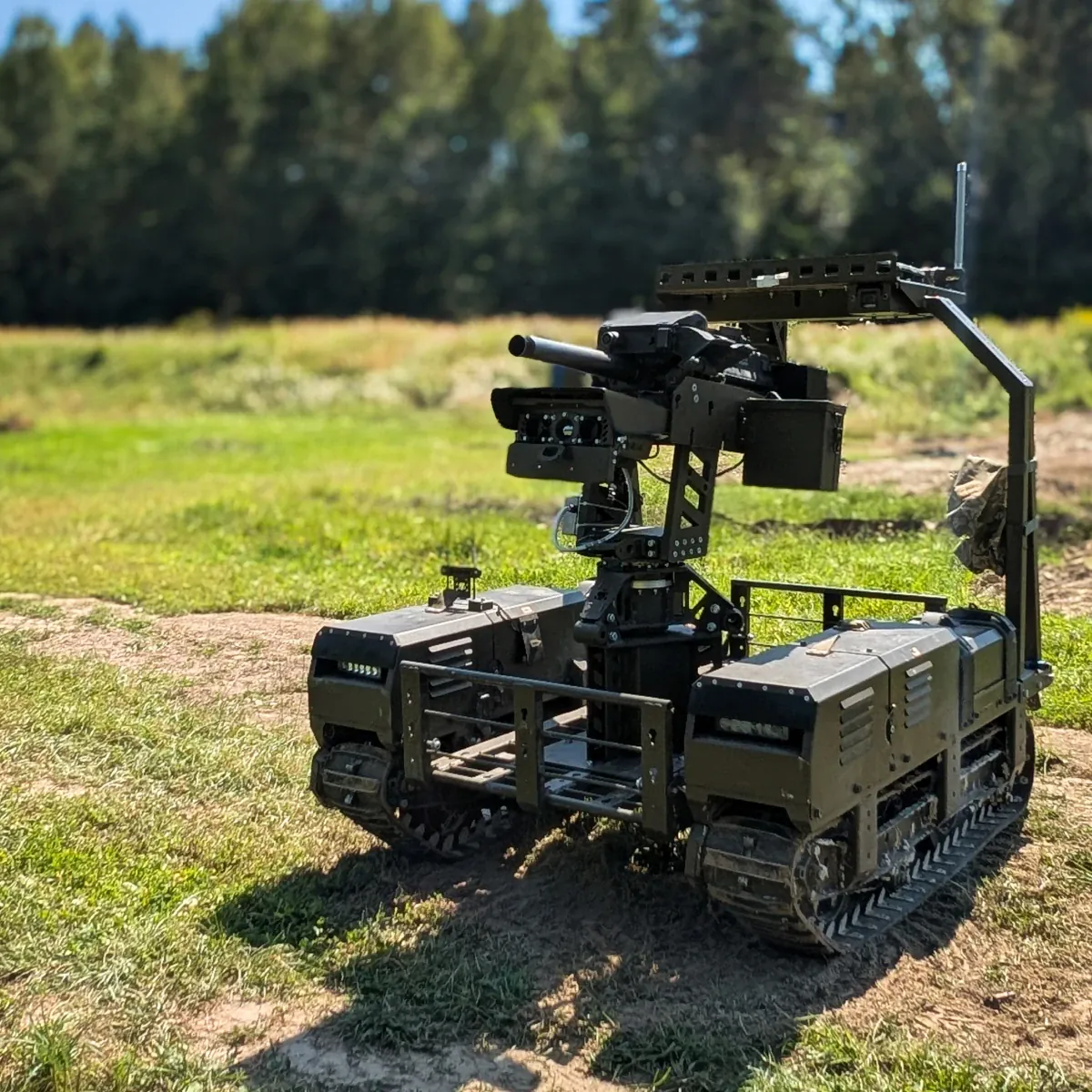
Ukraine is set to field its first officially codified domestically built grenade launcher armed ground robot, after the Ministry of Defense approved the Droid NW 40 robotic combat system for service with the country’s Defense Forces, developer DevDroid said on December 23.
We bring you stories from the ground. Your support keeps our team in the field.
The decision allows the system to be formally supplied to and used by Ukraine’s security and defense forces, marking a major step in integrating robotic platforms into frontline operations.
The Droid NW 40 is a ground-based unmanned robotic complex designed to carry out high-risk combat missions without exposing personnel to danger. It is the first codified Ukrainian reconnaissance-and-strike UGV adapted to mount a 40 mm automatic grenade launcher—either the Mk-19 or AGL-53.
According to its developers, the system is intended to engage a wide range of targets, including lightly armored vehicles such as infantry fighting vehicles and armored personnel carriers, unarmored vehicles, exposed enemy personnel, and hostile firing positions located outside cover, in open trenches, or behind natural terrain features. In addition, the robot can conduct continuous remote battlefield surveillance.
The UGV is equipped with the new Wolly 40 combat module, which provides rapid target acquisition and wide engagement angles. The launcher has a maximum effective range of up to 1.5 kilometers and can fire either single shots or bursts, with an onboard ammunition load of 48 rounds.
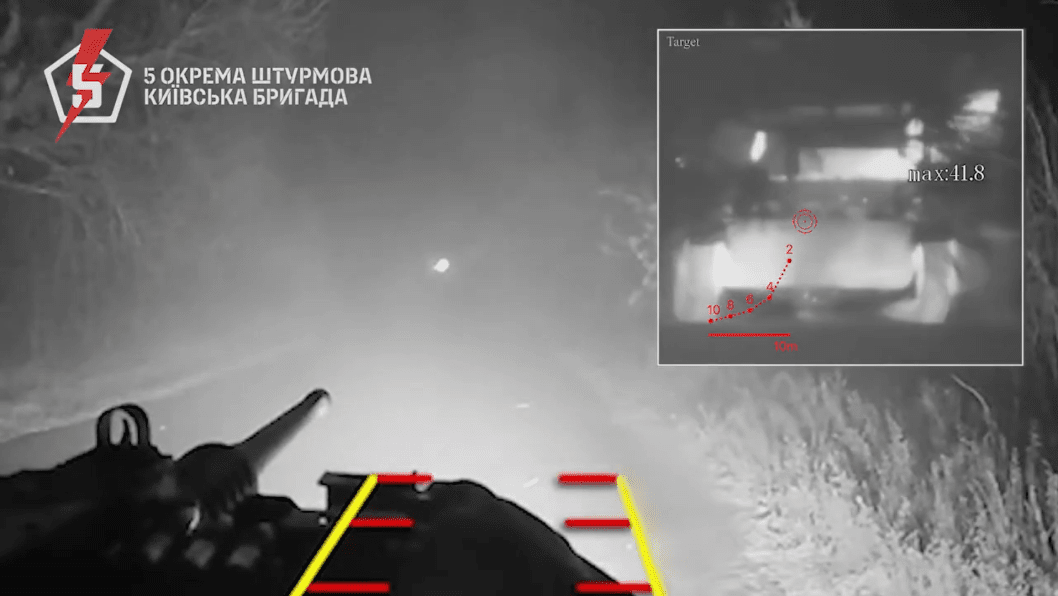
The combat module offers vertical elevation from −5° to +65° and horizontal traverse of at least 270°. Targeting speeds exceed 100 degrees per second both vertically and horizontally, allowing fast reaction against moving threats.
Mobility is fully electric. On a single battery charge, the Droid NW 40 can travel up to 50 kilometers on paved roads or up to 40 kilometers off-road. It can operate continuously for up to 12 hours while moving, or remain on standby in a static position for up to 120 hours.
Control of the system is entirely remote, using multiple redundant communications channels including Starlink, LTE, mesh networks, Wi-Fi, and Sine.link. Targeting can be performed manually or by coordinates, enabling strikes without operators being anywhere near the line of contact.

Deployment time is reported at around 10 minutes from arrival to combat readiness.
Thanks to official codification by Ukraine’s Ministry of Defense, the Droid NW 40 is approved for service and meets NATO standards, clearing the way for broader adoption across Ukrainian units.
“Droid protects its own. Destroys the enemy,” the company said, framing the system as part of Ukraine’s broader shift toward unmanned and robotic warfare aimed at reducing casualties while maintaining firepower on a battlefield increasingly dominated by drones and precision weapons.
Earlier, a ground-based combat drone operated by Ukraine’s Third Assault Brigade held a frontline position for 45 consecutive days without infantry presence.
Discuss this article:
-4a56a6b482ec132402c16ef6fcabf9a2.png)


-c439b7bd9030ecf9d5a4287dc361ba31.jpg "Photo of Katherina Popilnichenko")