- Category
- Latest news
Ukraine’s Naval Drones Get Lighter, Smarter—New Footage Reveals Unusual Missile Setup
 Prefer U24 Media on Google
- Authors


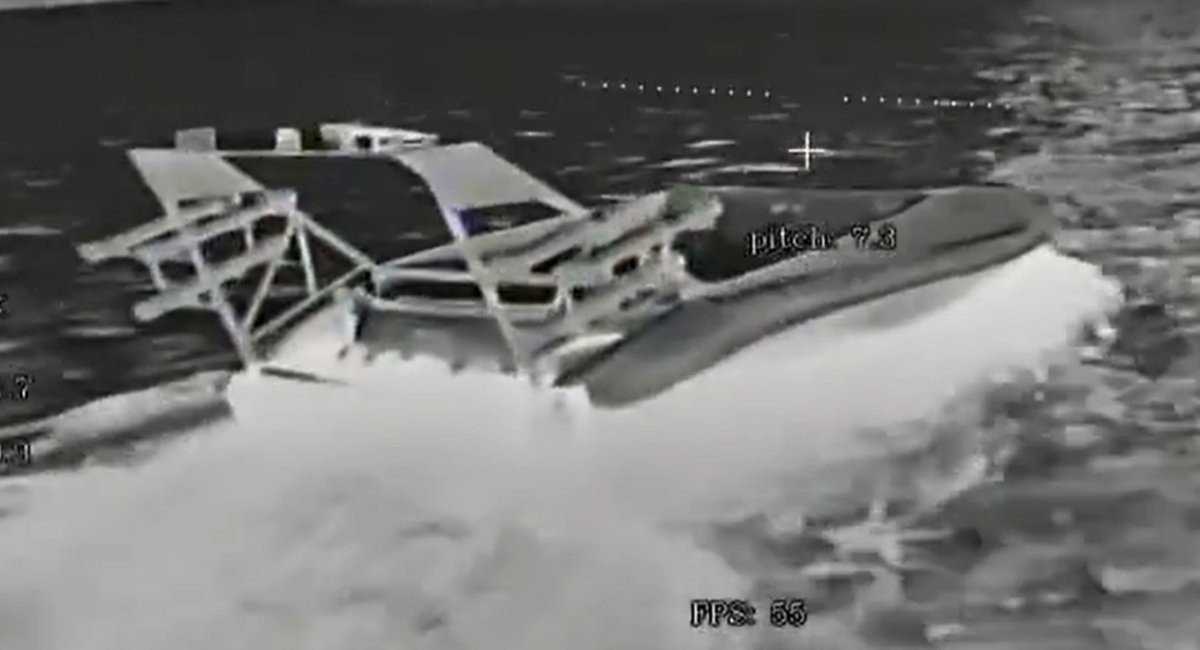
Ukrainian uncrewed surface vessels (USVs) have been observed carrying a previously unseen combination of weapons, including portable air-defense systems, in what appears to be a shift toward lighter and more flexible combat configurations.
We bring you stories from the ground. Your support keeps our team in the field.
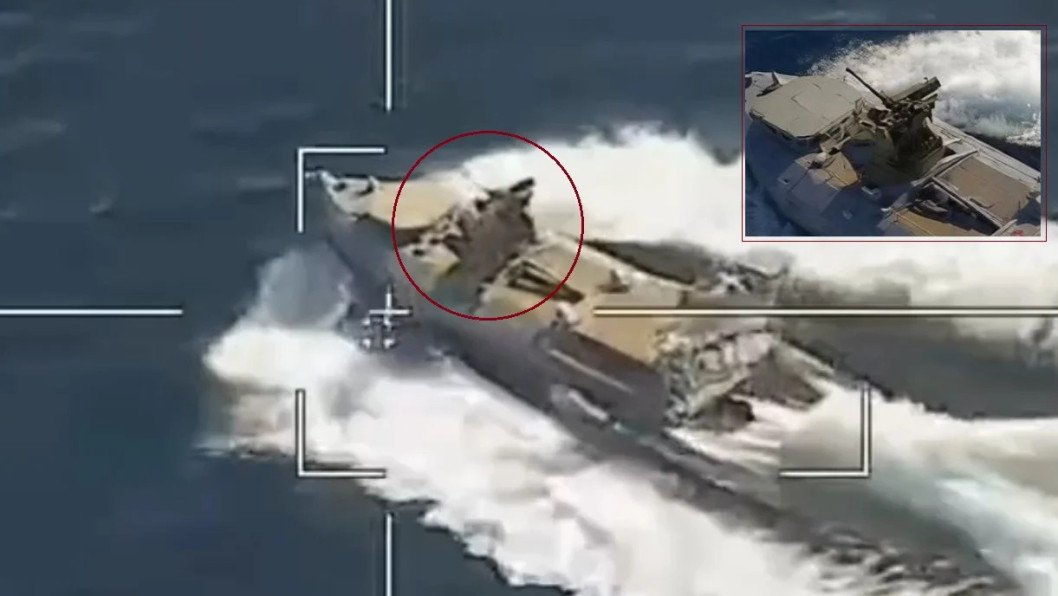
According to Defense Express on April 14, newly surfaced footage captured by a Russian fiber-optic-controlled FPV drone shows a Ukrainian naval drone—likely from the Barracuda family—equipped with multiple types of onboard weaponry during an attempted strike.
The video, published online, indicates that the FPV drone struck the left side of the vessel’s deck without critically damaging key systems, suggesting the USV may have remained operational. The clarity of the footage allowed analysts to identify several previously unreported elements of its configuration.
The fiber-optic FPV drone "KVN" hits the unmanned boat (UAB) "Barracuda" of the Armed Forces of Ukraine, equipped with anti-aircraft guided missiles (SAMs), in the waters of the Black Sea. pic.twitter.com/NW7widIm3u
— Rajendran (@Rajendr67215893) April 14, 2026
According to Defense Express, the drone appears to carry four tubular launchers mounted on a mast structure, which are likely portable air-defense systems (MANPADS). No dedicated targeting mechanism is visible, indicating that aiming may rely on maneuvering the entire vessel, which would limit engagement angles.
Below these launchers, the vessel is also fitted with two additional tubes, assessed as likely disposable anti-tank weapons or rocket-based systems intended for use against surface or coastal targets, including small boats or fortified positions.
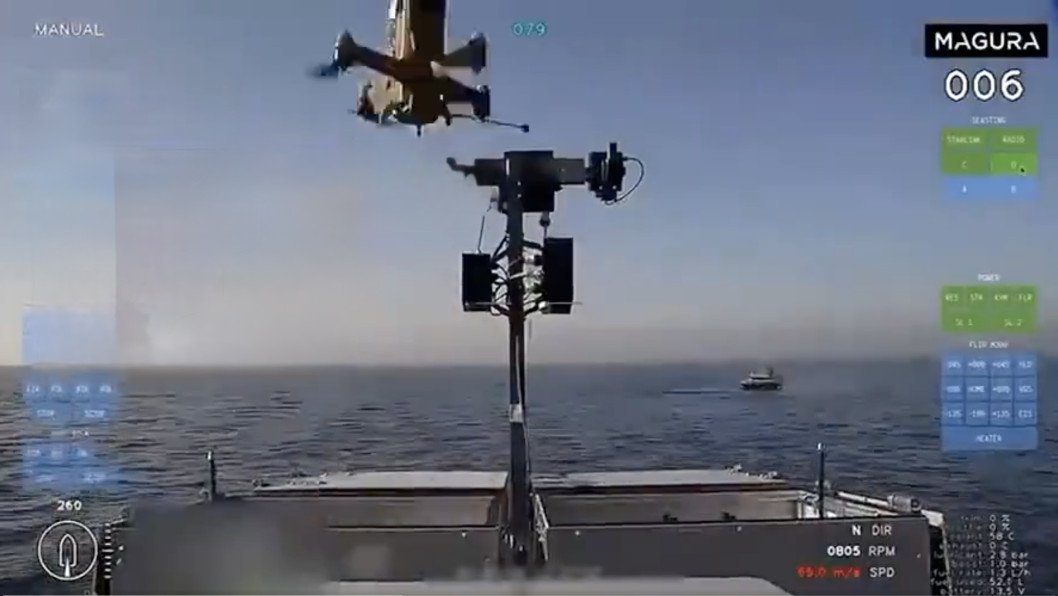
The footage further shows a central compartment with what appear to be retractable doors, which could be designed to store and deploy FPV drones or multicopter systems during missions.
The integration of MANPADS raises questions given that Ukrainian USVs have previously been equipped with more advanced air-to-air missiles such as the R-73 and AIM-9. These missiles offer significantly greater range and engagement capability against aerial threats.
However, the report notes that weight considerations may explain the shift. A typical MANPADS missile, such as the Igla, weighs approximately 10.6 kilograms, while an R-73 missile weighs around 110 kilograms, excluding additional launch and control systems. This difference significantly affects payload capacity.
According to Defense Express, lighter systems allow USVs to carry a broader mix of weapons simultaneously, including strike drones, while still maintaining limited air-defense capability. In contrast, equipping a vessel with heavier air-to-air missiles restricts its payload and may require deploying separate drones dedicated solely to air defense.
The use of MANPADS may also offer practical advantages in targeting, as their seekers can provide wider acquisition angles compared to some air-to-air missile systems, potentially simplifying engagement under certain conditions.
Earlier, the US and Ukraine launched a joint initiative to transform Magura V7 naval drones into multi-role platforms by integrating AI-powered Bullfrog turrets, designed to intercept Shahed-type UAVs and engage surface targets.
Discuss this article:
-9a7b3a98ed5c506e0b77a6663f5727c5.png)