- Category
- Latest news
Ukrainian Pilot Sets World Record—Two Shaheds Downed From 500 km Using STING Interceptor, Video
 Prefer U24 Media on Google
- Authors

-72b63a4e0c8c475ad81fe3eed3f63729.jpeg "Photo of Cyril Barabaltchouk")
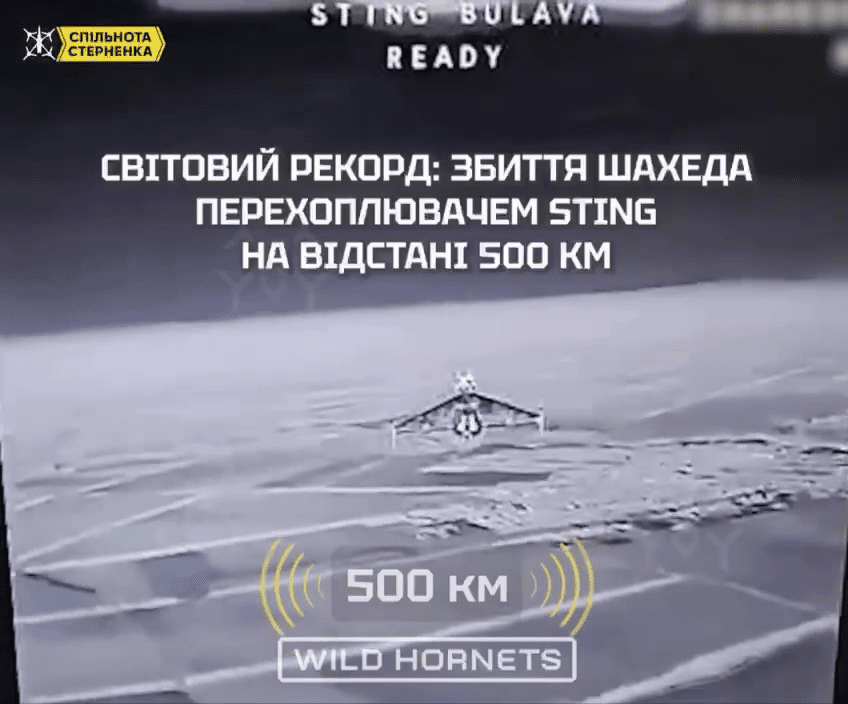
A pilot known as Roman “Hulk” from the Ukrainian Bulava drone unit successfully intercepted and destroyed two Russian Shahed-type loitering munitions from a distance of 500 kilometers, the unit reported on April 4.
This operation marks the first time in history that a drone interceptor has been successfully controlled and utilized to strike a target at such an extreme range from the operator’s starting location. Using the STING interceptor drone, Roman “Hulk” navigated through complex conditions to neutralize two separate air targets, demonstrating a level of remote lethality that fundamentally changes the geography of air defense.
We bring you stories from the ground. Your support keeps our team in the field.
The STING is a specialized, bullet-shaped interceptor drone developed by the Wild Hornets (Dyki Shershni) volunteer group. Specifically engineered to outrun and ram Shahed suicide drones, the NATO-codified STING can reach speeds exceeding 340 km/h and operate at altitudes of up to 3 kilometers.
Its effectiveness is amplified by Hornet Vision Ctrl, a digital video and telemetry system that provides HD-quality video and low-latency control over massive distances, effectively turning small FPV-style interceptors into long-range air defense assets.
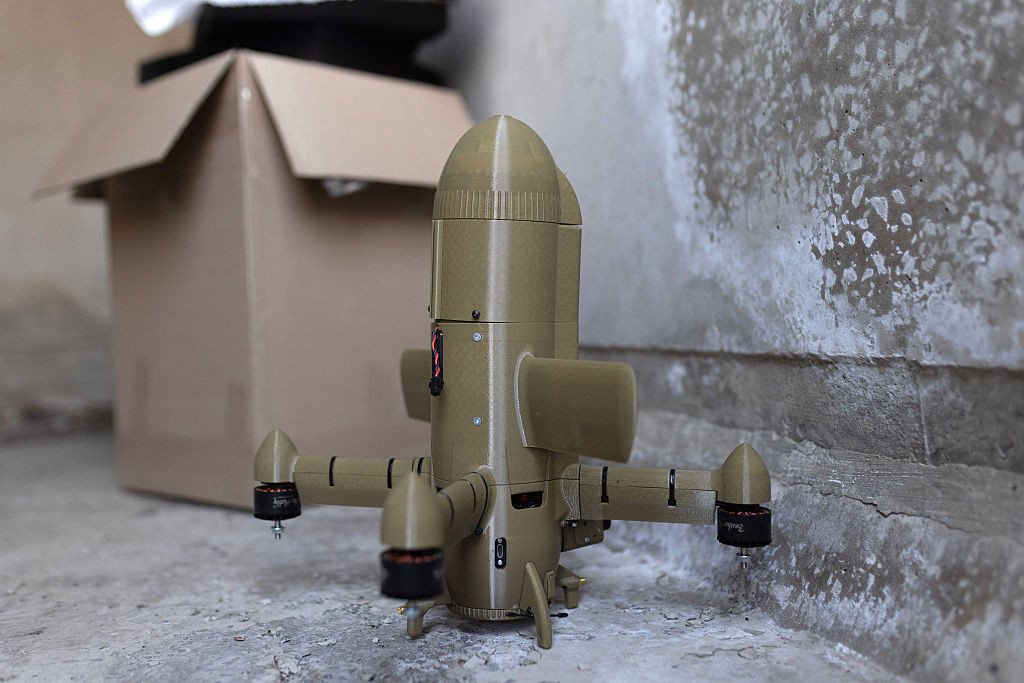
The record-breaking mission was made possible by the integration of Hornet Vision Ctrl, a cutting-edge digital control ecosystem that allows operators to stay in complete safety, hundreds of kilometers behind the front line. The technology enables high-definition video transmission and precise flight control over distances that bypass traditional signal limitations.
The Bulava unit, which has been at the forefront of the drone war, emphasized that this is not an isolated experiment but the start of a mass deployment.
“When we say 'further — more, ' it is not just words,” the unit wrote. The ability for a single crew to monitor and protect an area of hundreds of kilometers, rather than the standard 20-30 km, allows the Ukrainian Armed Forces to saturate large portions of the sky with minimal personnel on the ground.
The record-breaking 500 km intercept by the Bulava unit is part of a massive surge in Ukrainian air defense efficiency documented throughout early 2026. In March alone, Kyiv’s forces destroyed over 2,300 aerial targets—a 55% increase compared to February—driven by the rapid scaling of low-cost interceptor drones and AI-assisted guidance systems.
These platforms have become a cornerstone of a layered defense strategy that includes mobile fire groups and helicopters, which alone neutralized 379 drones last month. This shift toward automated, high-precision interception is not only stabilizing the frontline but has also sparked significant international interest from partners in the Middle East seeking to adopt Ukraine’s battle-proven anti-drone architecture.
Discuss this article:
-9a7b3a98ed5c506e0b77a6663f5727c5.png)



-c439b7bd9030ecf9d5a4287dc361ba31.jpg "Photo of Katherina Popilnichenko")


-58027ba3c731b844e3279bf1086a8d0b.jpg "Ukrainian DJ KOROLOVA. (Source: @korolova.dj/Instagram)")