- Category
- Defense Tech
What Is Ukraine’s Interceptor, One of the World’s Most In-Demand Drones?
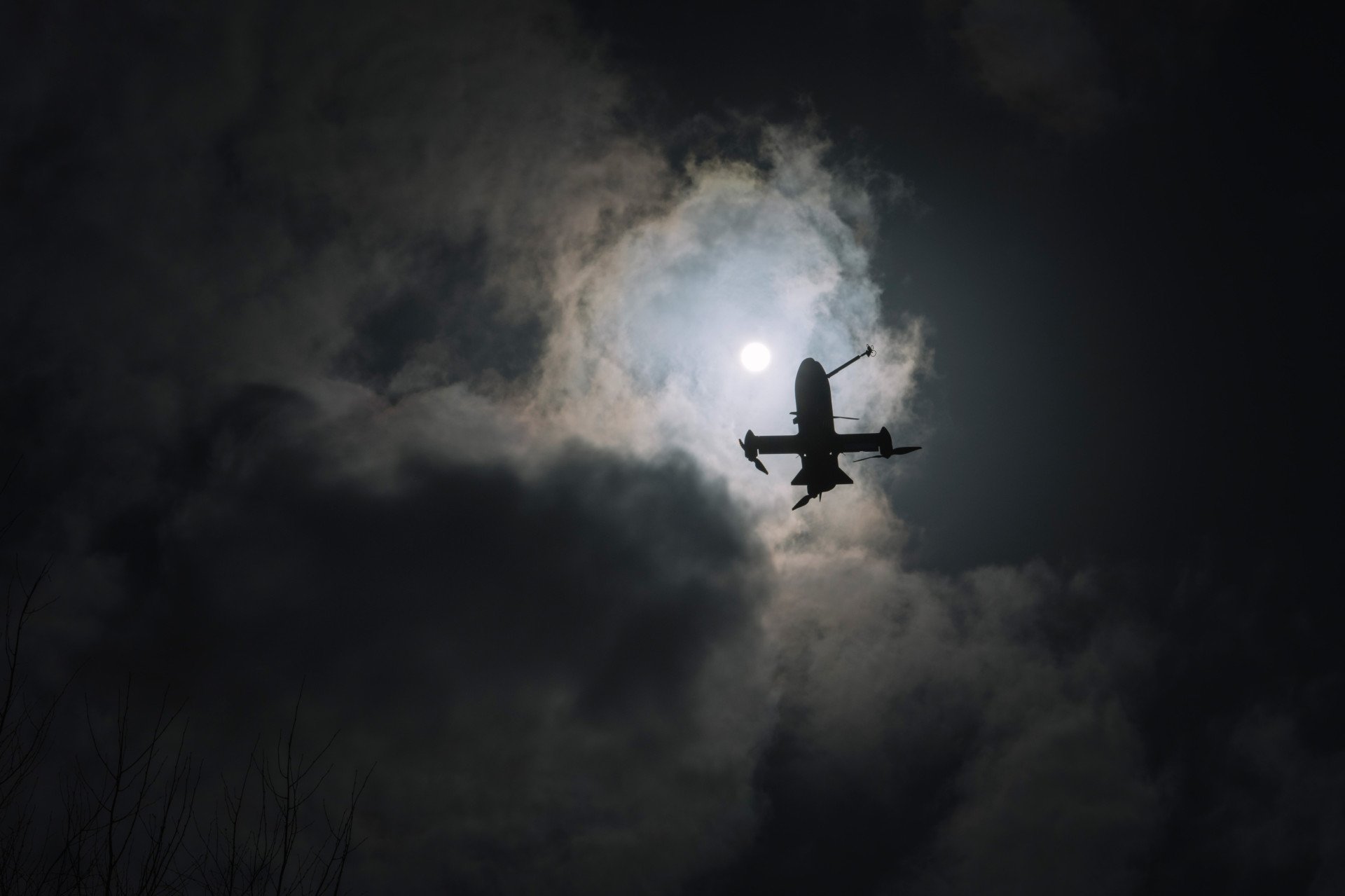
Ukraine’s self-produced interceptor drones recently made the headlines worldwide as Gulf countries turn to Kyiv to provide cheap defense systems against Iran-made Shahed drones. What are the interceptor drones, and what makes them so valuable?
 Prefer U24 Media on Google
- Authors


First off, there’s not one single interceptor drone, but rather a variety of products with different specifications, depending on the company that produces them.
These 3D-printed, low-cost anti-drone systems are designed to shoot down Iranian-designed Shahed and Russian-produced Geran attack drones, as well as other UAVs.
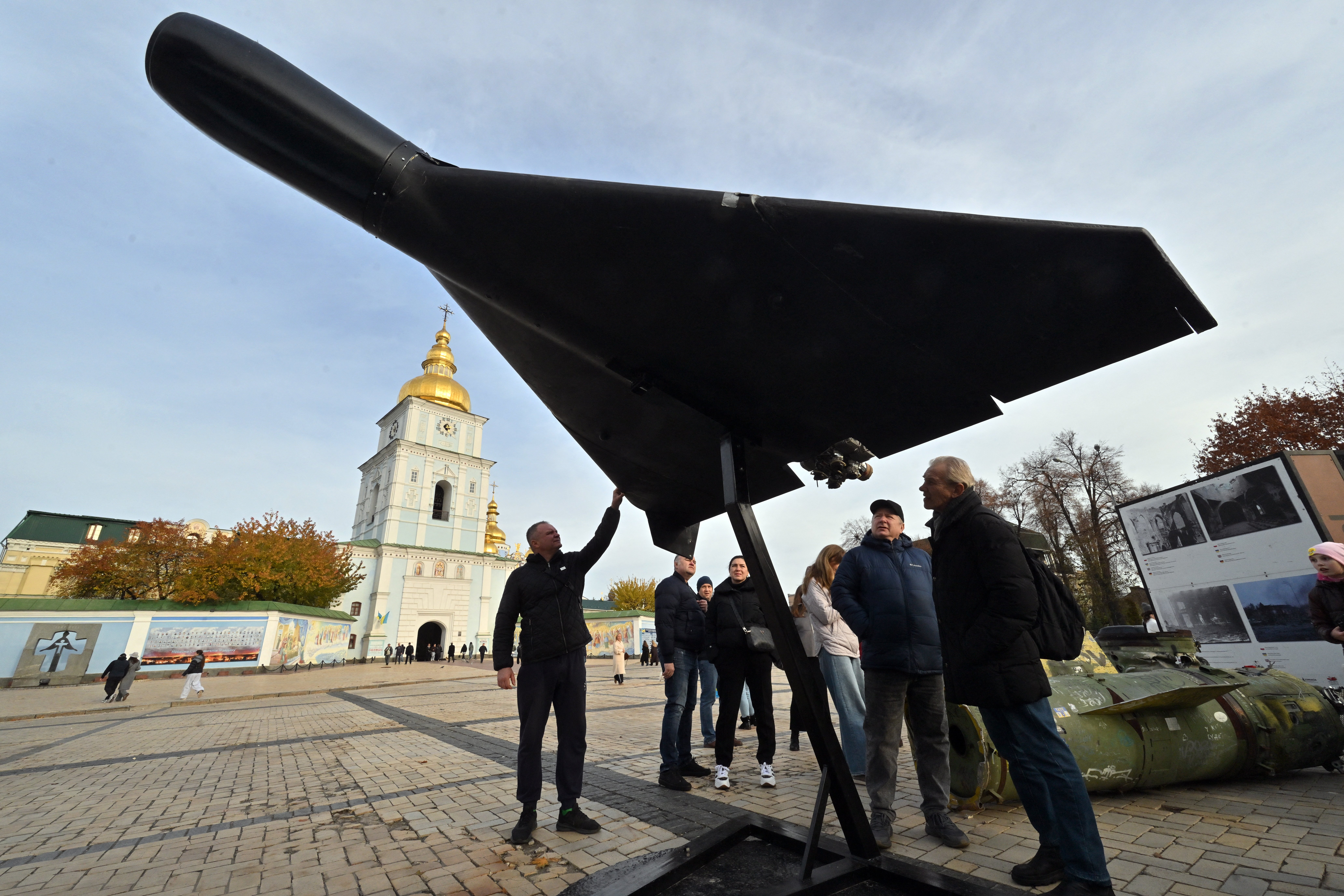
Thanks to their low cost of roughly $1,000–$3,000, the interceptors appear to be a much cheaper option than $4 million US–made Patriot missiles for taking down Shaheds, which are estimated to cost between $20,000 and $50,000 to produce.
We bring you stories from the ground. Your support keeps our team in the field.
The scale of missile usage in the region has already outpaced annual US production capacity with over 800 missiles launched on the first days of the war in the Middle-East, according to President Volodymyr Zelenskyy.
Ukraine is capable of producing at least 2,000 effective and combat-proven interceptors every day, Zelenskyy said during an official visit in London on March 17.
First, we are capable of producing at least 2,000 effective and combat-proven interceptors every day. We can produce more – it depends on investment. We need about 1,000 interceptors a day, and we can supply at least another 1,000 a day to our allies.
— Volodymyr Zelenskyy / Володимир Зеленський (@ZelenskyyUa) March 17, 2026
Second, we know how to… pic.twitter.com/vIB2qRho8P
“We can produce more—it depends on investment. We need about 1,000 interceptors a day, and we can supply at least another 1,000 a day to our allies,” he said.
The many interceptor drones of Ukraine
Designed to launch quickly, track a moving aerial target, and ram into it while exploding, the interceptors put Ukraine on the map as an indispensable actor of the world’s defense industry. Ukraine’s decision to treat interceptor drones as a primary capability led not only to a two- to threefold increase in production within months, but also to the rapid emergence of new manufacturers.
P1-SUN, by Skyfall
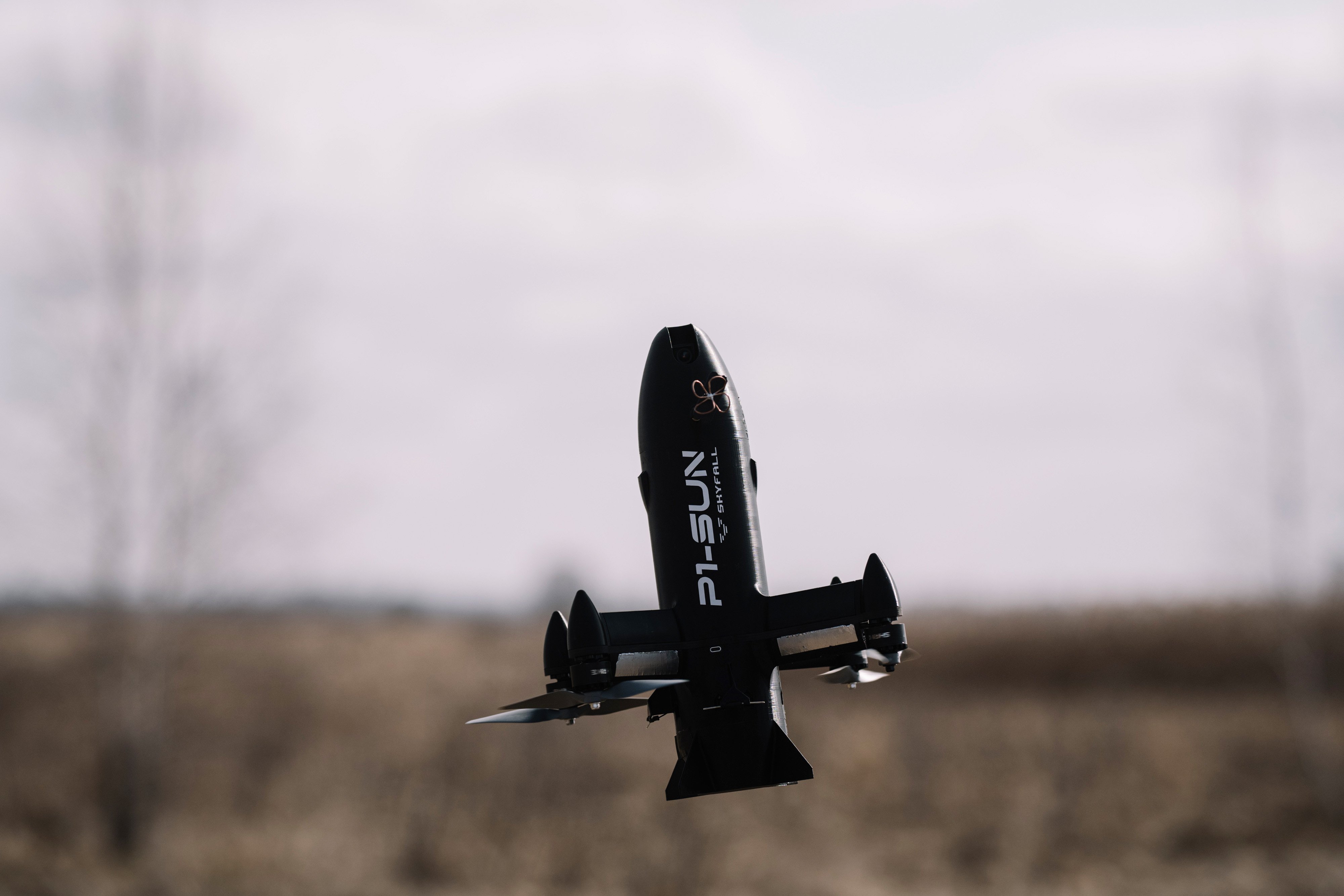
The most publicized yet is the P1-SUN, a Ukrainian play on words referring to its phallic bullet shape.
Created by SkyFall, it’s a high-speed drone designed to take off vertically. At a speed of between 300 km/h, typical, and 450 km/h for its upper estimate, it’s one of the fastest drones on the market, able to take out the most common models of Shahed-136 that cruise at roughly 185 km/ hour.
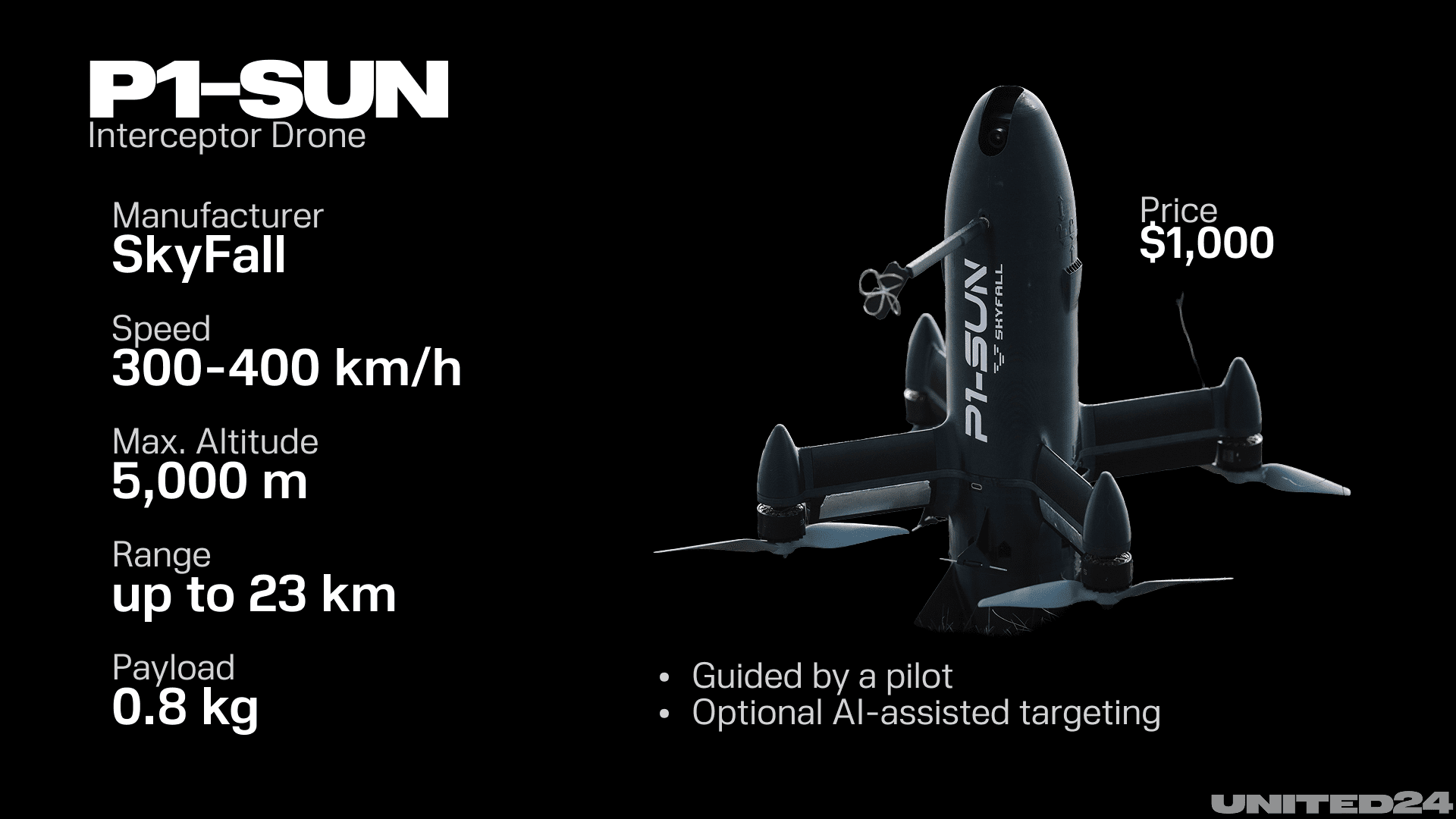
However, the new jet-powered Shahed-238, which can reach up to 550-600 km/h, can prove much more difficult to stop in the long run. The P1-SUN can reach an altitude of up to 5 kilometers. It is also guided by a pilot and has optional AI-assisted targeting.
The drone costs roughly $1,000 to produce and can carry a small modular charge, depending on the needs and the target. The company estimated it could manufacture up to 50,000 interceptor drones a month and export 5,000 to 10,000 without hampering local needs, Reuters reported.
As of March, SkyFall appears to be the clearest large-scale commercial player, described by Reuters as a major drone maker, with the P1-SUN interceptor among the main anti-Shahed systems now drawing foreign demand.
STING, by Wild Hornet
The STING, produced by Wild Hornet, is also a serious contender for international exports. Also bullet-shaped, the STING looks roughly the same as the P1-SUN, with its four high-trust motors, designed to maximize forward acceleration but not hover efficiency.
Tuned to outrun Shahed drones, this model has a proven speed of roughly 280 km/h, can reach up to 7 kilometers in altitude, has a range of up to 37 kilometers, and has an endurance of up to 15 minutes, the company says.
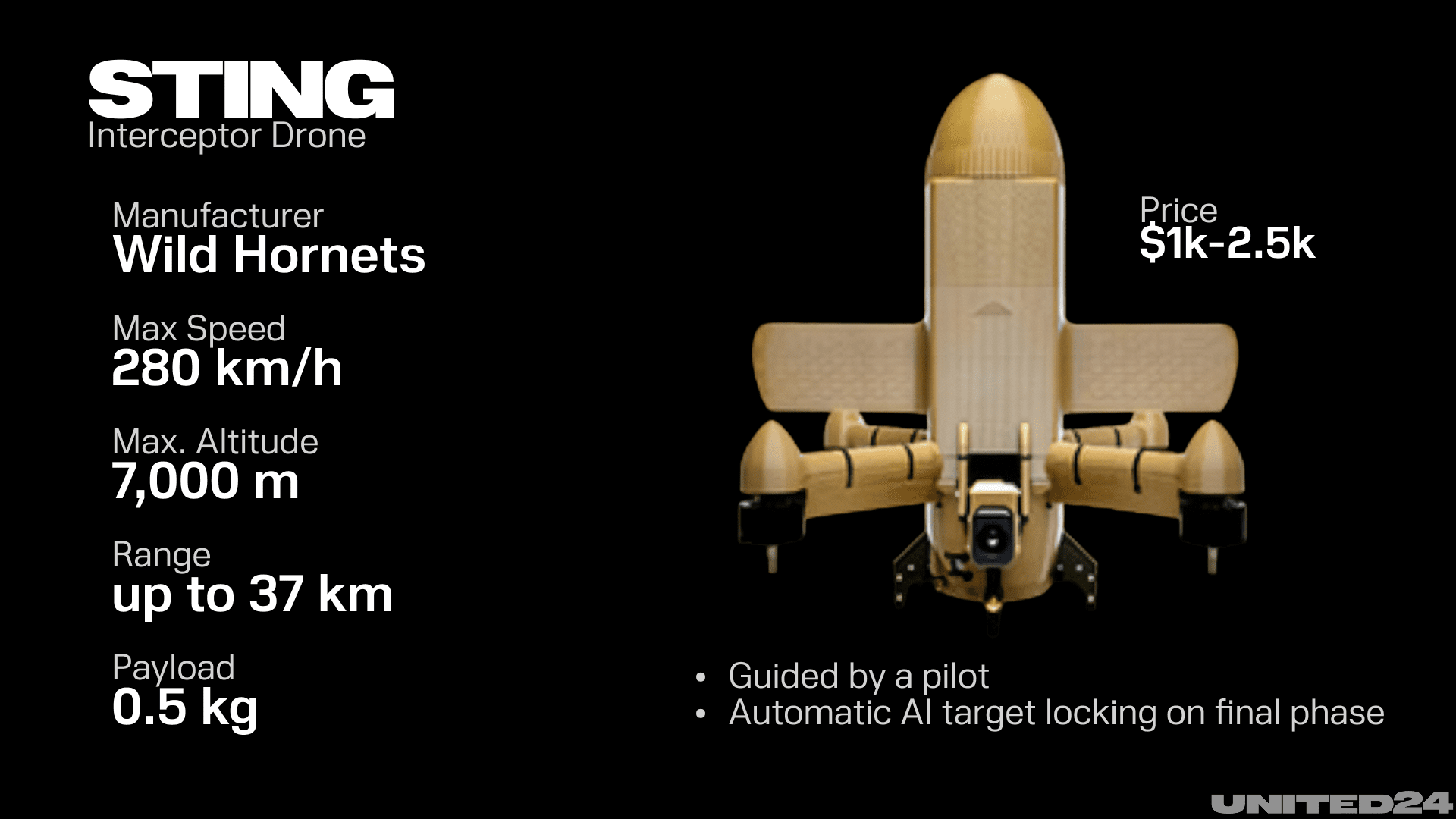
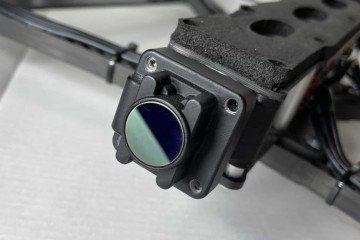
The interceptor can be guided by a pilot and, through AI, automatically lock the target during its final phase. The model has a daylight and a thermal camera, allowing it to detect Shahed engine heat at night. It can hold some warheads weighing 500 grams, according to the company.
Combat-proven and priced between $1,000 and $2,500, it’s cheap and scalable, producing 10,000 units or more per month, says the company representative.
STRILA, by WIY DRONES
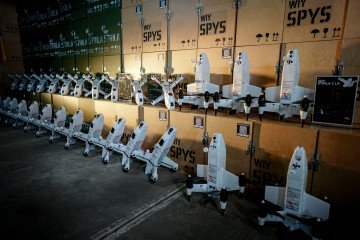
The STRILA, described by its manufacturer, WIY DRONES, as a “rocket-type air-defense” interceptor despite its four motors, can reach speeds of over 350 km/h and, during testing, was accelerated to 400 km/h, the company said.
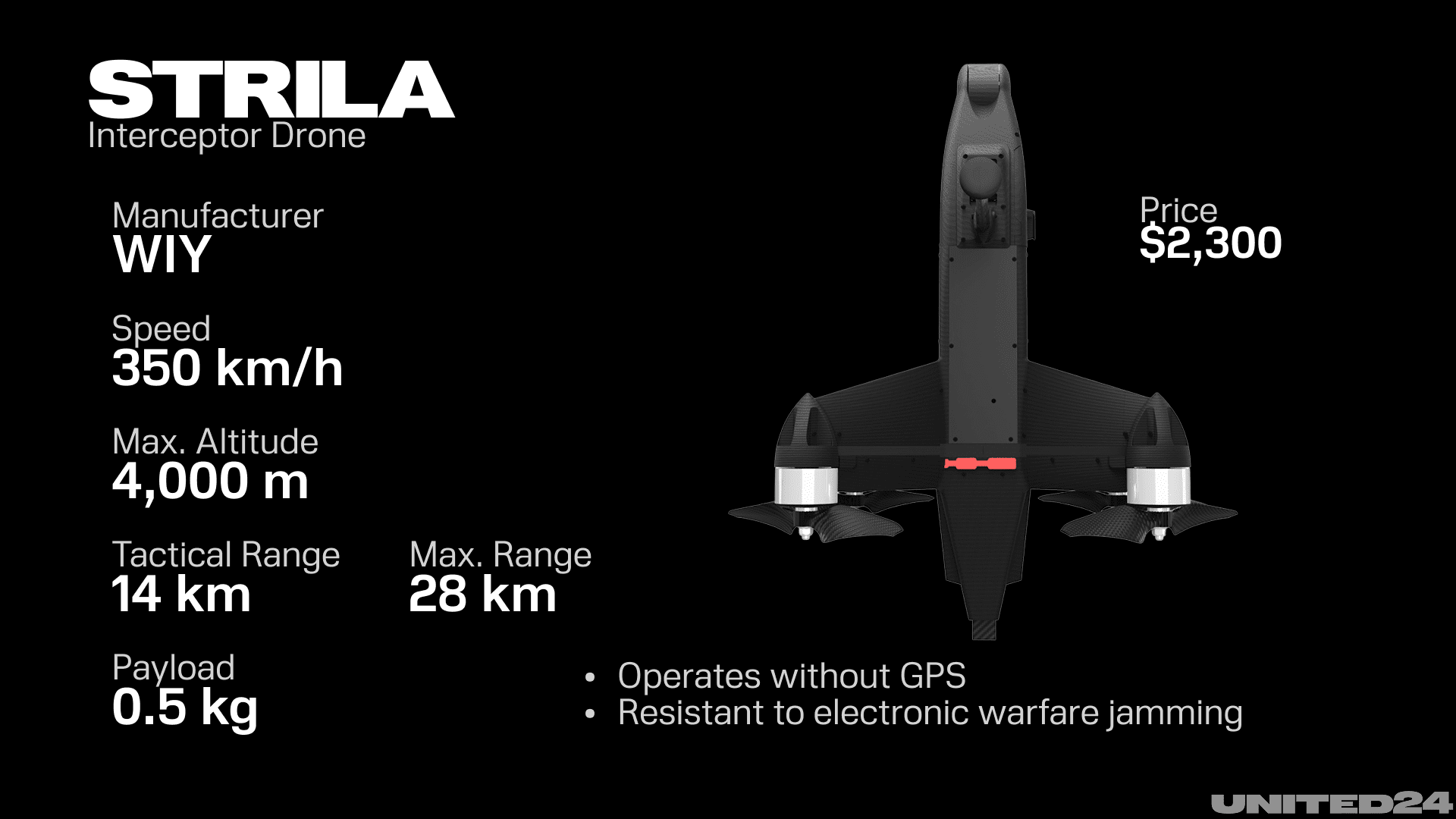
The interceptor is reportedly capable of operating at a distance of up to 14 km in tactical mode and covering up to 28 km at maximum range, reaching altitudes of up to 4 kilometers.
Its latest Strila system version features a communication system that enables operation without GPS and increases resistance to electronic warfare jamming.
The operator can now also switch communication channels during flight. The daytime and night cameras have also been upgraded.
The company says it is currently manufacturing about 100 interceptors per day, has begun serial deliveries under government contracts, and cut the unit price to roughly $2,300 in January 2026.
Zerov-8, by The Fourth Law
The Fourth Law recently unveiled the Zerov-8, a vertical takeoff and landing interceptor that can turn mid-flight horizontally, resembling a small quadrimotor airplane.
Compared to the P1-SUN and the STING, it trades agility for efficiency and range, with a 20-kilometer radius, the company says. It can reach a maximum speed of 326 km/h, making it slower than its quadcopter challengers but more efficient in cruise mode during horizontal flight.
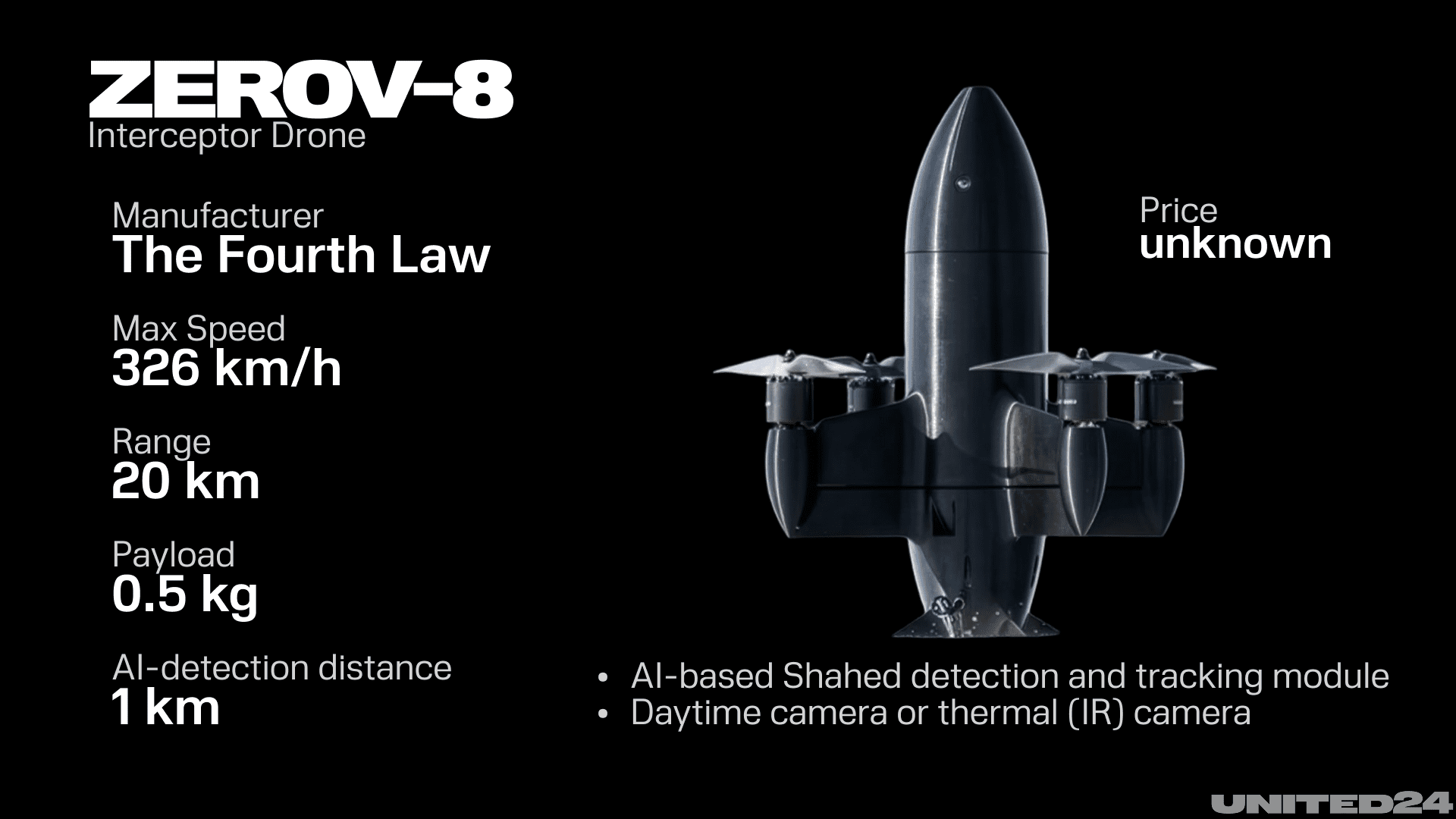
Its core feature? An AI-based detection and tracking module that allows it to identify Shahed, track them autonomously, and guide the interceptor on its own during its terminal phase before impact, according to the company.
The Zerov-8 can carry a 0.5 kg warhead and thermal cameras, but the company didn’t disclose its price, as it’s still at an experimental state.
Octopus, by Project OCTOPUS
The Octopus, a high-speed quadcopter interceptor, has a maximum speed of 300 km/h, a combat radius of roughly 30 km, can reach up to 4.5 kilometers in altitude and has an endurance of 15 minutes with a payload of 1.2 kg, Ukrainian military-tech company TAF Drones Industries said.
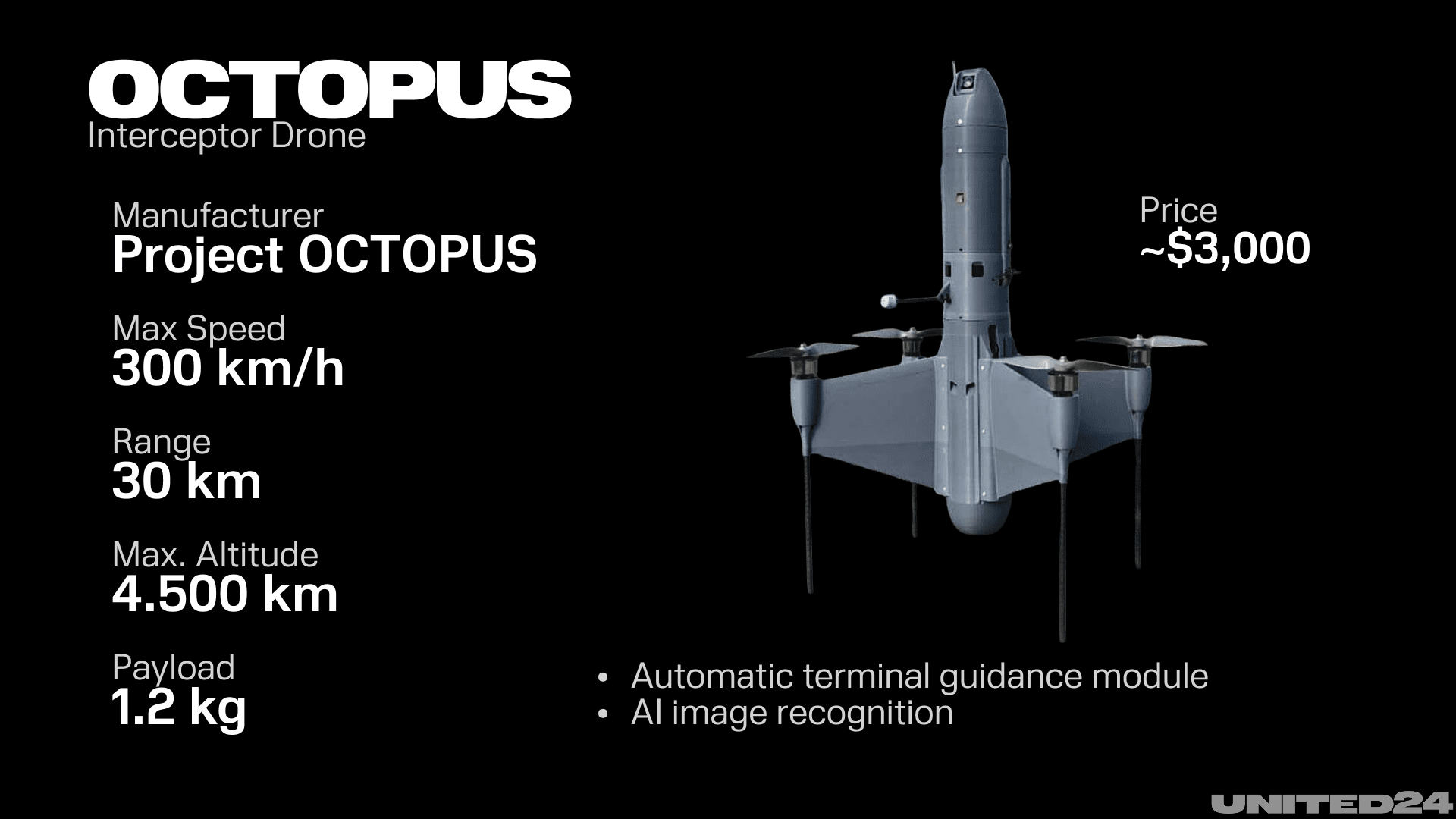
Thanks to its automatic terminal guidance module and AI image recognition, it can pick a target and finish it off without pilot output, according to the Royal United Service Institute (RUSI).
Ukraine and the UK were set to begin the joint production of 1,000 Octopus interceptor drones per month starting in February 2026, Ukraine’s former Defense Minister Denys Shmyhal announced in January. The drones themselves were presented in London by Zelenskyy in late October 2025.
Deals not done yet
Ukraine has already sent anti-drone defense experts to assist partners in the Middle East amid the ongoing war involving Iran, while Kyiv has also proposed a joint drone production agreement with the United States, Zelenskyy said on March 14. 201 Ukrainian military experts are already deployed across the Gulf region, with 34 more ready to deploy, the president said a few days later.
Ukraine received multiple requests from partners in the region, including Jordan, the UAE, Saudi Arabia, Bahrain, and Qatar, Zelenskyy said.
“If a 'Shahed' needs to be stopped in the Emirates—we can do it,” he said in London on March 17. “If it needs to be stopped in Europe or the United Kingdom—we can do it. It is a matter of technology, investment, and cooperation.”
Meanwhile, Zelenskyy warned about risks related to private actors attempting to procure Ukrainian anti-drone systems outside official government agreements.
“There are private companies that want to circumvent governments and procure Ukraine’s anti-drone systems and expertise in the Middle East,” Zelenskyy said.
Despite companies such as Wild Hornets saying that Middle East clients have expressed interest in its interceptors, the company said they are focused foremost on bolstering Ukraine's military, and would only export at the government's call—meaning that the deals are not done yet.
Discuss this article:


-c439b7bd9030ecf9d5a4287dc361ba31.jpg "Photo of Katherina Popilnichenko")