- Category
- War in Ukraine
Ukraine–Japan Drone Alliance Builds a $2,000 Answer to a $2 Million Air Defense Problem
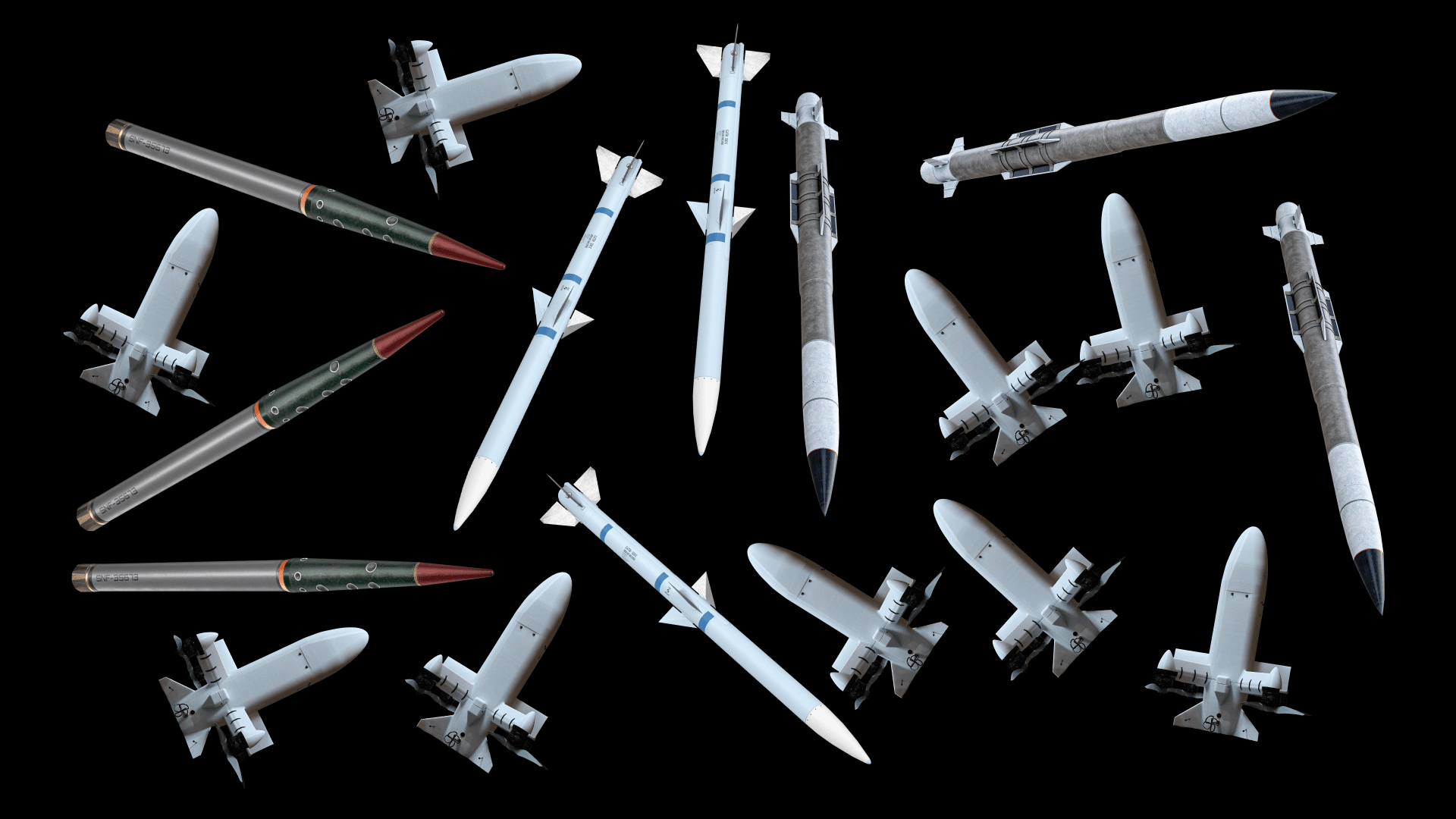
Air defense often operates with a costly imbalance, where interceptors can be far more expensive than the threat. But as Ukraine develops new ways to counter Russia’s waves of attack drones, a partnership with Japan is shaping a more efficient solution.
 Prefer U24 Media on Google
- Authors


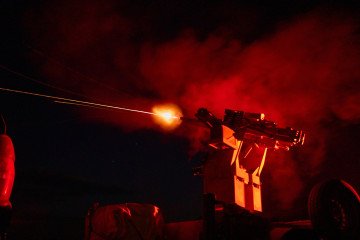
The skies over Ukraine and the Middle East share a deadly commonality. Mass-produced attack drones are overwhelming traditional air defenses, forcing modern militaries to fire million-dollar missiles at targets that cost less than a used car.
We bring you stories from the ground. Your support keeps our team in the field.
Now a groundbreaking alliance between a Japanese corporate powerhouse and a battle-tested Ukrainian startup is delivering a radical answer to this global security crisis.
The economics of exhaustion
Russia’s war in Ukraine has proven that low-cost drones deployed at scale are a decisive factor on the battlefield. Every single day, and especially at night, Russia launches waves of Iranian-designed Shahed loitering munitions at Ukrainian cities.
This is not an isolated, regional issue. The exact same threat is currently reshaping the Middle East. Expensive Western air defense systems are struggling to maintain interception rates against cheap, expendable drones.
Toru Tokushige is the founder and CEO of Terra Drone. He has spent the last year trying to explain this dangerous asymmetry to the world.
“Every day in Ukraine, there are multiple drone and missile attacks—three or four times a day, even at night,” Tokushige said during the press conference in Kyiv on March 31.
“Initially, air defense relied on expensive missiles. A Shahed drone may cost around $30,000 to $40,000, while a missile can cost $1 to $2 million. But interceptor drones can cost as little as $2,000 to $3,000. This changes everything.”
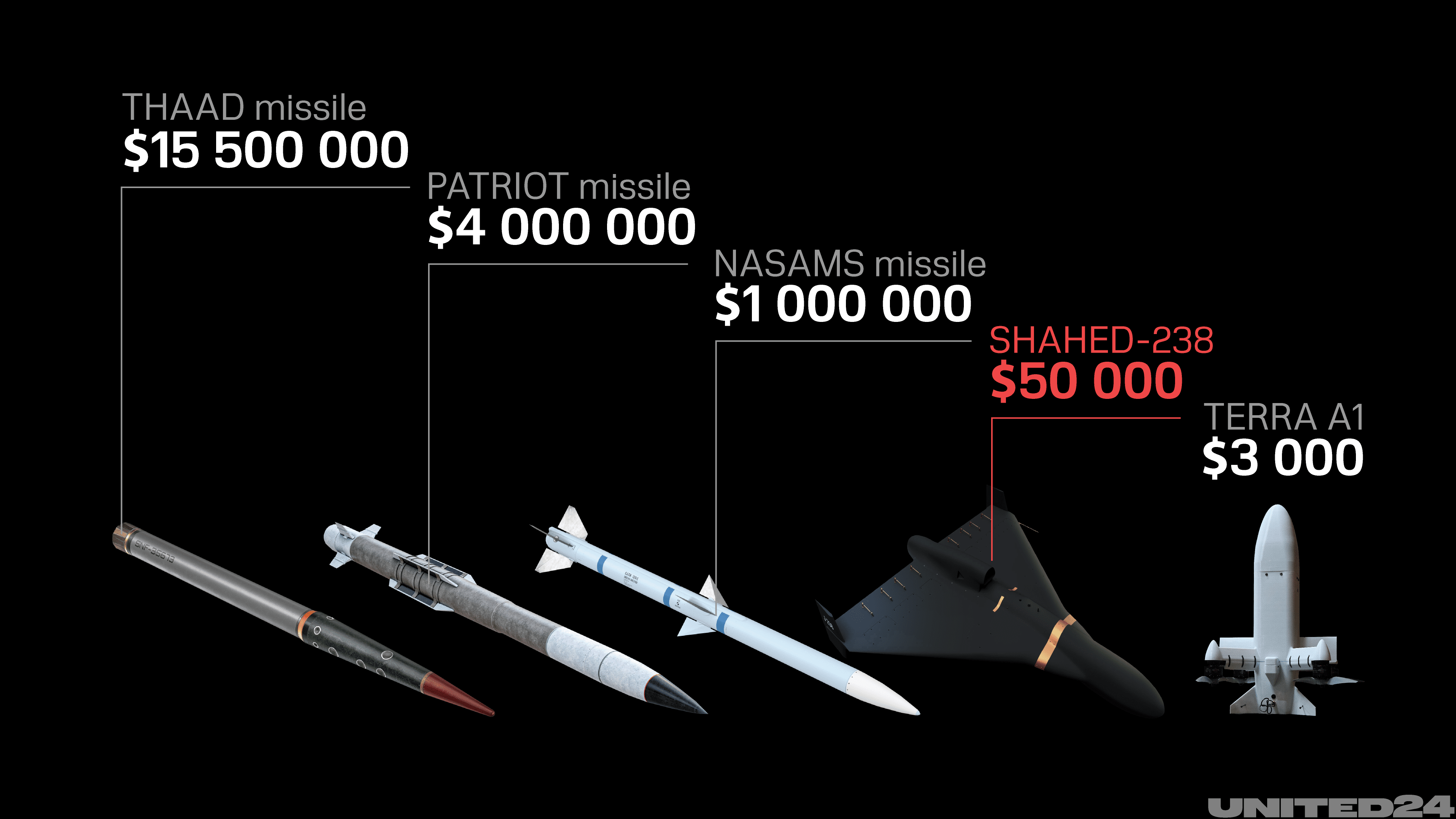
Tokushige noted that many people abroad did not fully grasp this reality until they watched the recent events in the Middle East unfold. The effectiveness of interceptor drones has now been undeniably demonstrated on the global stage, making them a top priority for international security.
A meeting of two worlds
To solve this crisis, two vastly different companies have joined forces.
Terra Drone Corporation is a Japanese technology giant with around 650 employees. Founded a decade ago, the company listed on the Tokyo Stock Exchange in 2024.
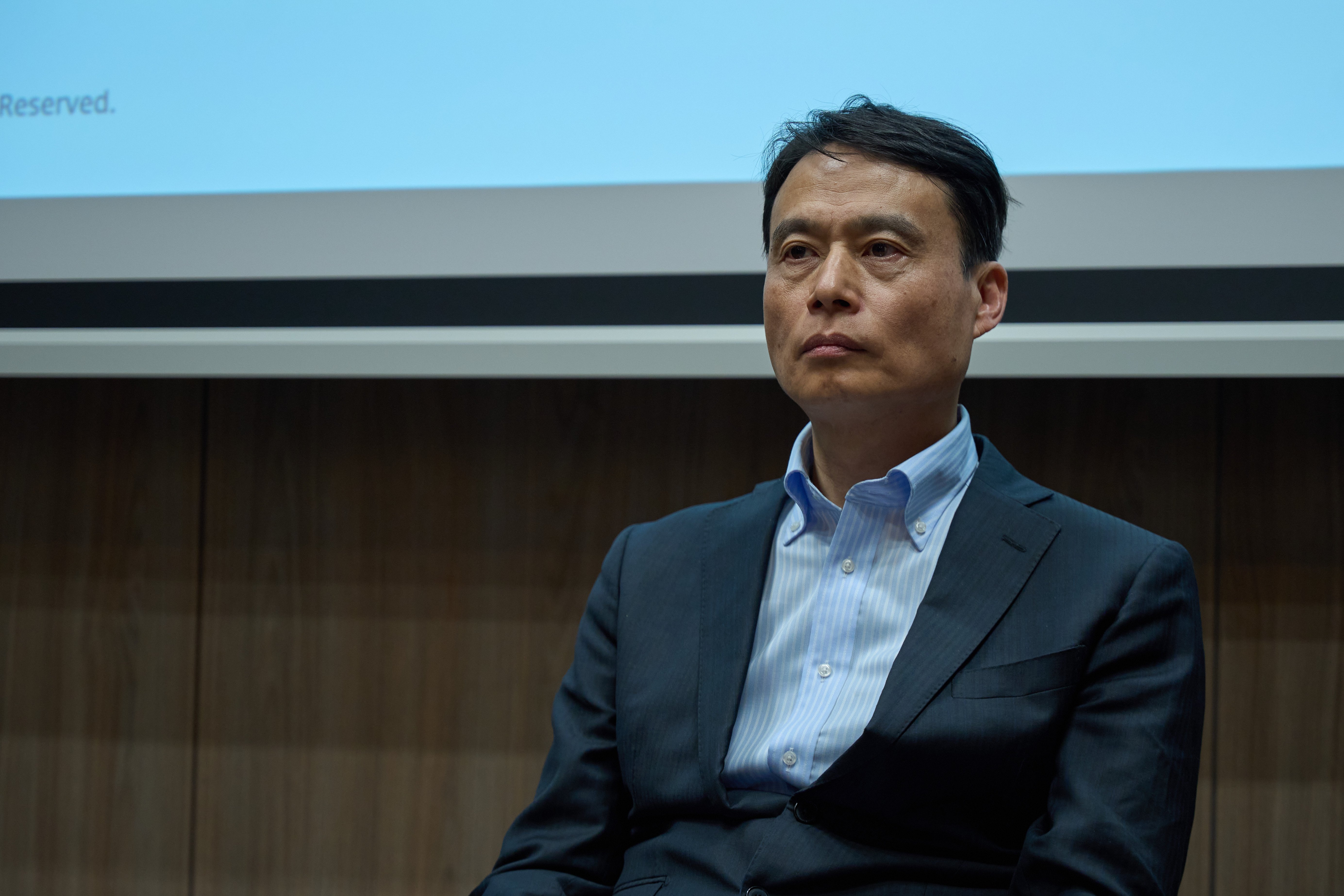
While they initially dominated the global industrial drone and Unmanned Traffic Management markets, they recently announced a full-scale entry into the defense sector. They are a massive, established player with 60% of their revenue coming from outside Japan.
Amazing Drones represents the opposite end of the spectrum. Based in the frontline city of Kharkiv, it is a Ukrainian defense-tech startup born directly from the fires of the invasion. Maksym Klymenko is the CEO.
“I started this business three years ago,” Klymenko said. “It was not a business at the beginning—it was more like a volunteer initiative. A friend asked me to help with FPV drones, and at that time, I knew nothing about drones. We thought we would assemble maybe 10 drones—and that would be it. But the situation changed.”

Today, Amazing Drones is a key member of the Brave1 defense cluster, actively developing advanced interceptors based on grueling real-world combat experience. The two CEOs met at a defense exhibition about a year ago. Klymenko was surprised to see Tokushige, who had traveled 30 hours from Asia just to find real, battle-tested innovation.
That meeting sparked a massive commitment. Tokushige has now traveled to wartime Ukraine eight times, regularly traveling to Ukraine from Poland by bus and train.
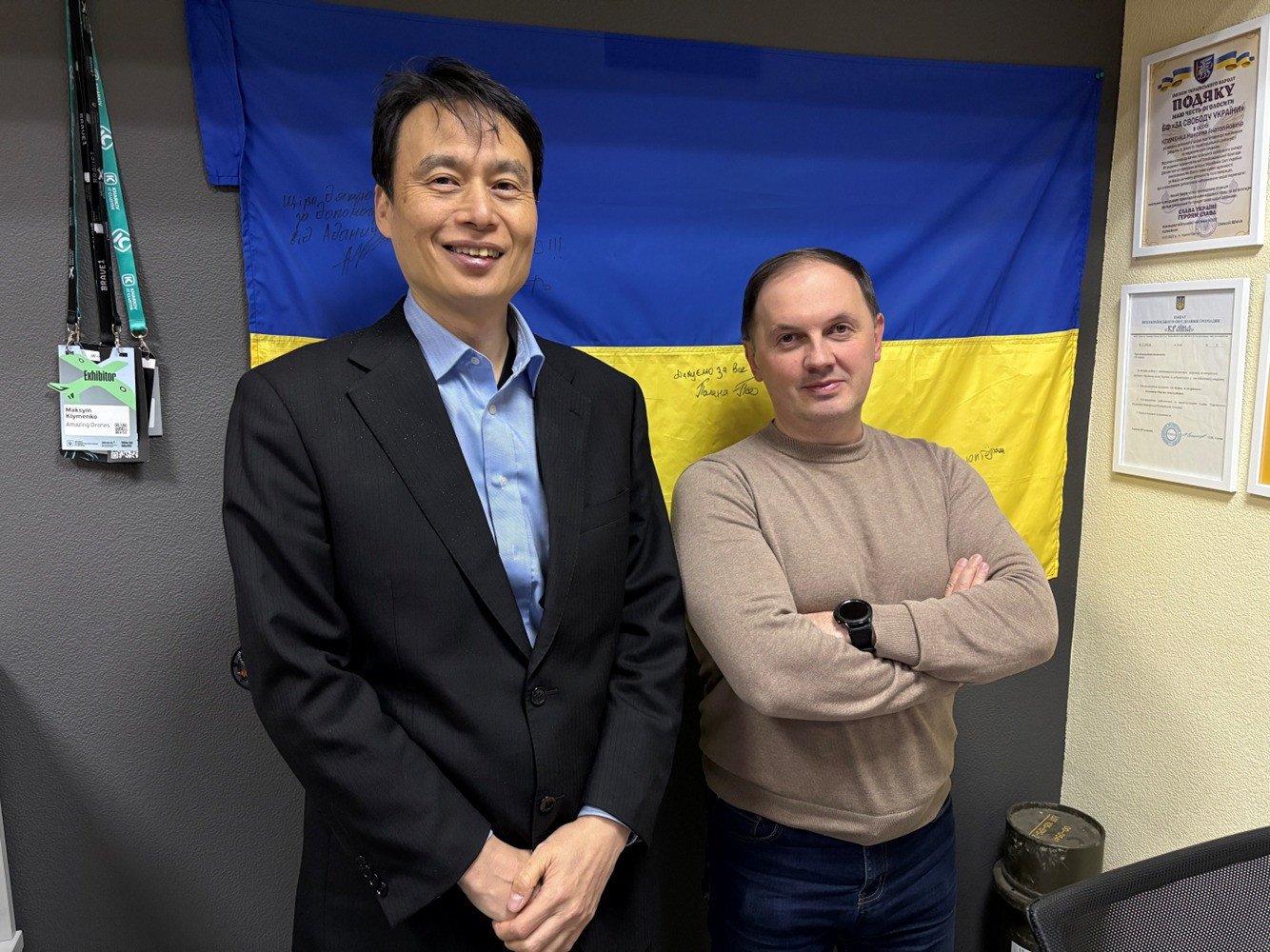
“Many Japanese companies say they want to support Ukraine, but often they talk about doing so after the war,” Tokushige said. “However, Ukraine needs support right now. That is why I am here—this is my commitment.”
The ultimate drone hunter
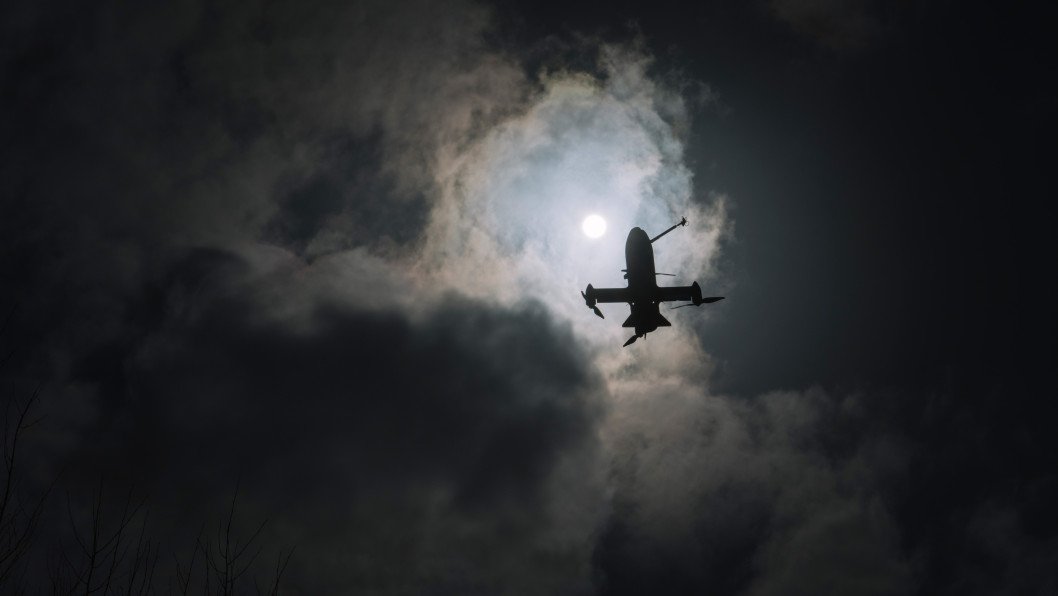
The result of this partnership is a highly advanced interceptor drone explicitly designed to hunt and destroy targets like the Shahed. The technical specifications reflect the uncompromising demands of the Ukrainian front line.
According to Maksym Klymenko, CEO of Amazing Drones, the interceptor can reach speeds of up to 300 km/h, easily overtaking the typical 200 km/h cruising speed of a Shahed. It covers an operational range of up to 35 kilometers with a flight time of about 15 minutes.
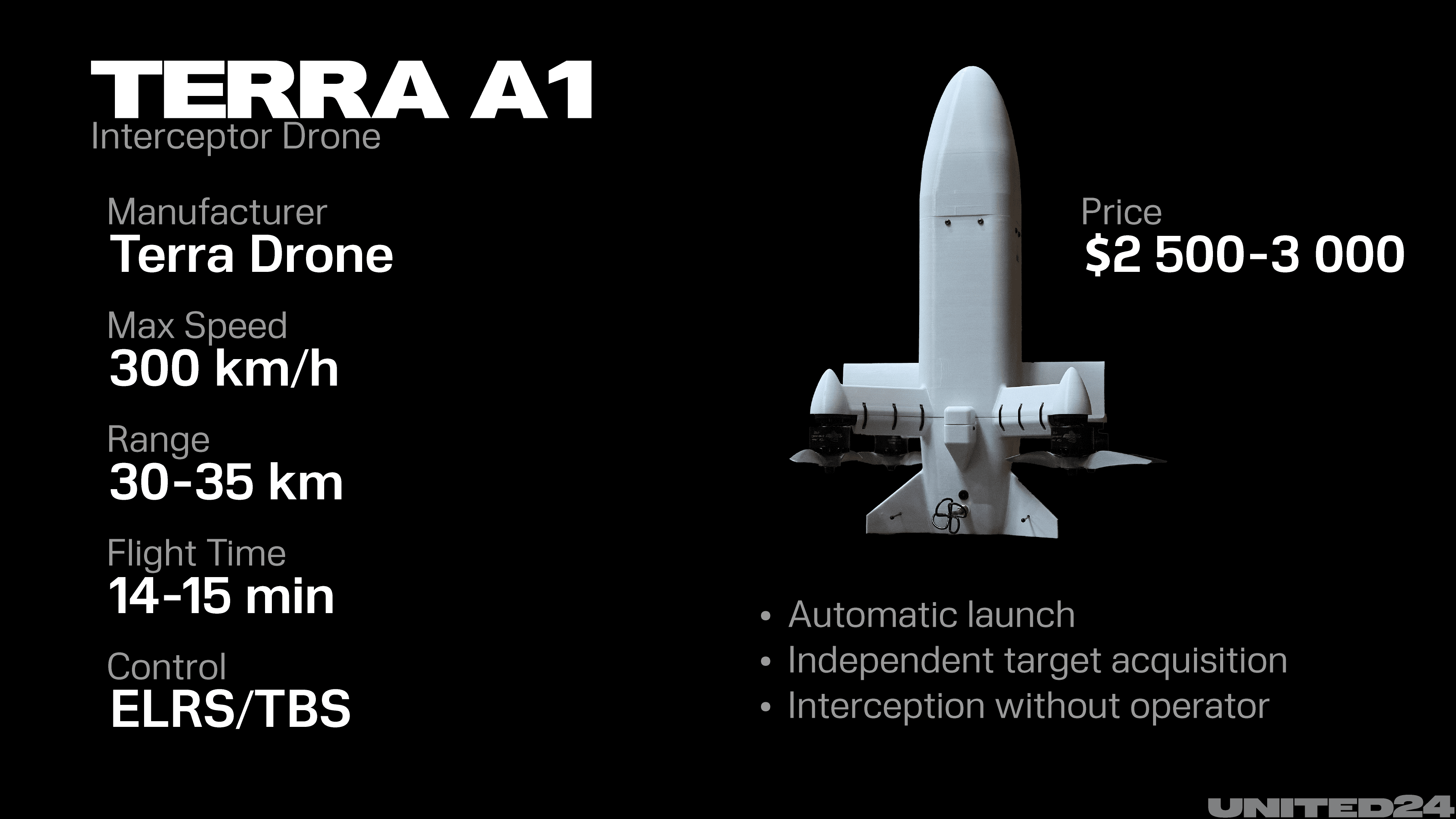
Crucially, the drone utilizes high stealth capabilities. Thanks to its electric propulsion, it has a remarkably low noise and low heat signature, allowing it to evade detection while neutralizing aerial threats.
Currently, a single worker can assemble about two interceptor drones per day, though production is expected to scale as processes become more structured, Klymenko said, adding that the key is not speed, but the intelligence of the drone itself.
“The key is not the number of operators, but the intelligence of the drone itself—its ability to operate independently without requiring extensive operator training,” Klymenko said.
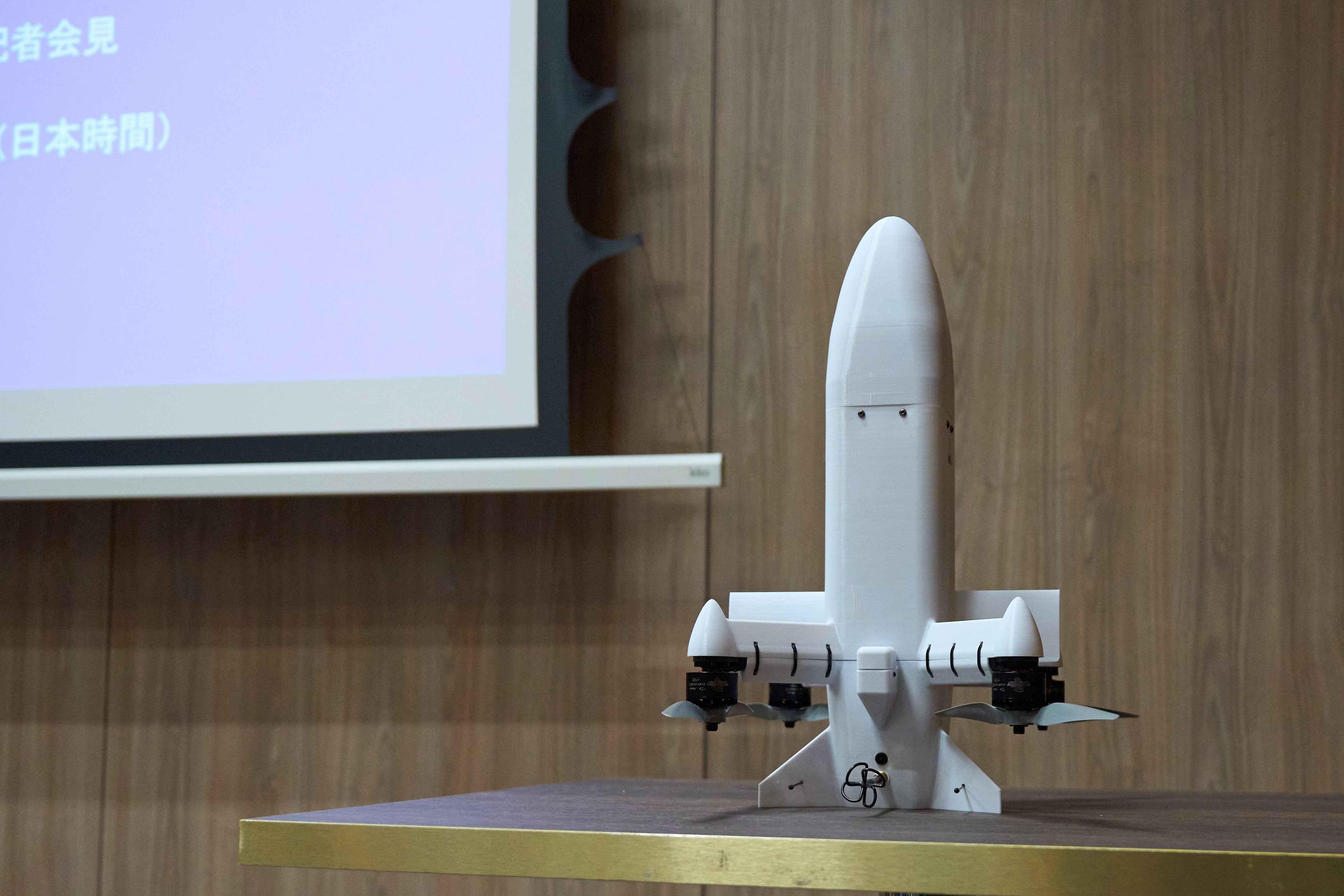
“We cannot respond to Russia by simply increasing manpower. We do not have that capacity. Our only option is to be smarter—to stay one step ahead. That is why autonomy is our main priority.”
Scaling under fire
Bringing this technology to the world requires capital and mass-production expertise. Terra Drone has made an initial strategic investment of $10 million through its subsidiary, Terra Inspectioneering.
This financial backing is a lifeline in the Ukrainian reality. Even successful defense startups in Ukraine struggle to secure bank loans, and when they do, interest rates can reach around 20%, Tokushige said. By leveraging Japanese capital, where rates hover around 2%, Terra Drone is unlocking significant growth potential.
Tokushige draws heavily on his past experience manufacturing tens of thousands of electric vehicles, noting that the core components, such as motors and batteries, are identical to those used in drones.

However, building a manufacturing hub in a warzone carries immense physical risks. Traditional, centralized factories are immediate targets for Russian cruise missiles.
“If you build a large factory in the traditional way, it becomes a target,” Tokushige said. “Ukrainian engineers already have practical know-how—how to decentralize production and operate under constant threat. We are studying and considering this approach as well.”
Klymenko agrees that scaling under full-scale war conditions is the main challenge, citing constant threats, strikes, and a severe shortage of personnel. Yet, both men are incredibly optimistic about their capacity to overcome these hurdles and export their solutions globally.
The future of the alliance
While the partnership is currently focused on scaling interceptor drones in Ukraine, both sides are already outlining broader ambitions.
When asked whether Terra Drone is considering joint production of Ukrainian drone technologies in Japan, Tokushige told UNITED24 Media: “Yes, we are considering launching production of Ukrainian drone technologies in Japan.” “There are still many challenges, but this is part of our future plans.”
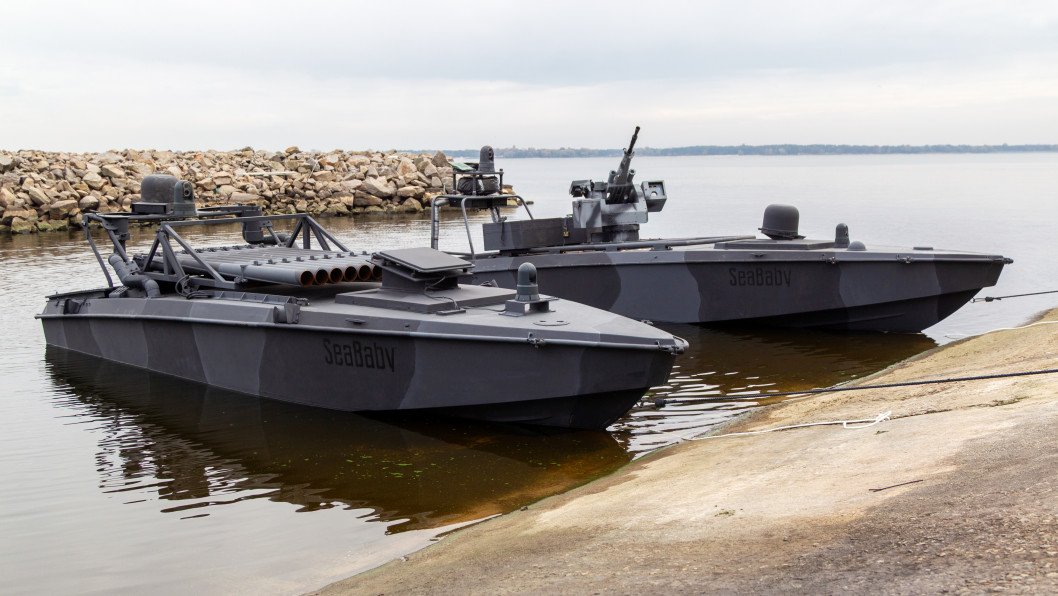
Tokushige also responded to a question about expanding cooperation into new unmanned systems, including maritime solutions: “We are also exploring the development of new types of unmanned systems, including maritime solutions,” Tokushige said.
“This could include sea-based platforms, drone carriers, or systems similar to maritime radar designed to monitor and defend large areas.”
By merging the rapid, combat-driven innovation of Amazing Drones with the massive industrial scale of Terra Drone, this partnership is doing much more than defending Ukraine. They are building a next-generation defense foundation, proving that the only way to defeat a cheap, mass-produced threat is with a smarter, faster, and equally scalable solution.
Discuss this article:
-9a7b3a98ed5c506e0b77a6663f5727c5.png)


-c439b7bd9030ecf9d5a4287dc361ba31.jpg "Photo of Katherina Popilnichenko")