- Category
- Latest news
US ERAM Shipments to Ukraine Spark Push for Mass-Produced CAMP Air-Defender
 Prefer U24 Media on Google
- Authors


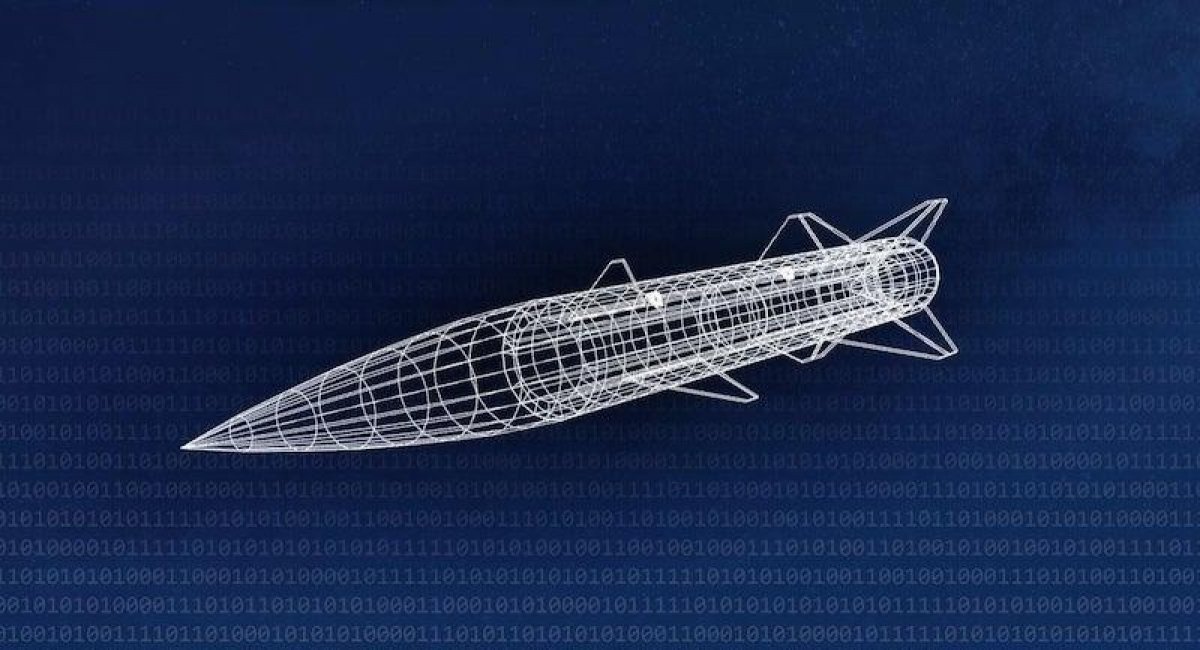
US Air Force procurement officials have launched an early-stage concept competition for a low-cost, high-rate-of-production surface-to-air and air-to-air missile under the Counter-Air Missile Program (CAMP), as reported by Ukrainian defense media outlet Defense Express on November 11.
The program’s commercial targets are: a unit price below $500,000 and an industrial cadence of at least 1,000 missiles per year, with planning envelopes that stretch up to 3,500 annually. Defense Express emphasized that the effort will draw heavily on the ERAM workstream already tasked to support Ukraine.
🇺🇸🇪🇺🇺🇦 The USA has, according to reporting from the Wall Street Journal, approved the sale of 3.550 Extended Range Attack Munitions (ERAM) to Ukraine as part of an 850 million USD arms sales package.
— Jeff2146🇧🇪 (@Jeff21461) August 24, 2025
The purchase is funded by select European countries including the Netherlands,… pic.twitter.com/WEQGmIKnu6
Officials and industry briefings cited by Defense Express describe CAMP as a pragmatic, cost-driven program that will reuse mature ERAM elements—propulsion, guidance modules, and low-cost manufacturing approaches—to shorten development time and compress risk.
ERAM itself is not a single missile but a US program that has already produced two competing cruise-missile concepts for Ukraine from Zone 5 Technologies and CoAspire; those ERAM variants have an average reported unit cost in the $250,000 range, Defense Express noted.
F-16 of the Air Force of Ukraine. The aircraft is armed with AIM-120 and AIM-9X air-to-air missiles, as well as eight GBU-39 precision-guided bombs. pic.twitter.com/TCIRoyoxMG
— Special Kherson Cat 🐈🇺🇦 (@bayraktar_1love) October 20, 2025
That ERAM experience is central to CAMP’s logic: by building on ERAM’s lessons in inexpensive cruise-missile engineering and supply-chain scaling, the Air Force hopes to deliver an air-defense round that can be launched from both ground batteries and aircraft, while keeping per-unit costs below legacy interceptors.
Defense Express noted that reuse of ERAM subsystems could materially shorten CAMP’s timeline and reduce technical risk.
How “cheap” CAMP will really be depends on the tradeoffs contractors make. An early price cap of under $500,000 would place CAMP alongside or slightly below the cost of an AIM-9X Sidewinder for US forces, and well below the AIM-120 AMRAAM.
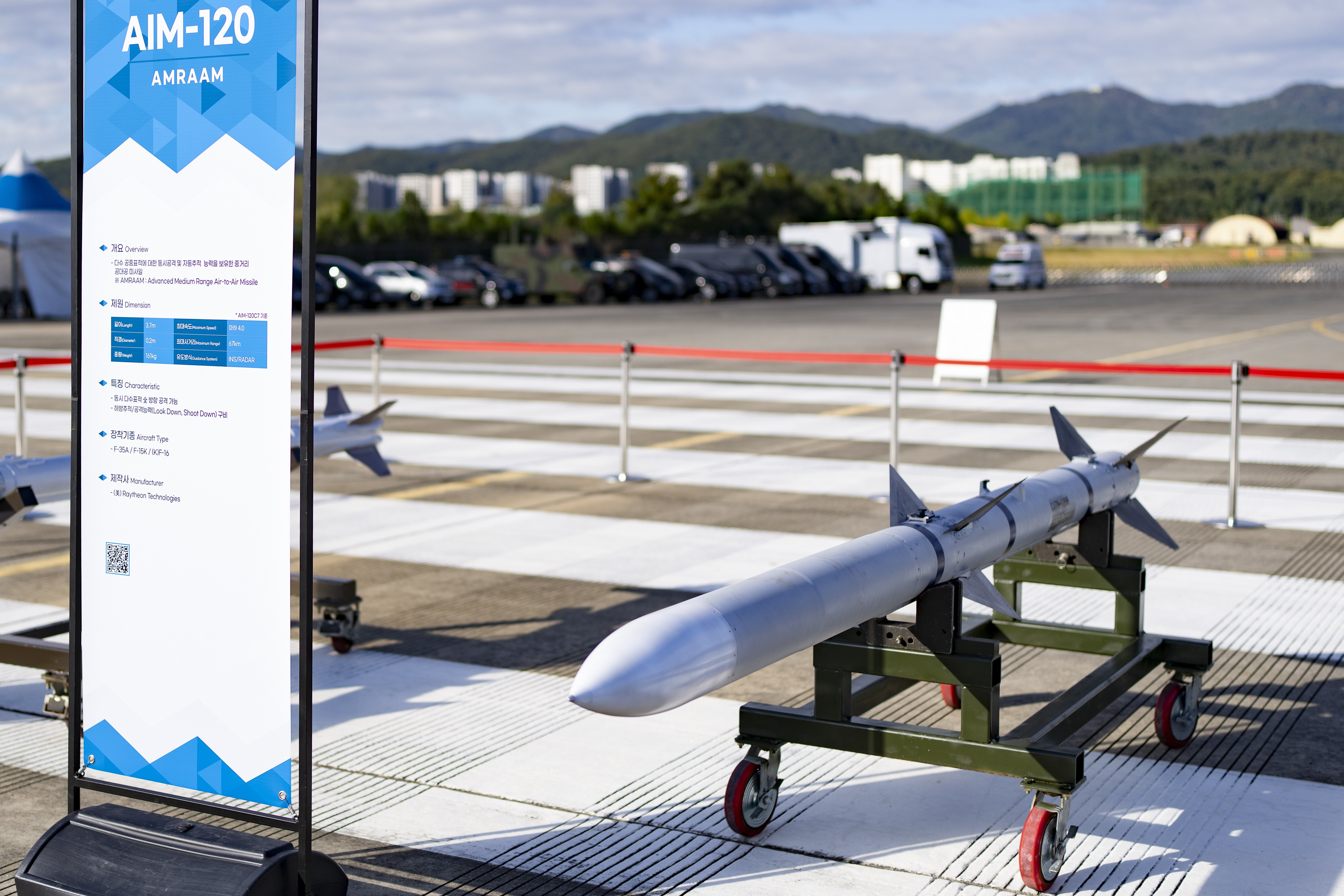
But Defense Express pointed out that true cost economics will hinge on production scale: the program’s aspirational output targets—1,000 to 3,500 rounds per year—are where per-unit prices could drop sharply.
Key technical requirements for CAMP remain tightly scoped in publicly released documents. Authorities have stressed modularity and manufacturability: the missile must combine “meaningful capability with an accessible cost and manufacturability profile,” per program language reported by Defense Express.
Beyond that, the Air Force has left tactical-performance parameters—range, seeker type, kinematics, and warhead options—deliberately open at this stage, creating room for industry proposals that balance capability and price.
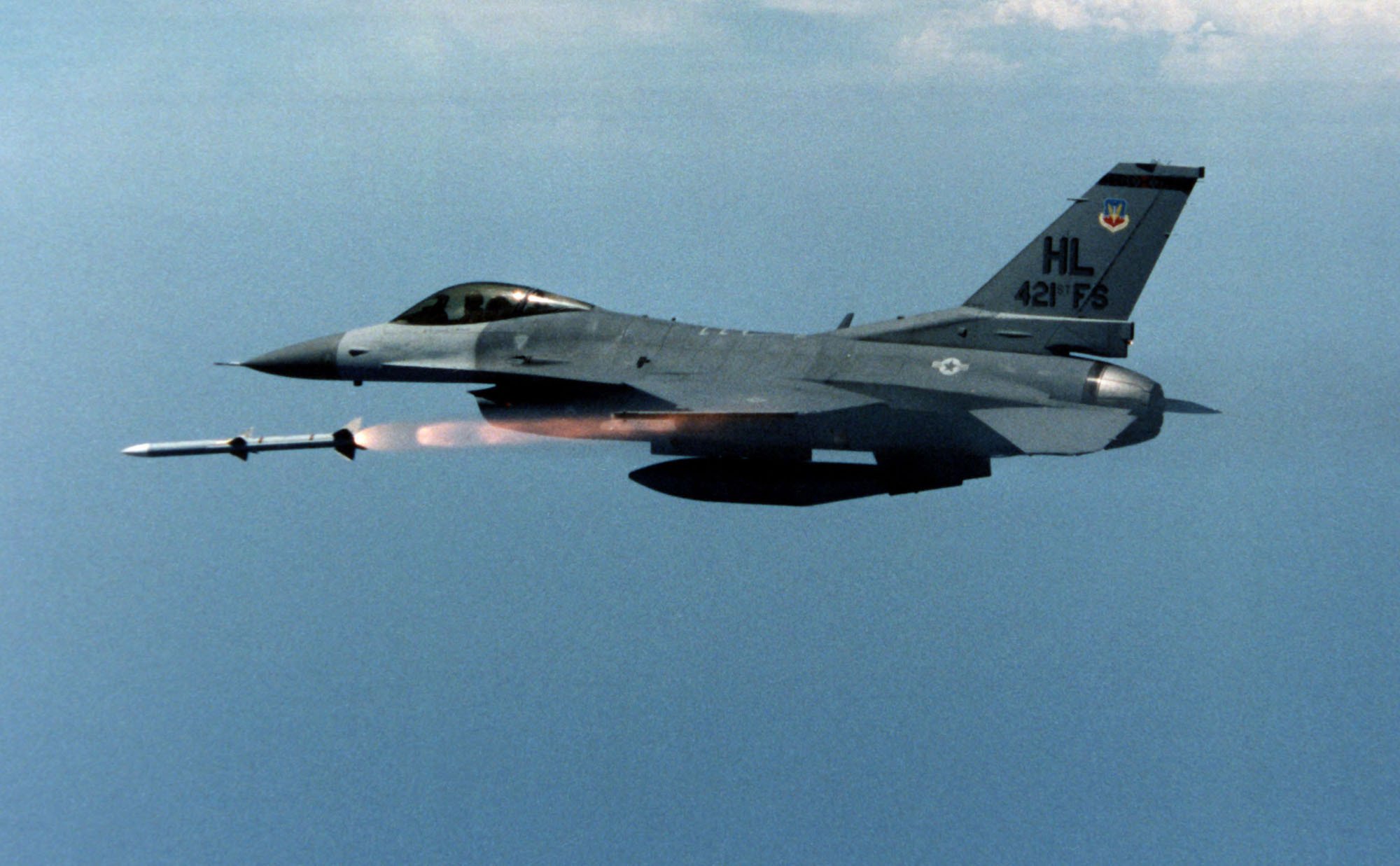
Industry sources told Defense Express that CAMP will prioritize designs that can be integrated with existing launchers and aircraft pylons to maximize commonality and accelerate fielding. That approach mirrors ERAM development choices, where designers emphasized low-risk subsystem reuse and production techniques suitable for rapid scale-up.
Earlier, reports emerged that Raytheon, the American defense giant, secured a massive contract worth up to $3.5 billion to manufacture AIM-120 AMRAAM air-to-air missiles for both the US and international clients, including Ukraine. The contract, announced on July 31, marks a significant step in strengthening Ukraine’s air defense capabilities amid ongoing defense challenges posed by the Russian invasion.
Discuss this article:



-c439b7bd9030ecf9d5a4287dc361ba31.jpg "Photo of Katherina Popilnichenko")


-111f0e5095e02c02446ffed57bfb0ab1.jpeg "Photo of Roman Kohanets")