- Category
- Latest news
US Loses $180M Spy Drone Near Iran—What Happened to the Triton?
 Prefer U24 Media on Google
- Authors


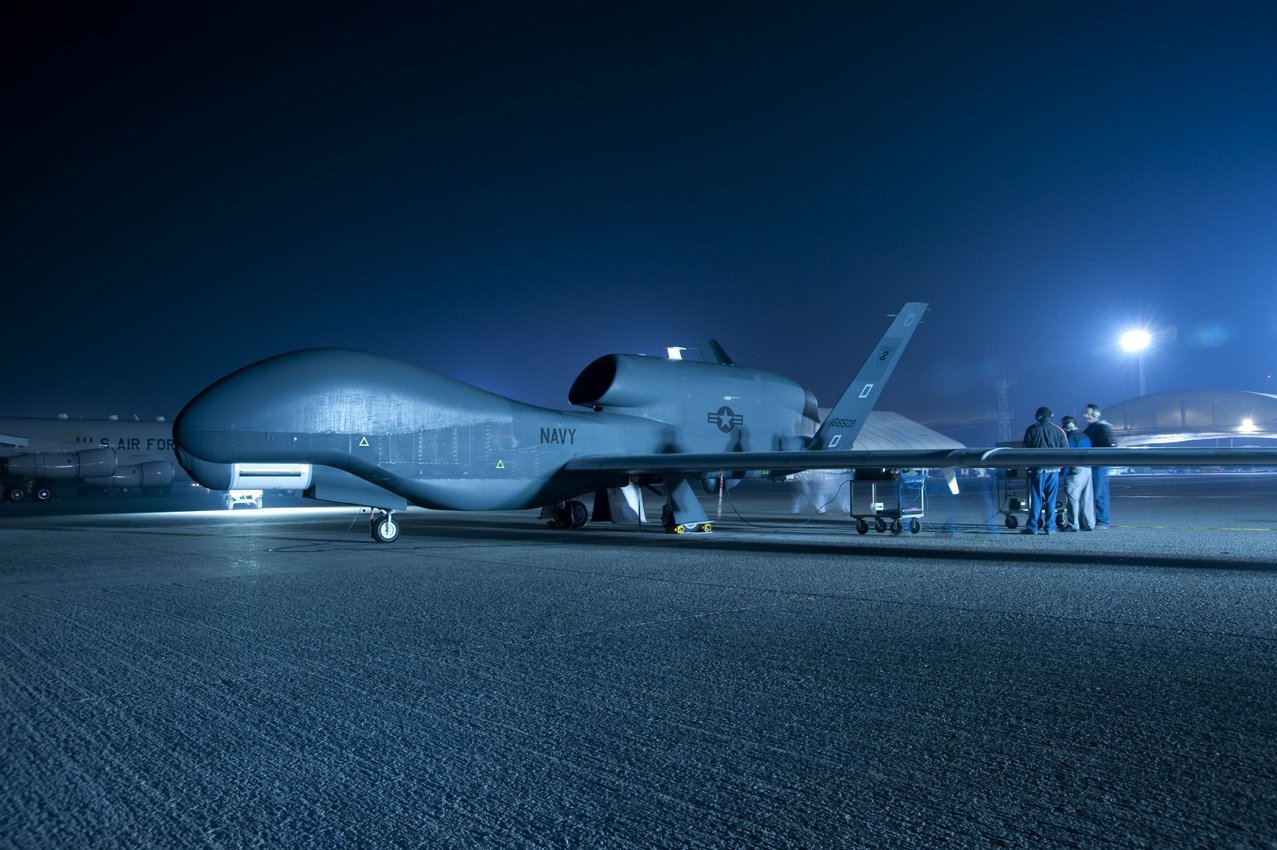
The US Navy has officially confirmed the first-ever loss of an MQ-4C Triton strategic reconnaissance drone, which went down under unclear circumstances near Iran in the Persian Gulf, according to The War Zone on April 14.
In a newly released safety report, US Navy officials confirmed that the advanced surveillance drone crashed on April 9. The exact location of the incident has not been disclosed for operational security reasons.
We bring you stories from the ground. Your support keeps our team in the field.
Details surrounding the loss remain limited, and it is still unclear whether the drone went down due to a technical malfunction or as a result of external interference.
Available data suggests the aircraft may have encountered trouble while returning to its base in Sigonella, Italy, after conducting surveillance over the Strait of Hormuz.
The drone, identified by registration number 169804, reportedly transmitted a 7700 emergency code before switching to 7400, indicating a loss of control by its operator.
U.S. Navy MQ‑4C Triton squawks emergency, plunges over Persian Gulf before disappearing from radar cause unclear
— Washington Eye (@washington_EY) April 9, 2026
An MQ‑4C high‑altitude surveillance drone abruptly transmitted a 7700 emergency code and lost altitude before vanishing from public tracking data over the Strait of… pic.twitter.com/mu0RaTDH87
Flight tracking data showed the Triton abruptly changing course toward Iran and descending rapidly from an altitude of approximately 50,000 feet (15.2 km) to around 10,000 feet (3 km). Shortly afterward, the drone disappeared from tracking systems, suggesting its onboard transponder had been shut off.
Based on available information, the aircraft likely went down close to the Iranian coastline, raising concerns about the possibility of recovery or capture. Given that several days have passed since the incident, it is possible the drone has already been located.
US assets remain active in the area, including another MQ-4C Triton and a P-8A Poseidon maritime patrol aircraft, which could be involved in search and recovery operations.
The US Navy has confirmed that it lost a $240 million MQ-4C Triton reconnaissance drone last week, likely this one that crashed into the Persian Gulf after scouting the Strait of Hormuz. pic.twitter.com/ZiPQCUtHsb
— OSINTtechnical (@Osinttechnical) April 14, 2026
The circumstances behind the loss remain uncertain, and there is no confirmation of Iranian involvement. However, the sequence of events—including the apparent loss of control followed by a course deviation toward Iran—has fueled speculation about possible electronic warfare interference.
Such a scenario could involve the disruption of communication links or even the manipulation of navigation data, potentially forcing the drone off course. A similar incident occurred in 2011, when Iran claimed to have taken control of a US RQ-170 Sentinel drone and landed it on its territory.
VERY RARE FOOTAGE 🚨🇺🇸🇻🇪
— WAR (@warsurv) January 3, 2026
Footage captures a U.S. RQ 170 Sentinel stealth drone returning to Puerto Rico after reportedly supporting last night’s U.S. strikes on Venezuela.
The RQ 170 is a highly secretive high altitude unmanned aircraft developed by Lockheed Martin’s Skunk… pic.twitter.com/SVoeiCpuHV
However, experts note that the MQ-4C Triton relies on satellite communications, making it more resistant to such interference. Alternative explanations include physical damage to key systems, such as the antenna, possibly caused by a missile strike, or a purely technical failure.
At this stage, the exact cause of the incident remains unknown, and further details are expected following the completion of the official investigation.
The MQ-4C Triton is a naval variant of the RQ-4 Global Hawk, designed for long-endurance maritime surveillance. While this marks the first confirmed loss of a Triton, Iran previously shot down a related RQ-4A Global Hawk BAMS-D drone over the Strait of Hormuz in 2019.
This is not the first high-valuable loss of the US Army during Operation Epic Fury. Previously, high-resolution satellite imagery indicated that a US AN/TPY-2 radar—an essential component of the THAAD missile defense system—was likely destroyed at Prince Sultan Air Base in Saudi Arabia.
Images show visible damage at the radar’s deployment site, including a burned-out shelter that previously housed key system components such as generators and command units.
Discuss this article:
-9bd5e1532102621f8fb1c4ba871a3171.png)