- Category
- Latest news
Why Are US F-16s Suddenly Operating From Remote Alaska Bases
 Prefer U24 Media on Google
- Authors


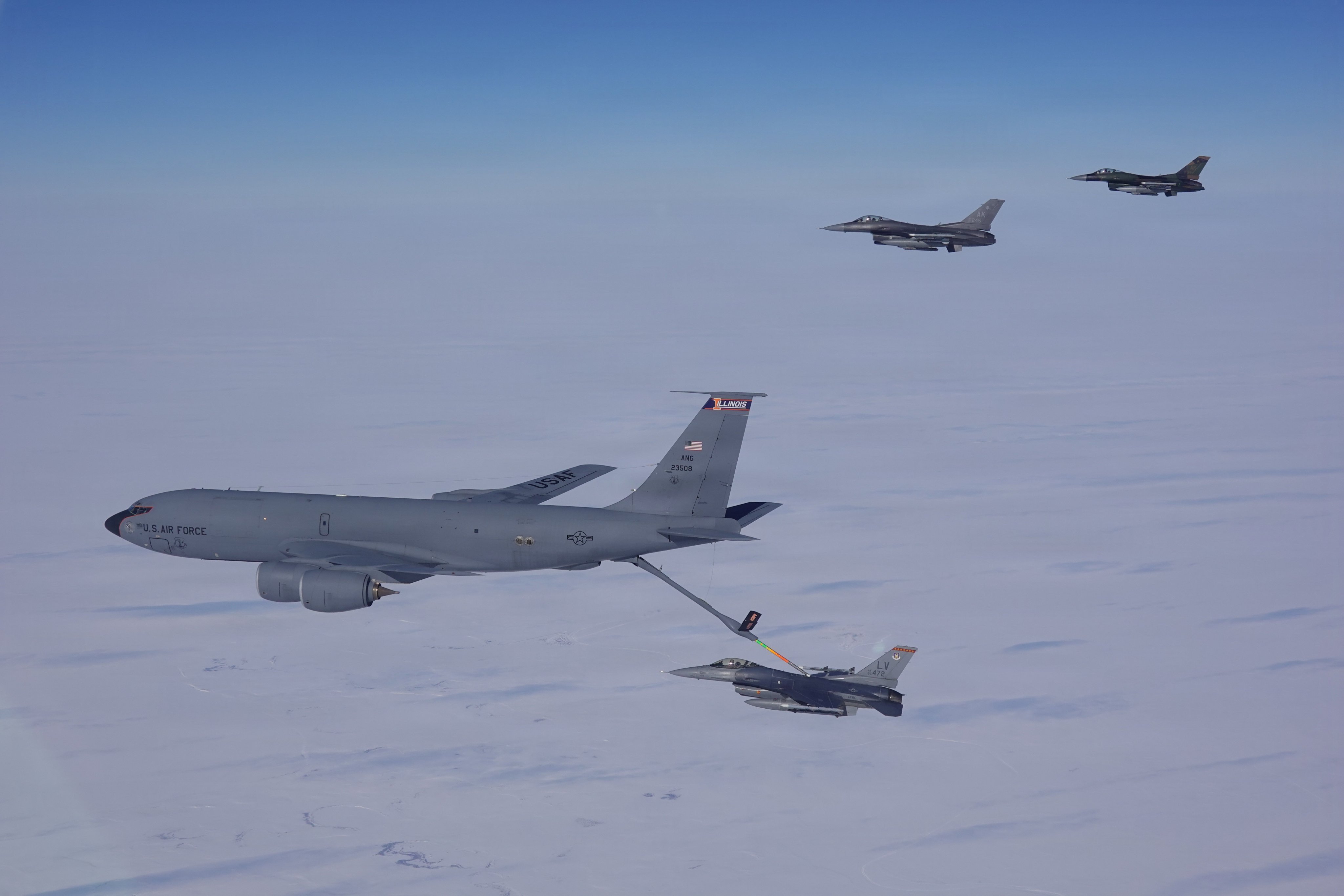
US Air Force F-16 Fighting Falcon jets have been operating from remote locations across Alaska in response to increased Russian air patrol activity, as part of ongoing missions, the North American Aerospace Defense Command (NORAD) reported on April 6.
The deployments are aimed at maintaining a high level of readiness and ensuring rapid response capability to potential threats approaching US airspace.
We bring you stories from the ground. Your support keeps our team in the field.
F-16s assigned to NORAD’s Alaska region conducted operations from austere and forward locations, including King Salmon Airport in the Bristol Bay area. The move demonstrates the US Air Force’s ability to disperse assets and sustain operations from remote environments across Alaska’s vast territory.
The operations were supported by Boeing KC-135 Stratotanker aircraft, which provided aerial refueling to extend the fighters’ range and time on station. This integrated approach allows NORAD to maintain continuous coverage even in areas with limited infrastructure.
.@NORADCommand F-16's operated from King Salmon Airport demonstrating the Alaskan NORAD Region’s capability to respond from remote locations throughout Alaska.
— Alaskan NORAD Region and Alaskan Command (@ANRALCOM) April 6, 2026
We stand ready to detect, deter, and defeat threats to North America.#WeHaveTheWatch | #HomelandDefense | #AKTO pic.twitter.com/35yaT2IjpK
Earlier in March, Russian aircraft—including Tu-142 maritime patrol planes—were detected operating in Alaska’s Air Defense Identification Zone (ADIZ). US and Canadian forces tracked and escorted the aircraft during those missions.
While such flights are not considered direct threats, they are recurring events that test NORAD’s early warning and response systems.
Recent allied responses have involved a mix of advanced assets, including F-22 and F-35 fighter jets, KC-135 tankers, Boeing E-3 Sentry airborne early warning aircraft, and CF-18 fighters from the Royal Canadian Air Force.
Together, these operations reflect a coordinated US-Canada approach aimed at maintaining deterrence and demonstrating readiness in the face of continued Russian air activity near North American airspace.
In another case of a Russian aircraft operating near Alaska, NORAD said it identified and tracked two Tu-95 strategic bombers, two Su-35 fighter jets, and one A-50 airborne early warning and control aircraft inside the Alaskan Air Defense Identification Zone (ADIZ).
In response, NORAD launched two F-16s, two F-35s, one E-3 surveillance aircraft, and four KC-135 refueling tankers to intercept and escort the Russian aircraft.
Discuss this article:


-72b63a4e0c8c475ad81fe3eed3f63729.jpeg "Photo of Cyril Barabaltchouk")