- Category
- Latest news
Why Was Russia’s Buk-M3 Air Defense System Seen Rolling Through Alabama?
 Prefer U24 Media on Google
- Authors


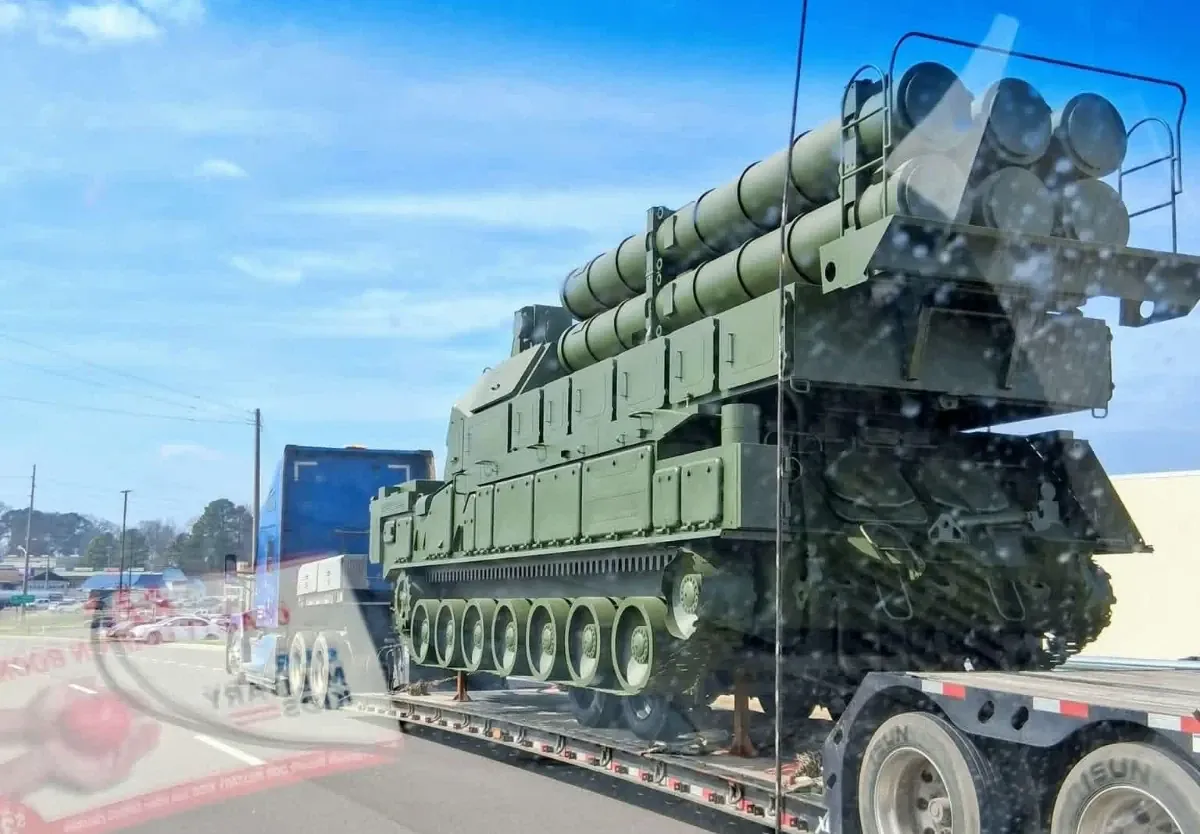
The United States military has been seen transporting a replica of Russia’s Buk-M3 surface-to-air missile system in the state of Alabama.
Images circulating online show a detailed mockup of the Russian air defense launcher mounted on a semi-trailer rather than a tracked combat chassis.
We bring you stories from the ground. Your support keeps our team in the field.
According to Defence Blog on March 9, the replica is likely being used as a training asset during US military exercises to simulate modern Russian air defense systems.
Militaries frequently use high-fidelity replicas of foreign weapons systems to replicate adversary equipment during exercises. Such targets allow pilots and ground forces to train against realistic visual signatures and practice identifying and engaging systems they could encounter in combat.
The Buk-M3 is the newest generation of the Soviet-designed Buk family of medium-range air defense systems and entered Russian service around 2016. The system uses the 9M317M surface-to-air missile and features several structural changes compared with earlier Buk variants.
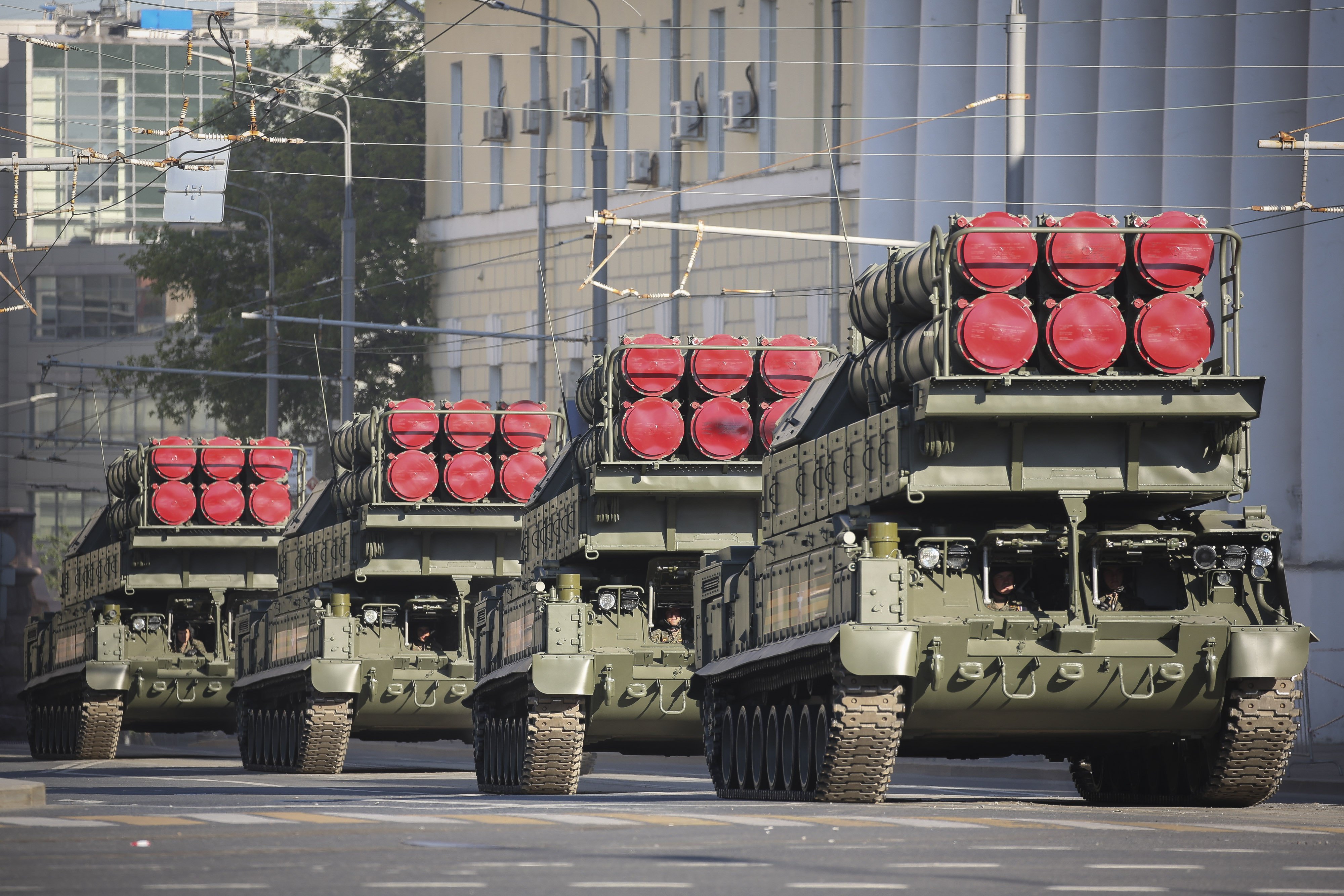
Earlier systems such as the Buk-M2 carried four missiles mounted externally on the launcher. The Buk-M3 instead uses sealed transport-launch containers and carries six ready-to-fire missiles, increasing the launcher’s engagement capacity.
According to a US Army Training and Doctrine Command (TRADOC) manual cited by Defence Blog, the Buk-M3 provides improved performance compared with earlier Buk variants and “outperforms even the old S-300P long-range air defense system,” known in NATO terminology as the SA-10.
Russian technical descriptions state the system is designed to intercept a wide range of aerial threats, including aircraft and cruise missiles, with targets traveling at speeds of up to three kilometers per second.

The system’s reported engagement range extends from approximately 2.5 to 70 kilometers, with interception altitudes from about 15 meters to 35 kilometers. The launcher also includes a television-thermal imaging targeting system capable of detecting and tracking aerial targets in both daytime and nighttime conditions.
According to publicly available specifications cited by Defence Blog, the probability of destroying a non-maneuvering aerial target with a single missile can reach 0.9999, while the probability of intercepting a cruise missile is estimated at around 0.8.
The replica observed in Alabama does not appear to be operational equipment. It is designed to replicate the appearance of the Buk-M3 launcher for training scenarios and can be easily transported between training ranges due to its trailer-mounted configuration.
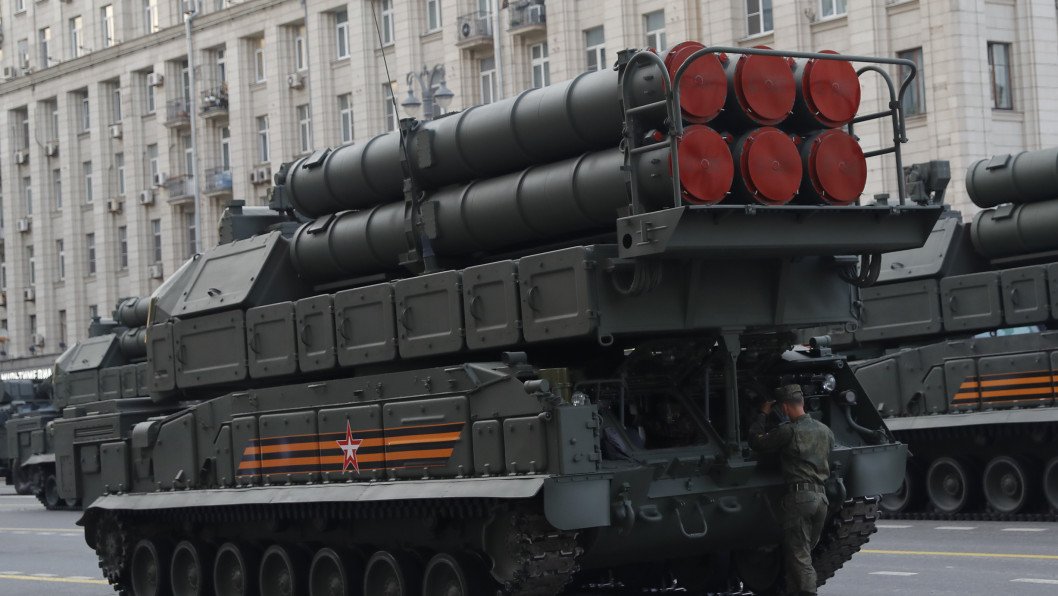
The United States military has historically used both captured equipment and detailed replicas of foreign systems during training and evaluation. When original systems are unavailable, realistic mockups allow pilots and sensor operators to practice detection using radar, targeting pods, and electro-optical systems during exercises.
The Buk-M3 has also attracted attention during Russia’s war against Ukraine. According to open-source battlefield monitoring cited by Defence Blog, Ukrainian forces have destroyed roughly 20 vehicles belonging to Buk-M3 air defense units since the start of the full-scale invasion.
Earlier, the US Air Force used the GBU-57A/B Massive Ordnance Penetrator—its largest conventional bunker-busting bomb—to strike Iranian nuclear facilities including Natanz, Isfahan, and the heavily fortified Fordow site. In contrast, Russia fields smaller bunker-buster munitions such as the KAB-1500L-Pr and BetAB-500ShP, which have significantly lower penetration capability and lack a direct equivalent to the US MOP.
Discuss this article:
-9a7b3a98ed5c506e0b77a6663f5727c5.png)


-c439b7bd9030ecf9d5a4287dc361ba31.jpg "Photo of Katherina Popilnichenko")