- Category
- Latest news
With Sales Collapsing at Home, Russia Turns to Iran and the Houthis to Sell Ladas
 Prefer U24 Media on Google
- Authors


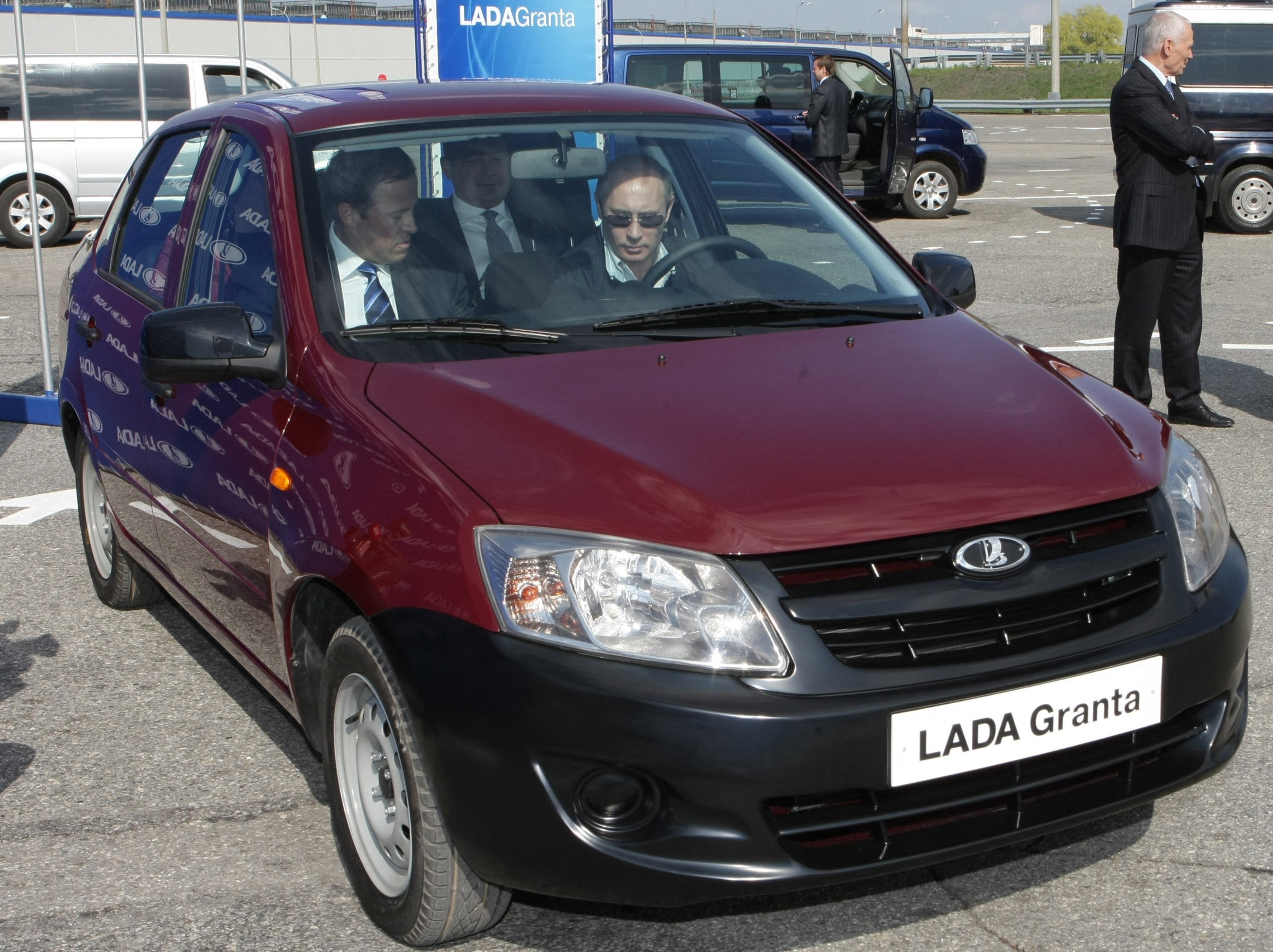
Russia’s largest carmaker, AvtoVAZ, has begun exporting unsold Lada vehicles to the Middle East as domestic demand weakens sharply, The Moscow Times reported on December 19.
We bring you stories from the ground. Your support keeps our team in the field.
In December, the company added two new dealers in the region. One has already opened in Sanaa, the Yemeni capital controlled by the Houthis, while another is preparing to launch in Tehran.
In Yemen, the first shipment—around 50 vehicles—has already arrived at a local showroom, featuring the Niva, Vesta, and Granta models. Sales are being promoted with aggressive advertising slogans, including: “The Russian Lada—with this much power, you don’t need a warranty.”
News from the Russian car industry
— Visegrád 24 (@visegrad24) October 2, 2025
The steering wheel of a Lada Vesta locked up at high speed, the airbags failed to deploy, and the “SOS” system was unable to call for help — the car rolled over into a ditch three times, leaving the driver with a spinal fracture.
This is the… https://t.co/TORLY5XW0h pic.twitter.com/UAE24DSzTv
AvtoVAZ’s entry into Iran is proceeding more cautiously. A showroom in Tehran is set to open with the Vesta model on display. Initial deliveries are limited to several dozen vehicles, with full-scale sales planned for early 2026.
This year, AvtoVAZ vehicles also began selling in the United Arab Emirates. The company had planned to showcase its full lineup there, including the Niva Travel, Granta, Vesta, Largus, and Aura.
A Russian made a review of a new Lada Largus, priced at almost 1,8 million rubles ($21,5 thousand) in the "Comfort" trim level.
— Anton Gerashchenko (@Gerashchenko_en) September 26, 2025
The car does not have climate control, a stereo, steering wheel and seat adjustment, covering or function buttons on the steering wheel. It also has an… pic.twitter.com/60Z1WU36Fa
The push into Middle Eastern markets comes as demand for Lada vehicles inside Russia has fallen significantly. By the end of 2025, AvtoVAZ expects to produce 274,000 vehicles at its Tolyatti plant—about 40% below its original target.
The value of shipped vehicles is projected at 464.5 billion rubles, down 27.7% year over year. In 2026, output is forecast to decline by a further 3.3%, to roughly 265,000 vehicles.
The disaster came unexpectedly – production of one of russia's symbols, the Lada Aura, was halted. Fewer than 800 vehicles were sold, and in September 2025, it was decided to halt production.
— Jürgen Nauditt 🇩🇪🇺🇦 (@jurgen_nauditt) September 24, 2025
Not even advertising from putin helped – he extolled the car's virtues in front of a… pic.twitter.com/7A6HIAOJeb
AvtoVAZ chief executive Maksim Sokolov said the company is prepared to offer its engineering solutions to foreign partners, highlighting India as a particularly promising market. According to Sokolov, AvtoVAZ entered several new markets in 2025, including Venezuela, Vietnam, Oman, and Kuwait.
Earlier, reports emerged that to combat its declining birthrate, Russia was considering new financial incentives for families, including a 25% discount on Lada cars for parents having additional children.
Discuss this article:






-80134f2dc17b4a887d01513a1c7bc929.png "Illustration of Russian military infrastructure targeted by Ukrainian strikes in temporarily occupied eastern Ukraine. (Source: General Staff of the Armed Forces of Ukraine)")