- Category
- Life in Ukraine
Beyond Socialist Realism: A Hidden Ukrainian Artist Rises Again in Wartime Kyiv
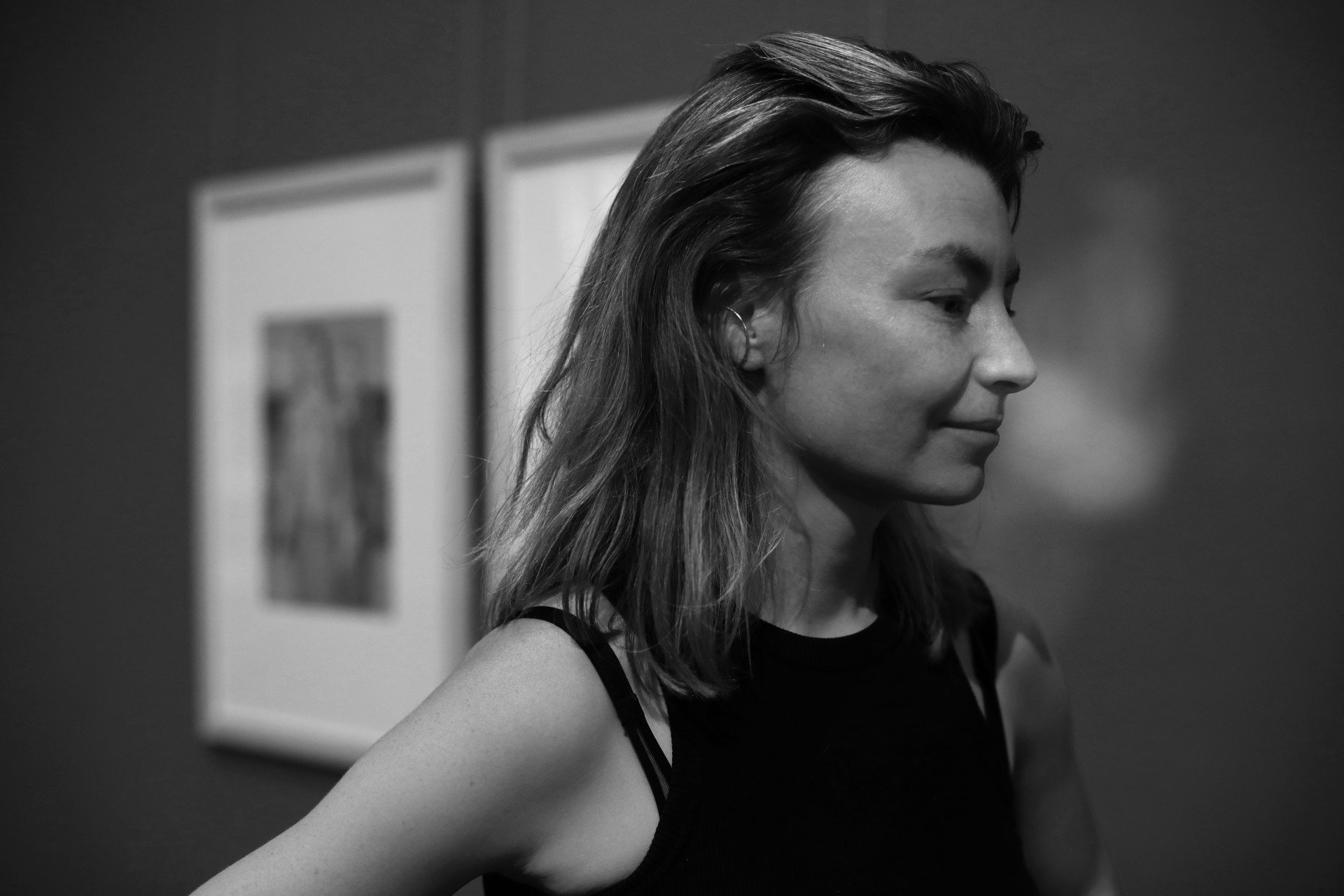
Inside Kyiv’s Khanenko Museum, where evacuated galleries reflect the ongoing toll of the war in Ukraine, curator Lizaveta German has staged a vital encounter with the past. Hryhorii Havrylenko. New Life gathers the delicate ink drawings of a key figure in Ukraine’s “Sixtiers” movement who quietly resisted Soviet Socialist Realism.
 Prefer U24 Media on Google
- Authors

-554f0711f15a880af68b2550a739eee4.jpg "Photo of Lucile Brizard")
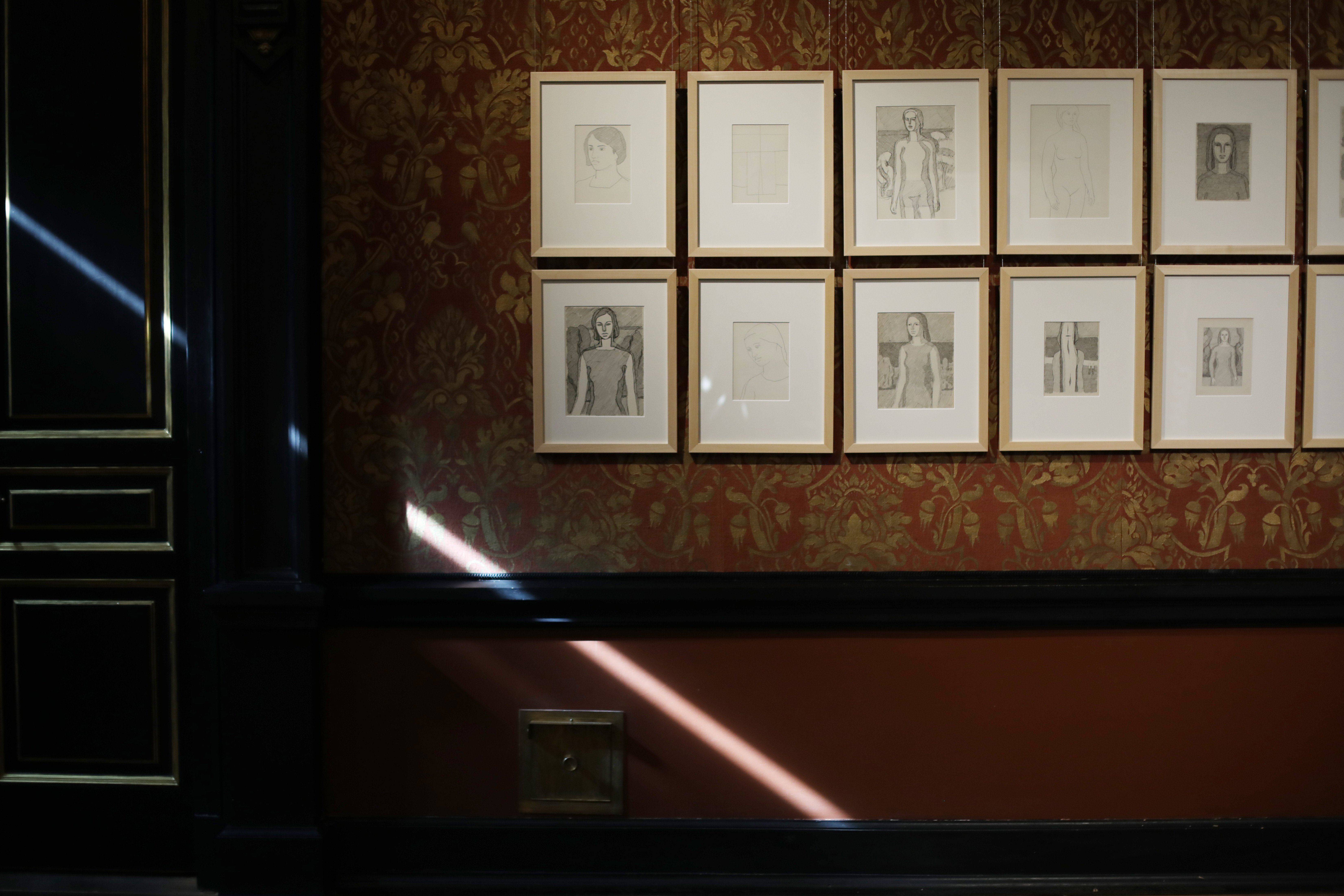
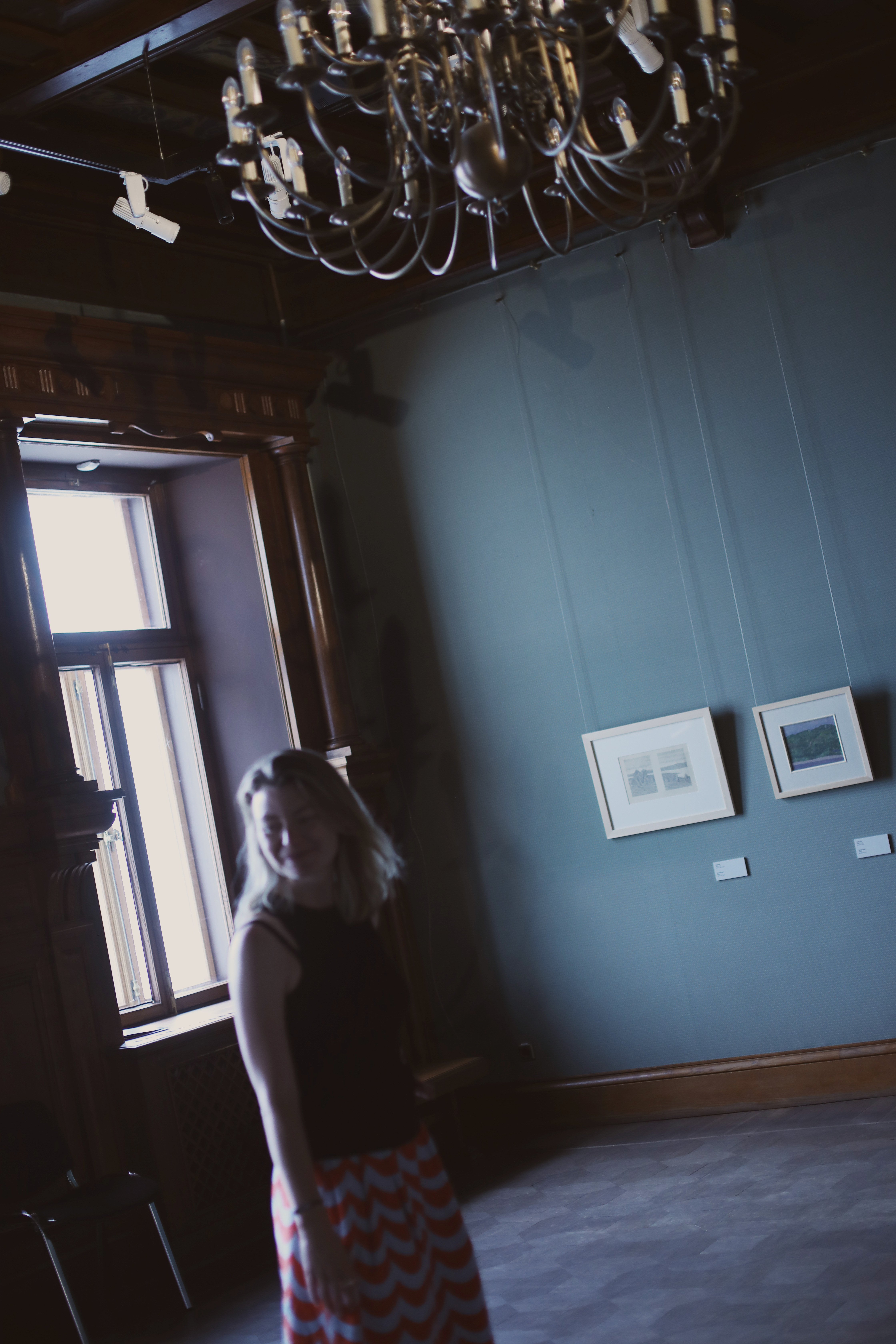
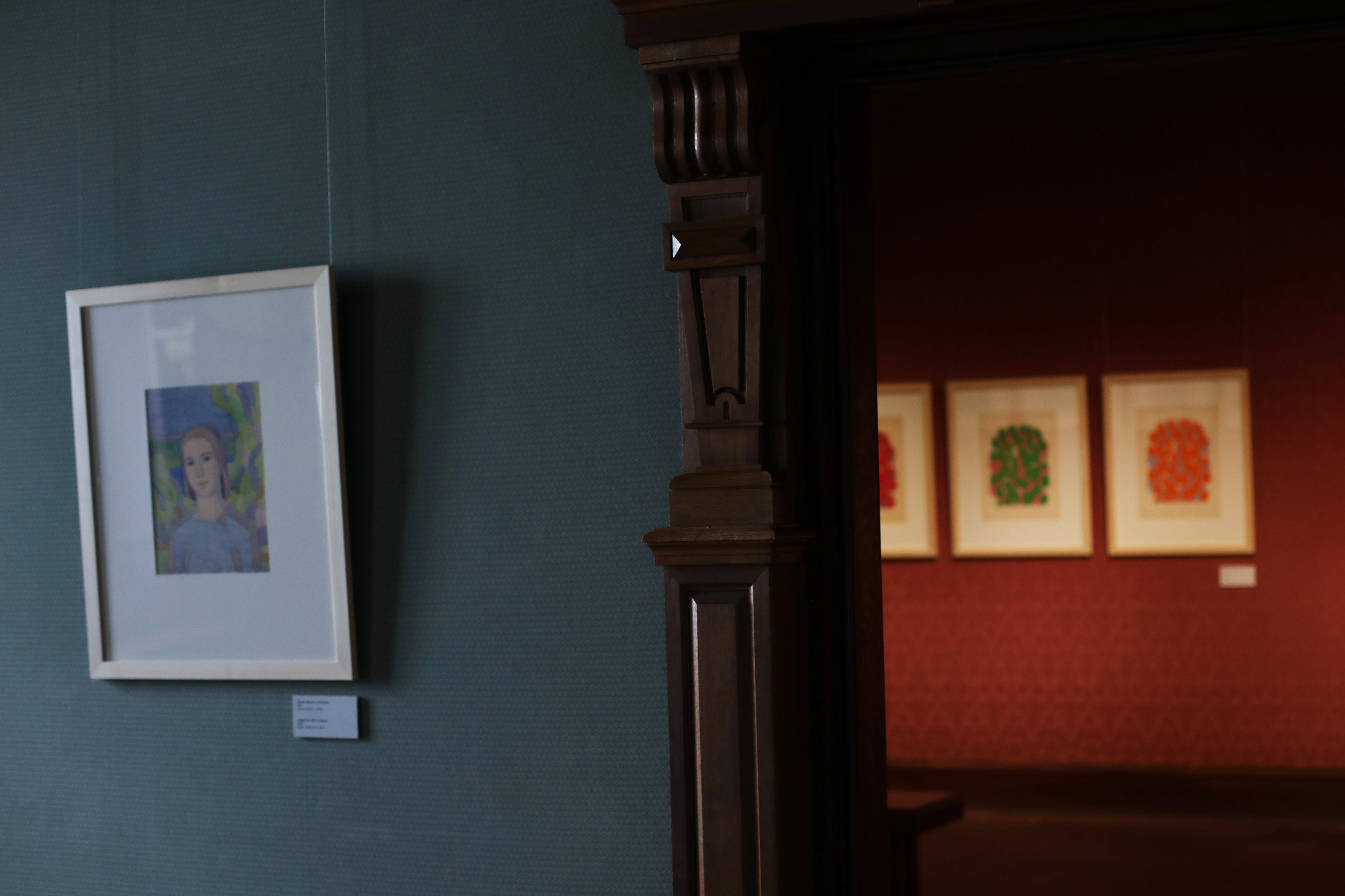
What is most apparent when walking through the exhibit Hryhorii Havrylenko. New Life is the contrast between the walls: deep, rich reds and framing oak serve as a backdrop for the clean and deceptively simple lines that make up Havrylenko’s drawings and linocuts inside Kyiv’s Khanenko Museum.
Lizaveta German, the exhibits curator and one of Ukraine’s main figures in the art world, is used to working within such spaces. “In Ukraine, we don’t have many white cubes. We don’t have a Museum of Contemporary Art or that white cube tradition”
She founded the Kyiv gallery The Naked Room, along with Maria Lanko, one of Ukraine’s best-known contemporary galleries, and specifically chose to steer clear of the white-wall feel. Instead, raw, pastel coloured plaster was used, giving the whole space an unfinished feel—in a good sense.
“Sometimes, this kind of dialogical contrast is much more interesting than putting minimalistic art into an ultra-minimalistic setting,” states German. “I’m a bit skeptical of sterile spaces.”
Art, ideology, and the Kyiv underground
The cyclical pattern of Russian aggression that German contends with today was the same backdrop to Havrylenko’s life in the Soviet era—he died in 1984, seven years before Ukraine reclaimed its independence. While the state-enforced doctrine of Socialist Realism demanded monumental statues and heroic murals, Havrylenko chose a path of quiet divergence: small, precise, and painstakingly minimal pen-and-ink line drawings.
A central figure of the 1960s Sixtiers generation, he operated within the Kyiv underground—though the regime targeted him early. In his youth, his father was sent to a labor camp, and by the 1960s, Havrylenko himself was sacked from the Kyiv State Art Institute for “ideological reasons.”
Living most of his adult life in a modest basement apartment, he loved tea (German decided to exhibit a small Chinese tea cup from the museum’s collection) and was surrounded by Ukraine’s elites of the art world: the filmmaker Serhii Paradzhanov, the composer Valentyn Silvestrov, and artists such as Heorhiy Yakutovych and the Lamakhs.
He made his living illustrating over 30 books, his “masterpiece” the 1965 pen-and-ink series for Dante’s Vita Nova—gave the current exhibit its name. Havrylenko left behind almost no photographs and virtually no written manifestos. His work was mostly unseen for two decades after his death, though private collectors like Eduard Dymshyts managed to secure his legacy, and all of the works on view are from Dymshyts own collection.
A museum founded by the Kyiv elite
That quiet act of private preservation has now converged with the museum’s own fight for cultural continuity.
When Russia launched its full-scale invasion, the Khanenko Museum dismantled the permanent exhibitions, safeguarding the historic estate. The threat struck close to home on October 10, 2022, when a Russian missile exploded in the adjacent park, shattering the building’s facade, windows, and glass ceilings. In light of its now empty walls, the museum continues to exhibit other artists, pivoting to spotlight contemporary art and private collections.
In the 1870s, the Khanenko Museum originated when newlyweds Bohdan Khanenko and Varvara Tereshchenko, prominent Kyiv art patrons, embarked on a decades-long European pilgrimage to assemble an encyclopedic collection of global art—spanning old European masters, Islamic relics, Asian artifacts, and ancient Ukrainian antiquities—inside their Kyiv mansion.
Driven by a vision to gift a public museum of world art to their city, Varvara willed the collection and mansion to the Ukrainian Academy of Sciences in 1918 following Bohdan’s death, only for the Bolshevik government to nationalize the property in 1919 and strip the founders' names from the institution under the guise of lacking “revolutionary merits.”
Throughout the twentieth century, the institution endured forced transfers and state-mandated sales that funneled its prized masterworks to the Hermitage in Saint Petersburg, all while suffering the looting of its remaining holdings during the Nazi retreat in World War II. Yet, following a transformative late-century restoration, the museum re-emerged in 1999.
Two eras holding hands
“There is history behind this museum, there is a history of private collecting, and there is this interior, which belongs to the city,” says German, her hands animated as she makes the connection between the museum, Dymshyts, Havrylenko, Kyiv, and her role as curator.
Dymshyts, who German defines as “a remarkably thoughtful collector,” started collecting Havrylenko’s works in 1990’s through access to the artist’s family. Dymshyts, who is also an art historian, collects like a museum curator rather than someone merely looking for financial value, German notes.
Havrylenko didn’t have a family of his own, and there is not much archival material, but there are people who knew him. “Some of them I met like 15 years ago,” notes German, who started researching the artist at that time as an art history student.
When her professor, the reference point on Havrylenko, passed away, German became the main researcher of the artist, becoming the “keeper” of his legacy.
“I didn’t have much access to his artworks, and this was an amazing chance for me,” she says. As the Khanenko Museum only opened for temporary exhibitions after its permanent collection was evacuated for safekeeping, and the exhibition was “a fortunate coincidence born of unfortunate circumstances,” states German, wistfully.
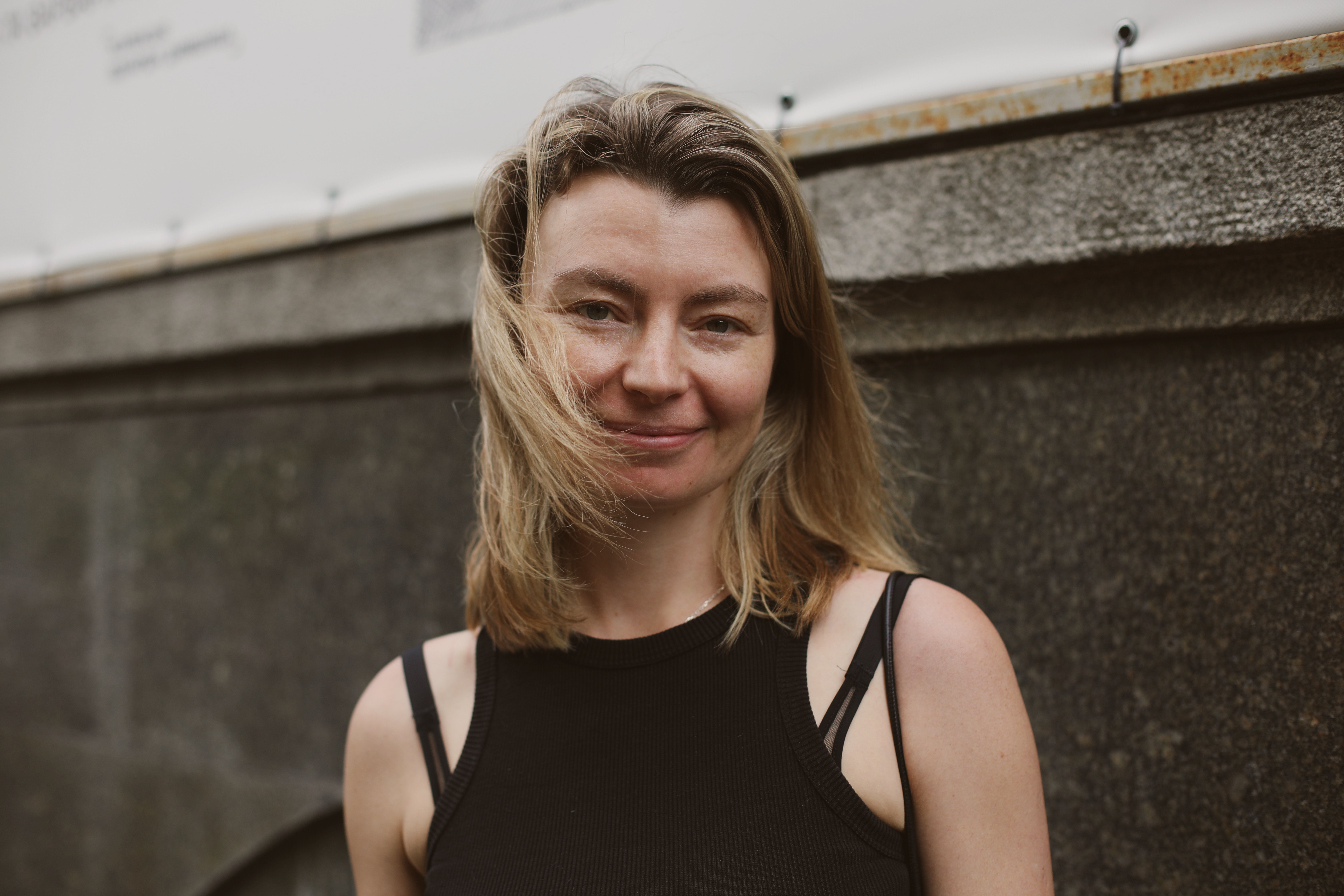
In this exhibit, Havrylenko’s legacy is being resurrected in tandem with a massive cultural renaissance and political awakening, in part due to Russia’s full-scale invasion. The artistic movement The Sixtiers, to which Havrylenko belonged, was also a reawakening.
“That’s when contemporary art in Ukraine truly began,” states German. The 1960s post-Khrushchev era gave artists in Ukraine a small taste of freedom—still strictly limited, but slightly less rigid than the heavy censorship of the Stalin years.
“It was a generation that rebelled,” she says, adding that Havrylenko “was not an explicit rebel.” Instead, he rebelled quietly, working in his studio entirely on his own terms and without seeking official approval, says German.
Other artists took a direct stand, triggering the birth of the human rights movement. Opposing the Soviet regime and driving for national revival despite heavy Russification, many important cultural figures embraced Ukrainian for the first time, and writers actively built a modern Ukrainian literary culture.
“That is why this period feels so relevant today,” notes German. “While the circumstances are different, we are living through a similar political and cultural awakening, fighting Russification under different terms. The two eras are holding hands.”
Reframing Ukraine’s 1960s artistic generation
The cultural renaissance in Ukraine can also entrap artists, making them visible only through the lens of Soviet repression or the current full-scale invasion. German takes issue with this framing, saying:
It’s great that the 1960s generation is getting visibility, but the general audience and many researchers tend to view it purely through a political lens.
Lizaveta German
Curator of Hryhorii Havrylenko. New Life
German tried to curate the exhibit as apolitically as possible, and walking around the rooms, a quiet tension is indeed felt, but not loudly proclaimed. “Havrylenko’s political stance was precisely that he worked stubbornly and self-consciously on something purely non-Soviet,” she says adding, “He believed his art would survive, even if society didn’t need it at the time.”
Having co-curated the Ukrainian Pavilion at the Venice Biennale, German is well-versed in presenting her country’s art to an international audience. For her, “the next step must be to stop focusing solely on biographies of who suffered more or less under oppression, and instead focus on quality.”
That goes for the narrative within Ukraine as well, where artists are often glorified for their defiance rather than their practice. “I’m getting tired of that being our only narrative,” she says. By focusing on the work itself, art stops being a tool wielded as an objection, enthuses German.
“Havrylenko didn’t create to object to the Soviet regime—he created because he had his own distinct artistic program.”
Lizaveta German
Curator of Hryhorii Havrylenko. New Life
In harmony with her beliefs, the exhibition is “deliberately non-chronological,” German explains. Some pieces date from the 80s, while all the black-and-white works are from the 60s. Her goal, she tells me, was to demonstrate how Havrylenko continuously revisited similar themes over time.
German chose to weave a series of subtle visual dialogues, what she calls “Easter eggs” for attentive gallerygoers—throughout the exhibition spaces. In a room dominated by landscapes, she hung a stylized female portrait against a rural backdrop on the very wall typically reserved for the museum’s crown jewel, the famous Portrait of the Infanta Margarita, long considered an original Velázquez, though it has now been reattributed to his workshop.
The substitution was a deliberate attempt to let Havrylenko’s anonymous, archetypal figures temporarily inherit the museum’s prime spots. “He never portrayed anyone in particular,” she notes, pointing out that his female subjects function more like sacred symbols than distinct subjects. “All the women in his work, they’re like icons—Byzantine icons—without any specific features. It’s almost like a Madonna, how the Renaissance portrayed the Madonna.”
In her deliberate play on the museum’s past—its permanent collection rendered ghostly after being removed at the beginning of the war—her curatorial trick of placing Havrylenko’s works in the spots occupied by revered artists comes off as a kind of spiritual restitution.
Inside this temporary sanctuary, Havrylenko’s nameless, Byzantine-like faces, conceived in a dark basement studio on Honchara Street during the height of the Soviet freeze, could possibly be passing a torch, and New Life leaves the viewer not with a sense of tragedy or ruin, but with an overwhelming feeling of continuity.
Discuss this article:


-24deccd511006ba79cfc4d798c6c2ef5.jpeg "Photo of Louis Beaudemont")