- Category
- Culture
War Seen by Children: “Timestamp” Unveils a Quiet Revolution in Ukrainian Documentary Filmmaking
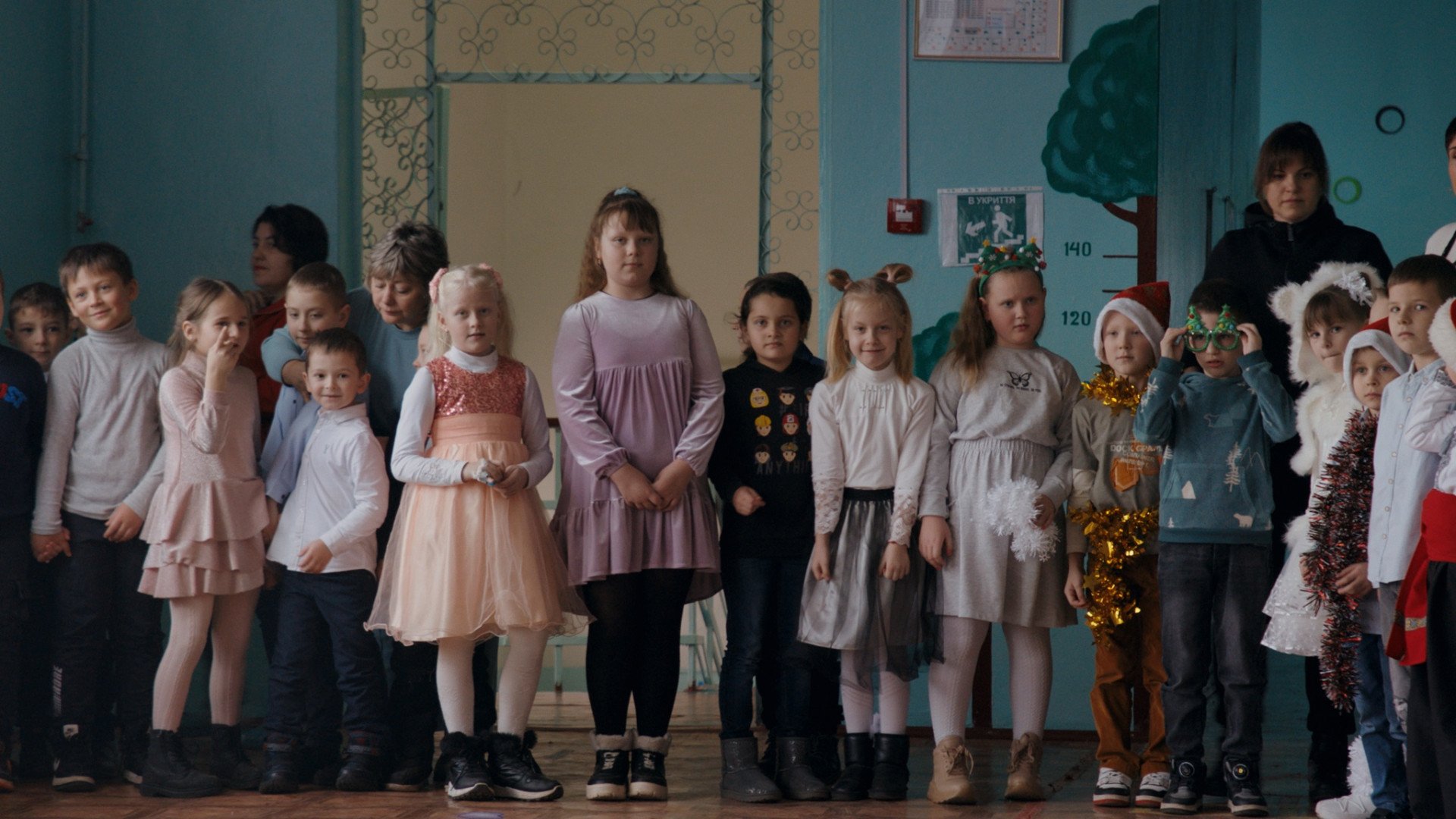
An increasing number of Ukrainian documentaries are embracing a “mosaic” style of storytelling, opting for a self-sufficient narrative that eschews voice-over narration. With an unflinching vision, Kateryna Gornostai’s Timestamp portrays Ukrainian children navigating classrooms amidst the backdrop of Russia’s full-scale war, offering an intimate, hyper-focused account of youth and teachers.
 Prefer U24 Media on Google
- Authors

-554f0711f15a880af68b2550a739eee4.jpg "Photo of Lucile Brizard")
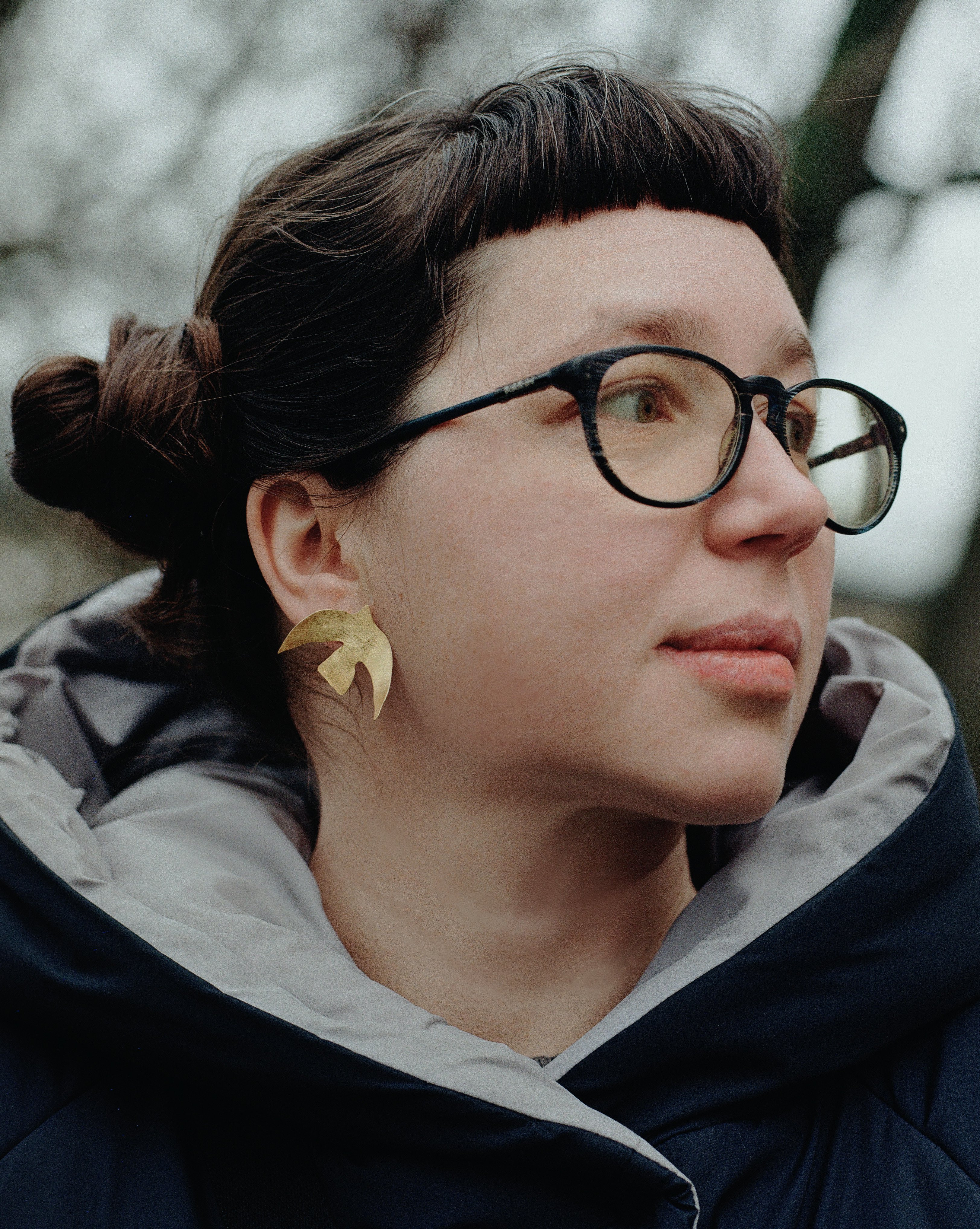
“I don’t like the word ‘metaphor,’” says Kateryna Gornostai, though metaphors, she concedes, are inescapable in Ukraine today. At a hybrid library-coffee shop on Kyiv’s main street, Khreshchatyk, the director comes off as subtly confident, wearing a long coat, her sympathetic gaze framed by black glasses.
In 2025, her feature length documentary, Timestamp, on Ukrainian schoolchildren stunned the global film industry positioning her as a standout talent in Ukraine today.
The unique storytelling of Timestamp
The documentary premiered in the 2025 at the 75th Berlin International Film Festival—the first Ukrainian film in over 25 years to enter the main competition, contending for the much coveted Golden Bear. Without resorting to the familiar crutch of voice-over, or “talking-head” interviews, the film explores the lives of schoolchildren in Ukraine, ranging from primary school to around 16 years old.
In the film, we watch—and the word is important—as students and teachers navigate the hurdles of education and war. Shot in frontline towns, major cities, and rural villages, the film is extensive, yet feels hyperfocused.
The documentary begins with a succession of slow-moving shots, through empty school corridors, classrooms, and sports halls. All at once, it evokes the beginning of school and the anticipation surrounding it, while also hinting at the risk of abandonment, as in Ukraine today, more and more schools are closing their doors due to Russia’s full-scale invasion.
Produced by the Ukrainian company 2Brave Productions, founded by Olha Bregman and Natalia Libet in 2022, Timestamp inscribes itself in what might be considered the “mosaic-movement.” Since Russia’s full-scale invasion, documentary filmmakers seem to have wholly embraced their place as observers, creating ensemble films, though documentary. In Timestamp, Gornostai’s particular directing choices allow the narrative to structure itself organically, moving away from a classical narrative arc.
Such documentaries include Militantropos and Songs of Slow Burning Earth, each offering an intimate portrait of everyday lives transformed by war, as well as Special Operation—a film about the Russian occupation of the Chornobyl Nuclear Power Plant in 2022.
A glimpse into Ukraine’s adapting schools
Tall and elegant, with a sharp style, Libet comes off as discreet yet commanding. Her career began in finance at an American consulting company before earning an MBA in Alabama as an Edmund Muskie Fellow, a US government program for Eastern European professionals. At the age of 42, she transitioned to film production, quitting her corporate job, and became “a full-time producer” in just two years.
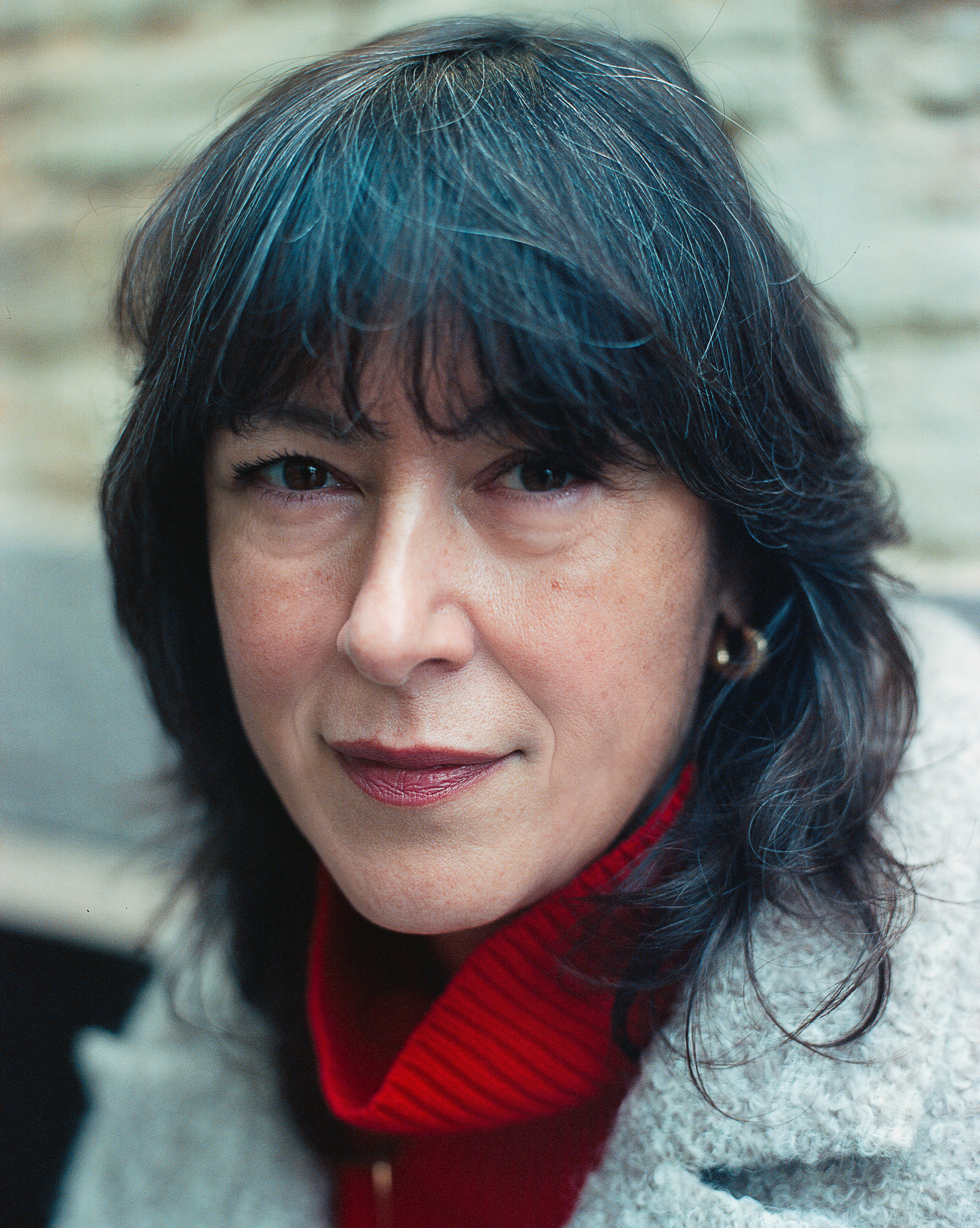
A key figure in the Ukrainian film industry, Libet’s vision of 2025 is that it ushered in a new era of “conscious togetherness.” As Ukrainian documentaries gain global recognition, it’s voice as a contemporary and relevant film industry is being nurtured, largely thanks to producers like Libet and Bregman, who are behind some of the country’s most influential films today, (The EUkrainian, directed by Viktor Nordenskiöld, Cuba & Alaska by Yegor Troyanovsky, and Timestamp by Kateryna Gornostai).
Libet met Gornostai in 2017 and produced one of her first shorts, Crocodile in 2018 and fan-favourite Stop-Zemlia in 2021, a coming-of-age film that received a Crystal Bear at the Berlinale. “If I don’t know how to do something, I’ll learn how to do it, just to be part of Kateryna’s project,” says Libet. “That’s my sincere approach to working with Kateryna.” Timestamp is their third venture together.
Libet acknowledges that part of the industry’s goal in Ukraine is to expand and “reach a wider audience.” In her opinion, to achieve this, it’s important not to be perceived as victims.
When her career started, some people tried indeed to box Ukrainian creators within a “victim” narrative. As global events unfolded and the industry fought for Ukraine to be recognized as a singular voice, its goal took shape: to be acknowledged on par with other nations. In this, Gornostai was instrumental, as Libet sees her directorial choices as “Letting the audience see without telling them what to think.”
Gornostai’s non-intrusive method could have been jeopardized by the camera and the kids' reaction to it: “We actually had a big camera, but they were still more intrigued by the boom,” she says, laughing, as the bustling Kyiv cafe fills up.
During her time spent in Ukrainian schools, she observed that children tend to gradually disconnect from the world around them, retreating to an inner world, or, as she put it, “They turn inward.” For Gornostai this was deeply significant, reflecting a child’s profound trust in their environment, despite the camera’s presence: “I know not to interrupt,” she says.
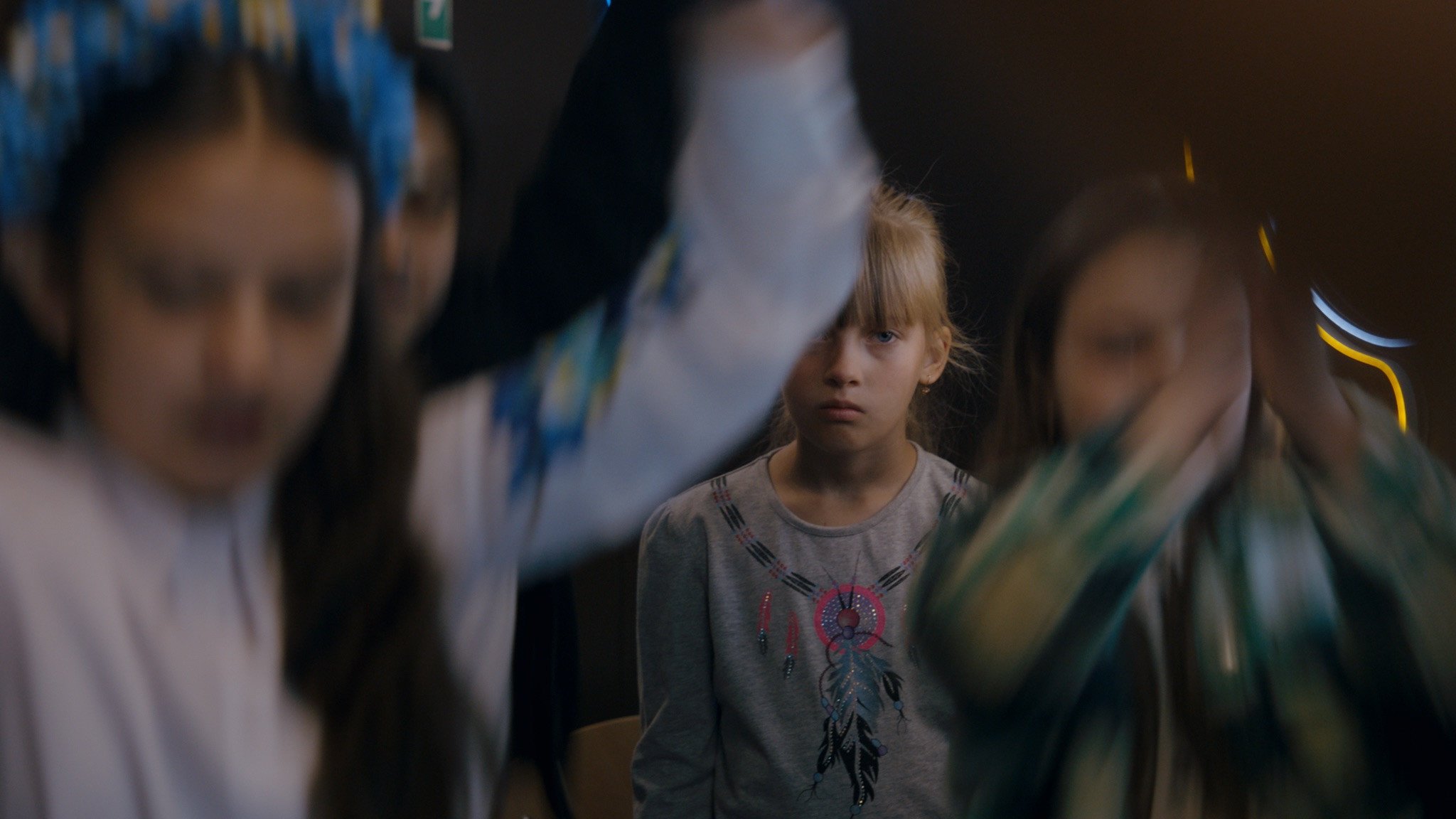
This inward state, pure and authentic to children, can be viewed as a victory for a teacher in Ukraine today. “We actually didn’t hear mentions of Russia or Putin inside the schools,” says Gornostai. “The first time we heard it was at a funeral. The priest said it, not the teacher.” The film portrays, almost accidentally, the role teachers have assumed, that of a shield, sheltering students from war, trying, it would seem, to protect innocence.
Teachers are the main adults in Ukraine who deal with the effects of war every day. They need to be a foundation of stability and sanity, like an island of calm for all these kids.
Kateryna Gornostai
Director of Timestamp
Though with children leaving and classrooms emptying, teachers are left to question their purpose. In one striking scene, filmed from afar, a woman stands in her garden pointing at a blackboard, seemingly alone. Only in the next scene do we understand that a laptop is placed before the teacher, and a bunch of kids are listening in virtually.
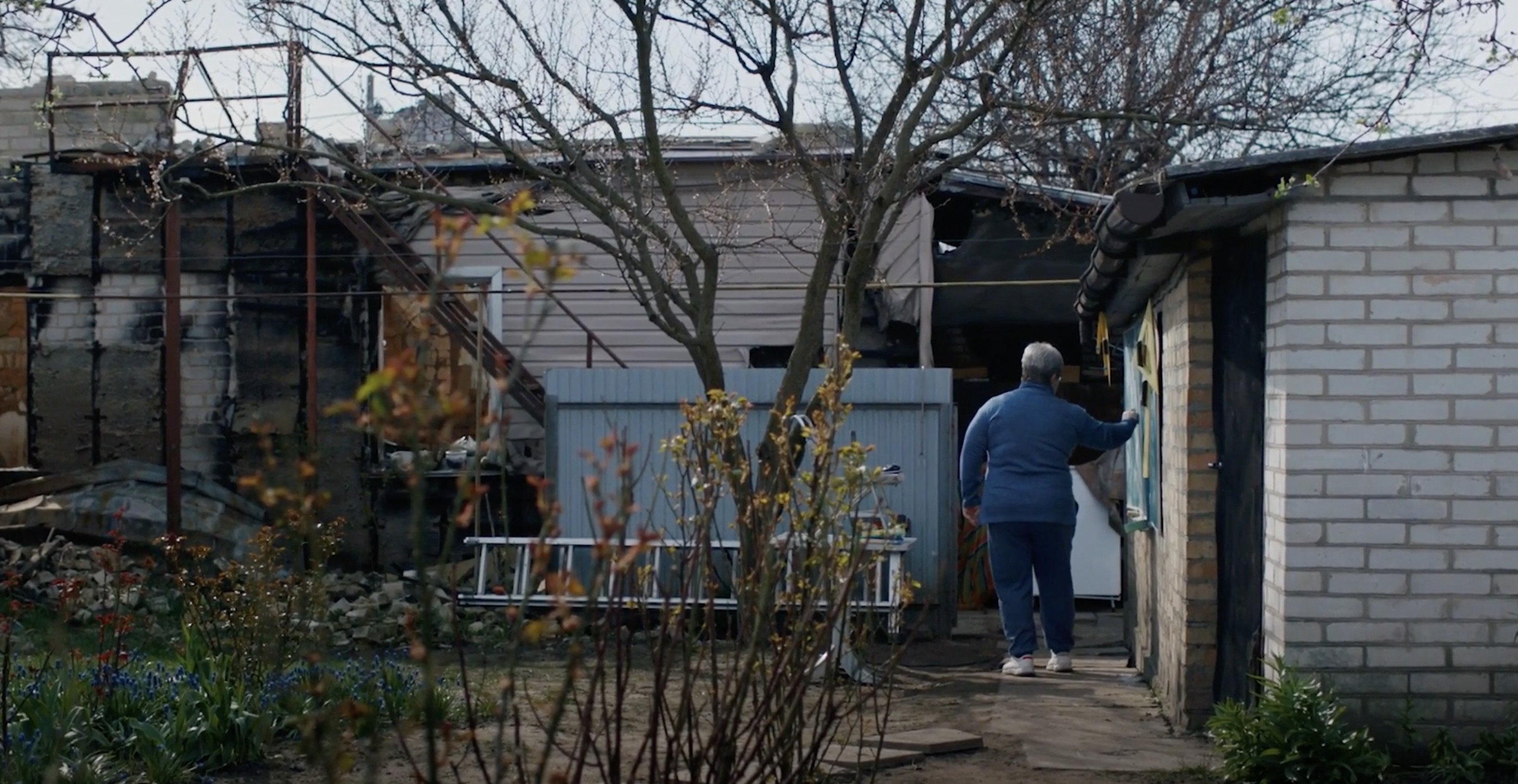
The fight to preserve Ukraine’s educational identity
Though the film is clearly an observation of children subject to the Russian invasion, one could say Timestamp is first and foremost a film about education. Gornostai brings up the topic much more than expected, speaking less about war and more about the facilities and programs that make up the education system in Ukraine.
Before the full-scale invasion, local governments, thanks to an ongoing decentralization reform, were able to secure funding for their schools independently. Many schools rebuilt from scratch—new cafeterias, soccer fields, and other improvements.
Having visited over 20 schools during her time filming, Gornostai puts it this way: “Russia just destroyed everything, and for me, that was a clear sign of their intentions here. If they can’t control something, like the media center in the classroom, their only option is to destroy it: so we can’t have it.”
In one scene, a headmaster is holding his laptop—showing a journalist over Zoom the devastation of his school, hit by a Russian missile. Gornostai partially staged the scene, as the headmaster had done the same thing for her when she first got in contact with him: “He stood up from his computer and started walking around the school, turning the camera around, saying, ‘I need to show you.’”
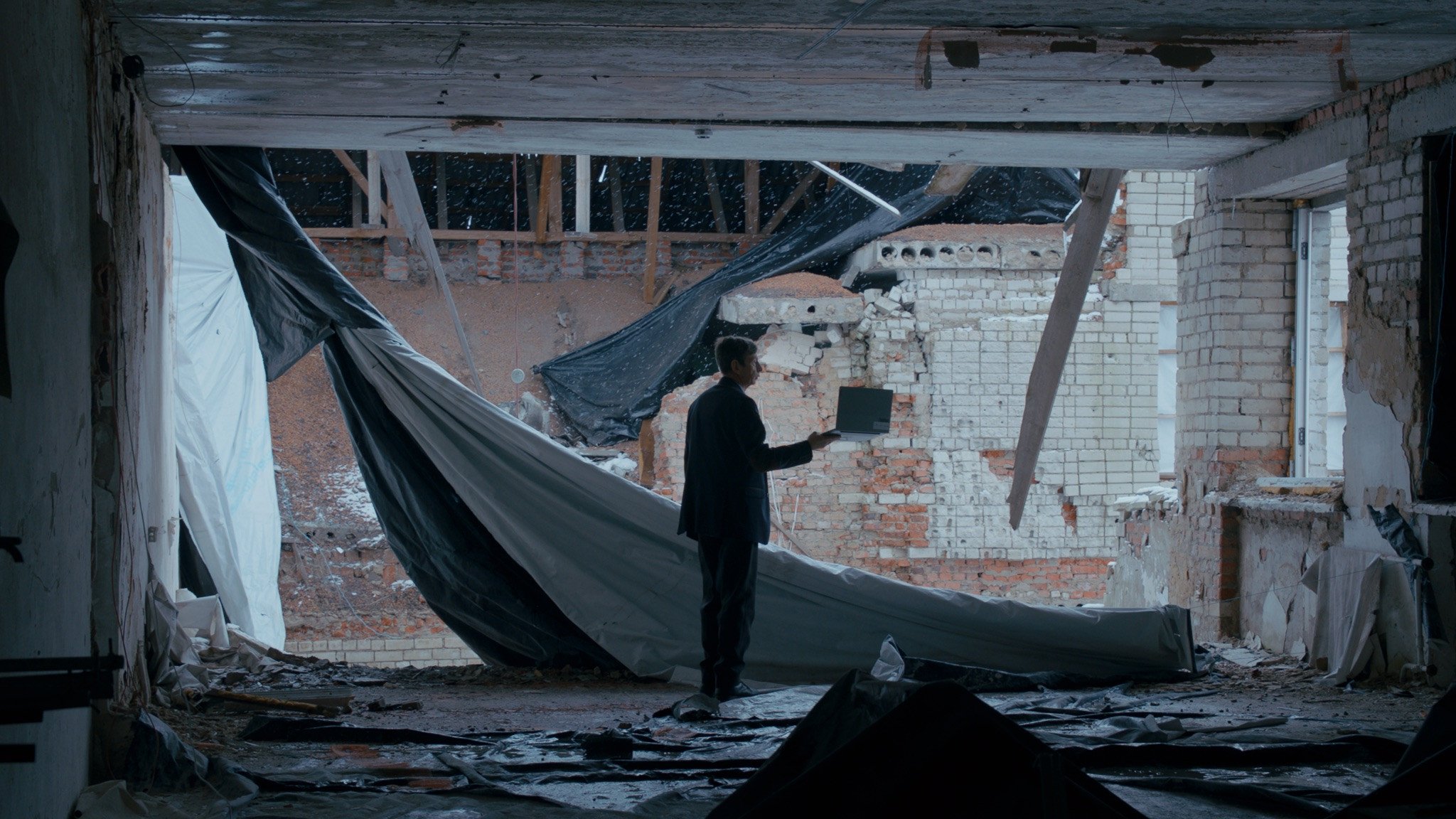
Students still study at the school, though half of it is destroyed. In a perfect example of the current conundrum, students are taught the past history of Ukraine, while that exact history takes place just meters away.
One of the history teachers at the said school, Ihor Susula, questions his 9th-grade students on 19th-century Tsarist decrees, “What is the Valuev Circular ?” —one student diligently answers. The teacher continues, outlining Russia’s successive efforts at colonizing Ukrainian culture. “And what can we call that? Totalitarisim?” he asks the class, going on: “And did they succeed?” though the students don’t have time to answer, as the air alert goes off.
Switching to a decolonized narrative began with education reform, focused on democratization, de-ideologization, and nationalization, which broke from Soviet influence. The 1989 Law on Languages and the 1990 Declaration on State Sovereignty, laid the groundwork for an education system that reflected Ukraine’s national identity.
Although that space has undeniably been distorted by Russian narratives, what is considered normal—learning the history of one’s own country—can, in Timestamp, sometimes appear tinged with propagandistic undertones. But Gornostai addresses these claims: “This is a normal thing to do, and that’s what people do at school. The fact that it can be questioned or controversial doesn’t make sense.”
Targeting schools in Ukraine
Schools are a target in Ukraine, that much is undeniable. After another Russian attack, when a Shahed drone hit a school in the Sumy region the day before the start of term, four people were killed: the headmaster, her secretary, a teacher, and the caretaker; present in order to prepare for the start of the term.
“They had all been at the school that morning, trying to prepare it for the reopening in September,” says Gornostai, looking down at her coffee as children choose books behind us, their mothers surveilling them. “It was so tragic, especially since the school hadn’t been functioning since the beginning of the invasion.”
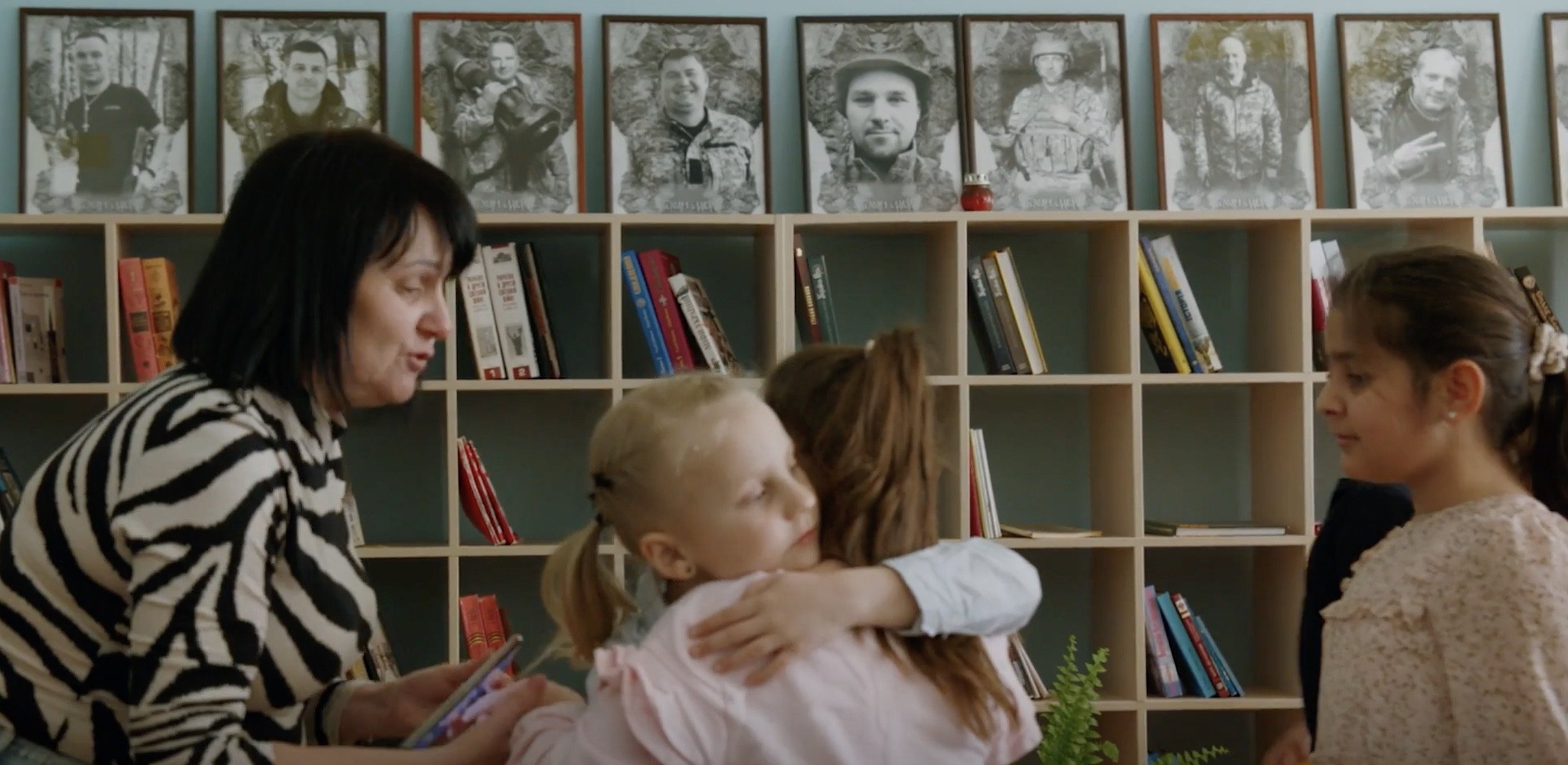
As a director, Gornostai had to go looking for these stories, had to hope for air alerts, had to film children anxious and stressed. Obviously, the split between her identity as a Ukrainian citizen and a filmmaker was difficult. “One of the most painful scenes that I had to film was when a girl saw the portrait of her dad in the classroom after he had died at the front.”
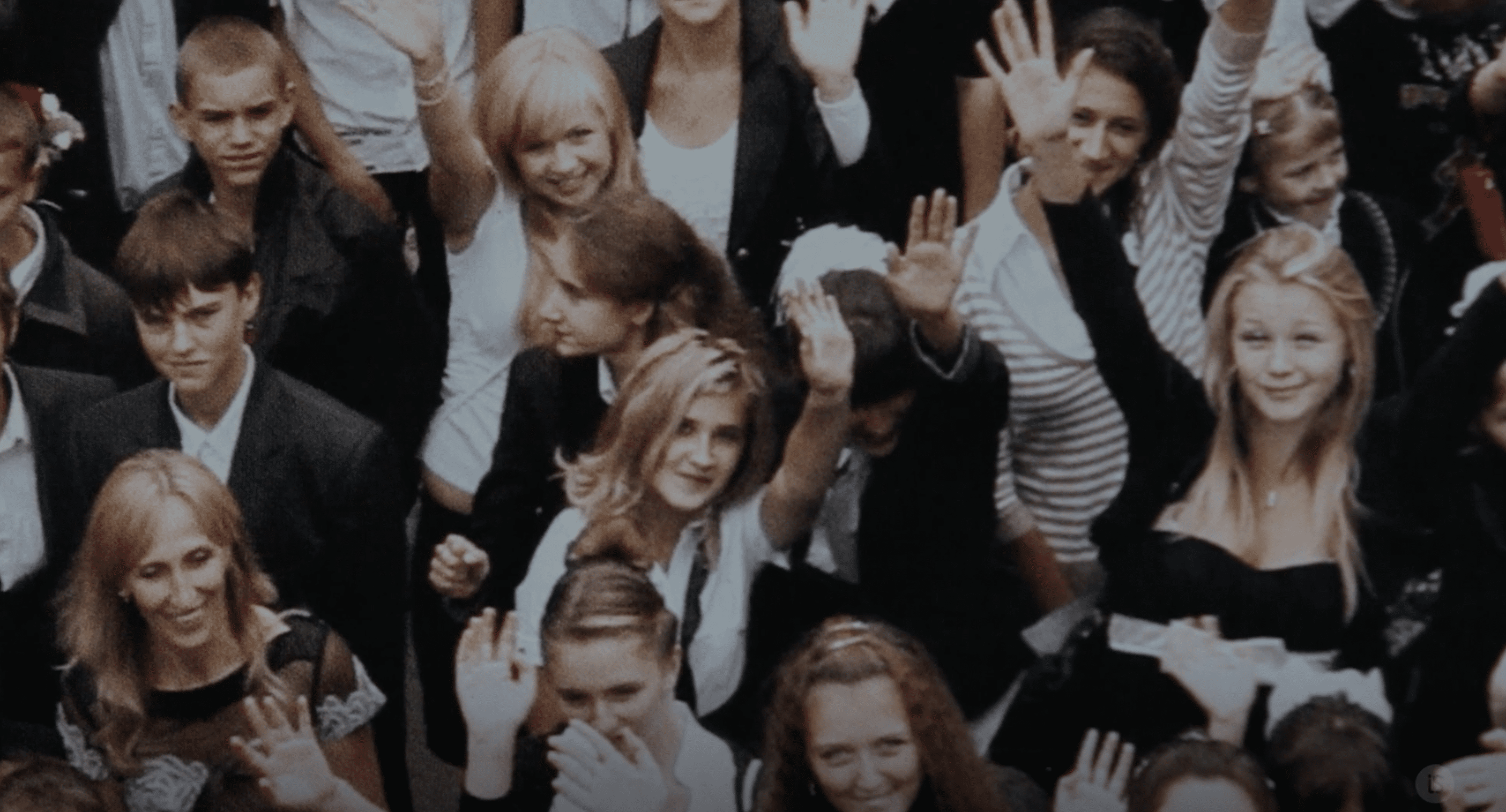
Other photographs displayed at one school haunted Gornostai. Not many kids were left studying there, as many had fled to safer regions. “We were wandering through the corridors, and I saw this bird’s eye view of the whole school taken on the last day of term,” remembers Gornostai.
The photograph was taken in 2017: “It felt both powerful and terrifying,” she says. In the film, it appears shot close-up, as if paused, silent; young faces wave up at the camera, oblivious to what would come in the next few years. These respites set the rhythm of the film and are used as spacers by Gornostai, allowing the audience to process what they are seeing.
These pauses then give way to the very real. A servicewoman, Alina Sarnatska, in one of the last scenes, speaks to a group of senior high school students. “Did you see death?” one bespectacled student asks, “How do you deal with the trauma?” inquires another.
Gornostai notes that we all want to ask those questions, though the servicewoman’s answer is stark: “I don’t know how to explain how we cope. We don’t.” The answer looms over the rest of the film and its young protagonists as they near fighting age. To raise a man in the Ukraine of today, “You can’t just not think about it,” says Gornostai, looking sideways. She herself recently had a child. “Even when you go to a doctor’s appointment to find out the baby’s sex, it’s something you think about.”
One night, Gornostai was sleeping in the corridor with her baby, while Kyiv was under attack. “It was particularly bad,” she remembers. Startled by the sound of the ongoing bombings, she woke up. “My heart was pounding from the stress,” she recounts, and though the baby didn’t wake up, she could feel his heart racing too. “It fascinated me. I realized I needed to reduce my stress to protect the baby.” Gornostai concluding the baby wasn’t stressed by the situation, but by her stress.
This telling episode exemplifies the impression Timestamp imparts. Maybe, right now, Ukrainian adults and the society they form have been tasked with retaining a sense of normality, so that school, children and quotidian life can stay protected, whilst the world beyond mutates into the unknown.
Discuss this article:



-e00d178a31a987cd514e15ad3a8c2131.jpeg "Max Klymenko wearing the Etnodim, featuring embroidery inspired by traditional Ukrainian crafts. (Source: Ian Treherne)")
-e88c01988249cd60b6f04f79d29156b7.jpeg "Damage to “Cosmogony,” the largest painting in Ukraine, following a Russian drone attack on Lutsk on October 13, 2026. (Source: @sashyyna/Instagram)")