- Category
- Life in Ukraine
What Do You Wear to a Bomb Shelter? Ukraine Holds Fashion Week as Russian Drones Fly Overhead
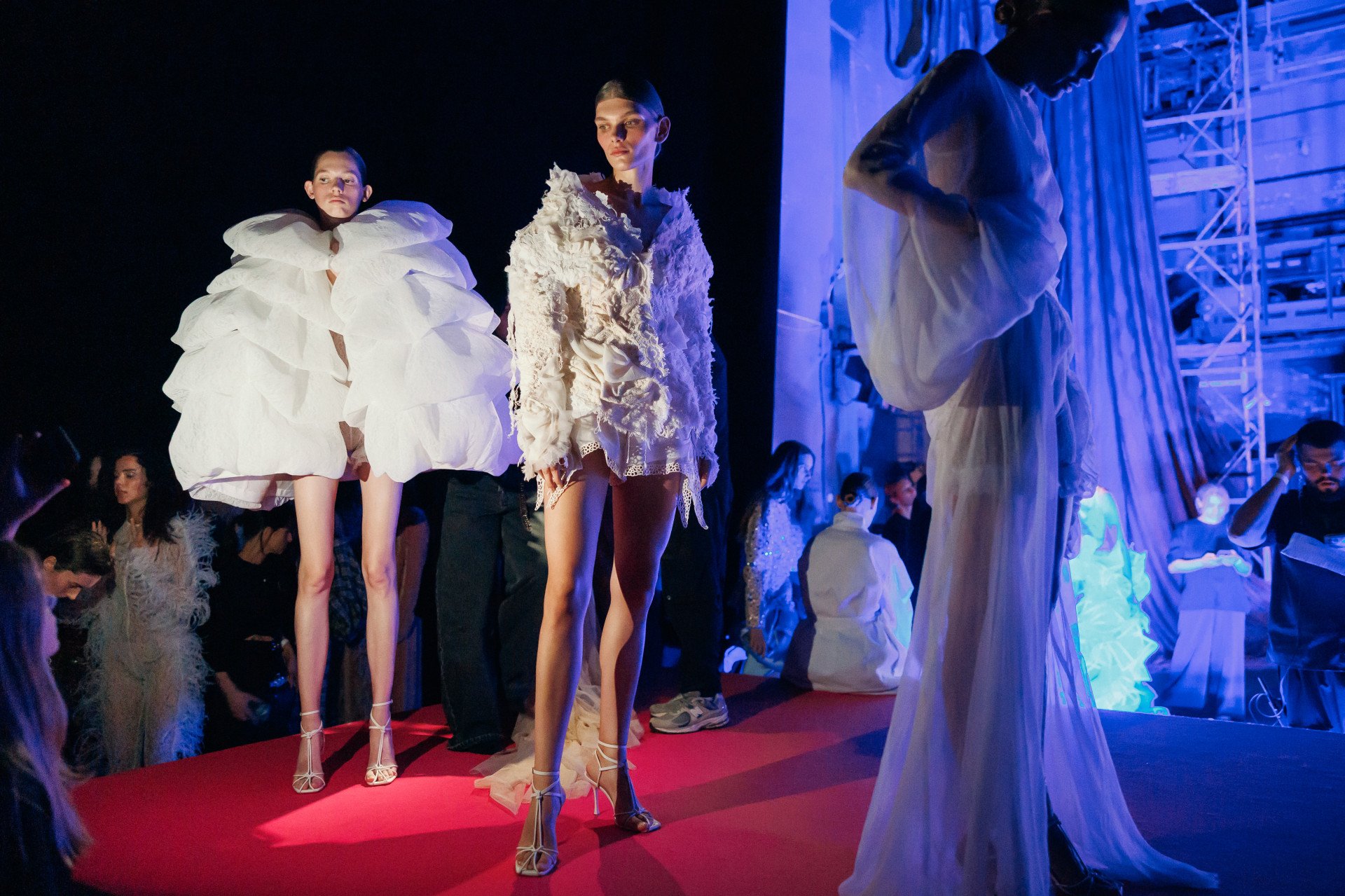
The models were walking, Gorillaz was playing, and Ukrainian air defenses were firing at Russian drones overhead. As guests descended into the bomb shelter, they slipped into empty seats beside the runway. This was Ukrainian Fashion Week 2026.
 Prefer U24 Media on Google
- Authors


Ukrainian Fashion Week (UFW) took place in Kyiv—the biggest event of the year for designers and everyone interested in fashion. While these days, once served primarily as a way to showcase the contemporary clothing being created in Ukraine, they increasingly demonstrate how Ukrainians continue to create and make sense of fashion amid war.
“Oh, now that’s not just fashionable—it’s actually useful,” one Ukrainian Fashion Week attendee comments during designer Viktor Anisimov’s show. On the runway, a model appears in an outfit where pajamas seem to have fused with a blanket. It is a look every Ukrainian understands: high fashion meets the very low desire to get out of bed. This is what people look like when they are regularly forced to sleepily trudge into a hallway or shelter in the middle of the night after an air raid alert goes off.
Ukrainian Fashion Week is the country’s premier professional fashion platform. Founded in 1997, it became the first prêt-à-porter fashion week in Eastern Europe. In 2022, after the start of Russia’s full-scale invasion, Ukrainian fashion partly relocated to international runways, before returning to Kyiv in September 2024. This year’s Spring/Summer 2027 season took place in the capital from September 2 to 6, bringing together 50 Ukrainian brands.
For many years, UFW’s main venue has been Mystetskyi Arsenal, a vast former factory complex. During the Russian Empire, weapons were manufactured, repaired, and stored here. In independent Ukraine, the complex was transformed into a vibrant cultural venue. But Russia brought war back here: in June 2026, a Russian drone strike sparked a fire that damaged around 2,000 square meters of the complex.
Just two months later, the Arsenal nevertheless hosted a major fashion week.
When the war enters the runway
The first show of the Ukrainian Fashion Week season was Opera, a new collection by the COAT by Katya Silchenko, whose clients include Maye Musk, Rita Ora, Coco Rocha, and Ukraine’s First Lady Olena Zelenska. The collection grew out of reflections on women, their changing roles in society, and the moment when historical imagery encounters the present day.
The show was held at a separate venue, the National Opera of Ukraine. Its building opened in 1901 and has survived fire, changing eras, and the trials of war. During World War II, this cultural landmark was also attacked by an aggressor: a German aerial bomb struck the building, piercing the roof and the auditorium floor, but failed to explode. The Opera endured, remaining a place of music, art, and life. The team at the COAT by Katya Silchenko saw an important parallel with the collection: times change, but art lives on.
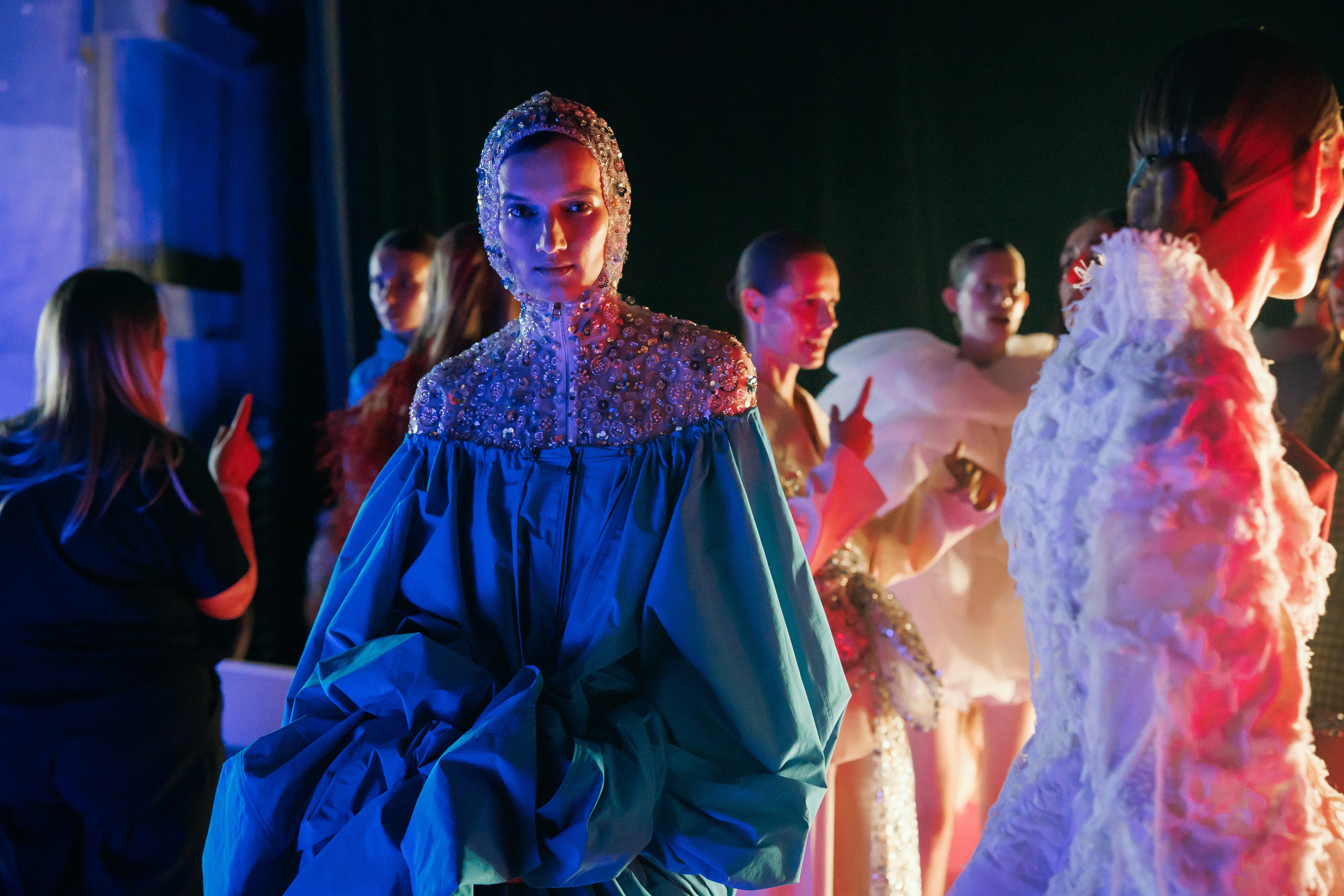
If a modern nomad is someone who constantly moves between cities, countries, and environments, Ukrainian nomadism in recent years has acquired another, tragic dimension: searching for a new home after being forced to leave the old one behind. Nearly 10 million Ukrainians have been displaced by Russia’s full-scale aggression. This is among the themes explored in Urban Nomads, the new collection by POUSTOVIT, one of Ukraine’s most influential designers.
In it, the designer explores how people search for their own place in a constantly changing world. The clothes themselves are also in motion: pieces can be layered, transformed, and interpreted in different ways.
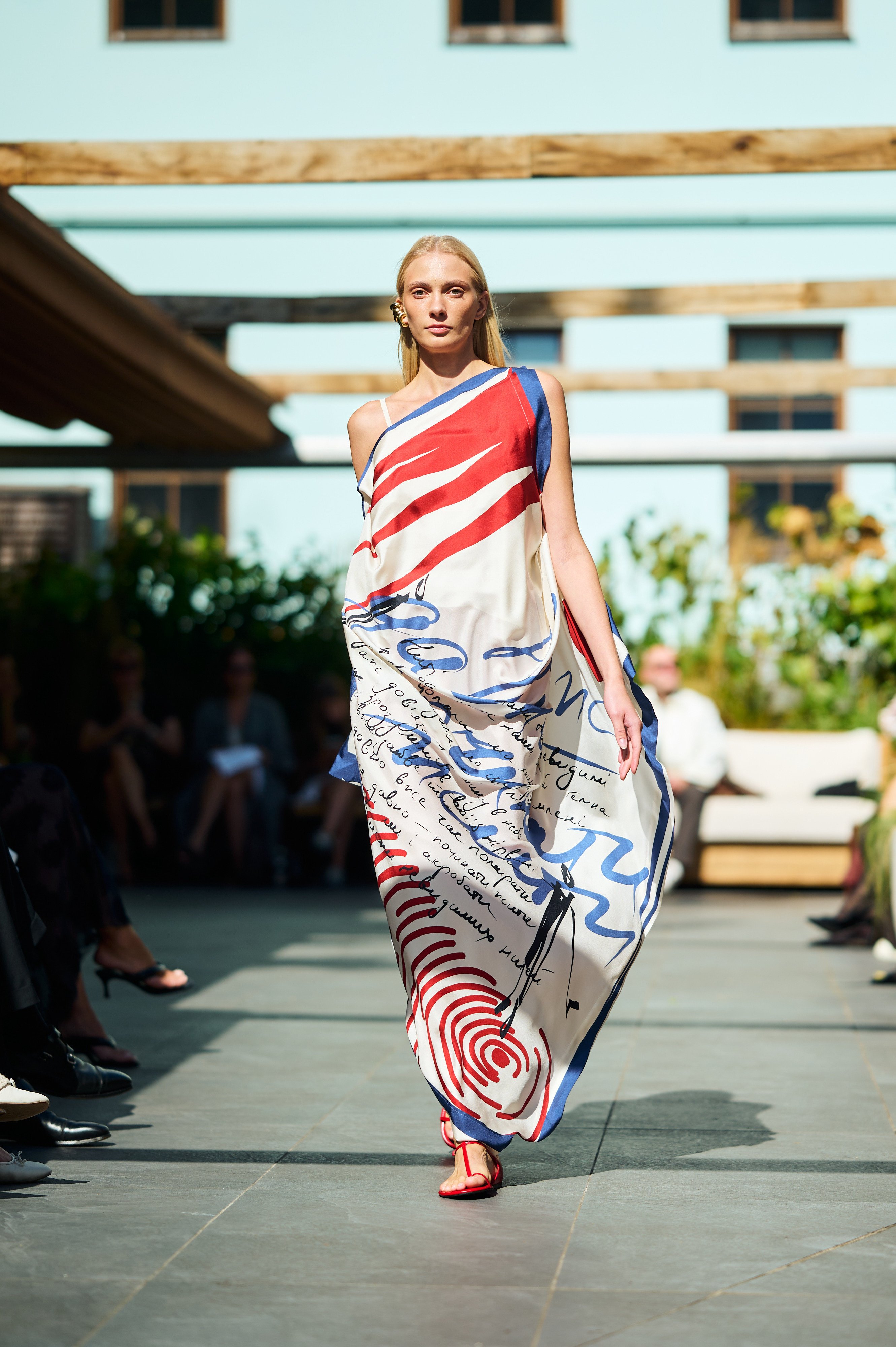
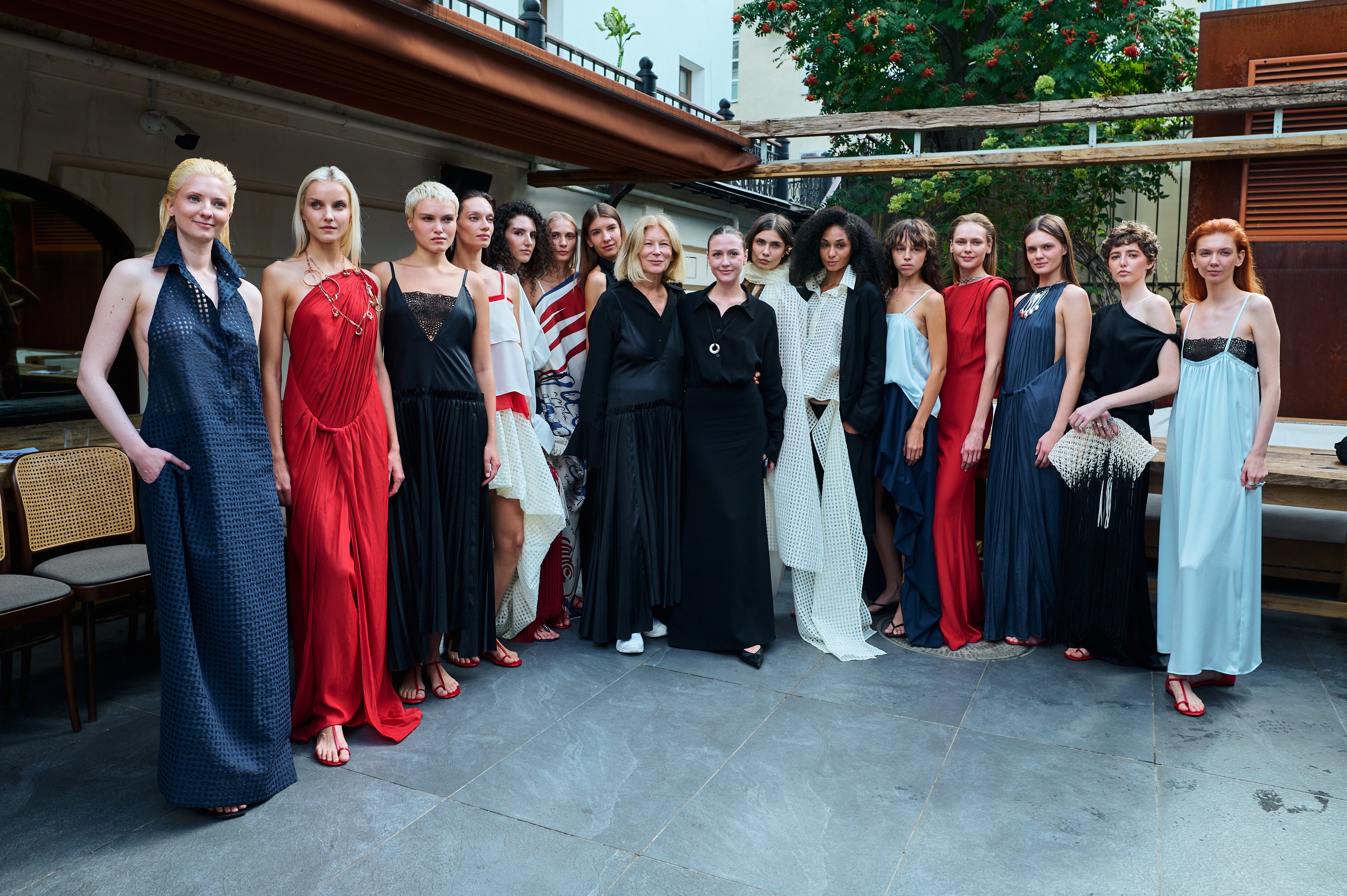
At the Arsenal’s main venue, SIDLETSKIY presented Woven by Nature, a collection exploring natural materials, tactile textures, and handcraft techniques, reimagined through the brand’s signature structural forms and minimalist aesthetic.
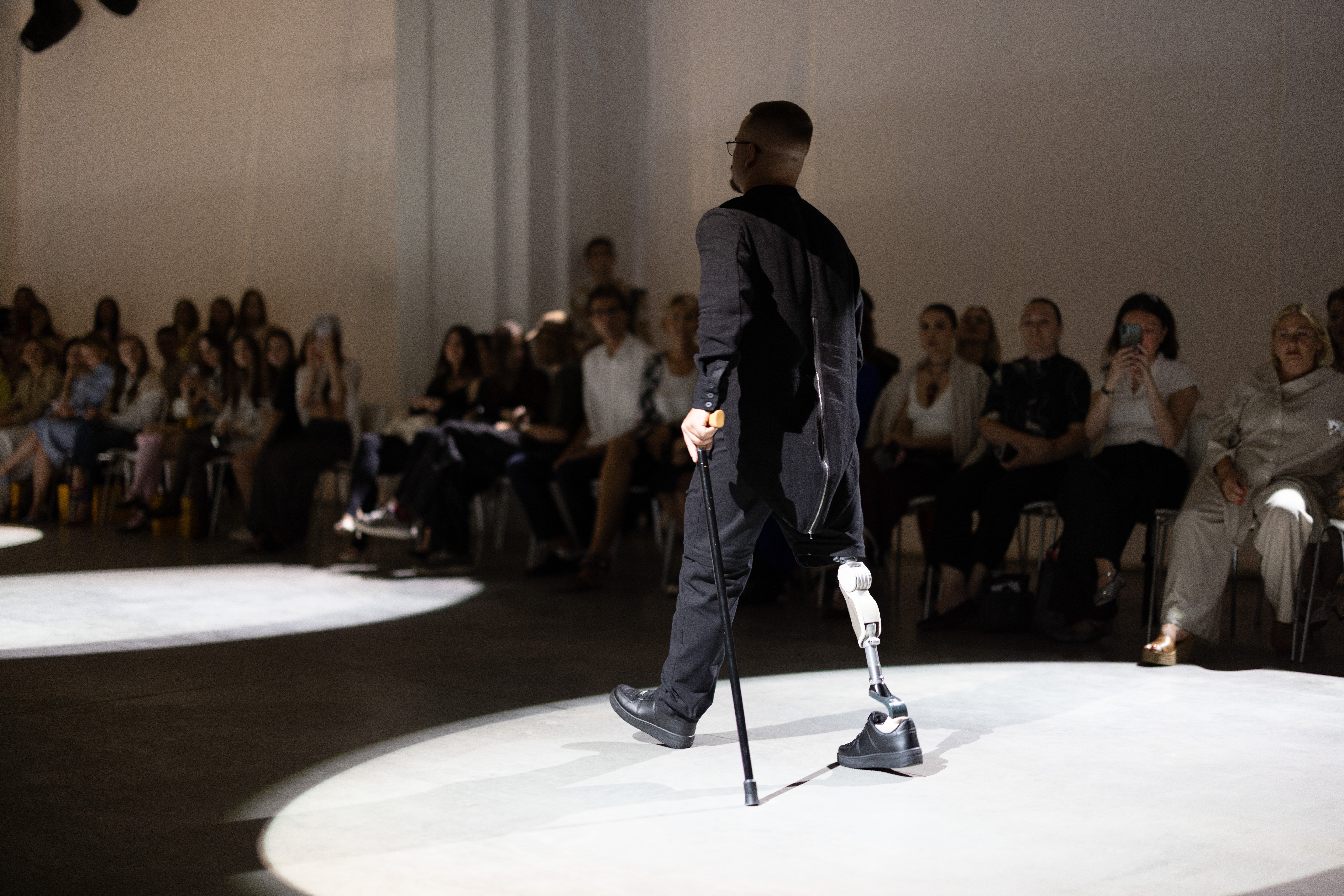
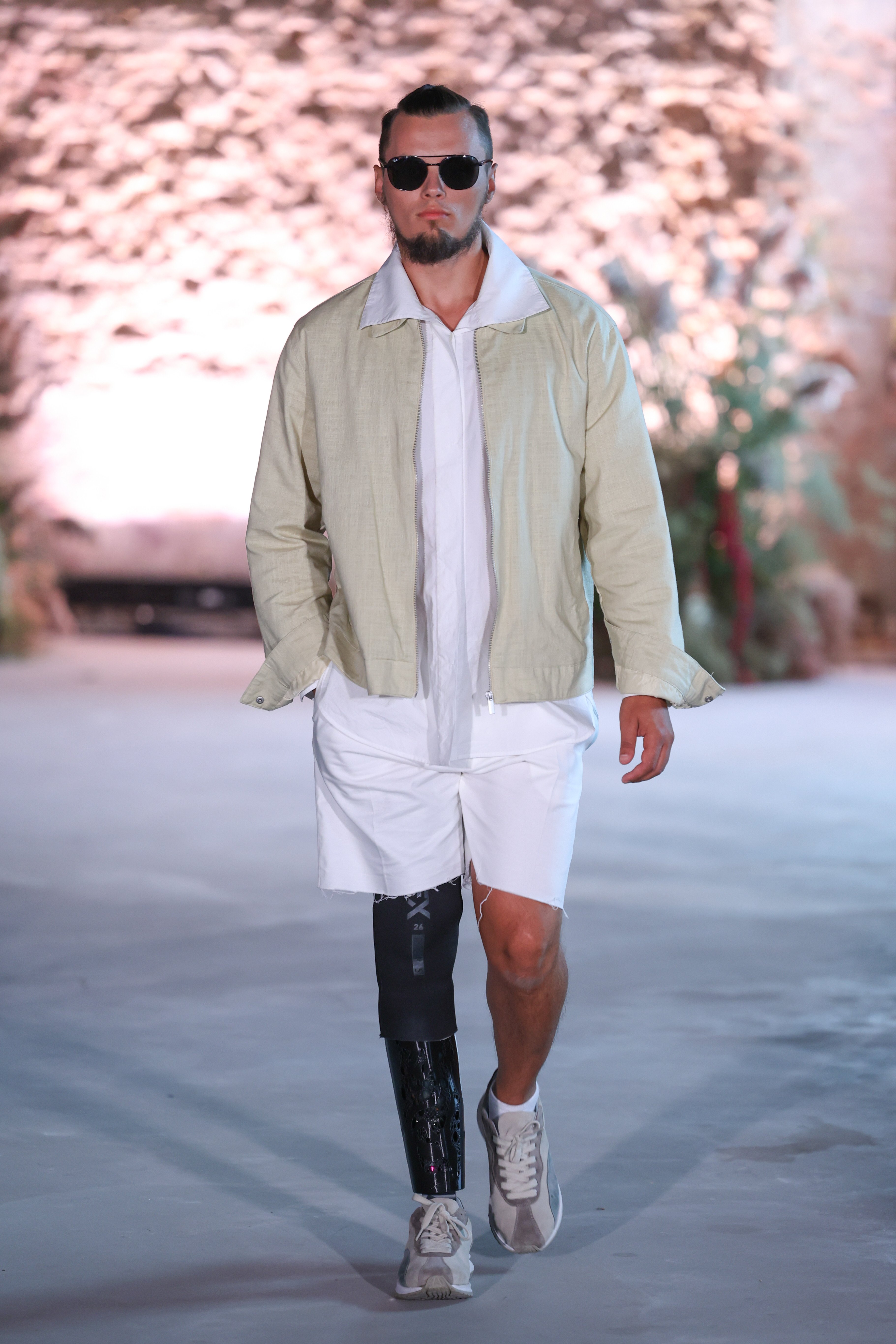
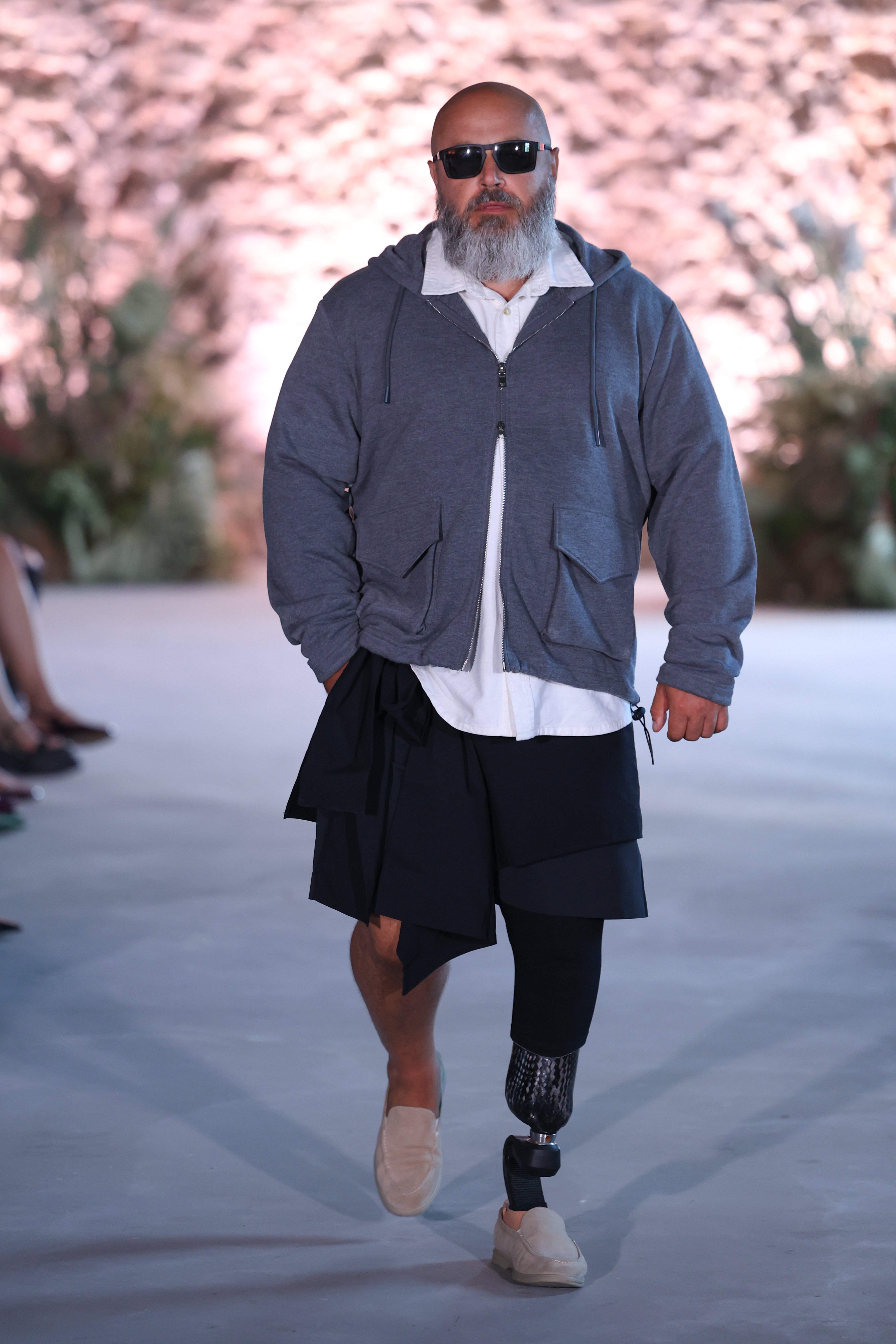
At fashion shows, applause usually comes after the runway presentation—and the most discerning spectators may do little more than snort skeptically. During SIDLETSKIY’s show, however, applause rang out almost continuously, directed at Ukrainian veterans with amputations who took to the runway that day.
In collaboration with the U+ System Prosthetics and Rehabilitation Center, the designer created five looks constructed around the specific needs of people who use prostheses. Functional solutions were integrated directly into the designs to make dressing easier, provide access to prosthetic areas, and ensure freedom of movement. What’s more, together with the Zhyty Nazustrich platform, SIDLETSKIY unveiled prosthetic covers that turn the prosthesis into an integral part of the look.
“Сontemporary fashion isn’t just about form and aesthetics,” founder Ihor Sidletskiy said. “It’s about giving people the opportunity to feel like themselves in their own clothes. We want to show that functional solutions can be part of the design, and that a prosthesis doesn’t have to be something you hide—it can be an element of personal style.”
Runway moves to a bomb shelter
The VIKTORANISIMOV show was particularly symbolic. Military details have long been part of the designer’s style, but they have now taken on a new meaning. His latest collection is about people living in a reality permeated by war.
Tarpaulin occupies a special place in the collection — a coarse material typically associated with temporary shelters and rescue operations. Here, however, it is transformed into lightweight outerwear.
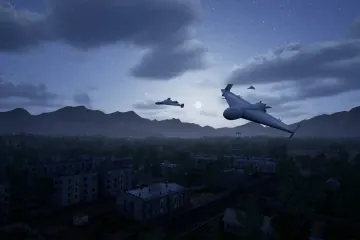
Viktor Anisimov had decided in advance to stage his show in a shelter to demonstrate the conditions in which Ukrainian fashion is now forced to operate. The decision proved prophetic: just before the runway show, two Shahed drones appeared over Kyiv.
The sounds of Ukrainian air defenses mingled with the music of Gorillaz: I ain’t happy, I’m feeling glad; I got sunshine in a bag; I’m useless, but not for long, The future is coming on.
Meanwhile, people descending into the shelter midway through the show made their way to empty seats alongside models walking the improvised runway. At times, the guests’ outfits were more elegant than the models’ somber looks in tarpaulin and khaki.
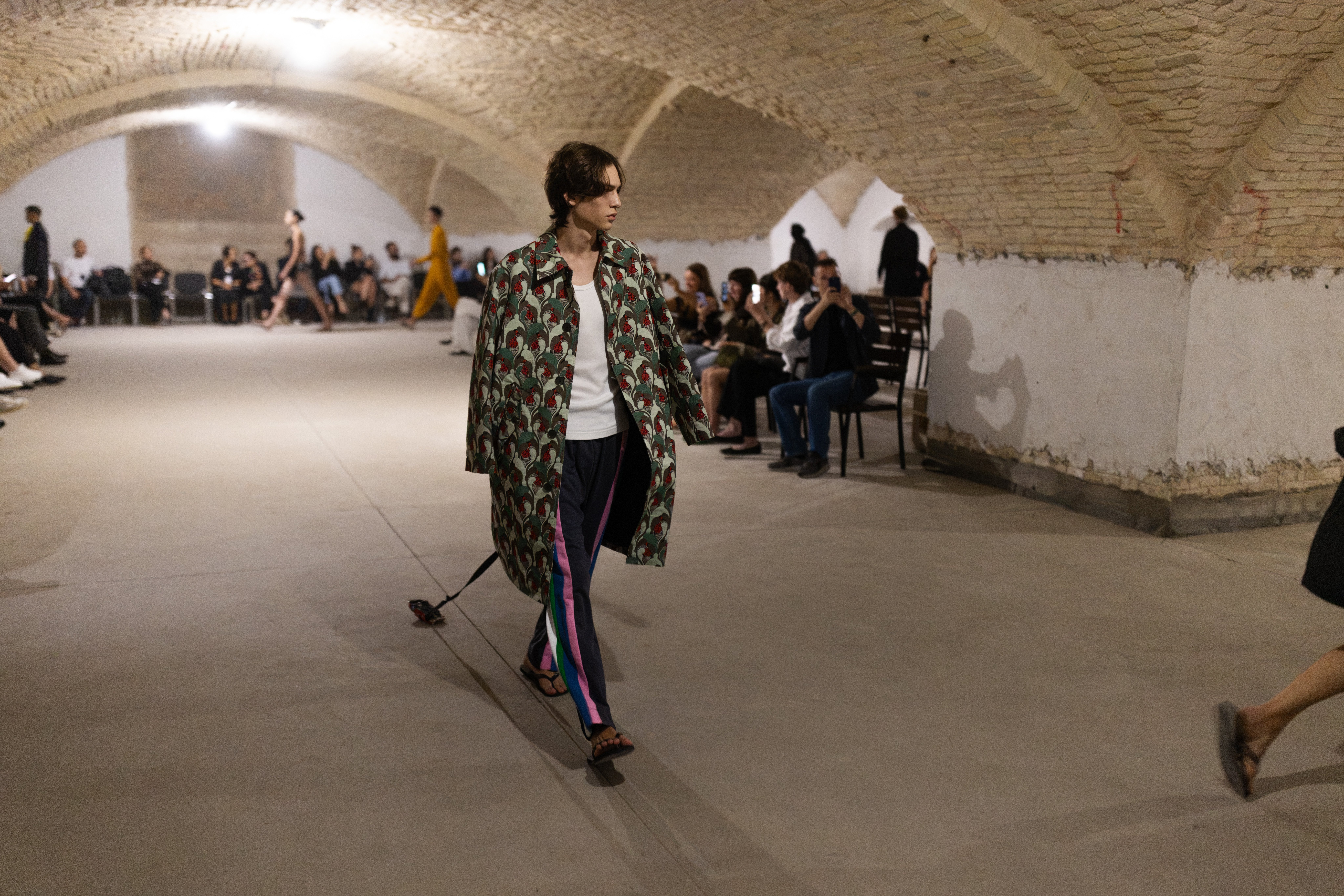
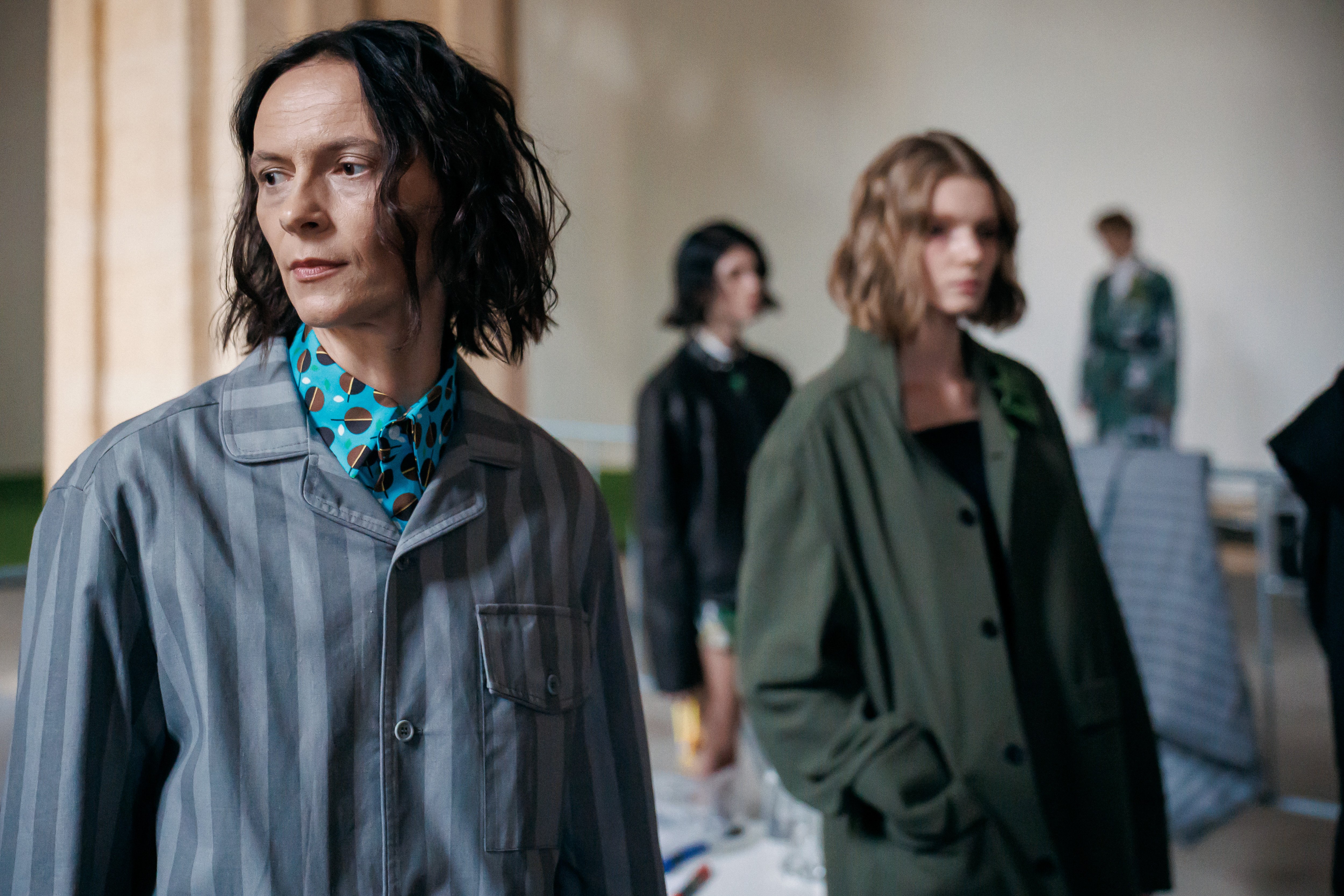
Air raid alerts also forced several other brands to present their new collections in a shelter, including VOROZHBYT&ZEMSKOVA, a UFW resident since 1997.
Fashion with a purpose
The war made itself felt not only on the runways and in air-raid notifications. In a BBC segment filmed in spring 2026, blogger Yana Metiolkina was dubbed Ukraine’s Carrie Bradshaw. She regularly jokes about what the life of the Sex and the City columnist would look like in Kyiv during the full-scale invasion. Yana came to UFW wearing an outfit made from defective components of 3D-printed drone equipment.
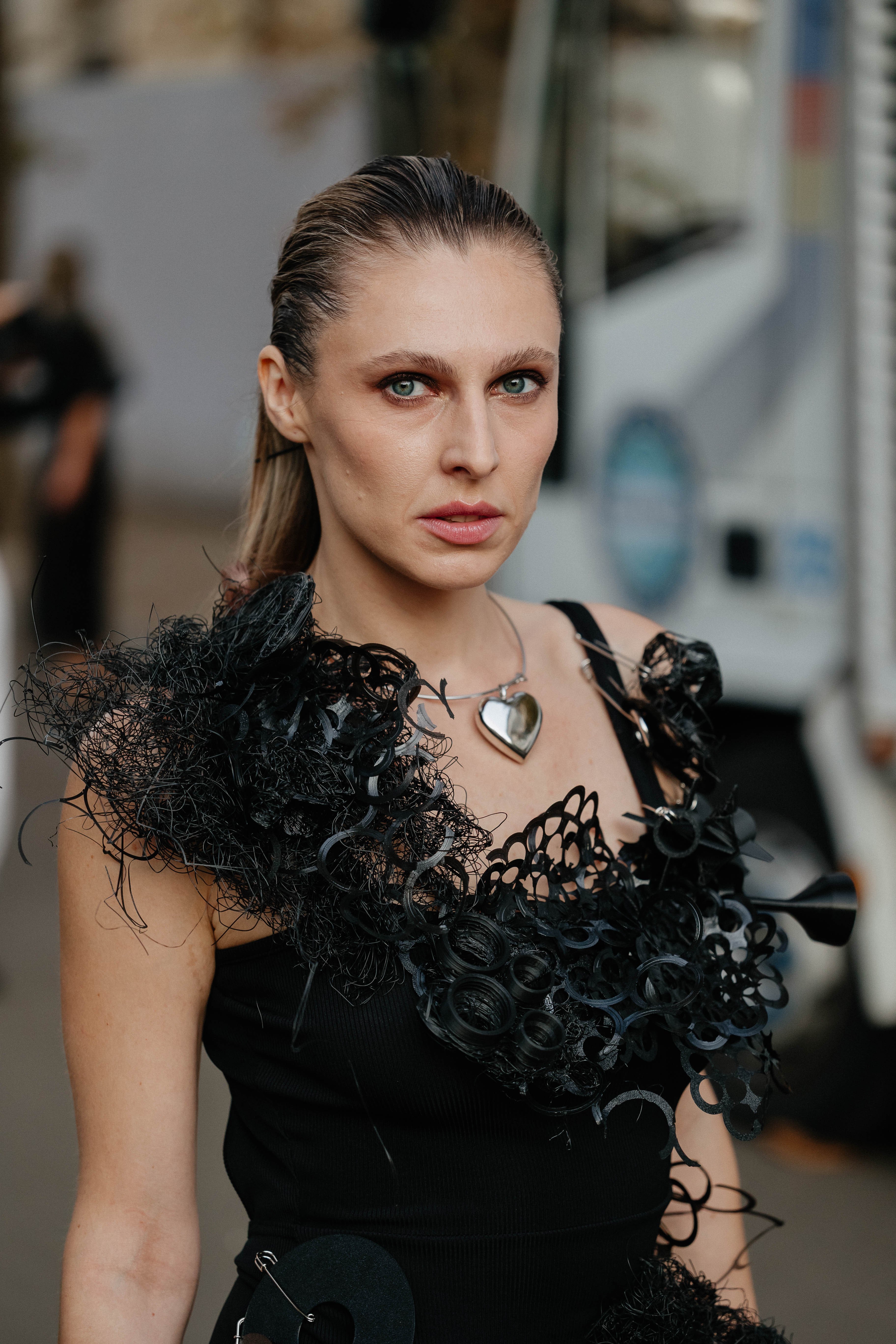
“It took me eight hours to make this dress,” Yana laughs in an interview with UNITED24 Media. “While the properly made drone components are helping neutralize the enemy on the front line, I turned the defective ones into a statement fashion. These are the times we live in, so this is the fashion we get.”
She says the dress also comes with a fundraiser launched by the blogger: the money will go toward destroying Russian suicide drones that attack Ukrainian cities every day. By the end of fashion week, Yana and her inventive dress had already helped raise $2,000.
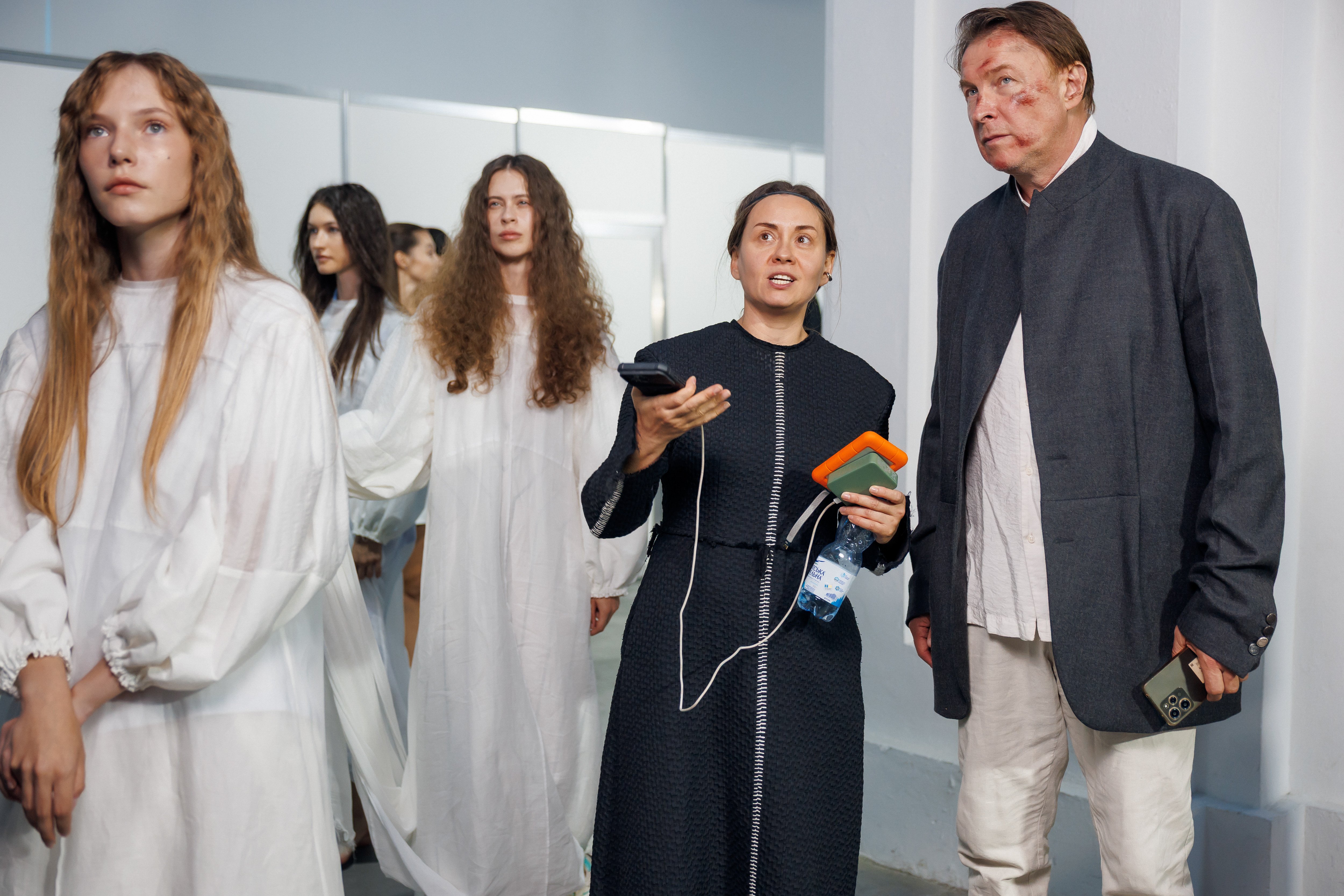
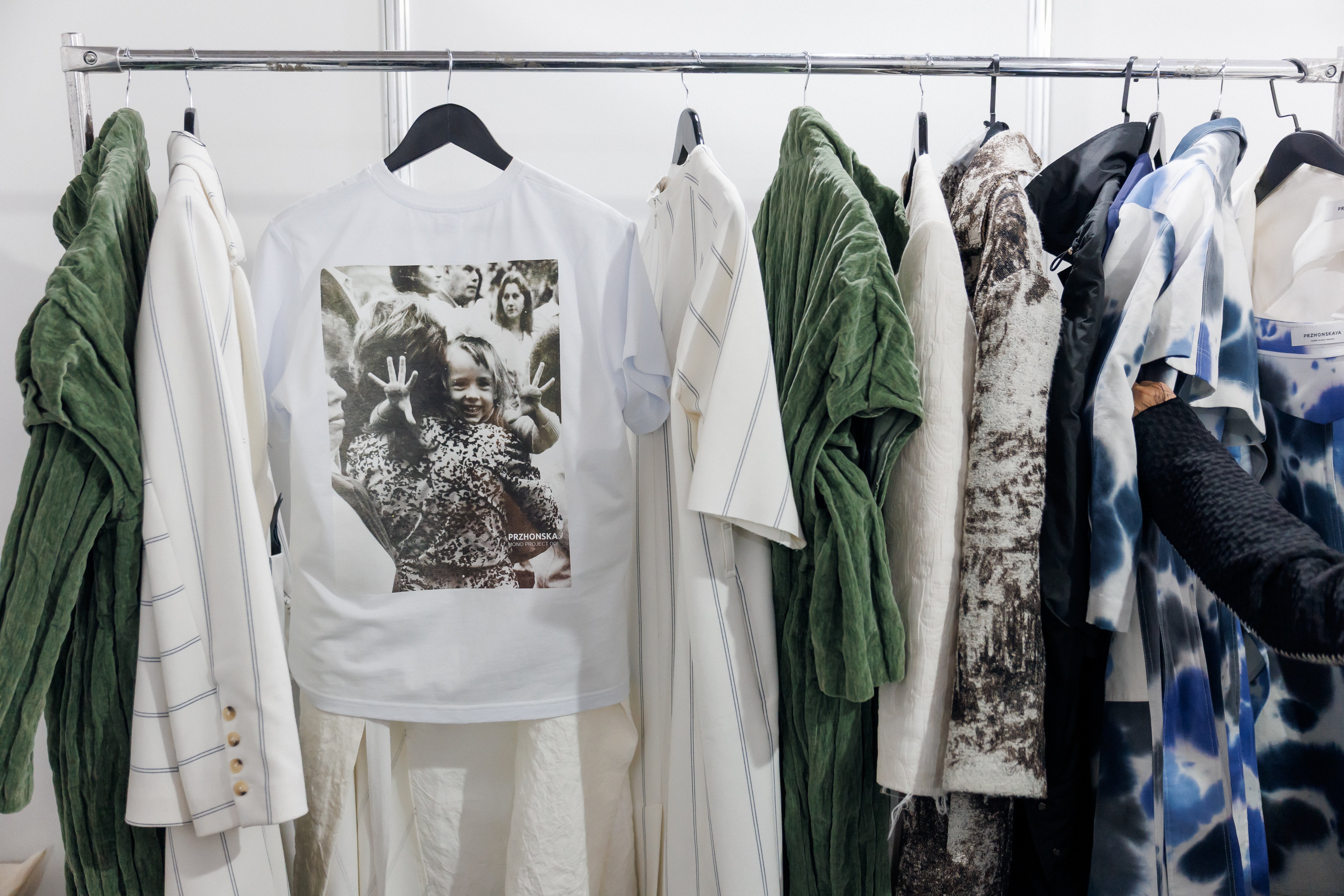
Other fundraisers and charitable initiatives were taking place at the same time. The well-known brand PRZHONSKA continued its support for the Faces of Heroes project, which helps Ukrainian service members who have suffered severe facial injuries. 100% of the funds raised at the brand’s event were donated to produce maxillofacial implants for Ukraine’s defenders.
Made in Ukraine, worn around the world
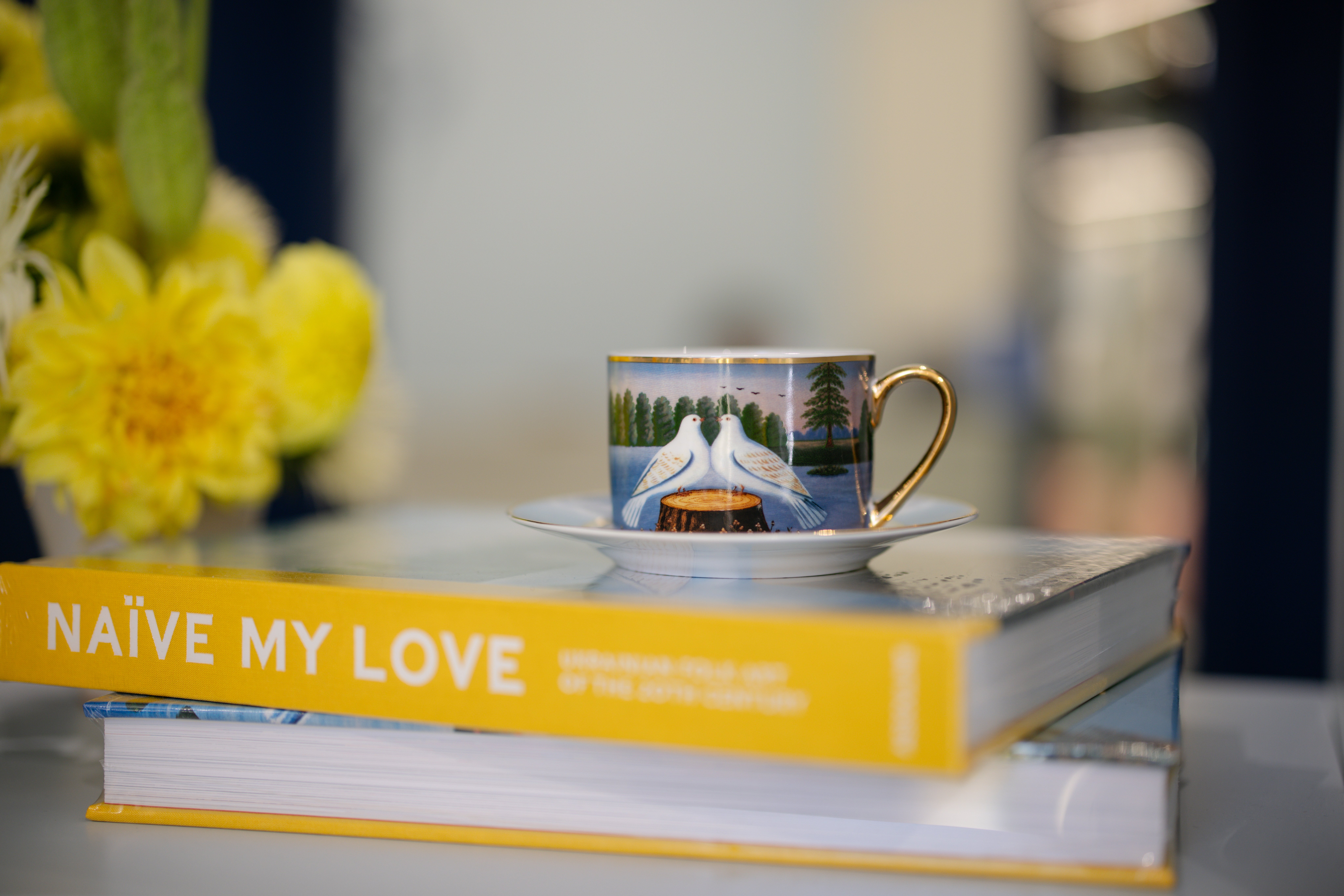
In July 2023, Kylie Jenner, founder of cosmetics brand Kylie Cosmetics and an influencer, posted an Instagram photo of a get-together with friends at home. In the shot was tableware from the Indigo collection by Ukrainian brand Gunia Project. Until then, the brand—which produces jewelry, ceramics, clothing, textiles, and décor inspired by traditional Ukrainian culture—had no idea Jenner owned any of its products.
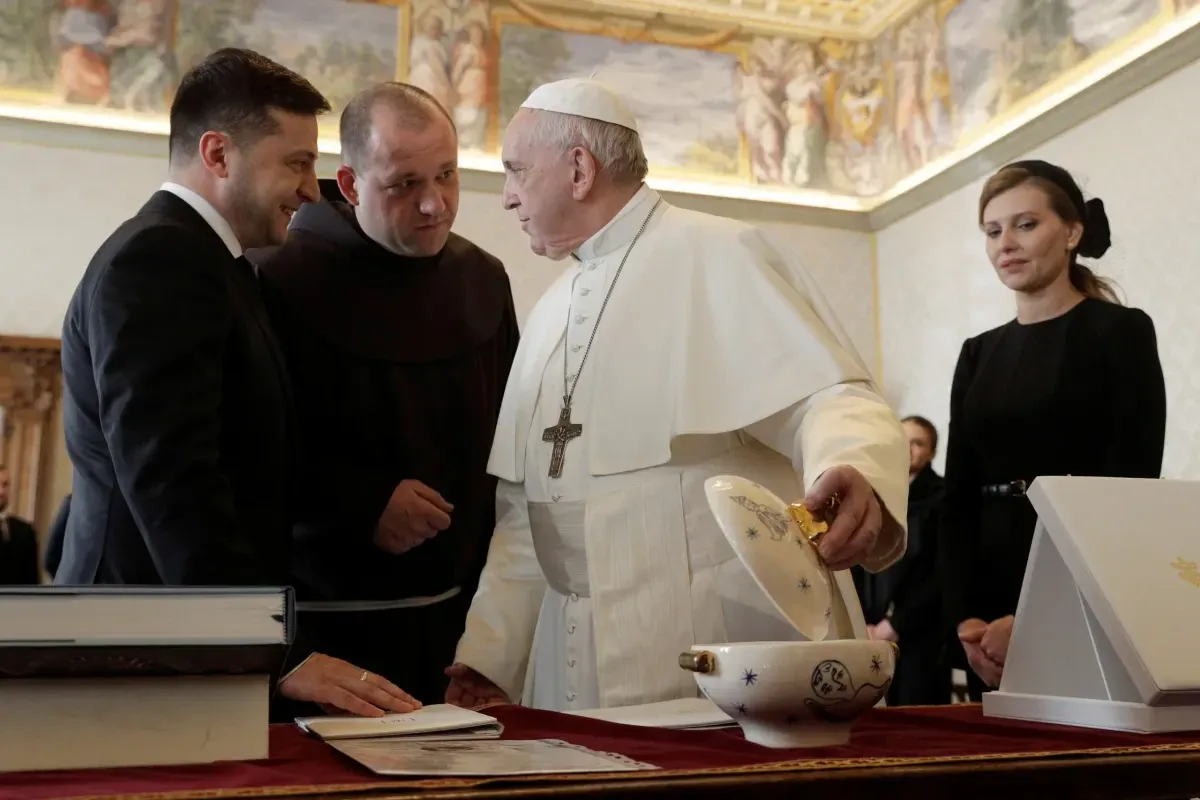
Gunia Project has been around since 2019, growing from a hobby into a brand whose pieces are now owned by Japan’s Emperor Naruhito, Brigitte Macron, Boris Johnson, and Lily Collins. Ukrainian President Volodymyr Zelenskyy personally presented one of the brand’s Christmas makitras, a traditional Ukrainian earthenware bowl, to Pope Francis at the Vatican.
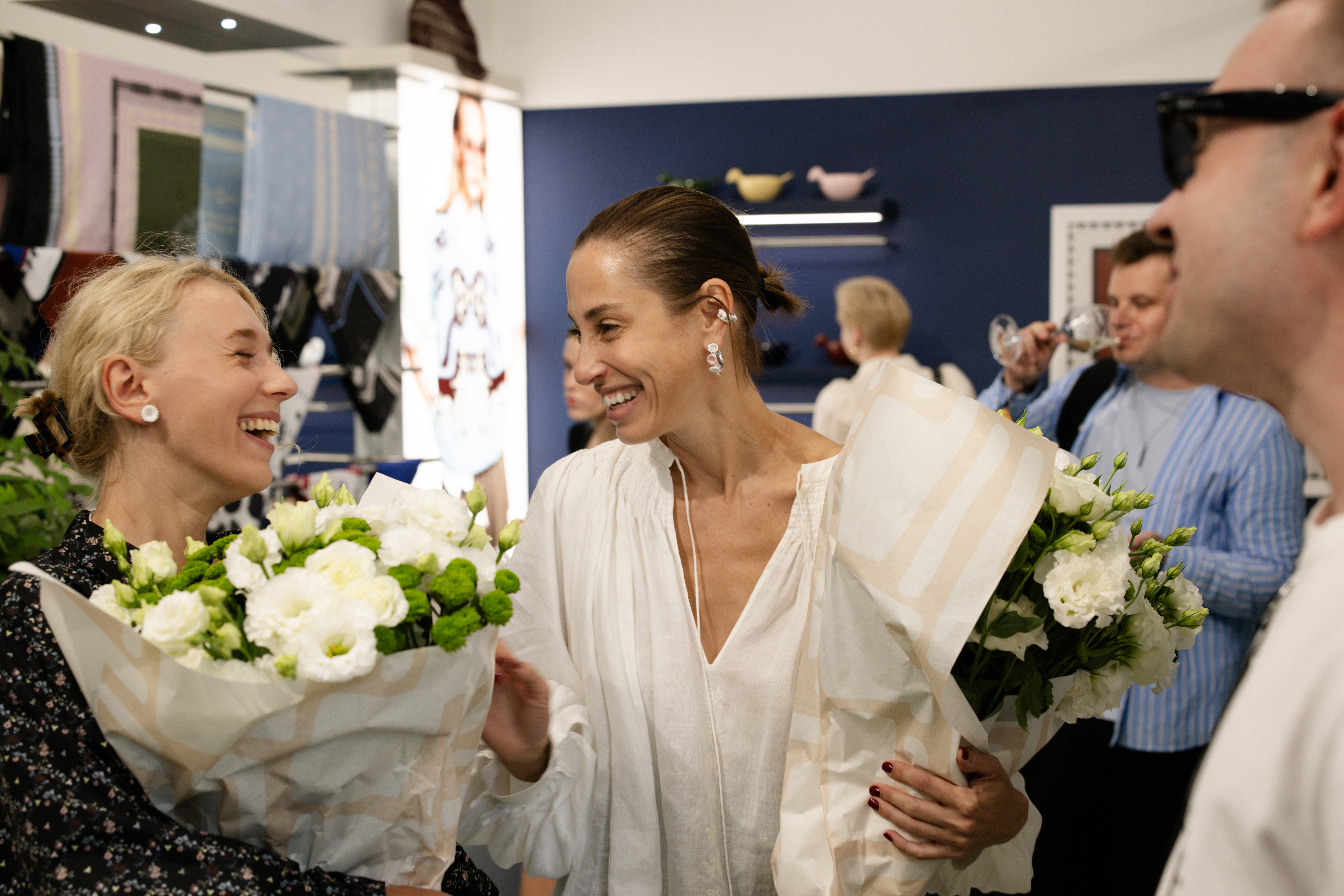
In addition to the runway shows themselves, UFW featured lectures, panel discussions, presentations, and other events. Gunia Project also held a grand reopening of its renovated store in central Kyiv. The day before, a jet-powered Shahed had struck a building of the Security Service of Ukraine. A couple of days earlier, two more drones had attacked Tarasivska Street. The sites of those strikes are only a few minutes on foot or by car from the store selling charming objects owned by emperors and influencers.
Despite all of this, the store reopened, and Gunia, like dozens of other brands, continues to operate.
“Unfortunately, for the international fashion industry, it doesn’t matter whether there is a war in Ukraine,” says Olha Tsarehradska, founder of Frame Fashion Consultancy, which helps Ukrainian brands enter the global market. “This is business: contracts, deliveries, products that have to reach a buyer’s store on time or be delivered directly to an international customer. So it’s important to remain reliable partners no matter what. For our designers, that is an enormous challenge right now because of attacks, disruptions to work schedules and deliveries, and interruptions to their teams’ work.”
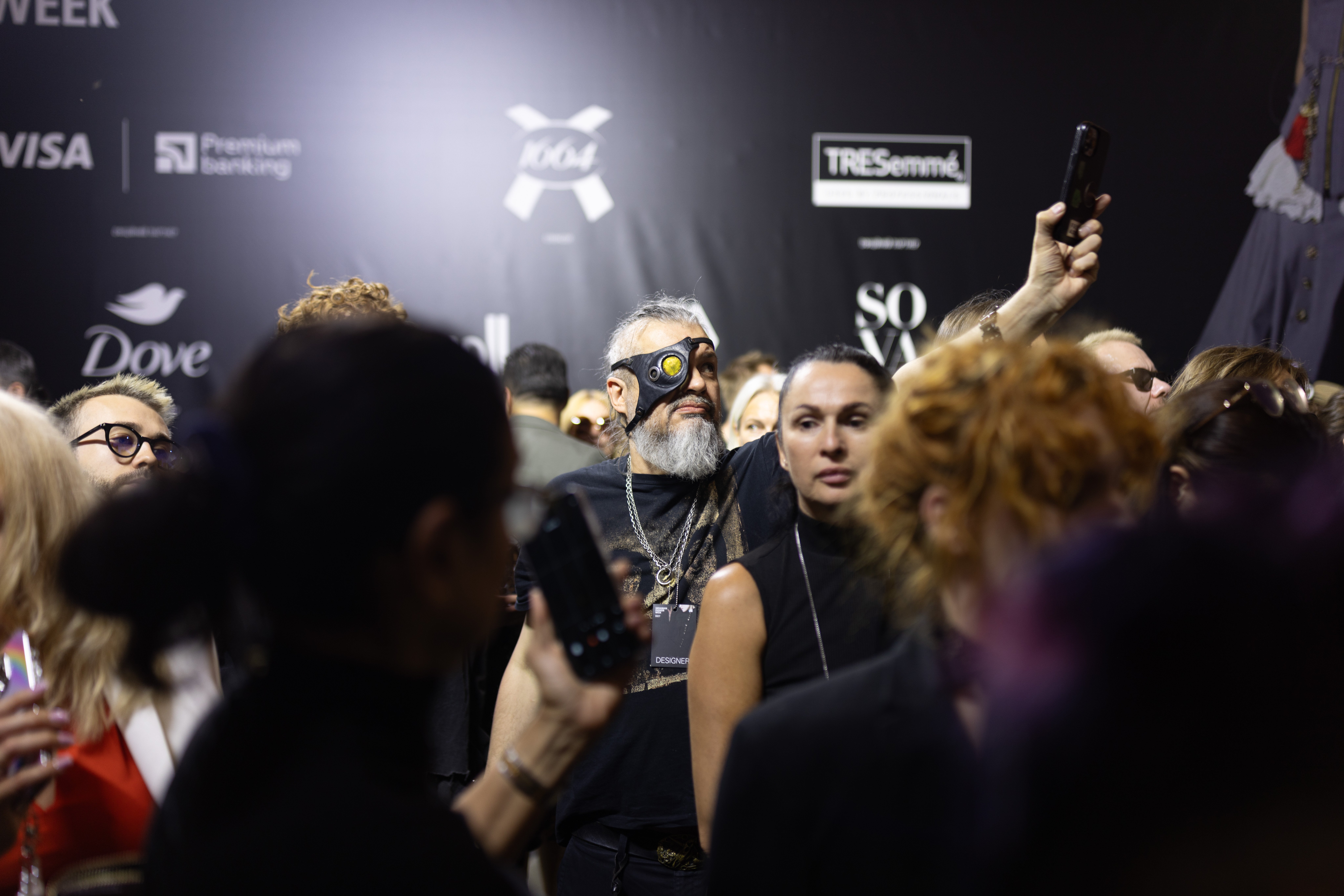
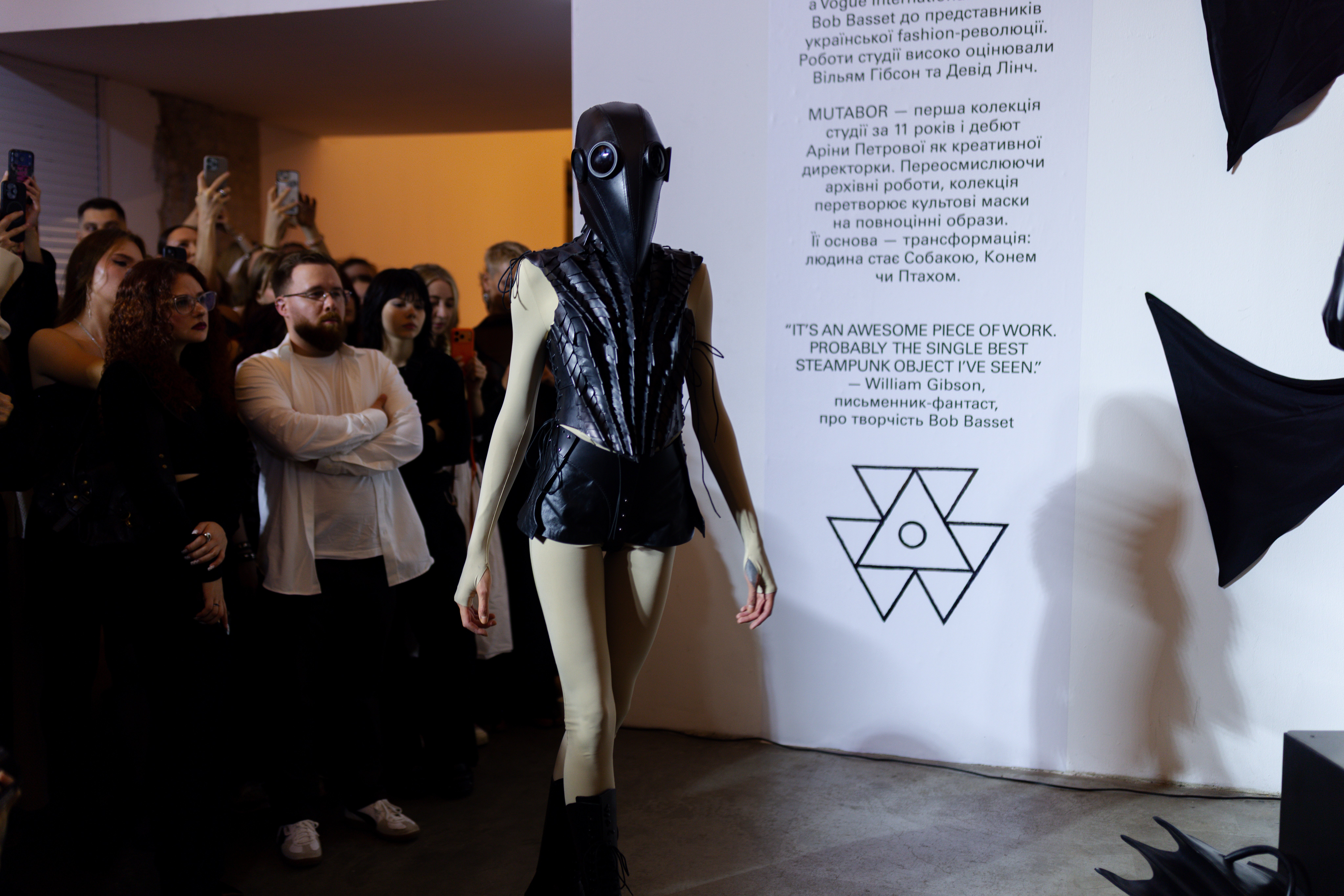
At the main venue, Bob Basset held a presentation. Back in 2006, the brand created a dragon-shaped backpack—and the story has periodically gone viral ever since. In 2015, for example, a story about a replica of Bob Basset’s Dragon Backpack was shared nearly 100,000 times and received around 44,000 likes on Facebook.
The leather masks and accessories that began as the work of a small studio in Kharkiv—now a frontline city—gradually became an international hit. Over the years, they have been used by Metallica, Avril Lavigne, and Givenchy, and for the Swedish band Ghost, they have effectively become part of the group’s DNA.
This year’s Mutabor was the art studio’s first full-fledged fashion collection since 2015. For three looks, the team created new accessories for the hands and feet, as well as clothing with a fetish aesthetic that extends the mask's anatomy across the entire body.
Weaving Ukrainian memory into fashion
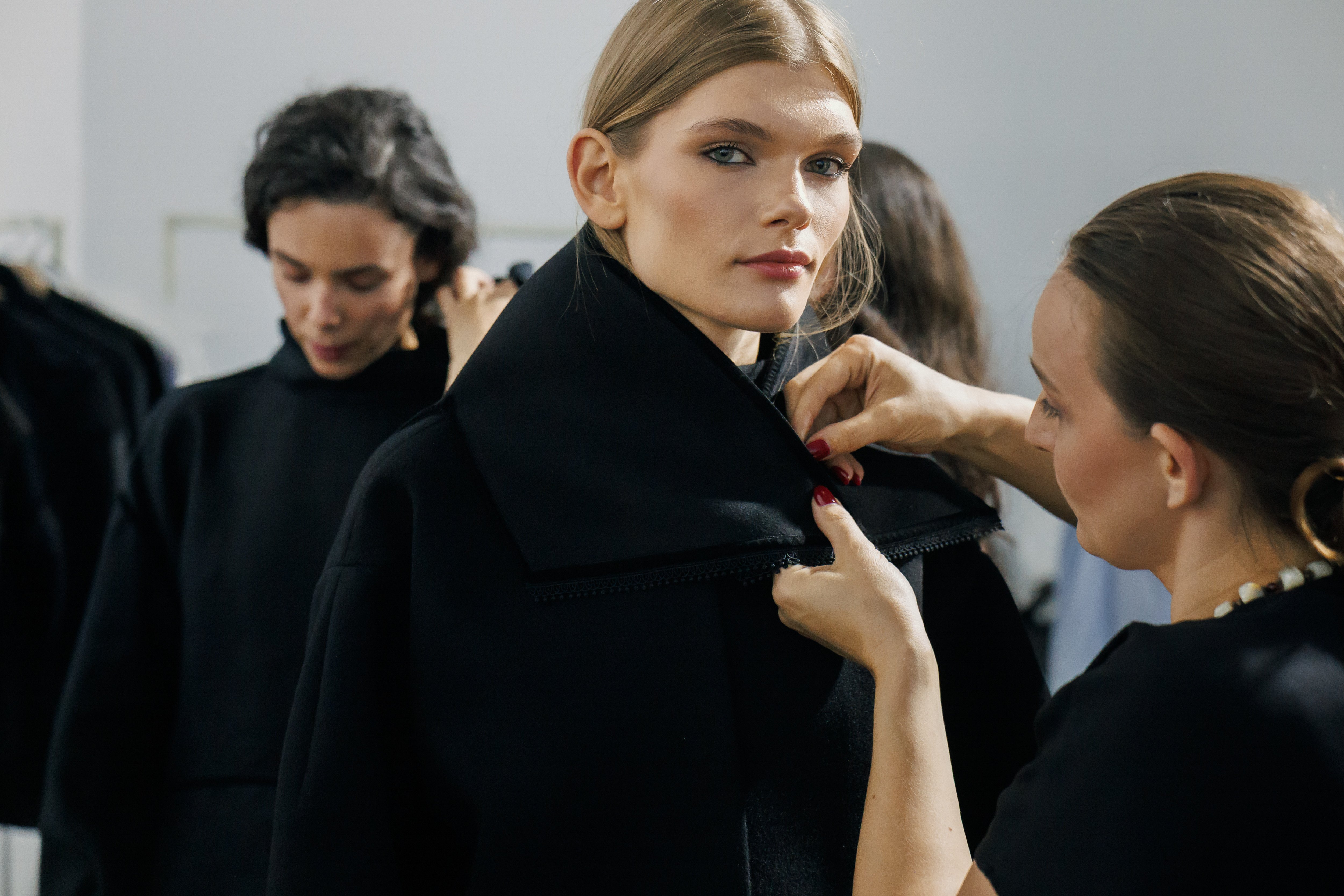
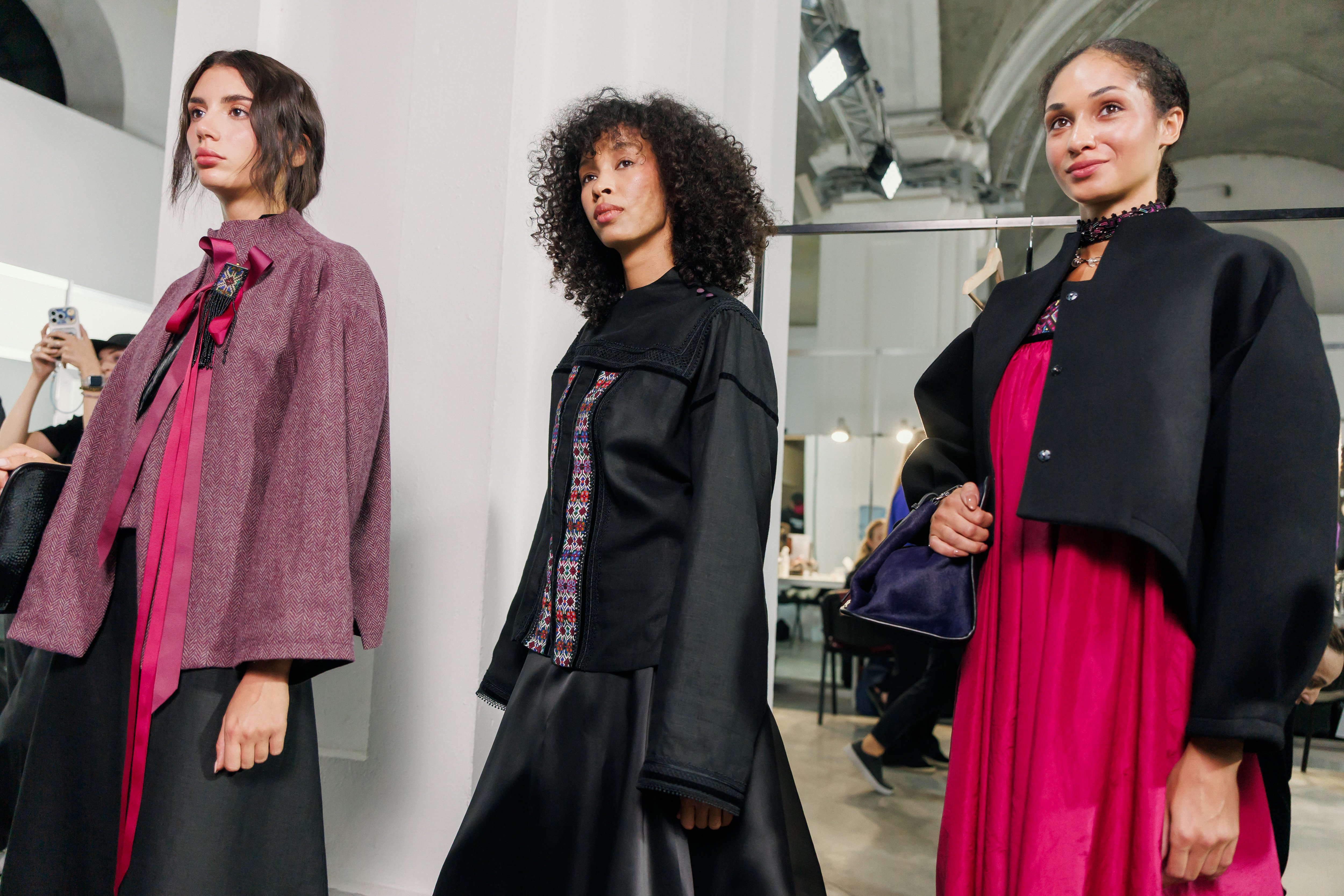
When the familiar world around you is falling apart, you search for what remains unchanged. For the Khrystyna Rachytska team, that means memory, native land, language, and culture. These ideas gave rise to the Support/Resistance collection, dedicated to the things that help preserve identity as everything else changes.
The collection grew out of research into Ukraine’s famous embroidered shirts. Every ornament in the collection is handmade. They reproduce traditional cross-stitch embroidery from early 20th-century shirts, but now appear in contemporary forms, styling, and trends. In other words, calling something “grandma’s” has finally stopped being an insult in the fashion lexicon.
SYNDICATE’s new collection also echoes the theme of memory. Its starting point was designer Iryna Vasylevska’s family archive: photographs of her parents, objects from her childhood, and ordinary household items that gradually became personal artifacts. But from these private stories, SYNDICATE moves toward the broader theme of collective memory.
That idea is reflected even in the way the collection works with materials. Traditional fabric-processing techniques are combined with modern technologies, while physical imprints of real flowers are digitized, transformed, and returned to the fabric in a new form. In the final part of the show, the metaphor took on a physical form: water interacted with the clothing and water-soluble material, making the process of transformation and disappearance part of the performance itself. The past met the present, the material met the digital, and the real met the artificial.
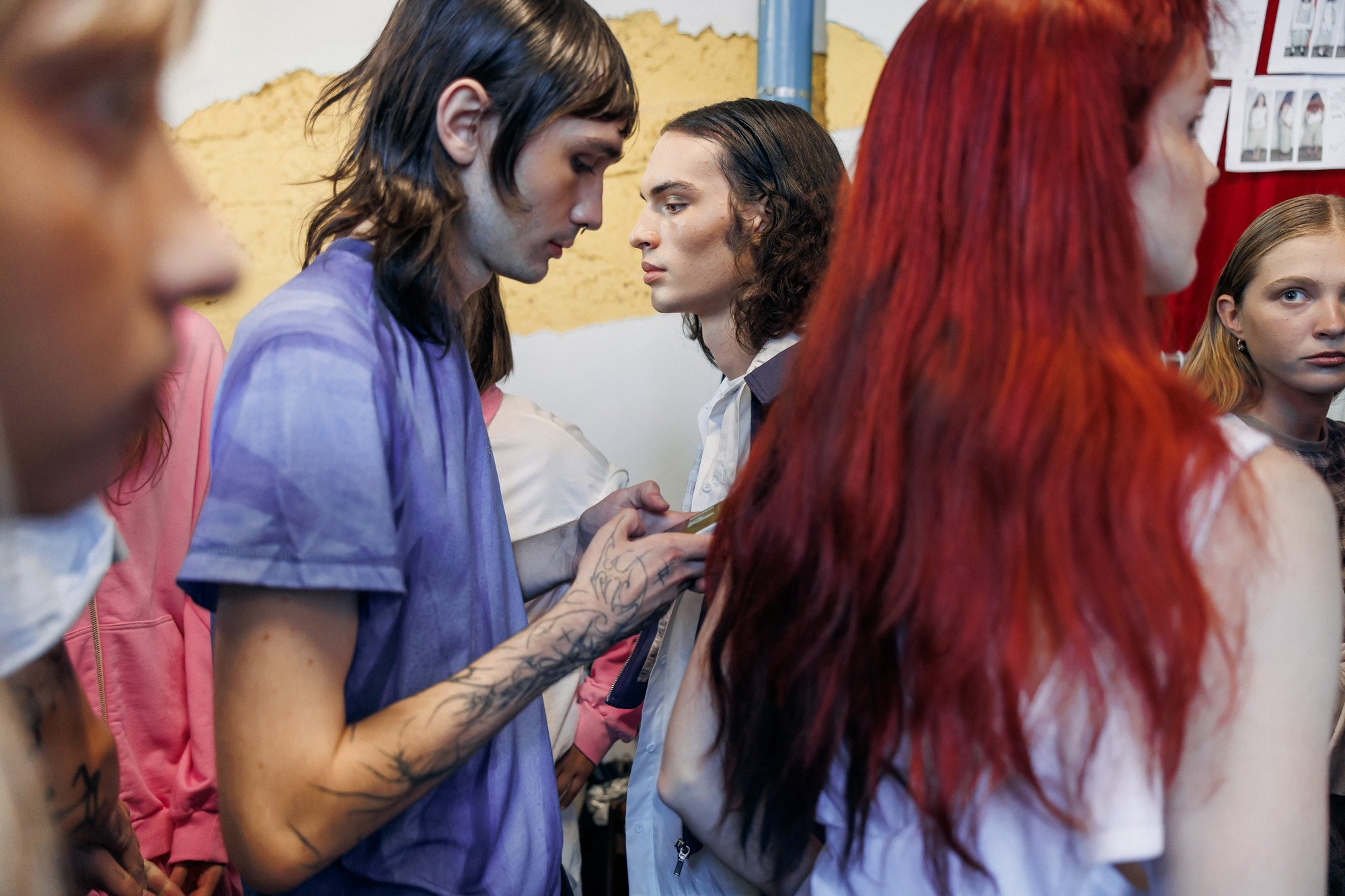
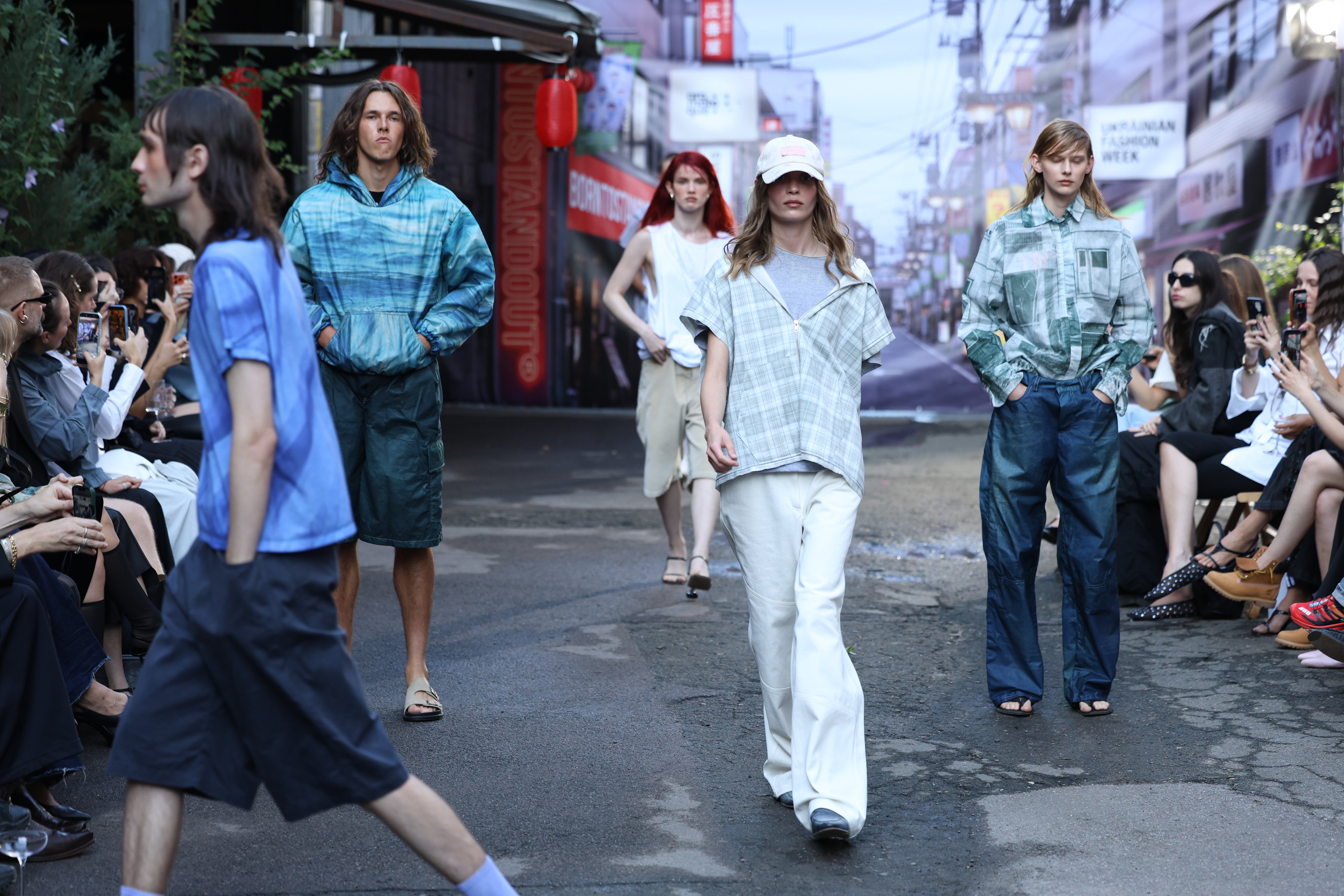
Overall, many prominent Ukrainian designers looked to memory and their native culture for grounding and inspiration. On the final day of fashion week, five young designers presented their work as part of New Names—and it turned out that the next generation is just as eager to look to the past, although what they make from what they find there is entirely different.
KAZHAN ELIS, for example, drew inspiration from St. Nicholas Roman Catholic Church in Kyiv, a unique Neo-Gothic landmark. Mariia Kaliukh of MAVKA BOUTIQUE, meanwhile, explored how traditional Ukrainian ways of life changed under the influence of industrialization, urban life, and standardization.
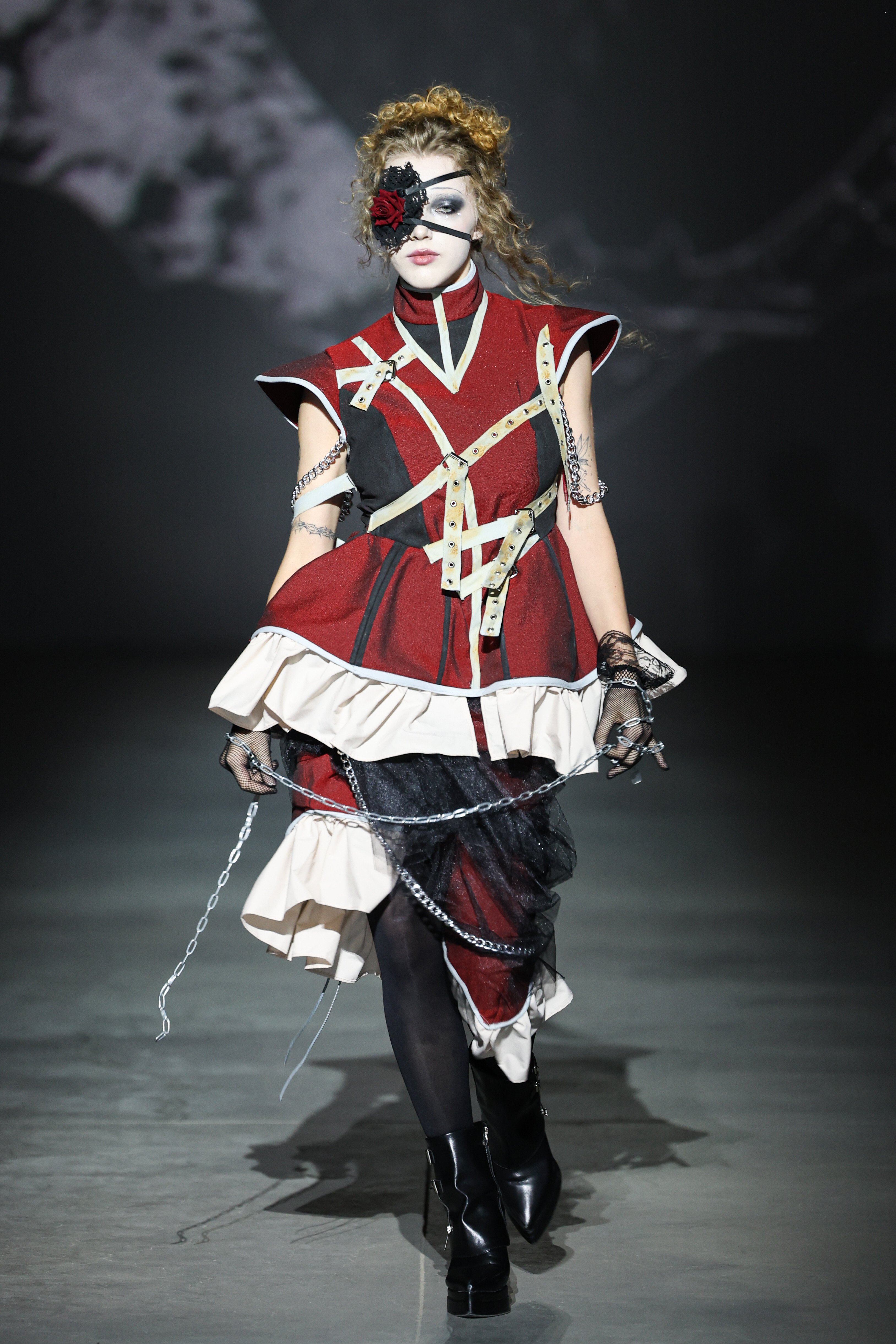
So Ukrainian fashion today can be about century-old embroidery, family photographs, or traditional ways of life. Or it can be about a blanket sewn onto a pair of pajamas so you can get to the shelter faster.
Ukrainian fashion is searching for answers in both the past and the future. But it is presenting them in a very concrete present—one in which the distance between the runway and the bomb shelter can be remarkably thin.
Discuss this article:

-111f0e5095e02c02446ffed57bfb0ab1.jpeg "Photo of Roman Kohanets")
-07c046f037cabcd54fb44b5253b3733d.jpg "“Bathing” (2021), an 80 × 60 cm artwork by Ukrainian artist Mariia Drozdova. (Source: Art From Ukraine/Instagram)")


-c439b7bd9030ecf9d5a4287dc361ba31.jpg "Photo of Katherina Popilnichenko")