- Category
- Opinion
The New Face of Russia’s Sanctions Evasion Is Young, Online, and Chasing Easy Money

A few years ago, sanctions and export control specialists mostly dealt with the criminal underworld: drug cartel transactions, terrorist financing networks, and money laundering schemes. Today, it is ordinary young people recruited online to trade signatures and shell companies for cash.
 Prefer U24 Media on Google
- Authors


Export controls are no longer a niche issue for lawyers. This year’s Association of Certified Sanctions Specialists (ACSS) conference in Washington, where I moderated a roundtable on export controls for defense and dual-use goods, made it clear. Export controls have become a major geopolitical and national security issue.What is at stake today is not simply frozen bank accounts, but the lives of millions of Ukrainians whose homes are being struck by Russian missiles assembled with “sanctioned” Western components. Today, the victims are Ukrainians. Tomorrow, they could be EU residents.
We bring you stories from the ground. Your support keeps our team in the field.
One of the key conclusions from the Washington conference was that the face of modern-day accomplices to terrorism has changed. The shell companies buying and selling goods in violation of sanctions are now represented by… a young Instagram model in a swimsuit.
New faces in Russia’s sanctions evasion schemes
The case of Valeria Baigaskina, which we at Ukraine’s Independent Anti-Corruption Commission, NAKO, previously analyzed in the context of sanctions evasion and presented at the event, is a perfect illustration of this new “trend.”
Our investigation found that a 25-year-old Kazakh citizen living in Belarus was supplying sanctioned British optics to Russia for missile production.
Baigaskina was an active social media user. She posted glamorous photos from the UAE and Malaysia, not content about weapons or war. Yet in 2023, a company called Rama Group was registered in her name. Rama Group was incorporated thousands of kilometers away from Baigaskina’s home, in Kyrgyzstan, and supplied Russia with millions of dollars’ worth of high-tech British optics.
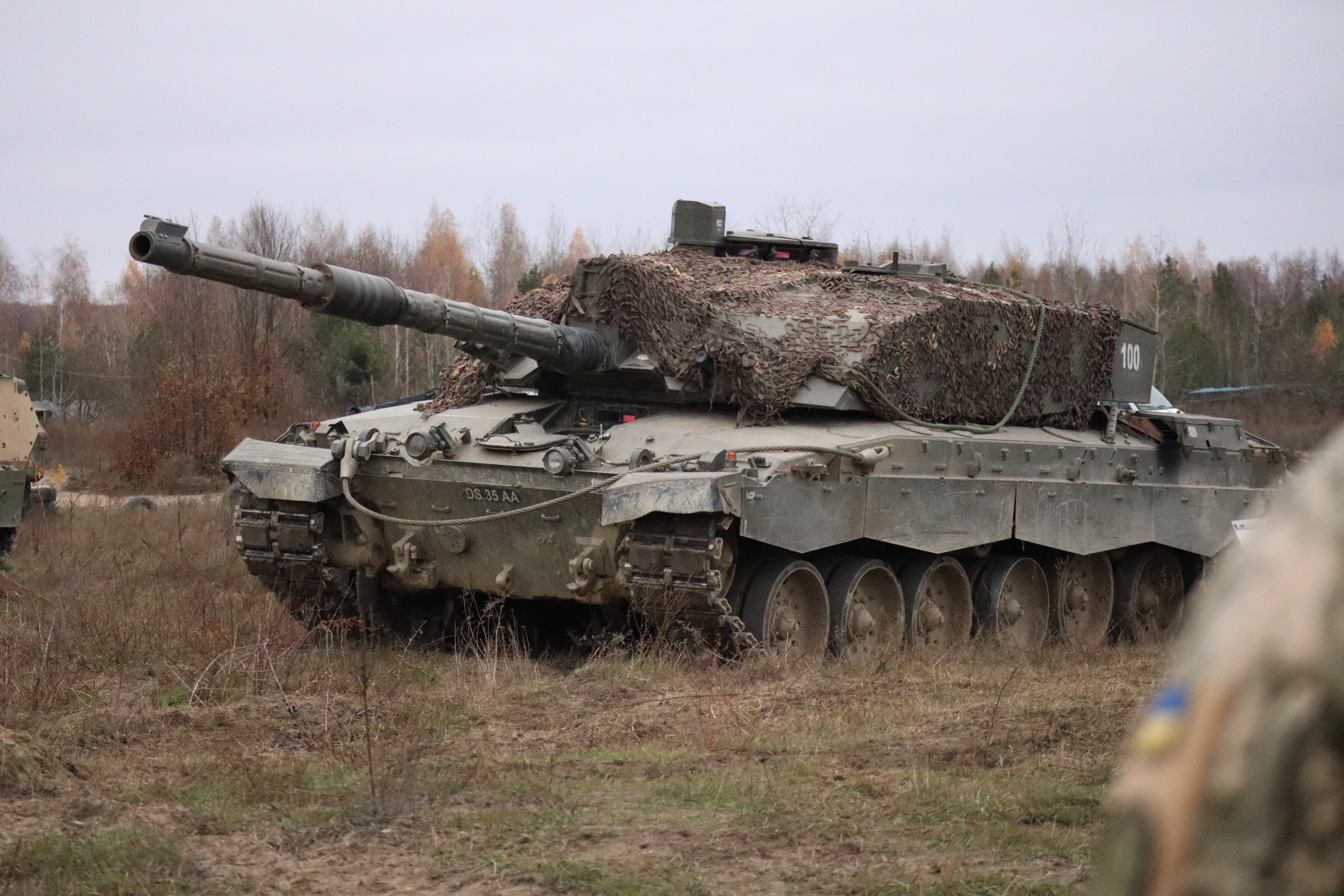
Lenses manufactured by Beck Optronic Solutions—used in British Challenger 2 tanks and F-35 fighter jets—were routed through her company to Russia’s Ural Optical and Mechanical Plant, which manufactures bomb guidance systems, as well as to Sol Group, both of which are under sanctions.
How did a young woman suddenly become a major supplier of sanctioned Western goods to Russia?
We found the answer—on social media. Many of Baigaskina’s Instagram photos were tagged with “Gruppa13.” As it turned out, this is a Belarusian company ostensibly specializing in electronic equipment supplies but, in reality, created specifically to facilitate shipments of sanctioned goods—most likely by a larger Belarusian import-export company. It is this company that recruits “enterprising” young people to register shell companies around the world for supplying sanctioned goods to Russia.
In May 2024, Baigaskina told BBC journalists, who conducted their own investigation, that she had sold the company to her friend Angelina Zhurenko, who had previously worked selling lingerie in Kazakhstan.
And there are many others like Baigaskina and Zhurenko: young women whose names are used to register shell companies that supply Russia with sanctioned goods.
Colleagues at the Washington conference shared another example: a young woman approached an American aviation company seeking to purchase equipment for civilian aircraft. During due diligence, compliance specialists discovered that the “successful businesswoman” had a very different professional background—she worked as a manicurist.
Banking professionals also shared cases with me in which clients attempted to purchase tanks without explicitly calling them “weapons,” listing only model numbers instead. Bank employees had to literally Google the numbers themselves to realize they referred to deadly military equipment.
But the most dangerous trend is the recruitment of young people with no ideology whatsoever.
The era of “empty” people
We are entering an era of “ideology-free terrorism.” The future of sanctions evasion belongs to people with no values, but a strong appetite for material wealth. Some may be financially desperate; others simply want to “live beautifully,” as social media has taught them to imagine it.
Instagram, Telegram, and TikTok have become tools not only for entertainment but also for recruitment into international criminal networks. Russia is actively exploiting this resource, buying “signatures on paper” from young people who never stop to consider that behind their “business” lie murdered Ukrainian children.
At the Washington conference, I reminded colleagues that while they are studying new compliance systems, Ukraine is fighting the largest war in Europe since World War II. Our shared task is to ensure that not a single lens, microchip, or “model in a swimsuit” can become part of Russia’s war machine.
Discuss this article:


-206008aed5f329e86c52788e3e423f23.jpg "Photo of Oleksandr Moiseienko")

-f3430f0449615e9897dff835086ac204.jpg "Ukraine Broke With a Soviet-Era Military System and Rebuilt It Around the Soldier")
-e126c16a85d580738cf2d57e760b80a3.jpeg "Photo of Vladyslav Greziev")